In 2026, warehouse operators face tighter footprints, faster order cycles, and higher expectations for inventory accuracy. Pallet Storage Racks remain a practical foundation for storing boxed goods, raw materials, and finished products safely. Yet the best system is rarely the tallest or cheapest option. It must fit the building, equipment, product profile, and daily handling routine.
This guide examines leading pallet storage racks for global warehouses, using criteria drawn from warehouse engineering practice and supplier specifications. We consider load capacity, beam adjustment, aisle width, forklift compatibility, corrosion protection, inspection access, and installation quality. Real performance also depends on floor flatness, pallet condition, seismic needs, fire protection, and local safety requirements. A rack that looks efficient on a drawing may slow operators beside a busy loading dock.
Small details matter.
For example, a 100-millimeter clearance error can affect forklift movement and product protection. Selective racks may support excellent access, while double-deep, drive-in, or very narrow aisle designs can improve density under suitable conditions. No ranking is perfect. Warehouse data changes, and supplier claims still require verification. We encourage readers to compare tested capacities, maintenance support, replacement lead times, and documented installation methods. Photos from working facilities can help, but they cannot replace a site survey or competent structural review. Some recommendations here may need refinement as automation, energy costs, and storage patterns evolve. That uncertainty deserves attention, not concealment. The goal is a clear, evidence-informed starting point for safer, more adaptable warehouse decisions in 2026.
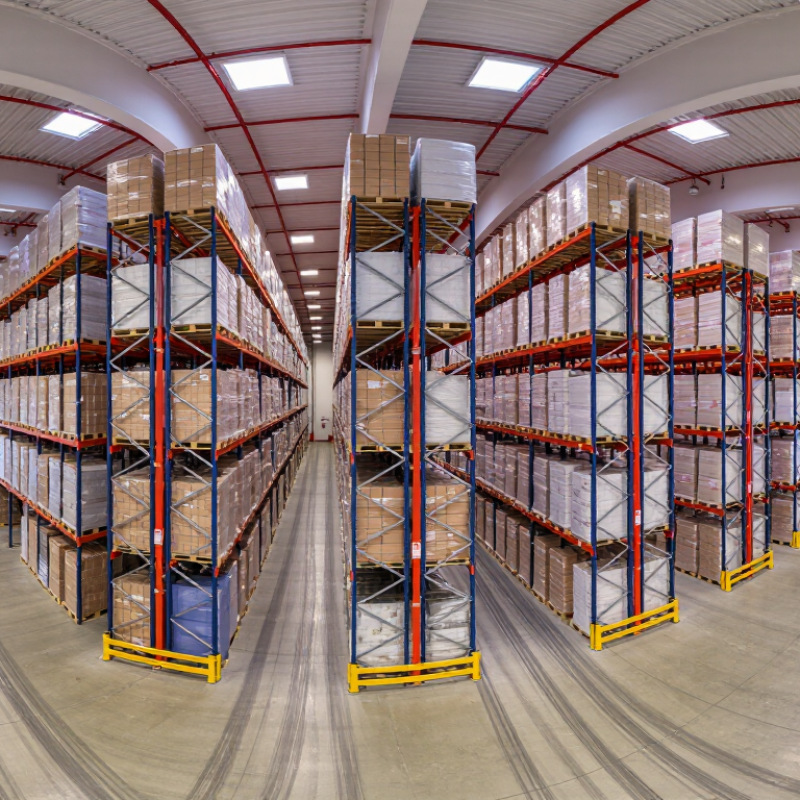
Pallet Storage Rack Basics and Warehouse Applications
Pallet storage racks create vertical space while keeping unit loads visible and accessible. A basic system uses upright frames, horizontal beams, connectors, and protective guards. Each level must match the pallet size, load weight, and handling equipment. Never guess capacity. Read the posted load information and confirm it with a qualified rack engineer.
Selective pallet racks suit warehouses with many products and frequent picking. They give direct access to every pallet, but they require wider aisles. Drive-in racks hold deeper quantities of similar goods and support high-density storage. Pallet flow racks can help with first-in, first-out rotation. Push-back designs reduce aisle space, although product control becomes less direct. Rack choice should follow inventory movement, not fashion.
I have seen efficient layouts fail because forklift turning space was measured too tightly. Small clearance errors become daily damage. Upright guards, beam locks, and floor anchors deserve careful inspection. Check for bent frames, loose connectors, missing safety pins, and overloaded beams. Keep aisles clear.
A good warehouse plan also considers fire protection, lighting, floor strength, and local safety requirements. Conditions change when pallet heights, forklift types, or inventory weights change. Review the layout after those changes. A practical rack system is not merely tall; it remains stable, readable, repairable, and easy for workers to use.
2026 Top Pallet Storage Racks for Global Warehouses - Pallet Storage Rack Basics and Warehouse Applications
| Pallet Storage System | Basic Configuration | Typical Access | Typical Aisle Width | Relative Storage Density | Best Warehouse Applications | Key Planning Considerations |
|---|---|---|---|---|---|---|
| Selective Pallet Rack | Single-deep pallet positions arranged in parallel rows with forklift aisles. | Direct access to every pallet position. | Approximately 2.7–3.5 m for reach trucks; wider for counterbalance trucks. | Baseline density; highest selectivity. | General distribution, retail replenishment, mixed-SKU inventory, and warehouses requiring frequent picking. | Beam capacity, pallet overhang, aisle turning radius, rack protection, and required fire clearances. |
| Double-Deep Pallet Rack | Two pallet positions deep, normally served by reach trucks with telescopic forks. | Direct access to the front pallet; rear pallet access requires moving the front pallet. | Usually about 3.0–3.5 m, depending on the truck and load dimensions. | Higher than selective rack, commonly about 20–40% more storage positions in a suitable layout. | Medium- to high-volume operations with several pallets per SKU. | Requires compatible reach equipment, stable pallets, and inventory controls that account for LIFO tendencies. |
| Drive-In Pallet Rack | Forklifts enter rack lanes supported by guide rails or pallet support rails. | Limited access; usually operates on a last-in, first-out basis. | Aisles are generally narrower than selective layouts, but lane entry and truck clearance must be verified. | High density because internal aisles are reduced. | Cold storage, buffer storage, and operations holding large batches of the same or similar products. | Best for low SKU variety, consistent pallet quality, controlled forklift operation, and limited product rotation. |
| Drive-Through Pallet Rack | Rack lanes are accessible from both ends, allowing forklifts to pass through. | Access from both sides; supports first-in, first-out workflows when managed correctly. | Varies with forklift type, load size, and the required front and rear operating zones. | High density, generally lower than single-ended drive-in because both ends require access. | Seasonal goods, food and beverage storage, and batch inventory needing rotation. | Requires coordinated loading and unloading from opposite ends and careful aisle separation. |
| Push-Back Pallet Rack | Inclined lanes use nested carts or rollers so pallets move toward the loading face after front pallets are removed. | Front-face access with last-in, first-out operation in most configurations. | Often around 3.0–3.5 m, subject to truck and rack design. | Higher than selective rack, with multiple pallets stored in each lane. | High-throughput buffer zones, seasonal inventory, and medium SKU volumes with multiple pallets per SKU. | Pallet dimensions, load stability, lane depth, cart capacity, and braking or speed-control requirements are important. |
| Pallet Flow Rack | Inclined roller lanes move pallets by gravity from the loading side to the picking side. | Separate loading and unloading faces; supports first-in, first-out rotation. | Aisle width depends on the forklift or pallet shuttle used at each face. | High density with strong product rotation. | Perishable goods, date-sensitive inventory, food distribution, and order fulfillment buffers. | Roller pitch, pallet bottom-board design, lane slope, braking devices, and load weight must be matched. |
| Mobile Pallet Rack | Rack rows are mounted on powered bases that open only the aisle required for access. | High selectivity when an aisle is opened; otherwise rows remain compact. | One active operating aisle can serve multiple rack rows, subject to safety rules. | Very high space utilization compared with fixed-aisle layouts. | Cold stores, archives, high-value inventory, and facilities where floor space is expensive. | Floor flatness, base loading, emergency access, controls, safety interlocks, and maintenance access require detailed design. |
| Pallet Shuttle Rack | A powered shuttle transfers pallets within deep storage lanes while forklifts operate mainly at the lane face. | High-density access at lane level; can be configured for FIFO or LIFO workflows. | Forklift aisles can be reduced because trucks do not travel through every storage lane. | Very high density for deep-lane storage. | Cold storage, high-volume buffer stock, manufacturing components, and repetitive pallet handling. | Battery charging, shuttle retrieval strategy, pallet tolerances, lane alignment, and backup operating procedures are essential. |
| Very Narrow Aisle Pallet Rack | Tall selective rack served by turret or specialized articulated trucks in narrow aisles. | Direct access to each pallet position. | Approximately 1.6–2.0 m for suitable equipment and layout conditions. | High cube utilization with selective access. | High-bay distribution centers where floor area is limited and SKU selectivity is important. | Floor guidance, truck lift height, rack plumbness, sprinkler design, and pedestrian exclusion controls must be coordinated. |
| Automated Pallet AS/RS | Storage and retrieval machines or automated shuttles place pallets in high-density rack aisles. | Software-directed access; pallet availability depends on system configuration and controls. | Machine aisles are designed around equipment requirements rather than conventional forklift turning space. | Very high cube and space utilization potential. | High-volume distribution, manufacturing, e-commerce fulfillment, and temperature-controlled facilities. | Building height, floor tolerance, power supply, fire protection, software integration, redundancy, and maintenance access must be assessed. |
FAQS
Record pallet weight, height, dimensions, access frequency, and forklift requirements. Start with real loads. Catalog drawings alone can mislead.
Selective racking usually gives direct access to each pallet. It suits mixed inventory and frequent picking. Access matters.
No. Drive-in, push-back, and double-deep systems can increase storage density. However, they may reduce rotation flexibility and slow picking. More capacity can still create delays.
Compare beam capacity at the actual span with each loaded pallet weight. Check upright frames, floor conditions, and building height. Do not rely only on advertised maximums.
Measure aisle width, forklift turning space, clear height, sprinkler clearance, and emergency routes. Also inspect floor levelness. Small errors matter.
Mark the rack footprint with floor tape. Then test a complete travel route using the largest forklift. Measure it twice.
Place fast-moving pallets near dispatch or receiving areas. This can reduce travel during busy periods. Peak hours expose weak layouts.
Check damaged beams, loose anchors, changed pallet weights, and load plaques. Maintain safe pedestrian separation and documented worker training. The design may still need revision.
Leave room for barcode scanning, slotting data, and possible automation. Rack locations should support future operational changes. My capacity-first instinct can be wrong.
Conclusion
This guide explains the fundamentals of Pallet Storage Racks and their role in improving warehouse organization, inventory visibility, and material flow. It reviews major rack types used in global warehouse operations in 2026, including selective, drive-in, double-deep, cantilever, and mobile systems. Each option is considered according to its ideal application, storage density, pallet access, and compatibility with different handling processes.
The article also presents practical methods for comparing rack systems by load capacity, facility layout, aisle width, accessibility, and future expansion needs. It highlights essential safety considerations, such as structural inspection, proper anchoring, load labeling, impact protection, and professional installation. By balancing storage volume, operational speed, budget, safety requirements, and inventory characteristics, warehouse managers can select the most suitable Pallet Storage Racks for reliable, efficient, and adaptable warehouse performance.