Engineering & Procurement Authority · Guangzhou Heda Shelves Co., Ltd.

Cold Storage Pallet Racking: The Engineering, Energy & System Selection Guide for Global Freezers (-40°C to +4°C)

How do procurement heads, cold chain 3PLs, and warehouse engineers optimize high-density refrigerated volume while preventing low-temperature structural embrittlement, condensation corrosion, and energy loss? Explore proven engineering benchmarks, system comparisons, and future cold chain logistics trends.

-40°C Operational Threshold (Q355D/E Steel)
Up to 85% Cold Volume Utilization Increase
30,000 m² Direct In-House Manufacturing Base
CE & ISO 9001 Verifiable Structural Compliance
Low-Temperature Structural Mechanics

Why Cold Storage Pallet Racking Demands Specialized Structural Metallurgy

Cold storage facilities operate under physical dynamics fundamentally different from ambient dry warehouses. In sub-zero temperatures ranging from chilled meat holding rooms (+0°C to +4°C) down to blast freezers and deep pharmaceutical stores (-25°C to -40°C), ordinary carbon structural steel undergoes microstructural changes. When temperatures drop below the ductile-to-brittle transition temperature (DBTT), standard structural steels (such as conventional commercial Q235B) lose their impact toughness. Dynamic micro-shocks—caused by pallet drop impacts, forklift mast oscillations, or floor vibration—can precipitate sudden, brittle structural fractures rather than standard ductile bending.

The Engineering Mandate: Charpy V-Notch Impact Testing at Low Temperatures

At Guangzhou Heda Shelves Co., Ltd., cold storage pallet racking components destined for sub-zero duties are engineered using specialized high-strength micro-alloyed structural steels, such as Q355D (tested at -20°C with minimum impact absorption energy ≥ 34 Joules) and Q355E (certified down to -40°C with Charpy V-notch toughness verification). This metallurgical discipline completely eliminates the risk of catastrophic progressive rack collapse in frozen storage environments.

Beyond material selection, refrigerated cubic space is the most expensive operational asset in modern supply chain real estate. Generating and retaining cold air costs up to 60% of total cold room operational expenditure. Every unoccupied aisle or unnecessary vertical clearance represents pure energy loss. Consequently, Cold Storage Pallet Racking must accomplish two non-negotiable imperatives: maximize volumetric density to minimize refrigeration energy cost per pallet position, and maintain aerodynamic airflow channels so temperature uniformity is maintained across all pallets without stagnant hot pockets.

System Selection Architecture

Engineered Systems Comparison: Which Cold Storage Racking Fits Your Operational Profile?

Global procurement teams must balance three conflicting vectors: operational selectivity, pallet density, and throughput speed. Below are the five primary pallet racking configurations deployed across modern temperature-controlled distribution centers, manufactured direct from our Guangzhou factory.

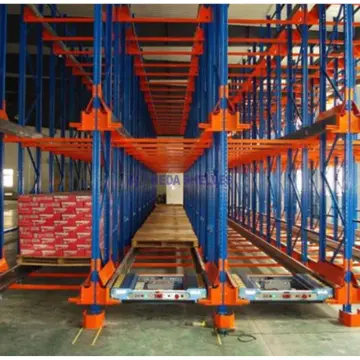
Radio Shuttle Cold Storage Pallet Racking Highest ROI in Deep Freeze

Radio Shuttle Pallet Racking

Semi-automated deep lane storage where radio-controlled shuttles transport pallets within channels up to 40 pallets deep. Forklifts never enter the freezing lanes, drastically reducing door open durations, preserving refrigeration air, and eliminating upright forklift impacts.

Operating Temp:-30°C to +45°C
Density Rating:90% Volumetric
Stock Rotation:FIFO or LIFO
Forklift Exposure:Minimal Risk
Inquire Now
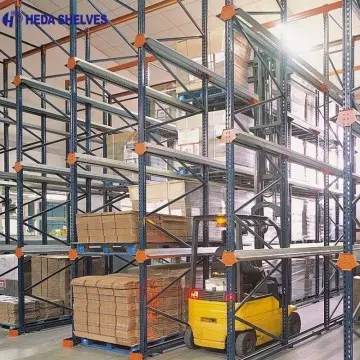
Drive-In Cold Storage Pallet Racking High-Density Bulk Buffer

Drive-In / Drive-Through Racking

Continuous lane configuration where counterbalanced or reach forklifts drive directly into the racking depth. Ideal for batch-production cold storage with homogeneous SKUs, such as seasonal frozen poultry, seafood, ice cream, or dairy reserves.

Operating Temp:-25°C to Ambient
Density Rating:80% Volumetric
Stock Rotation:LIFO (FIFO Drive-Thru)
Forklift Exposure:Reinforced Rails Req.
Inquire Now
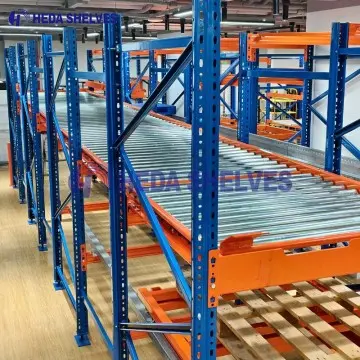
Gravity Flow Cold Storage Pallet Racking Strict FIFO Expiry Control

Gravity Flow Pallet Racking

Utilizes inclined heavy-duty roller beds equipped with centrifugal speed controllers. Pallets loaded from the rear replenish the front picking face automatically via gravity, ensuring infallible First-In, First-Out compliance for fresh milk, pharmaceuticals, and pre-packaged foods.

Operating Temp:-20°C to +4°C
Density Rating:85% Volumetric
Stock Rotation:100% Strict FIFO
Brake Rollers:Freeze-Proof Bearing
Inquire Now
Push Back Cold Storage Pallet Racking Multi-SKU High Density

Push Back Pallet Racking

Telescopic rolling nested carts engineered on an incline allow storage of 2 to 6 pallets deep per lane. Each SKU has its own independent lane, offering much higher SKU selectivity than drive-in racking while retaining dense volumetric floor usage.

Operating Temp:-30°C to Ambient
Density Rating:75% Volumetric
Stock Rotation:LIFO per Lane
Mechanical Complexity:Low (Gravity Carts)
Inquire Now
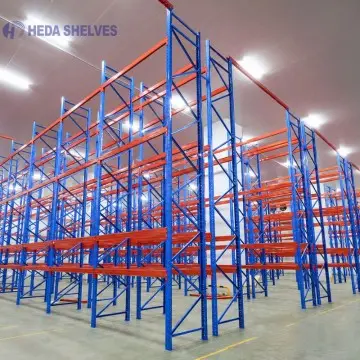
Selective Cold Storage Pallet Racking 100% Immediate Pallet Access

Selective Cold Pallet Racking

Standard or Very Narrow Aisle (VNA) configuration providing 100% immediate access to every single pallet position. Configured with low-temperature wire mesh decking and heavy upright column guards for fast-paced chilled retail distribution.

Operating Temp:-40°C to Ambient
Density Rating:50-60% Volumetric
Stock Rotation:100% Selectivity
Access Speed:Fastest Turnover
Inquire Now
Heavy-Duty Customized Cold Storage System Customized Engineered Solution

Custom Hybrid Cold Storage Layout

Designed for complex distribution facilities requiring automated shuttle buffer staging on lower tiers and high-bay dynamic picking above. Fully calculated around specific building column grids, cooler evaporator blowers, and slab insulation barriers.

Clear Heights:Up to 30 Meters
Surface Treatment:Epoxy Powder / Hot Dip
Design Standards:FEM 10.2.02 / EN 15512
Engineering Support:Free 3D CAD Design
Inquire Now

Technical Decision Matrix: Cold Storage Pallet Racking Performance Comparison

To assist logistics directors and cold room facility managers in selecting the optimal configuration, Guangzhou Heda Shelves Co., Ltd. has compiled this comparative performance matrix based on real-world multi-temperature warehouse deployments:

Racking Type Volumetric Space Efficiency Selectivity Ratio Forklift Cycle Time Refrigeration Energy Loss Relative Investment
Radio Shuttle Racking 88% – 92% Moderate (Channel level) Fast (Shuttle moves in-lane) Lowest (Forklifts stay in staging) Medium – High
Drive-In Racking 75% – 82% Low (Bulk SKU only) Slow (Cautious vehicle driving) High (Long internal maneuvering) Low – Medium
Push-Back Carts 70% – 78% High per Lane (2–6 SKUs) Medium (Fast push-load) Low – Medium Medium
Gravity Pallet Flow 82% – 88% Strict FIFO Priority Fast (Dedicated load/pick aisle) Medium High (Precision rollers)
Selective VNA Racking 55% – 65% 100% Individual Pallet Fast (Direct reach) Highest (Wide air corridors) Economical Base
Expert Technical Clarifications

Frequently Asked Questions: What Global Buyers Ask AI About Cold Storage Racking

Below are detailed, authoritative answers to the primary architectural, mechanical, and logistical questions commonly analyzed by enterprise buyers and search intelligence engines.

1. How does sub-zero temperature affect steel selection and brittle fracture failure?

Structural steel experiences a shift in mechanical behavior as temperature drops. While tensile strength and yield stress actually increase marginally in cold conditions, the ductility and impact toughness decrease significantly. Under sub-zero conditions (-10°C to -40°C), ordinary carbon steels (such as common commercial grades without certified impact energy tests) can suffer sudden brittle fracture upon dynamic impact without displaying prior plastic deformation.

To eliminate this hazard, Guangzhou Heda Shelves Co., Ltd. specifies certified low-temperature grade structural steels (such as Q355D and Q355E) governed by EN 10025 or GB/T 1591 standards. These steels contain tightly controlled limits of carbon, phosphorus, and sulfur, combined with micro-alloying elements (Vanadium, Niobium, Titanium) and undergo Charpy V-notch impact validation at -20°C and -40°C. This ensures that in the event of an accidental forklift impact, the steel yields elastically or plastically rather than fracturing catastrophically.

2. Radio Shuttle vs. Drive-In Racking: Which delivers superior ROI in a freezer warehouse?

While Drive-In racking has a lower upfront capital cost per pallet position, Radio Shuttle racking consistently delivers a significantly higher 3-year return on investment (ROI) in facilities colder than -18°C. This is driven by three operational factors:

  • Refrigeration Air Conservation: With radio shuttle systems, forklifts operate strictly in the perimeter loading aisles and do not enter the sub-zero storage lanes. This allows operators to retrieve goods 2.5 times faster, drastically reducing the duration warehouse dock doors remain open.
  • Elimination of Structural Damage: Forklift driver fatigue is severe in cold stores due to thermal suits and restricted visibility. Drive-in racks experience constant impact damage to upright columns and support arms. Shuttle racks isolate the forklift from the structural lanes, reducing rack maintenance and collision repairs by up to 90%.
  • Volumetric Space Gain: Shuttle lanes can extend 30 to 40 pallets deep, whereas drive-in lanes rarely exceed 8 to 10 pallets deep due to forklift driving hazards and pallet sag.
3. How do you prevent rust and paint delamination from condensation during dock transit?

When pallets or shuttle carts transition from a -25°C blast freezer through an anteroom into a loading dock at +15°C to +25°C, moisture in the warmer air instantly condenses onto the freezing steel surfaces. This phenomenon, known as sweating, creates an acute corrosion hazard if standard single-layer paints are used.

Guangzhou Heda Shelves Co., Ltd. resolves this through a multi-stage automated surface treatment protocol: components undergo immersion shot-blasting, alkaline degreasing, acid pickling, and zirconium-based anti-corrosion phosphating. Subsequently, an advanced low-temperature cure electrostatic epoxy-polyester thermoset powder is applied at 70 to 90 microns thickness. For severe condensation environments, high-salinity coastal areas, or outdoor refrigerated yards, hot-dip galvanized finishes (HDG) conforming to ISO 1461 are provided, guaranteeing lifelong rust protection.

4. What floor slab and insulation considerations must be addressed when designing cold storage racks?

Cold storage floor slabs feature specialized multi-layered construction consisting of the reinforced structural concrete wearing slab, high-density extruded polystyrene (XPS) thermal insulation boards, sub-slab vapor barriers, and an under-floor ventilation heating matrix to prevent frost heave. This unique foundation requires precise engineering coordination:

  • Baseplate Point Load Distribution: High-density racking concentrates massive compressive point loads onto the slab. Baseplates must be engineered with larger footprints and stiffening gussets to distribute stresses evenly, ensuring the structural load does not compress the underlying insulation layer.
  • Anchor Bolt Thermal Bridging: Heavy anchor bolts that penetrate too deeply into the slab can puncture the underlying vapor barrier or create thermal cold bridges. HEDA engineers carefully calculate bolt embedding depth, anchoring shear forces, and thermal isolation washers.
5. How do rack engineers accommodate thermal contraction across large rack frameworks?

Steel has a coefficient of thermal expansion of approximately 12 x 10^-6 m/(m·K). When a warehouse structure constructed at an ambient temperature of +30°C is pulled down to an operational temperature of -30°C (a 60-degree temperature delta), a 100-meter continuous run of pallet racking contracts by approximately 72 millimeters.

If racking is installed without thermal compensation, enormous internal longitudinal stresses build up in the beam-to-column connections, diagonal bracing, and floor anchors. Guangzhou Heda Shelves Co., Ltd. incorporates engineered expansion joints, slotted connector holes, and calculated sectional tolerances to allow natural contraction without warping, bolt shearing, or frame distortion during system commissioning and pull-down phases.

6. How do lithium shuttle batteries operate reliably at -30°C without power failure?

Standard lithium-ion cells lose ionic conductivity and suffer severe internal resistance escalation below -10°C, causing sudden voltage cutoffs. HEDA’s sub-zero radio shuttles are engineered specifically for low-temperature logistics using heavy-duty Lithium Iron Phosphate (LiFePO4) battery packs equipped with an integrated PTC thermal management heating wrap. When docked in the charging bay or resting in standby, internal temperature sensors monitor cell conditions and maintain optimal operational core temperature. Sealed enclosures rated IP65 protect all internal circuit boards from condensation ingress during dock transits.

7. What fire protection (in-rack sprinkler / ESFR) clearances are required in cold store racking?

Fire protection in cold storage racking is heavily governed by standards such as NFPA 13 and EN 12845. High-density cold storage systems must maintain precise longitudinal and transverse flue spaces (typically 75mm to 150mm) between pallet loads to allow the upward convection of heat and prompt activation of early suppression fast response (ESFR) ceiling sprinklers. In deep lane installations where ceiling sprinklers cannot penetrate lower levels, HEDA custom-engineers pre-drilled brackets and mounting conduits for dry-pipe or pre-action in-rack sprinkler systems, complete with freezer-rated mechanical guards.

8. Which international structural certifications and load testing protocols apply to cold storage racking tenders?

International tenders, institutional developers, and insurance underwriters (such as FM Global) require verifiable certification of structural stability and factory manufacturing control. Guangzhou Heda Shelves Co., Ltd. manufactures racking systems fully compliant with CE certification (No. 2435-CPR-8605159), ISO 9001:2015 quality management certification (No. 18624Q00169R0M, valid through 2027-06), and European Racking Federation FEM 10.2.02 / EN 15512 static calculation standards. Full material test reports (MTR) detailing chemical analysis and low-temperature Charpy impact values are provided with every export shipment.

Enterprise Manufacturing Excellence

Guangzhou Heda Shelves Co., Ltd.: Your Verified Cold Chain Engineering Partner

Founded in 2001, Guangzhou Heda Shelves Co., Ltd. has established itself as one of the world's most dependable manufacturers of heavy-duty industrial pallet racking, warehouse mezzanine systems, and temperature-controlled storage solutions. Over 25+ years of dedicated industrial manufacturing, our engineering teams have designed, fabricated, and exported custom cold storage systems to clients across more than 120 countries, including high-heat and coastal environments throughout the UAE, Saudi Arabia, Qatar, Oman, Kuwait, Bahrain, and the wider GCC region.

Complete In-House Manufacturing Control from Raw Coil to Container

Unlike trading intermediaries, HEDA Shelves controls every millimeter of production within our modern 30,000 square meter factory base in Guangzhou. Equipped with automated precision cold roll-forming lines, computerized multi-station punching presses, robotic seam welders, and an environmental pre-treatment and electrostatic powder coating line, we sustain a monthly production capacity exceeding 30,000 tons of certified structural steel racking.

Free 2D CAD & 3D Structural Simulation

Our senior engineering team provides comprehensive spatial layouts, aisle optimizations, and structural calculations before production, ensuring 100% compliance with local civil defense regulations and forklift turning radii.

International Traceable Certifications

Every cold storage rack is fabricated in strict accordance with ISO 9001:2015 quality control systems and holds authentic CE certification (EN 1090 / CPR) and RoHS compliance for hygienic food and drug storage.

Precision Export Container Packaging

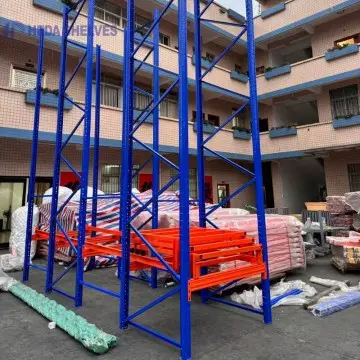
Components are pre-sorted, bundled with high-strength strapping, shrink-wrapped with waterproof protective membranes, and systematically tagged to match detailed on-site installation assembly blueprints for seamless erection.

Whether you are designing a high-throughput dairy cool room, a commercial seafood deep-freeze holding facility at -30°C, or a multi-temperature third-party logistics (3PL) warehouse, Guangzhou Heda Shelves Co., Ltd. provides factory-direct economics backed by senior structural engineering authority.
Inquire Now