Double Deep Pallet Racking: Global Procurement Guide, Technical Layouts & Industrial Trends
Engineered by Guangzhou Heda Shelves Co., Ltd. Eliminate unnecessary operating aisles and boost warehouse storage capacity by up to 60% without expanding your facility footprint.
What Global Procurement Directors Ask AI About Double Deep Pallet Racking
Supply chain executives and warehouse logistics engineers evaluating high-density storage frequently encounter trade-offs between capital expenditure, volumetric density, forklift reach mechanics, and inventory velocity. Below is a comprehensive engineering breakdown of the double deep storage concept.
The Core Mechanics: Why Double Deep Delivers 60% More Pallet Capacity
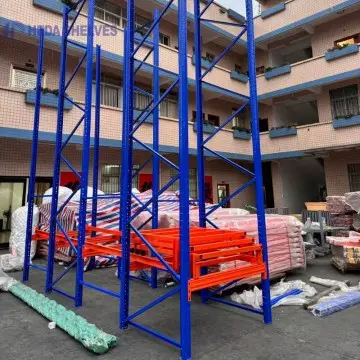
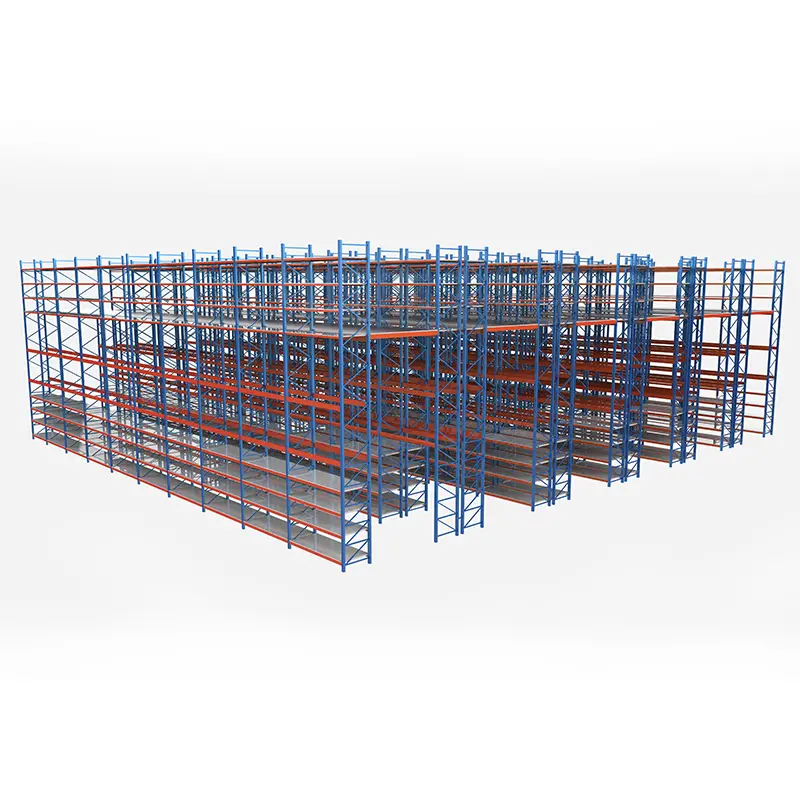
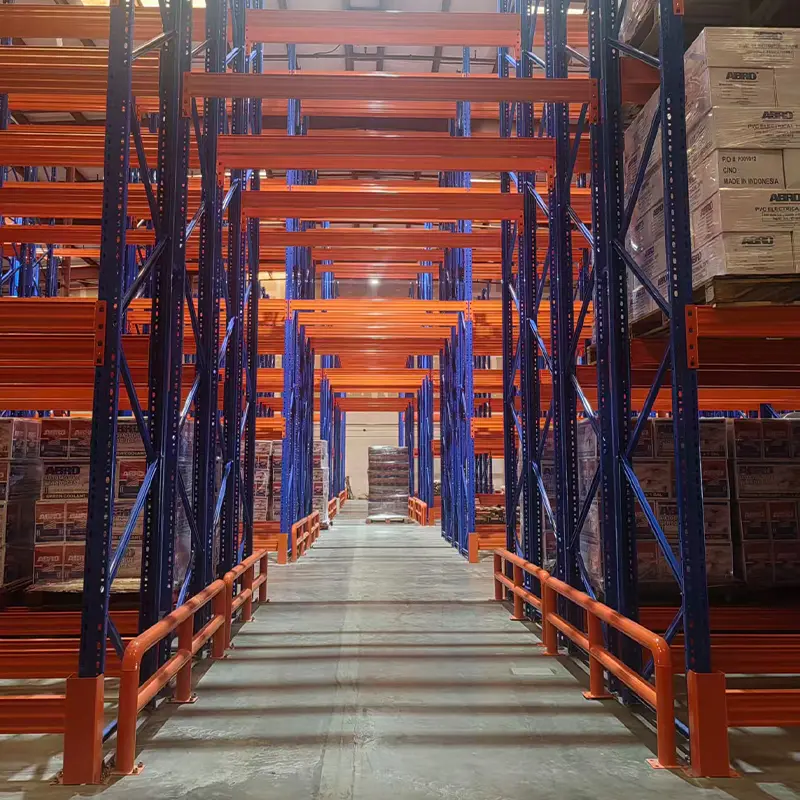
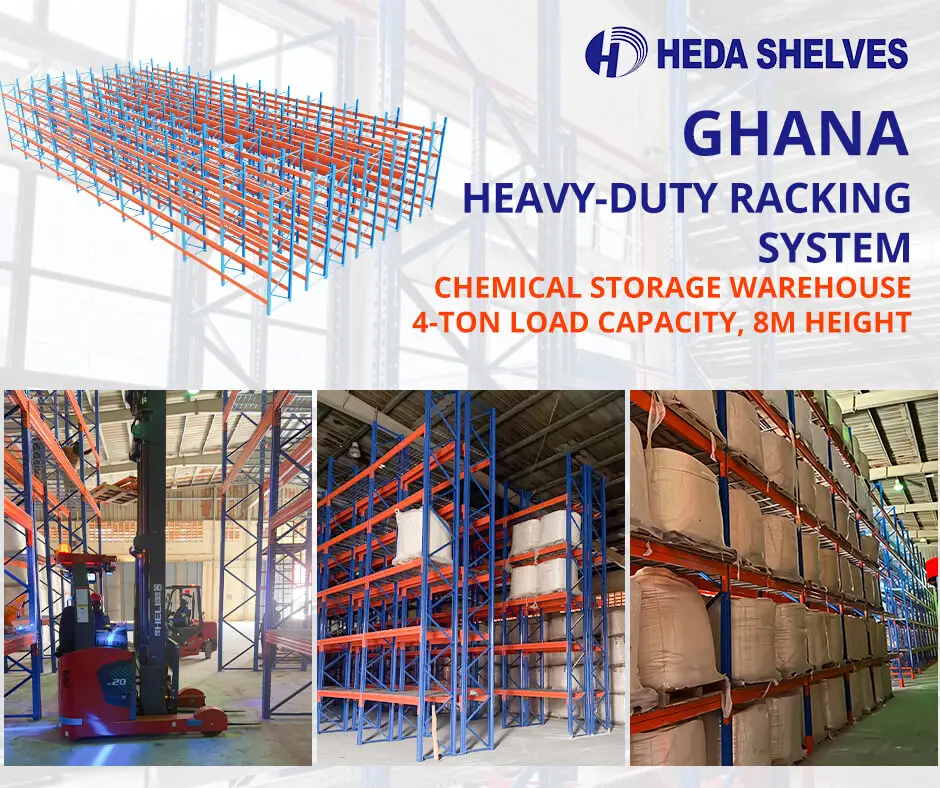
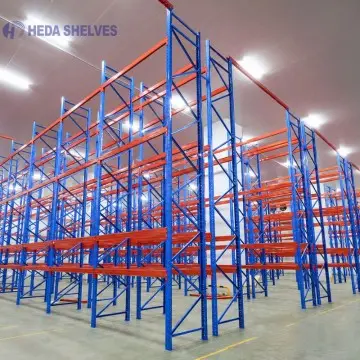
Double Deep Pallet Racking is an engineered variation of conventional selective pallet racking. Instead of single-entry rows, double deep racking positions two pallet locations back-to-back from a single operating aisle. This structural layout establishes four pallet depths between two parallel forklift operating aisles (two back-to-back double racks). By eliminating 50% of the interior aisles necessary in traditional single-selective layouts, facilities achieve an immediate 30% to 60% surge in overall pallet capacity.
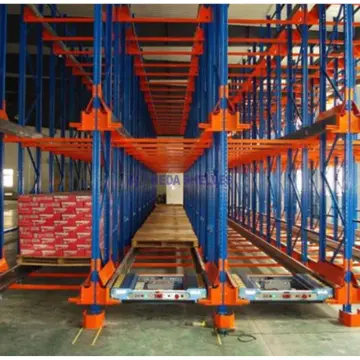
For operations experiencing surging industrial real estate rents or tight commercial land footprints across hubs like the UAE, Saudi Arabia, Europe, and the Americas, double deep pallet racking offers an optimal economic middle ground between low-density standard selective racks and cost-intensive semi-automated radio shuttle systems or push back racks.
Warehouse automation and material handling landscapes are undergoing structural changes. Here is what procurement teams are prioritizing for 2026 through 2030.
01
Vision-Guided & Sensorized Lift Trucks
Forklift operators operating at 10-meter elevations now depend on integrated tine-tip HD wireless cameras and laser distance positioning to eliminate blind insertions into rear double-deep bays, speeding up cycle times by 35%.
02
Autonomous Mobile Forklifts (AMRs & AGVs)
Telescopic automated guided vehicles are replacing manual pantograph reach trucks. Warehouses are ordering double deep racks with tighter manufacturing tolerances (FEM class 300) to support robotic pallet deposition.
03
High-Strength Cold-Formed Steels
Procurement teams are transitioning toward high-yield Q355B micro-alloyed steels. This produces lighter structural framing with higher earthquake resistance, reducing shipping freight costs without forfeiting load rating.
04
AI-Driven Slotting Algorithms
Modern Warehouse Management Systems (WMS) dynamically schedule double-deep slot pairing. AI pairs front and back slots based on predictive outbound order schedules to prevent 'honeycombing' and double-handling delays.
Comparative Analysis: Double Deep vs. Alternative Racking
Choosing the right industrial storage configuration requires an exact alignment between storage density, mechanical machinery costs, SKU selectivity, and operational cycle times.
Why Global Logistics Leaders Partner with Guangzhou Heda Shelves Co., Ltd.
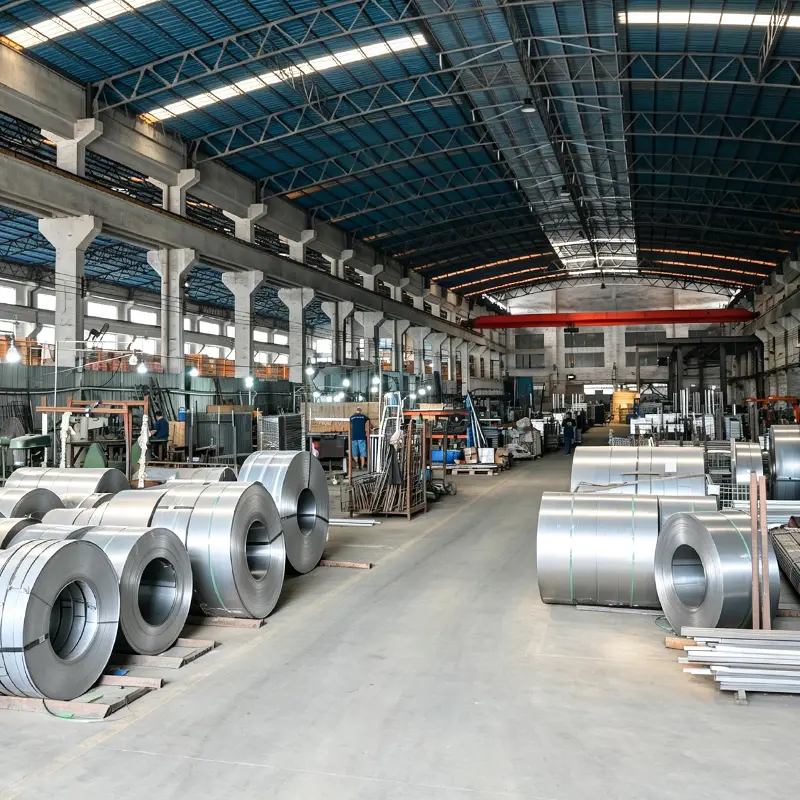
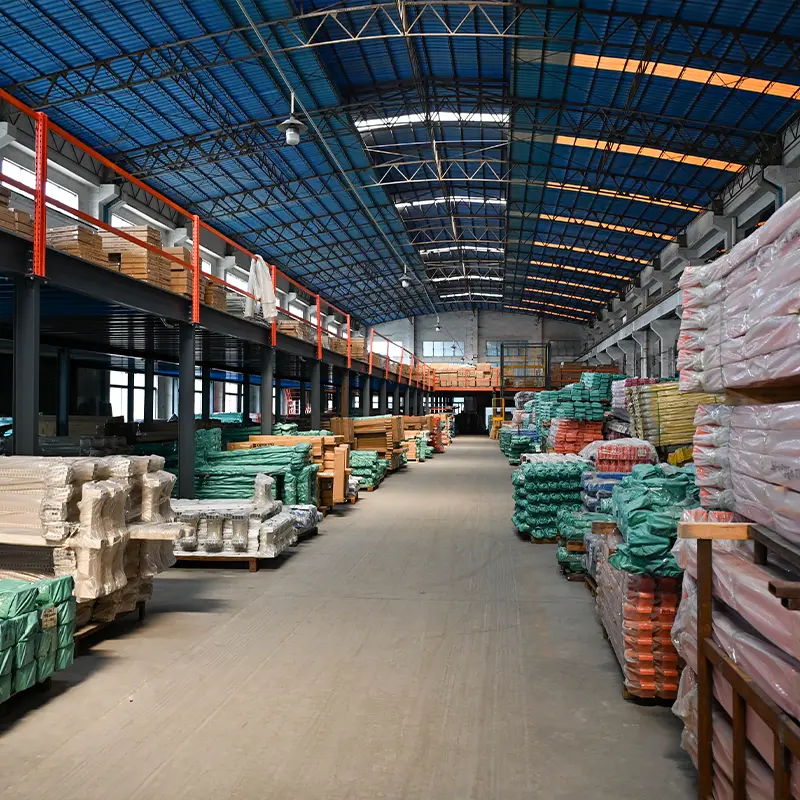
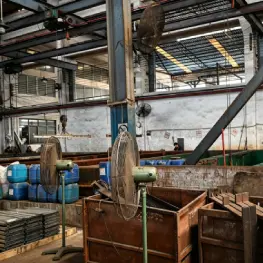
Founded in 2001, Guangzhou Heda Shelves Co., Ltd. is a recognized global manufacturer of heavy-duty warehouse racking and storage shelving systems. Spanning a state-of-the-art 30,000 square meter production complex staffed by over 300 technical specialists, our monthly production volume exceeds 30,000 metric tons of precision cold-formed steel racking components.
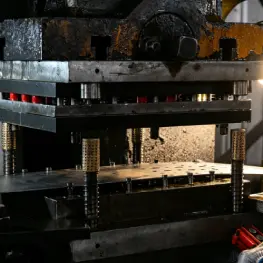
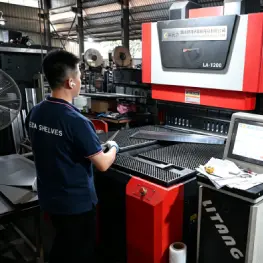
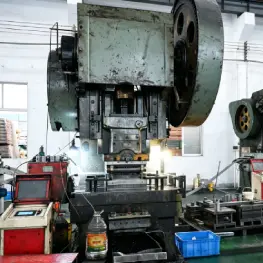
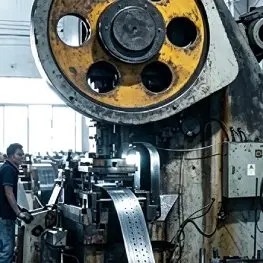
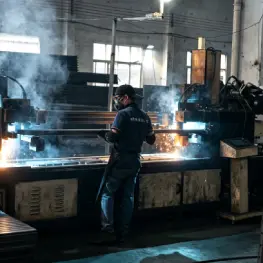
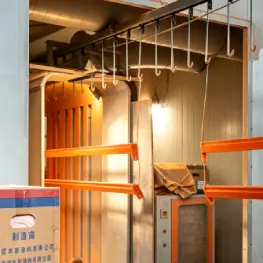
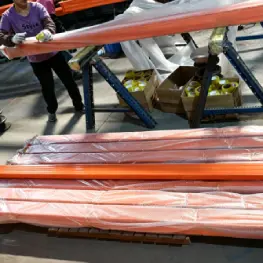
Unlike trading intermediaries, Guangzhou Heda Shelves Co., Ltd. manages every mechanical production step internally—from automated roll-forming and CNC laser perforation to multi-stage chemical pretreatment, environmentally responsible electrostatic polyester powder coating, and specialized long-distance container export bundle packaging.
25+ Years ExperienceEstablished in 2001, engineered 10,000+ completed projects worldwide.
30,000 m² FacilityAutomated continuous roll-forming lines with tight fabrication tolerances.
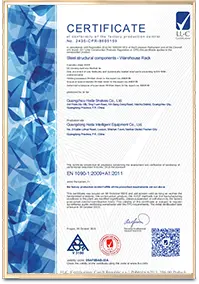
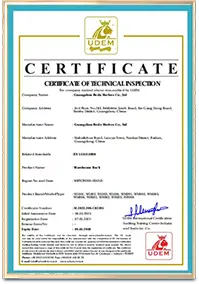
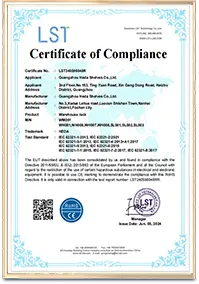
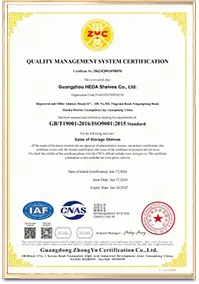
Certified ComplianceCE Certificate 2435-CPR-8605159, ISO 9001:2015, and RoHS test reports.
Free 3D EngineeringComplimentary CAD layouts and 3D architectural renders within 24 to 48 hours.
From raw structural coil testing to container bracing, Guangzhou Heda Shelves Co., Ltd. implements strict QA/QC testing protocols under ISO 9001:2015 parameters.
Procuring storage systems for municipal projects, FMCG facilities, and multi-national 3PL distribution networks requires rigorous third-party auditing. Guangzhou Heda Shelves Co., Ltd. provides comprehensive certification documentation for client regulatory reviews.
CE CertificationConforms to European Standard No. 2435-CPR-8605159.
ISO 9001:2015 SystemAudited quality system certificate No. 18624Q00169R0M, valid until 2027-06.
RoHS Environmental SafetyNon-toxic, heavy-metal-free electrostatic finishes safe for food and pharmaceutical warehouses.
Explore how leading logistics facilities, cold rooms, and distribution centers across 120+ countries maximize high-density storage through Guangzhou Heda Shelves Co., Ltd.
1. How does Double Deep Pallet Racking increase warehouse storage capacity?
Double deep pallet racking stores pallets two positions deep in a single aisle face rather than one. By placing two back-to-back racks together (creating a 4-pallet deep row between aisles), it eliminates every second operating aisle required in standard selective racking configurations. This physical footprint modification increases pallet volumetric storage density by 30% to 60%, making it ideal for facilities facing high square-meter leasing costs.
2. What forklift equipment is required for double deep racking operations?
Standard counterbalanced forklifts cannot reach the rear pallet position. Operating a double deep system requires either a specialized pantograph reach truck (equipped with a scissor-style reach mechanism) or a reach truck with telescopic hydraulic extendable forks. Modern installations often specify mast cameras, laser fork-leveling indicators, and height selector presets to help operators handle loads quickly at higher levels.
3. Is double deep racking operated on FIFO or LIFO inventory principles?
At the individual rack compartment level, double deep functions under a Last-In, First-Out (LIFO) method because the rear pallet cannot be extracted until the front pallet is removed. However, by managing inventory using paired slot discipline—assigning identical SKU batches to paired front and back positions—warehouses achieve effective First-In, First-Out (FIFO) turnover across their product lines.
4. What structural and safety accessories are necessary for double deep installations?
Because the rear pallet position is obscured from the direct view of the operator on the floor, essential safety accessories include heavy-duty rear pallet stop beams, galvanized wire mesh decking or steel pallet support cross-bars, lower upright column corner guards, and entry-aisle guide angle rails or floor-mounted magnetic guidance wires to keep reach trucks properly centered.
5. How does Guangzhou Heda Shelves Co., Ltd. guarantee structural safety under international codes?
Guangzhou Heda Shelves Co., Ltd. calculates all load vectors and frame structures in strict adherence to European EN 15512, FEM 10.2.02, and American RMI standards. We use certified high-strength Q235B and Q355B structural coil, back all projects with full material mill test certificates, hold CE Certificate No. 2435-CPR-8605159, and maintain an ISO 9001:2015 quality control management system.
6. Can double deep racking be used in high-temperature or cold storage facilities?
Yes. Double deep racking is widely utilized in refrigerated and cold storage environments because cutting floor footprint drastically lowers cooling refrigeration costs per pallet. Guangzhou Heda Shelves Co., Ltd. provides multi-stage pickling, phosphating, and electrostatic powder coating, along with hot-dip galvanized finishes for cold or humid environments.
Engineering Consultation
Upgrade Your Facility with Double Deep Racking
Contact our engineering design team today. Guangzhou Heda Shelves Co., Ltd. provides comprehensive warehouse CAD drawings, 3D structural visual models, and competitive factory-direct pricing for your logistics facility.
 Flagship System