Who are the top China Cantilever Pallet Racking suppliers? The answer depends on what your warehouse actually stores. Long steel tubes, timber bundles, and irregular panels place different demands on rack design. A useful comparison looks beyond the catalog. It checks load ratings, arm spacing, column strength, finish quality, and installation support.
A verified industry voice can sharpen that assessment. Insert a sourced expert name and exact quotation here: “[Add a quotation from the supplied article or another verifiable source].” Without a source, attributing a statement to a named specialist would be unreliable. That matters when buyers are comparing suppliers on safety-critical details, not just price.
This guide examines Chinese manufacturers through practical questions: Can they document design assumptions? Do their drawings match the proposed loads and site conditions? Are welds consistent, and are components clearly identified? Ask for references and inspect sample specifications. Small details matter. A bent arm or unclear load label can complicate daily work. Supplier rankings also have limits; a strong factory may not be the right fit for every project. The best choice is the one whose engineering, production control, communication, and after-sales service match your actual storage needs.
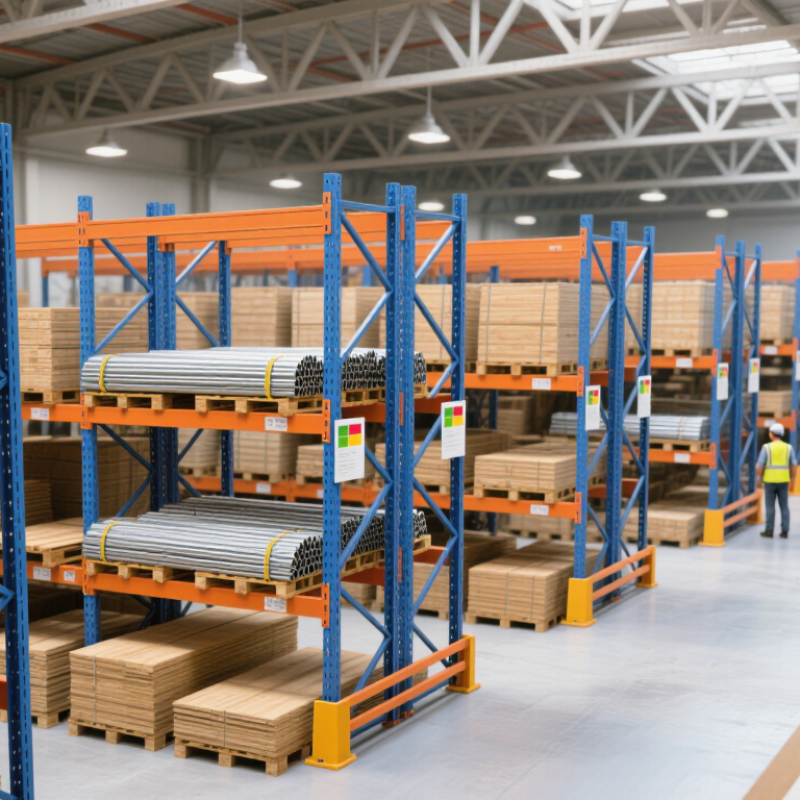
ANSI MH16.3-2016 is the design, testing, and utilization standard for industrial steel cantilevered storage racks. These racks use vertical columns with arms projecting outward, leaving the front open for long or awkward loads such as timber, pipe, and sheet material. Unlike conventional pallet racks, they usually have no front columns blocking access. That openness is useful, but it does not make the structure simple. Engineers must account for load weight and position, arm length, column strength, bracing, base stability, and anchorage. A pipe bundle placed off-center can create a different demand from one evenly supported.
The standard provides a framework for evaluating rack strength and stability; it is not a substitute for site-specific engineering or careful installation. The U.S. Bureau of Labor Statistics reported 4.8 recordable injury and illness cases per 100 full-time workers in warehousing and storage in 2022, compared with 2.7 across private industry. Those figures do not identify rack-related incidents, but they underline why handling and storage conditions deserve attention.
One detail is easy to miss: rated capacity depends on the actual configuration, not just the arm’s appearance. Check the approved drawings, load labels, floor condition, and visible damage. And inspect after changes. Even a small alteration can matter.
Long loads need support along their length, not just at two contact points. Cantilever racks use upright columns, arms, and bracing to hold timber, pipe, or metal sections. Single-sided racks fit against a wall and preserve central aisle space. Double-sided racks serve both sides of a shared row, but need more floor depth. Measure the longest load, its overhang, and forklift turning space before selecting a layout.
Mobile cantilever racks move on powered bases, reducing fixed aisles and bringing a selected row to the operator. They can suit high-density storage, but add mechanical complexity and require careful floor-load and safety checks. Space is tight. MHI’s 2024 Annual Industry Report, a survey of more than 2,000 supply-chain professionals, found that 55% planned to increase supply-chain technology investment. That broad finding supports modernization, but it does not prove mobile racks suit every warehouse. A site review still matters.
Tips: Ask suppliers for arm-load and bay-load ratings, plus calculations for the actual load length and weight. Check floor condition, anchoring, bracing, and clearance with a qualified rack engineer. A tempting shortcut is to choose the densest layout; it may slow picking or leave long loads poorly supported. Measure twice.
When comparing top China cantilever pallet racking suppliers, ask how their engineers verify the design—not just its advertised capacity. They calculate each arm’s load from the stored goods, including where the load sits along the arm. A long steel bundle placed near the tip creates more bending force than the same bundle tucked close to the upright. Load position matters.
The engineer then checks the upright columns for combined bending and compression, and reviews bracing, arm-to-column connections, base plates, and anchors. Loads from every storage level accumulate down the frame, so a rack that looks sturdy at one level may still need stronger columns or closer bracing. Floor condition and anchorage also deserve attention. They are easy to overlook.
Deflection is the arm’s downward movement under load. Engineers compare predicted movement with the project’s design limits, considering the rack’s span, material, connection stiffness, and load placement. They may use calculations and physical testing, but a test result only applies to its tested configuration. Ask for clear load charts and written assumptions. A small gap in the data can change the answer. If loads vary, share the heaviest and most uneven cases before approving the layout.
Chinese suppliers offering cantilever racking usually fall into three groups: rack manufacturers, project engineering firms, and export-oriented equipment suppliers. Manufacturers can fabricate uprights, bases, and arms to suit long or awkward loads, such as timber, steel tube, and panel stock. Engineering firms may add layout design, installation, and integration with existing warehouse equipment. Ask which work is done in-house; the distinction matters when a project needs custom arm lengths or nonstandard loading.
MHI’s 2024 Annual Industry Report found that 55% of surveyed companies planned to spend more than $1 million on supply chain innovation over the following two years. That figure is not specific to cantilever racks, but it signals continued investment in storage and handling infrastructure. A useful starting point. Request drawings that state load capacity per arm and per upright, bay spacing, steel grade, and finish. Then compare those details with the actual dimensions and weight of stored goods.
Ask suppliers for load-test documentation, project references, and a clear warranty scope. Check how they protect exposed steel edges and whether the base plates match the floor conditions. A polished quotation can still leave out installation tolerances. I would not treat a low unit price as proof of value; without a complete layout and load schedule, comparisons are imperfect.
A single-sided row provides access from one side; a double-sided row provides access from two sides. When comparing suppliers, confirm the rated capacities and dimensions for the specific system and load.
To identify top China cantilever pallet racking suppliers, compare evidence, not catalog claims. Check capacity by arm, column, and full bay, including the stated load distribution. Ask for project-specific calculations and drawings. Confirm which standards apply to your destination and whether the design meets them; ANSI MH16.1 may be relevant for U.S. projects. A BLS 2023 Survey of Occupational Injuries and Illnesses reported 4.8 recordable cases per 100 full-time workers in warehousing and storage, versus 2.4 across private industry. This is sector-wide context, not proof that racks caused injuries. Still, safe access and clear handling routes deserve attention.
Review design details against actual goods: long loads, forklift turning space, floor condition, and outdoor exposure. Ask suppliers to itemize fabrication, coating, inspection, shipping, and installation lead times. Get service terms in writing, including engineering revisions, replacement arms, and response times. Small omissions matter. A quoted capacity can change with the layout, so have a qualified engineer verify the final configuration before purchase.
Tips: Send every supplier the same load schedule, site dimensions, and delivery location. Compare revised drawings and exclusions side by side. Keep one point of doubt: a polished proposal is not evidence of proven performance. Request inspection records or comparable project references, then verify them.
Cantilever racks support loads along their length with upright columns and projecting arms. They suit timber, pipes, and metal sections. Measure the longest item and its overhang before choosing a layout.
Single-sided racks sit against a wall and preserve central aisle space. Double-sided racks store goods on both sides of one row, but need more floor depth. Check forklift turning space too.
No. Powered bases can reduce fixed aisles and bring a selected row to the operator. They add mechanical complexity and need floor-load and safety checks. Space is tight, but density is not the only goal.
They consider the stored item’s weight and its position along the arm. A steel bundle near the arm’s tip creates more bending force than one placed close to the upright. Position matters.
Engineers check columns, bracing, connections, base plates, and anchors. Loads from each level accumulate down the frame. Floor condition is easy to overlook.
Deflection is the arm’s downward movement under load. Engineers compare predicted movement with project limits, using factors such as span, material, and load placement. Small movement still matters.
Ask for clear load charts, drawings, steel grade, bay spacing, and written design assumptions. Request ratings per arm and upright, plus relevant test documents. A polished quote may leave gaps.
Compare complete layouts against the actual dimensions and weights of your goods. Ask what work is done in-house and clarify installation and warranty details. A low unit price alone proves little. I may be missing something, so review the final design with a qualified rack engineer.
This guide explains how Cantilever Pallet Racking is designed for storing long, bulky loads and what buyers should consider when selecting a system. It introduces the role of ANSI MH16.3-2016 as a reference for rack design and safety, then compares single-sided, double-sided, and mobile configurations for different storage layouts and access needs.
It also outlines how engineers evaluate arm and column loads, along with deflection, to ensure the system is suited to its intended use. Rather than focusing on brand names, the guide presents a practical way to compare suppliers through five checks: rated capacity, standards and compliance documentation, design support, lead time, and after-sales service. Together, these considerations help buyers assess whether a proposed system fits their loads, facility, and operational requirements.