0%

Warehouse Pallet Racks do more than hold inventory. They shape how goods move, how quickly orders are picked, and how safely a warehouse operates. The right system depends on the building, the products, and the work happening each day. A rack that looks efficient on a floor plan may create awkward turns for forklifts once pallets are moving. Small details matter.

Warehouse-planning author James A. Tompkins has written extensively about facility design and material flow. A concise paraphrase of his planning principle is: “Let material flow guide the layout.” This is not a verified verbatim quotation, but it captures a useful idea: storage choices should fit the operation, not just maximize pallet positions. That distinction is easy to overlook.

This guide compares the top types of Warehouse Pallet Racks, including selective, drive-in, push-back, pallet-flow, and cantilever systems. Each offers different trade-offs in access, storage density, and product suitability. Selective racks provide direct access to each pallet, while denser systems can reduce aisle space but limit access or require tighter inventory planning. There is no universal winner. A warehouse handling mixed cartons may need a different setup from one storing uniform, high-volume loads. We’ll outline where each rack type works well, what to consider before choosing, and which assumptions deserve a second look. A careful selection starts with real load dimensions, handling equipment, and operating patterns—not a tidy sales diagram.
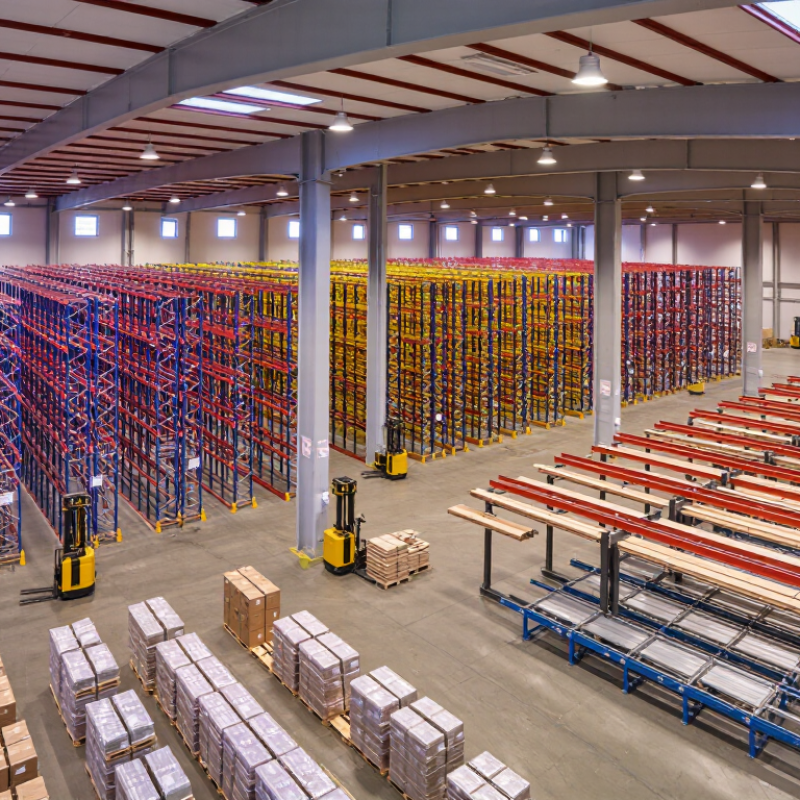
What Are the Top Types of Warehouse Pallet Racks?

What Warehouse Pallet Racks Are and How They Work

Warehouse pallet racks are structural systems that hold palletized goods above the floor, leaving clear aisles for forklifts and picking. Upright frames carry vertical loads; horizontal beams support each pallet level. Workers place pallets onto beams, while the frame transfers weight to the floor. Simple in principle.

In selective racks, each pallet is directly accessible from an aisle, making stock rotation and item retrieval straightforward. Drive-in systems store pallets several positions deep, trading access speed for denser storage. Push-back racks use carts on inclined rails, while pallet-flow lanes move loads forward by gravity. The right layout depends on pallet dimensions, load weight, turnover, and forklift reach. A drawing can look efficient but overlook turning space.

The Rack Manufacturers Institute’s ANSI MH16.1 standard covers the structural design and testing of steel storage racks. OSHA’s materials-handling rule also requires stored materials to be secured against sliding or collapse. These references matter because a beam’s capacity depends on its configuration and loading—not appearance alone. MHI’s 2024 Annual Industry Report found that 55% of surveyed supply-chain leaders planned to increase technology investment. In practice, warehouse teams can pair rack labels with inventory systems, but accurate load data still matters. A bent upright or missing load sign deserves prompt inspection, even when the rack seems stable.

How Pallet Rack Systems Are Classified

Pallet rack systems are best classified by three practical questions: how much access each pallet needs, how densely space must be used, and how pallets move through the system. Selective rack gives forklifts direct access to every pallet. Double-deep rack stores two pallets deep, trading some selectivity for higher density. Drive-in and drive-through racks place pallets on rails, while push-back and pallet-flow systems move loads along inclined tracks. Small differences matter.

A second classification separates static racks from mobile or automated systems. Mobile racks travel on powered bases, opening an aisle where needed. Automated storage and retrieval systems use machinery to place and retrieve loads. MHI’s 2024 Annual Industry Report found that 55% of surveyed supply-chain professionals were using robotics and automation. That figure describes technology adoption, not rack selection; automation can work with different storage layouts.

For structural safety, rack design and installation should follow applicable engineering requirements. The Rack Manufacturers Institute’s ANSI MH16.1 standard addresses the design, testing, and use of steel storage racks. In practice, classify a system by its operating method, not its marketing label. Check pallet dimensions, load weights, forklift turning space, and fire-protection clearances. A dense layout may look efficient on paper, yet slow picking or block access during replenishment. The category alone cannot settle that trade-off.

What Are the Main Types of Warehouse Pallet Racks?

What Are the Main Types of Warehouse Pallet Racks?

Selective pallet racks are the familiar choice: each pallet can be reached directly from an aisle. They suit warehouses handling many product lines, though aisles use floor space that denser systems could reclaim. Double-deep racks store pallets two positions deep, improving density but requiring a compatible deep-reach truck. Small change in layout. Big effect on access.

Drive-in and drive-through racks let forklifts enter the storage lane, making them useful for large batches of similar goods. Push-back racks use inclined carts, while pallet-flow racks use rollers to move pallets toward the picking face. These options can reduce travel or aisle space, but need careful SKU rotation and loading practices. For bulky, long items such as timber or pipe, cantilever racks provide open-front arms instead of pallet beams.

MHI’s 2024 Annual Industry Report found that 55% of surveyed supply-chain professionals planned to spend more than $1 million on supply-chain technology over the following two years. That investment trend makes it worth checking how rack choice fits forklifts, inventory systems, and picking workflows—not just storage density. Rack capacity and configuration also matter: the Rack Manufacturers Institute’s ANSI MH16.1 standard addresses structural design, while OSHA requires stored materials to remain stable and secure. There is no perfect rack. A high-density system may save space yet slow access; that trade-off deserves a real aisle-level review.

What Are the Top Types of Warehouse Pallet Racks? - What Are the Main Types of Warehouse Pallet Racks?
Rack Type Access and Selectivity Storage Density Typical Stock Rotation Common Applications Key Consideration
Selective Pallet Rack Direct access to each pallet position; high selectivity Low to moderate Suitable for FIFO or LIFO, depending on how inventory is managed Warehouses with many SKUs, varied products, or frequent picking Easy pallet access, but aisles take up more floor space than in high-density systems.
Double-Deep Rack Access from the aisle to the front pallet; rear pallets require a reach truck Moderate to high Generally LIFO within each lane Operations with multiple pallets per SKU and moderate inventory turnover Requires compatible reach equipment and reduces direct access to individual pallets.
Drive-In Rack Forklift enters the rack lane; access is usually from one end High Typically LIFO Large quantities of the same product with limited SKU variety Deep lanes save aisle space but make stock rotation and individual pallet access less flexible.
Drive-Through Rack Forklift can enter from either end of the lane High Can support FIFO when loading and unloading are organized at opposite ends High-volume storage where stock rotation is important Needs access aisles at both ends and careful traffic coordination.
Push-Back Rack Pallets are loaded and retrieved from the same aisle; carts move pallets along inclined rails High Typically LIFO within each lane Multiple pallets per SKU with several days of inventory on hand Offers greater density than selective rack, but pallet dimensions and load compatibility matter.
Pallet Flow Rack Pallets move by gravity from the loading side to the picking side High FIFO Perishable goods, date-sensitive inventory, and fast-moving products Supports orderly rotation; pallet condition and consistent loading are important for reliable flow.
Pallet Shuttle Rack A powered shuttle carries pallets within deep storage lanes Very high Can be configured for FIFO or LIFO, depending on the system layout High-volume storage with many pallets per SKU and reduced forklift travel inside lanes Requires shuttle equipment, compatible rack design, and appropriate operating procedures.
Cantilever Rack Open-front arms provide access to long or irregular loads Varies by layout and product length Usually direct access; rotation depends on the handling process Long, bulky items such as pipes, lumber, and sheet materials Designed for loads that do not fit well on standard pallet beams; load limits depend on the rack design.

How Rack Types Differ in Storage Density and Pallet Access

Rack selection is a trade-off between storage density and pallet access. Selective racks provide direct access to every pallet, making them practical for many SKUs and frequent picking. They use more aisle space, though. Drive-in racks reduce aisles and store pallets several positions deep, but operators usually access pallets in sequence. Double-deep racks also increase density, while requiring equipment that can reach the rear pallet. Push-back lanes suit last-in, first-out stock; pallet-flow lanes support first-in, first-out rotation.

These differences matter in daily operations: a picker may reach one pallet immediately in a selective bay, but search or move other stock in a deep lane. MHI and Deloitte’s 2024 Annual Industry Report found that 55% of surveyed supply-chain leaders planned to increase technology investment. The report does not prescribe rack layouts, but it reinforces the need to assess equipment and workflows together. Higher density can reduce access flexibility. That trade-off deserves a real-site test.

Tips: Map SKU turnover and pallet dimensions before choosing a system. Test a representative aisle with actual handling equipment. I still see layouts optimized for capacity alone; that can mean slower picks and awkward replenishment. Check fire protection, load ratings, and operating clearances with qualified professionals.

What Factors Help Determine the Right Pallet Rack System?

Choosing a pallet rack system starts with the work it must support, not just the available floor space. Record pallet dimensions, loaded weights, and the number of distinct products. A 1,800-pound pallet needs a different load plan from a light, uniform carton. Check that beam capacities match the actual loads, and have a qualified rack professional verify the design.

Next, consider how often staff need direct access to each product. Selective racks offer straightforward access to many SKUs, while higher-density systems can reduce aisle space but may limit access or change how stock moves. Think about forklift turning space, aisle width, ceiling height, and the building’s floor capacity. Measure them in the facility. A drawing can miss an awkward column or a low sprinkler line.

Inventory turnover matters, too. Products that move quickly may need convenient picking locations; slower-moving goods can often use denser storage. Decide whether stock rotation needs to follow first-in, first-out or last-in, first-out practices. Then compare today’s needs with expected growth and seasonal peaks. Don’t overbuild on guesswork. Even a careful spreadsheet can overlook damaged pallets, changing product sizes, or human habits on a busy shift. Walk the picking route with warehouse staff before settling on a layout, and review safety clearances and building conditions with qualified professionals.

Top Types of Warehouse Pallet Racks

Compare common systems by pallet selectivity—the ease of reaching a specific pallet position.

How to read this chart: Ratings are a qualitative comparison, not a standardized industry measurement. A higher score means more direct access to individual pallet positions.

Choosing a system: Consider required selectivity and FIFO/LIFO inventory flow, available floor space and building height, pallet dimensions and load weights, forklift type and aisle width, SKU count and turnover, and budget. Selective racks suit high selectivity; double-deep, drive-in, push-back, and pallet-flow systems trade some selectivity for denser storage.

FAQS

What does a warehouse pallet rack do?

It stores palletized goods above the floor. Upright frames carry vertical loads, and horizontal beams support each pallet. Clear aisles help forklifts move and pick goods. Looks simple.

What is the main benefit of selective rack?

Every pallet can be reached directly from an aisle. This suits warehouses with many items or frequent picking. It usually needs more aisle space than deeper storage systems.

How do drive-in and double-deep racks save space?

They store pallets farther into each lane, reducing the space used for aisles. Access becomes less direct. In drive-in lanes, pallets are generally retrieved in sequence.

When are pallet-flow or push-back racks useful?

Pallet-flow lanes move loads forward by gravity and can support first-in, first-out rotation. Push-back racks use carts and often suit last-in, first-out stock. Check the workflow carefully.

What should teams check before choosing a rack layout?

Check pallet dimensions, load weights, stock turnover, forklift reach, and turning space. Also account for fire-protection clearances. A tidy drawing can hide awkward turns.

Can a denser rack layout slow warehouse work?

Yes. Deep lanes may require moving other pallets before reaching the desired load. Test a representative aisle with actual handling equipment. I would not trust capacity figures alone.

How do rack labels and inventory systems help?

Labels can connect rack locations with inventory records and help workers find stock. But the system depends on accurate pallet and load data. Errors still happen.

What signs may indicate a rack needs inspection?

Look for bent uprights, missing load signs, or visibly damaged beams. Do not assume a rack is safe because it appears stable. Have concerns checked by qualified professionals.

Conclusion

Warehouse Pallet Racks are structural systems that store palletized goods vertically, helping warehouses make better use of floor space while keeping inventory organized and accessible. They typically consist of upright frames and horizontal beams, with pallets placed on the beams by material-handling equipment. Systems can be classified by their structure, how pallets are accessed, and whether they prioritize direct access or high-density storage.

Common options include selective racks, which provide access to each pallet; drive-in and drive-through racks, which store pallets in deep lanes; push-back racks, which use inclined carts; and pallet flow racks, which move pallets along rollers. These designs differ in storage density, selectivity, and inventory flow. Choosing a suitable system depends on available space, inventory volume and turnover, pallet dimensions and weight, handling equipment, and the level of access required. The right choice balances capacity, efficiency, safety, and operational needs.

Elliot

Elliot

Elliot is a professional marketing specialist dedicated to helping businesses understand products, markets, and customer needs with greater clarity. With extensive knowledge of the company’s solutions, he creates informative, practical, and engaging blog content for the company website, covering......