Warehouse Racking decisions shape how quickly staff can find, move, and replenish stock. In 2026, the right system still depends on the work happening inside the building. A distributor handling many product lines may value direct access to each pallet. A facility storing fewer, uniform products may need more density. Small details matter: aisle width, pallet dimensions, forklift turning space, and how often inventory moves.
This guide examines leading options, including selective pallet racking, drive-in and drive-through systems, push-back racks, pallet flow racks, and cantilever racking. Each offers a different balance of access, storage density, and operating complexity. No single design fits every warehouse. Not even close. A high-density layout can save floor space, yet make stock rotation or access less convenient. Before comparing prices, teams should confirm load requirements, inventory patterns, building constraints, and equipment compatibility with qualified suppliers or engineers. Manufacturer specifications and site conditions deserve careful review; a tidy layout on paper may feel very different when forklifts are moving through it. The overview ahead explains where each type can work well, what trade-offs to expect, and which practical questions to ask before choosing.
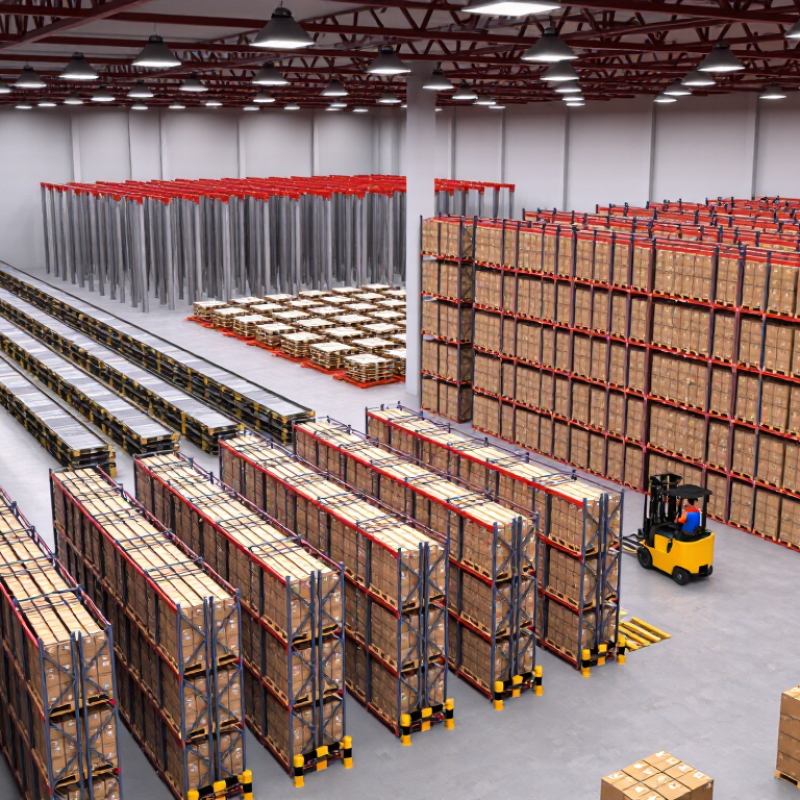
What Warehouse Racking Systems Do
Warehouse racking systems do more than hold pallets. They shape how goods move, how quickly workers can reach them, and how much floor space remains open. Selective pallet racking keeps each pallet accessible from an aisle, making it practical for varied inventory. The trade-off is clear: more aisles can mean less storage density. Access matters.
Drive-in and drive-through racks let forklifts enter storage lanes, reducing aisle space for larger runs of similar products. Push-back racks store pallets several deep while keeping loading and retrieval at the front. These designs can increase capacity, but they need consistent pallet sizes and careful operating rules. A damaged pallet or blocked lane can disrupt access. Not always obvious.
Pallet flow systems use rollers to move loads toward a picking face, supporting rotation where older stock should be reached first. Cantilever racks hold long items such as pipe, lumber, or trim without front columns. Mezzanine platforms add usable levels, though they require thoughtful planning for stairs, lifting routes, and worker movement. A common planning mistake is choosing by capacity alone. Measure actual loads, forklift turning space, and picking habits before settling on a layout; even a neat drawing can miss a daily bottleneck.
What Are the Top Warehouse Racking Types in 2026? — What Warehouse Racking Systems Do
| Racking System | How It Works | Selectivity | Storage Density | Best Suited For | Key Operational Consideration |
|---|---|---|---|---|---|
| Selective Pallet Racking | Provides direct access to each pallet from an operating aisle. | High | Low to medium | Warehouses with many SKUs, varied product turnover, or frequent pallet access. | Requires an aisle in front of each rack row, so it typically uses more floor area than high-density systems. |
| Double-Deep Racking | Stores pallets two positions deep, usually accessed with a deep-reach forklift. | Medium | Medium to high | Operations holding multiple pallets of the same SKU. | The rear pallet is less directly accessible; inventory rotation and equipment requirements should be considered. |
| Drive-In / Drive-Through Racking | Forklifts enter storage lanes to place or retrieve pallets on rails. Drive-in lanes are commonly accessed from one end; drive-through lanes can be accessed from both ends. | Low to medium | High | Large quantities of similar products and operations aiming to reduce aisle space. | Drive-in layouts generally operate on a last-in, first-out (LIFO) basis. Drive-through layouts can support first-in, first-out (FIFO) when loading and retrieval are managed from opposite ends. |
| Push-Back Racking | Loads pallets onto nested carts that move backward along inclined rails as additional pallets are added. | Medium | High | Multiple pallets per SKU where rapid access from the aisle is useful. | Typically operates on a LIFO basis within each lane; pallet and cart compatibility is important. |
| Pallet Flow Racking | Uses gravity rollers or wheels to move pallets from the loading side toward the picking side. | Medium | High | High-throughput storage requiring orderly stock rotation, such as date-sensitive goods. | Can support FIFO; lane design and pallet condition affect smooth movement and reliable flow. |
| Mobile Racking | Rack rows move on powered or manually operated bases, opening an access aisle where needed. | Medium | High | Facilities seeking greater storage density while retaining access to stored loads. | Only a limited number of access aisles are open at a time, so retrieval planning and safety controls matter. |
| Carton Flow Racking | Cartons or totes move forward on inclined flow tracks from the replenishment side to the picking side. | High at the picking face | Medium to high | Piece-picking operations with frequent replenishment and multiple small-item SKUs. | Track design should match the size, weight, and base condition of the cartons or totes being handled. |
| Cantilever Racking | Stores loads on arms projecting from upright columns, leaving the front open. | High | Low to medium | Long, bulky, or irregular items such as lumber, pipe, and sheet material. | Arm spacing, load length, and rated capacity should be matched to the stored material. |
FAQS
It keeps each pallet reachable from an aisle. This suits mixed inventory and frequent picking. It uses more aisle space.
It stores one pallet behind another, increasing storage density. Use it when lanes hold similar products and stock rotation is predictable. Rear pallets are less accessible.
Forklifts enter supported lanes to place pallets several positions deep. It suits large batches of similar goods. Careful driving matters. One damaged upright matters.
Push-back storage typically follows last-in, first-out retrieval. Pallet flow moves loads by gravity toward a picking aisle, supporting first-in, first-out rotation. Check carts and rollers.
Cantilever racks support items such as timber, pipe, and metal profiles. Adjustable arms make loading easier. Set arms for the actual load, not its average length.
Record pallet dimensions, weights, SKU count, and movement frequency. Measure ceiling height, aisle widths, door locations, and floor conditions. A few centimetres matter.
No. It can reduce aisle space but may slow access to individual pallets. Match storage density to picking patterns and throughput. Not always.
Have a qualified professional assess floor capacity, rack loads, and anchoring needs. Preserve sprinkler clearances and safe travel paths. A site walk can reveal tight turns that spreadsheets miss. Keep room for inventory changes.
Conclusion
Warehouse Racking systems organize palletized goods, use vertical space efficiently, and support safer, more orderly warehouse operations. In 2026, widely used options include selective, double-deep, drive-in, push-back, pallet flow, and cantilever racks. Each design serves different storage needs: selective racks provide direct access to individual pallets, while double-deep racks store pallets farther back to increase capacity. Drive-in racks allow equipment to enter storage lanes, making them useful when many pallets of the same product are stored together.
Push-back racks use inclined lanes to store pallets several positions deep, while pallet flow racks move goods through lanes using gravity to support organized stock rotation. Cantilever racks, with open fronts and arms, are suited to long or bulky materials. Choosing the right system depends on inventory variety, pallet volume, access requirements, available floor and ceiling space, handling equipment, and stock rotation priorities. A careful assessment of these factors helps balance storage density, accessibility, and workflow.
