The search for the 2026 top Pallet Rack Systems begins with warehouse reality, not glossy product claims. A 30-foot ceiling, narrow aisles, mixed pallets, and frequent forklift traffic demand different solutions. Selective racks still offer direct access. Drive-in racks can increase density. Push-back and pallet-flow systems may improve throughput when inventory rotation matters.
Recent industry evidence supports a more careful comparison. The MHI Annual Industry Report 2025 identifies continued investment in automation, real-time data, and warehouse productivity. Grand View Research also reports steady growth in the global warehouse racking market, driven by e-commerce, distribution expansion, and space pressure. However, market growth does not prove that every automated or high-density system fits every facility. That assumption needs challenging.
John J. Bartholdi III, co-author of Warehouse & Distribution Science, states, “The fundamental objective in warehouse design is to minimize the cost of moving material.” This principle remains useful in 2026. It connects rack selection with travel distance, labor time, safety, and order accuracy. A system that stores more pallets may still perform poorly if operators queue at congested aisles.
This guide compares the leading Pallet Rack Systems for capacity, accessibility, selectivity, installation complexity, and long-term value. It considers practical details, including beam loading, upright protection, pallet dimensions, fire-sprinkler clearance, and inspection routines. Data sources differ in scope. Some rankings remain imperfect. Real warehouse measurements should have the final word.
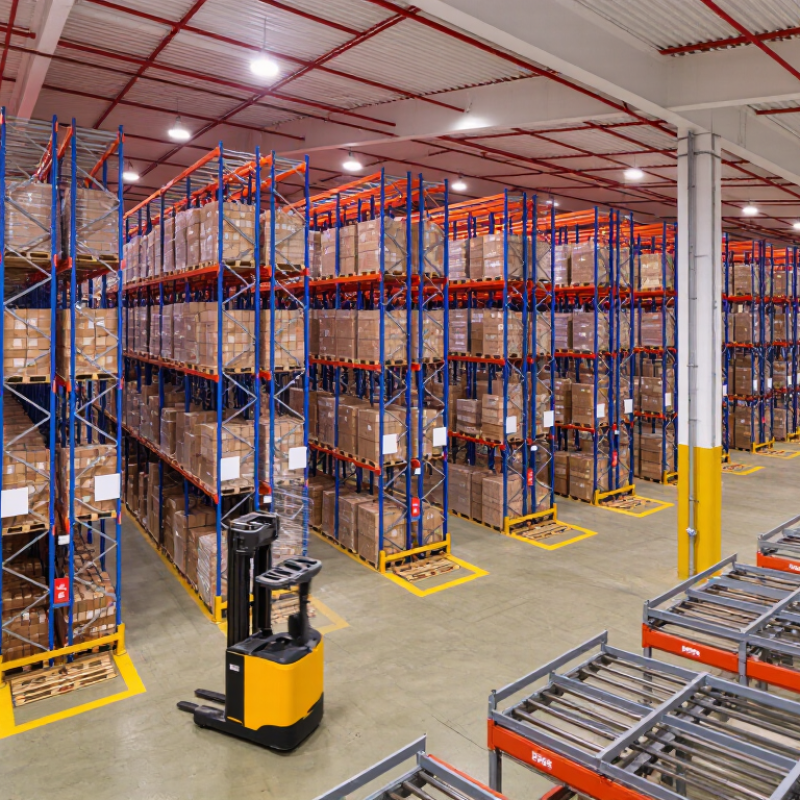
Defining 2026 Pallet Rack Leaders Through RMI and ANSI MH16.1 Standards
What Are the 2026 Top Pallet Rack Systems?
The strongest 2026 pallet rack systems will be measured by engineering discipline, not appearance. RMI specifications and ANSI MH16.1 establish practical benchmarks for structural design, load capacity, testing, and safe use. Buyers should request sealed calculations, material grades, connection details, and clear unit-load ratings. A beam that looks substantial may still fail under uneven loading.
MHI’s 2024 Annual Industry Report found that 83% of supply chain professionals planned to increase technology investment during the following five years.
That investment will raise expectations for rack visibility, inspection records, and warehouse adaptability. Yet digital monitoring cannot correct poor anchoring or overloaded beams. Physical evidence still matters. Look for base plates fixed to a level slab, upright protectors near forklift lanes, and labels that remain readable beneath dust.
RMI guidance also stresses regular inspections and prompt repair of damaged components. This is where many “top” systems become less convincing. A capable rack can deteriorate after one impact. ANSI MH16.1 supports safer design, but it does not replace trained installation or disciplined maintenance.
The better 2026 choice may be the system with simpler inspections and clearer documentation, not the one with the highest advertised capacity. Specification reviews should include seismic conditions, aisle clearance, pallet quality, and future load changes. Small omissions remain expensive.
Comparing Selective, Drive-In, Push-Back, and Pallet-Flow Rack Systems
What Are the 2026 Top Pallet Rack Systems?
Comparing Selective, Drive-In, Push-Back, and Pallet-Flow Rack Systems
Warehouse planning starts with the pallet, not the catalog. Selective racking offers direct access to every load and fits operations with many stock-keeping units. It is usually the easiest system to inspect, reconfigure, and expand. The trade-off is modest storage density. WERC’s 2024 DC Metrics report highlights space utilization and inventory accuracy as essential warehouse benchmarks, and selective racks support both.
Drive-in racking stores pallets deeply on rails. It suits large quantities of similar products, especially stable, last-in, first-out inventory. Fewer aisles create more capacity, but forklifts must enter the structure. Small loading errors can damage rails or pallets. Push-back racks improve access compared with drive-in systems. Carriages move pallets toward the rear, allowing several loads per lane. This design saves aisle space while supporting multiple product groups. It still needs disciplined loading.
Pallet-flow racks use rollers and gravity to move pallets toward the picking face. They work well for first-in, first-out rotation, chilled goods, and high-volume dispatch areas. The 2024 MHI Annual Industry Report notes that 55% of supply-chain professionals increased technology and innovation investment, yet automation cannot correct poor rack selection. A practical audit should measure pallet dimensions, daily movements, aisle clearance, and damage history. Numbers matter.
One assumption may fail.
A dense rack can reduce travel but increase replenishment pressure. The best 2026 system depends on product behavior, not fashion. Professional inspection and load calculations remain necessary before installation.
Measuring Storage Density, Aisle Width, FIFO, and LIFO Performance
What Are the 2026 Top Pallet Rack Systems?
Measuring Storage Density, Aisle Width, FIFO, and LIFO Performance
Choosing a pallet rack system in 2026 requires more than counting storage positions. Warehouse teams should measure usable density, forklift movement, and inventory rotation together. Selective racking usually offers aisles near 3.0 to 3.5 meters, depending on truck type and pallet size. It provides direct access to every pallet, making FIFO control practical for dated goods.
Double-deep systems can increase density by placing one pallet behind another. However, the rear pallet needs careful sequencing. A reach truck with suitable fork extension is also essential. Drive-in racking uses fewer aisles and can create strong LIFO performance. It suits uniform products with longer storage periods. It performs poorly when operators need frequent access to mixed stock.
Density is not simply the number of pallets stored. Measure the ratio between occupied locations and the total floor area, including work aisles. A narrow-aisle layout may add positions, but turning delays can reduce daily output. I have seen plans that looked efficient until battery charging, damaged pallets, and pedestrian crossings were added.
That assumption needs testing.
FIFO demand often favors flow-oriented designs, while LIFO demand may favor drive-in or push-back arrangements. Still, inventory rules can change faster than rack structures. A practical assessment should record pallet dimensions, load weights, daily moves, retrieval times, and seasonal peaks. One imperfect measurement can distort the entire comparison. Reserve space matters, too. A warehouse without adjustment room may become dense, but not reliable.
Applying OSHA 1910.176(b), Seismic Rules, and Rack Inspection Requirements
What Are the 2026 Top Pallet Rack Systems?
In 2026, selective pallet racks remain practical because they provide direct access to every pallet. Push-back and drive-in systems can increase density, but they demand stricter load control. Cantilever racks suit long materials, provided arms, columns, and floor anchors match the intended load. Capacity is not the only measure of a top system. Stability matters more.
OSHA 1910.176(b) requires stored materials to remain stable and secure against sliding or collapse. Pallets must sit evenly on beams, not on damaged decking or improvised supports. Clear aisles also help operators recognize leaning loads and fallen components quickly. Seismic design adds another layer. In earthquake-prone areas, engineers may require stronger anchors, bracing, beam connections, and documented floor capacity. Local building requirements can change the design.
Inspect racks before use, after impact, and whenever conditions change. Look for bent uprights, missing safety pins, displaced beams, cracked welds, and loose anchors. A competent person should document findings and isolate unsafe bays immediately. Formal inspections should follow site procedures and applicable industry guidance. Frequency alone is not enough. A perfect checklist can still miss a slowly twisting frame. That is the uncomfortable part. Forklift contact, overloaded beams, and altered layouts often create hazards long before a failure occurs. Keep load plaques visible, train operators on limits, and review the system after every major change.
What Are the 2026 Top Pallet Rack Systems?
Comparative planning index for selective, double-deep, drive-in, push-back, pallet-flow, and cantilever rack systems. The 1–5 values represent relative engineering and operational attention—not a legal compliance score.
OSHA 29 CFR 1910.176(b) requires safe clearances for aisles, loading docks, doorways, turns, and passageways, and requires aisles to remain clear and in good repair. Seismic anchorage and structural design depend on the site hazard, building code, rack geometry, and local adoption of applicable seismic provisions. Rack loads must be identified and controlled, while inspections should be performed under a documented employer program and manufacturer or engineer guidance; OSHA does not prescribe one universal inspection interval.
Reference framework: OSHA 29 CFR 1910.176(b), OSHA 29 CFR 1910.176(a), and applicable locally adopted building and seismic codes.
Ranking Systems by Load Capacity, Throughput, Safety, and Total Cost
What Are the 2026 Top Pallet Rack Systems?
The strongest 2026 pallet rack system depends on four measures: load capacity, throughput, safety, and total cost. Selective rack usually ranks highest for flexibility and low entry cost. It gives direct access to every pallet, but uses more floor space. Drive-in rack stores more pallets in a smaller footprint. However, its lower selectivity can slow picking and increase handling errors.
For high-throughput operations, carton-flow lanes and automated storage systems often perform better. They support faster replenishment and more consistent picking paths. MHI’s 2024 Annual Industry Report identifies labor pressure and digital investment as major warehouse priorities. That supports automation, but the initial cost remains difficult for smaller facilities.
Total cost includes installation, inspections, repairs, energy, software, and training. The cheapest frame may become expensive after three years.
Tips:
Match beam capacity to real pallet weights, not average weights. Leave visible clearance above each load. OSHA reports about 35,000 serious and 62,000 non-serious powered industrial truck injuries annually in the United States. Rack design cannot remove every collision risk. Guarding, documented inspections, and trained operators still matter. Load signs should be readable from the aisle.
A practical ranking is not permanent. Product mix changes. So does labor availability. One weakness remains: throughput estimates often ignore congestion near dock doors. Measure actual travel time before selecting a system.
Conclusion
The 2026 top Pallet Rack Systems are best defined by their ability to balance storage density, accessibility, safety, throughput, and total cost rather than by a single feature. This comparison uses RMI guidance and ANSI MH16.1 principles to evaluate structural design, load capacity, installation quality, and operational reliability. Selective rack offers the fastest access and strong SKU flexibility, while drive-in rack maximizes density for uniform products. Push-back rack supports efficient LIFO storage with reduced aisle requirements, and pallet-flow rack is well suited to FIFO rotation and high-volume distribution.
A complete evaluation also considers aisle width, pallet handling speed, usable cubic space, inspection frequency, and long-term maintenance. Systems should be designed and operated with OSHA 1910.176(b), applicable seismic requirements, proper anchoring, load signage, and documented rack inspections in mind. The strongest overall choice depends on facility priorities: selective systems favor accessibility, dense systems favor space efficiency, and flow-based solutions favor inventory rotation and throughput. Total cost should include equipment, installation, labor, maintenance, training, and future adaptability.