Featured Industrial Pallet Racking Systems
Factory-direct structural steel configurations certified for seismic endurance, heavy static and dynamic loads, and extreme logistical cycles in ambient and cold-chain facilities.
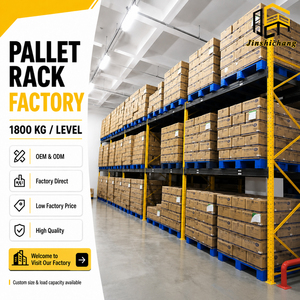
3000KG Heavy Duty Pallet Rack Powder Coating Steel System
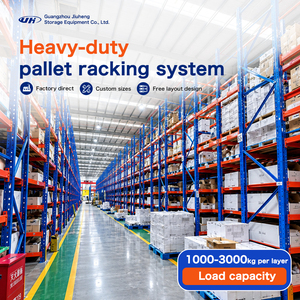
Industrial Steel Storage Rack Adjustable Beam Multi-Level Solution
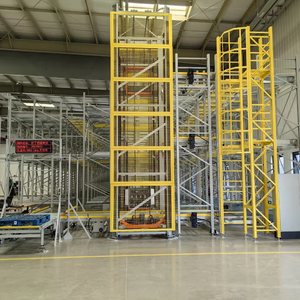
Intelligent Selective Pallet Rack with Integrated Conveying System
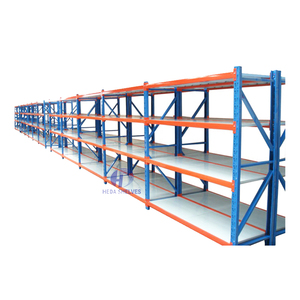
Garage & Warehouse Adjustable Heavy-Duty Steel Stacking Racks
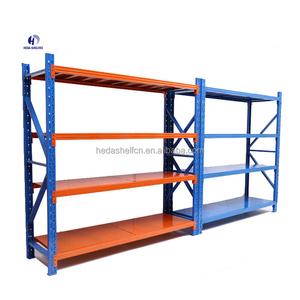
Adjustable Heavy Duty Industrial Metal Shelving & Pallet Racks
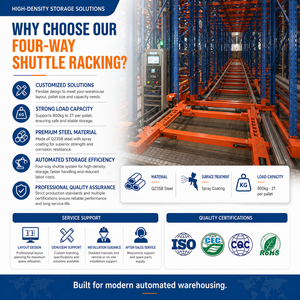
Automated Four-Way Shuttle Pallet Racking ASRS System
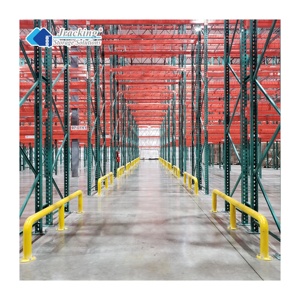
US Standard Teardrop Warehouse Heavy-Duty Pallet Racking
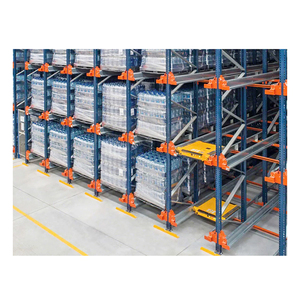
Heavy Duty Radio Shuttle Rack High-Density Pallet Storage
Structural Integrity, Metallurgy & Safety Compliance
A deep-dive technical examination of cold-formed structural steel behavior, moment connections, and deflection limits governing modern adjustable pallet racking according to EN 15512 and FEM 10.2.02 standards.
Fully integrated roll-forming, automated stamping, robotic welding, and powder coating lines in Guangzhou.
Massive monthly conversion capacity guaranteeing compressed lead times for hyperscale logistics deployments.
Successfully verified high-bay and selective racking installations across 120+ countries and harsh GCC environments.
Compliant with CE No. 2435-CPR-8605159, ISO 9001:2015, and strict EN 10204 3.1 steel mill test certificates.
1. Cold-Formed Steel Metallurgy & Upright Section Geometry
Adjustable pallet racking is essentially a skeletal structural system exposed to complex triaxial stress states, including axial compression from superimposed pallet loads, flexural moments from asymmetric loading, and lateral shear forces induced by forklift impacts or seismic activity. In high-density industrial storage, material choice dictates long-term elastic stability. Modern manufacturing relies upon Q235B and Q355B structural carbon steels, with nominal yield strengths ranging from 235 N/mm² to 355 N/mm² respectively. Under European Standard EN 15512:2020, the design of cold-formed thin-gauge components requires strict accounting for local and distortional buckling along the upright profile.
Our specialized roll-forming lines bend upright profiles through a sequence of 18 to 24 progressive cold-rolling passes. This process introduces strain hardening at the section corners, raising the effective yield stress in the critical corners of the post. The continuous open Omega (Ω) profile features up to 12 distinct bending facets. These multiple bends disperse stress concentrations, preventing premature web crippling when subjected to heavy pallet beam loadings. Automated CNC punching creates multi-functional pitch perforations (standard 50mm, 75mm, or 76.2mm spacing) while preserving the cross-sectional steel area necessary to withstand second-order sway moments (P-Delta effects).
2. Semi-Rigid Joint Dynamics & Beam-to-Column Locking Connectors
Unlike rigidly welded building frames, adjustable pallet racking relies on semi-rigid connections. The junction between the upright frame and the horizontal load beam is established via multi-claw welded end-connectors that interlock mechanically into the column’s punch pattern without bolts. This connection behavior is mathematically quantified by its rotational stiffness (Cj) and moment resistance, obtained through standardized physical cantilever portal tests.
The structural connector incorporates 3 to 5 heavy-duty cold-stamped claws. When seated, the connector creates a wedging effect that resists both downward gravitational shear and rotational prying forces during asymmetrical loading. Every connector is equipped with an integrated, zinc-plated safety spring pin capable of resisting an upward accidental dislodgement force exceeding 5.0 kN, as mandated by OSHA 1910 and ANSI MH16.1. This vital safety element prevents beam detachment caused by forklift masts catching lower beams during rapid extraction cycles.
Racking System Structural & Operational Comparison
Evaluate operational velocity, volumetric storage efficiency, structural steel intensity, and automation adaptability across primary industrial racking configurations.
| Storage System Type | Aisle Width (AST) | Floor Footprint Utilization | SKU Selectivity (Direct Access) | Throughput Velocity | Target Sector / Profile |
|---|---|---|---|---|---|
| Selective Pallet Racking | 3.0m – 3.8m (Reach / Counterbalance) | 40% – 45% (High Aisle Ratio) | 100% Instant Accessibility | High (60+ Pallets/hr/truck) | FMCG, 3PL Warehousing, Retail Hubs |
| Very Narrow Aisle (VNA) | 1.6m – 1.9m (Turret / Man-Up) | 55% – 65% (Optimized Height) | 100% Instant Accessibility | High (Guiding Wire / Rail) | High-bay Pharma, E-Commerce Fulfilment |
| Double Deep Racking | 3.0m – 3.4m (Deep Reach Mast) | 50% – 58% (Reduced Aisles) | 50% (Requires Shifting) | Moderate (35 Pallets/hr) | Raw Materials, Intermediate Buffer |
| Drive-In Racking | Direct Entry Driving Lane | 65% – 75% (Eliminates Aisles) | Low (LIFO / FILO Only) | Low-Moderate (Driver inside bay) | Cold Storage, Homogeneous Seasonal Stock |
| Radio Shuttle System | 2.8m – 3.2m (Access Bay Only) | 75% – 85% (Ultra-Dense) | Controlled Batch FIFO/LIFO | High (Automated Rail Carrier) | Chilled Logistics, Beverage Bottlers |
| 4-Way Shuttle ASRS | Automated Hoist / Rail Matrix | 85% – 92% (Maximum Density) | 100% Algorithmic Retrieval | Ultra-High (Multi-Shuttle Swarm) | Lights-Out Facilities, Micro-Fulfilment |
Future Procurement Trends & Technological Evolution
How structural steel manufacturing, robotics convergence, and climate extremes are reshaping international procurement strategies for the next generation of warehousing.
1. Autonomous Mobile Robots (AMRs) & Floor-Level Hybridization
Historically, warehouse operators strictly separated low-level manual picking from high-bay pallet racking. Today’s procurement specifications are shifting toward hybridized structural architectures. Facility directors increasingly demand adjustable pallet racks designed with open base levels that accommodate Autonomous Mobile Robots (AMRs), pallet dynamic rollers, or automatic guided forklifts (AGVs). This requires engineering adjustments: front upright bottom clearance must be reinforced with heavy cantilevered goalpost portals to eliminate front-post impact vulnerabilities from robotic sweeps.
Furthermore, floor flatness specifications (DIN 18202 / TR34) have become integral to the procurement contract. Racking suppliers must supply heavy-duty adjustable shims and dual-anchor baseplates capable of distributing concentrated point loads up to 150 kN to industrial slabs without cracking concrete edges or compromising post verticality.
2. Thermal & Corrosive Resilience for Cold-Chain and Harsh Climates
With cold-chain pharmaceutical and food logistics expanding globally, racking steel must maintain fracture toughness down to -30°C. Standard commercial structural steels undergo a ductile-to-brittle transition when exposed to sub-zero temperatures, risking catastrophic brittle shear failure if struck by a forklift. To counteract this, forward-looking buyers specify Charpy V-Notch impact-tested steels (conforming to EN 10025-2 S355JR/J2) that retain dynamic toughness at cryogenic temperatures.
Simultaneously, warehouse projects in coastal and equatorial regions (such as Dubai, Jebel Ali, Jeddah, Dammam, and Southeast Asia) battle extreme airborne salinity combined with 45°C ambient temperatures. This has driven the replacement of basic single-coat dipping with an advanced 10-stage pre-treatment line utilizing zinc-phosphate crystalline bonding, followed by 70–90 micron thermosetting polyester electrostatic powder coatings, or continuous hot-dip galvanizing (HDG) to EN ISO 1461, yielding corrosion resistance exceeding 1,000 hours of continuous neutral salt spray testing (ASTM B117).
Guangzhou HEDA Shelves: Manufacturing Excellence
Direct factory manufacturing since 2001. We control the complete lifecycle from hot-rolled steel strip slit coil inspection to cold roll-forming, automated beam welding, and overseas containerized logistics.
Traceable Mill Metallurgical Control
Every batch of Q235B and Q355B steel strip is sourced from Tier-1 state mills with chemical analysis and tensile yield certificates strictly audited under ISO 9001:2015.
Automated CNC Multi-Station Punching
High-speed continuous hydraulic punching ensures pitch dimensional tolerances within ±0.15mm over a 12-meter continuous vertical upright, guaranteeing seamless beam repositioning.
Certified Welding Quality Control
Dual-wire robotic CO2 shielded gas welding systems connect beam end-connectors to box beam profiles with zero porosity, verified via ultrasonic non-destructive testing (NDT).
Full CE No. 2435-CPR-8605159 Dossier
Our complete structural racking product line is verified by notified bodies according to Construction Products Regulation (CPR) 305/2011/EU and EN 15512 safety directives.
Free 2D CAD & 3D BIM Structural Design
Our veteran logistics engineering team prepares comprehensive AutoCAD layouts, realistic 3D renderings, and seismic calculations to support your local building authority permits.
Custom Export Packaging & Labeling
Components are bundle-strapped with protective corner profiles and barcode-tagged to match erection drawings, accelerating on-site installation and container offloading.
Frequently Asked Technical Questions
Precise answers to the critical engineering, fire safety, structural deflection, and logistics compliance questions raised by project consultants and warehouse procurement heads.
1. What exact deflection ratio limits are applied in structural load calculations for HEDA pallet racks?
Under both European standard EN 15512 and FEM 10.2.02, beam load capacity is calculated based on both ultimate limit state (material yield with safety factor γM ≥ 1.4) and serviceability limit state (deflection limit). For standard selective pallet racking operated with standard counterbalance or reach trucks, the maximum allowable vertical deflection is restricted to δ ≤ L / 200, where L represents the clear span of the horizontal beam.
In automated systems—such as automated 4-way shuttle lanes or crane-served VNA channels—the threshold is tightened to δ ≤ L / 250 or L / 300 to prevent automated optical proximity sensors from triggering false obstacle alarms caused by sag under heavy pallet weight.
2. How do your warehouse layouts meet Civil Defense and NFPA 13 fire protection regulations?
Civil Defense authorities throughout the GCC and international safety agencies mandate strict compliance with NFPA 13 regarding in-rack fire suppression and automatic sprinklers. Our CAD engineering layouts incorporate verified transverse and longitudinal flue spaces. Typically, back-to-back rack runs are designed with row spacers that maintain a 150mm to 300mm continuous vertical longitudinal flue gap.
Transverse clearances between pallets and upright frames are maintained at a minimum of 75mm–100mm, permitting unimpeded vertical water penetration from ceiling ESFR (Early Suppression Fast Response) sprinklers down through every storage tier. We also supply drop-in galvanized wire mesh decks with over 70% open area, satisfying fire code permeability requirements.
3. Can HEDA racking systems be customized for high seismic zones (Eurocode 8 / ASCE 7)?
Yes. In areas susceptible to seismic excitation, ground accelerations transfer dynamic spectral forces through the upright baseplates. Our structural design engineers carry out full dynamic response spectrum analyses in accordance with EN 16681 and ASCE 7-22.
Seismic modifications include widened heavy-duty footplates (10mm to 16mm hot-rolled steel plates), dual chemical M12/M16 Hilti anchor bolts per post, reinforced diagonal cross-bracing towers along vertical frame bays, and increased gauge steel thickness for bottom upright stubs where peak cyclic bending moments concentrate.
4. What specific data is required for HEDA to generate an official 3D CAD layout and quotation?
To deliver an optimized, millimeter-accurate layout proposal, our engineering department requires:
- Facility Architectural CAD: Exact slab boundaries, building column grids, interior wall positions, dock locations, and the clear height under haunch/sprinkler pipes.
- Unit Load Specs: Pallet dimension (L × W × H inclusive of product overhang) and maximum gross weight per pallet.
- MHE Specifications: Exact make, model, mast collapsed height, maximum lift height, and minimum right-angle stacking aisle width (AST) requirement.
- Target Inventory Strategy: Total pallet position requirements, rotation rules (FIFO vs. LIFO), and SKU count.
5. What is the standard lifespan of the powder-coated finish under non-climate-controlled environments?
In standard indoor ambient warehouses, our thermoset polyester powder coating provides a design lifespan exceeding 15–20 years without peeling or chalking. In non-air-conditioned warehouses in coastal, high-humidity, or desert dust environments (Corrosivity Categories C3 to C4 per ISO 12944), we apply our industrial-grade epoxy-polyester architectural powder after multi-stage chemical degreasing, acid pickling, and micro-crystalline zinc phosphating.
For outdoor installations, marine coastal quays, or wet wash-down chemical bays, we recommend continuous hot-dip galvanizing with a coating thickness of 65 to 85 microns, yielding over 25 years of corrosion-free operational service.
6. How does HEDA guarantee the safe transit of long-length uprights during international container ocean freight?
Uprights measuring up to 11.8 meters are manufactured to fit directly into standard 40ft High Cube (40'HC) shipping containers. Uprights and beams are bundled into structural steel packs bound with heavy-duty polyester composite strapping, wrapped with protective corrugated cardboard shields and polyethylene film.
Timber dunnage runners are secured beneath the bundles to enable rapid forklift tines access during unstuffing at destination ports, preventing scraping, warping, or impact damage to the protective powder-coated finish during long-distance ocean transit.
Accelerate Your Warehouse Capacity with Direct Factory Engineering
Collaborate directly with our technical design office in Guangzhou. Send us your architectural floor plan to receive a comprehensive structural proposal, including 2D CAD layouts, 3D realistic rendering, weight distribution analysis, and competitive factory pricing within 24 hours.