High-Density Industrial Storage & Material Handling Equipment
Explore our certified heavy-duty warehouse infrastructure systems, precision-rolled for extreme load stability, seismic endurance, and seamless MHE integration.
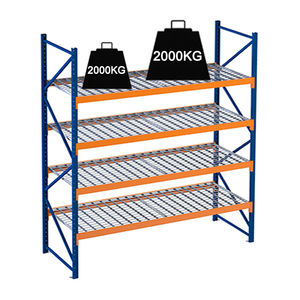
Stackable Storage Rack Pallet Racking Systems Warehouse Equipment 1000KG 2000KG 3000KG Pounds Tons
Product Details →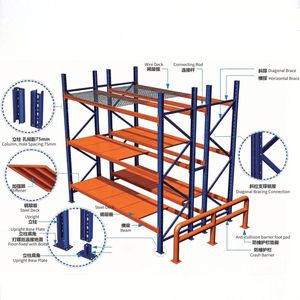
1000-5000 Kg Heavy Duty Anti-Rust Pallet Racking System Warehouse Storage Rack Adjustable Industrial Steel Shelving For Forklift
Product Details →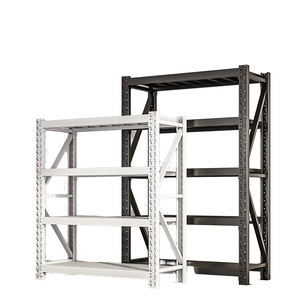
Customized Heavy-Duty Industrial Rack 5-Layer Iron Metal Storage Shelf for Warehouse Storage Steel Display Shelving
Product Details →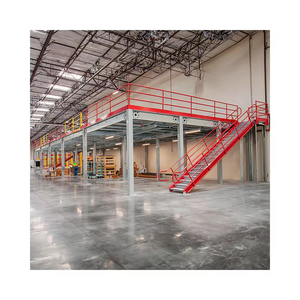
HUAWU 1000kg/sqm Industrial Mezzanine Floor Rack System Multi-layer Steel Warehouse Storage Platform Q235 Steel Structure
Product Details →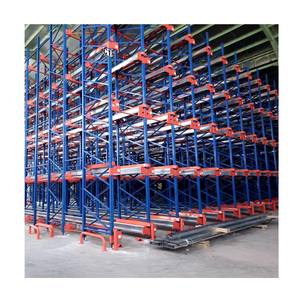
Adjustable High-Speed Storage Racks Shelving Systems Pallet Car Auto Shuttle Racking System For Warehouse
Product Details →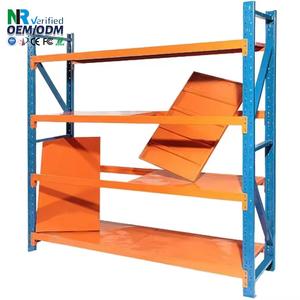
Metal Equipment Steel Rack System Industrial Shelving Heavy Duty Garage Shelving
Product Details →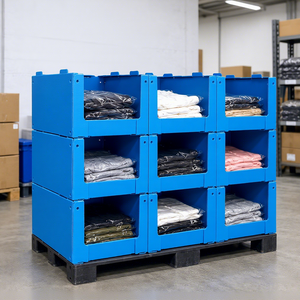
800x600mm Corflute Industrial Grade Stackable Picking Bin Warehouse Shelf Storage Box For Bulk Items
Product Details →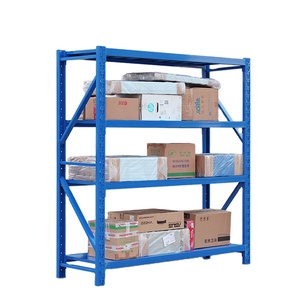
JIAMEI Storage Shelving Warehouse Storage Rack Long Span Shelf Rack
Product Details →Engineering Fundamentals of CE Certified Double Deep Racking Systems
A comprehensive technical evaluation of structural cold-formed profiles, pantograph reach kinematics, and seismic load compliance according to EN 15512 and FEM 10.2.02 standards.
Double Deep pallet racking represents the premier sweet spot between pure selective racking and high-density, automated storage configurations. By engineering pallet positions two-deep per aisle face—storing four pallets back-to-back between operating aisles—logistics facilities eliminate 50% of the access aisles required by conventional single-deep selective layouts.
To maintain strict compliance under the European Construction Products Regulation (CPR 305/2011/EU) and achieve CE Mark Certification (EN 1090-1 / EN 15512:2020), our double deep uprights and load-bearing longitudinal beams undergo rigorous FEA (Finite Element Analysis) stress-testing. Cold-rolled from prime high-yield structural steel coils (grades Q235B and Q355B, equivalent to European S235JR and S355JR), our rack sections are engineered with variable thickness profiles ranging from 1.5mm to 3.0mm. This profile design delivers exceptional resistance to torsional buckling, longitudinal flexure, and dynamic forklift impacts.
Optimized Upright Geometry
Engineered omega profiles featuring return lips that disperse axial loads uniformly. Continuous automatic CNC punching at 50mm or 75mm pitch allows micro-level vertical adjustment for maximum building cube utilization.
Twin-Box Welded Beams
Interlocked twin-C beam profiles with submerged robotic arc welding provide high sectional modulus. Integrated multi-claw connector brackets guarantee high semi-rigid joint stiffness, directly limiting frame drift.
Seismic Dissipation Bases
Thick laser-cut baseplates coupled with dual-expansion wedge anchor studs. Designed in accordance with Eurocode 8 and ANSI MH16.1 for robust dynamic load dissipation during seismic events.
High-Density Warehousing Systems: Operational Matrix
A data-backed comparative analysis assisting industrial logistics planners and procurement executives in evaluating footprint, capital expenditure, and throughput rates.
| System Architecture | Floor Space Utilization | Direct Selectivity | MHE Requirements | Inventory Rotation | CAPEX per Pallet |
|---|---|---|---|---|---|
| Standard Selective | 40% – 45% | 100% (Instant) | Standard Counterbalance / Reach | FIFO (Flexible) | Low baseline |
| Double Deep Racking | 60% – 65% | 50% (Pair Batch) | Pantograph Reach / Telescopic Forks | FILO / Controlled FIFO | Low to Moderate |
| Drive-In / Drive-Thru | 70% – 75% | 15% – 20% (Lane level) | Standard Reach / Counterbalance | Strict LIFO (Drive-In) | Moderate |
| Radio Shuttle Automation | 80% – 85% | Automated Lane-Level | Standard Forklift + Satellite Cart | FIFO or LIFO Configurable | High (Electromechanical) |
| Narrow Aisle (VNA) | 55% – 60% | 100% (Instant) | Specialized VNA Turret Truck / Rail | FIFO (Flexible) | Moderate-High |
Future Procurement Trends in Double Deep Racking (2025–2030)
How rapid logistics automation, industrial decarbonization, and ESG-driven supply chain mandates are reshaping steel racking procurement across Europe, the Middle East, and the Americas.
Global warehousing logistics are experiencing an unprecedented transition characterized by rising industrial land costs, surging labor expenses, and severe cold-chain consumption constraints. When assessing double deep racking investments over a 10-to-15-year asset lifecycle, industrial operators are pivoting toward four critical procurement trends:
1. Telematics-Enabled Automated Guided Forklifts (AGVs)
The traditional bottleneck of double deep storage—forklift operator blind spots on the second pallet position—is being resolved by vision-guided reach AGVs and camera-assisted forks. Procuring double deep systems with tighter beam deflection specifications ($L/300$ instead of $L/200$) is becoming standard to guarantee automated guided reach trucks can dock with sub-millimeter precision at rack heights exceeding 11 meters.
2. Cold-Chain Volume Density Maximization
Refrigerated and blast-freezer facilities operate with extraordinary kilowatt-hour utility overhead. Every cubic meter of unutilized cold air represents pure financial waste. International food distribution hubs and pharmaceutical 3PLs are standardizing on CE-certified double deep racking systems treated with anti-brittleness cold-room steel alloys that preserve high yield and tensile strength down to -30°C.
3. Traceable Low-Carbon Circular Metallurgy & Powder Pretreatment
Multinational procurement mandates now enforce Scope 3 carbon emission accounting. Top-tier exporters must provide certified raw material tracking. Racking manufactured using electric arc furnace (EAF) steel and finished via zero-VOC, heavy-metal-free electrostatic powder coating processes offers superior weatherability while aligning with international corporate ESG sustainability metrics.
Guangzhou HEDA Shelves: Global Racking Manufacturing Prowess
Delivering heavy-duty warehouse infrastructure since 2001. A 30,000 square meter intelligent manufacturing base exporting to over 120 nations worldwide.
Founded over two decades ago, Guangzhou HEDA Shelves Co., Ltd. has established an international benchmark in warehouse storage racking and automated material handling platforms. Operating from our expansive 30,000-square-meter facility with over 300 technical engineers, master welders, and production specialists, we execute strict in-house quality control across every production phase.
Our manufacturing ecosystem features automated continuous roll-forming lines, computerized multi-axis punching machines, robotic CO2 shielding welding cells, and an advanced automated multi-stage pre-treatment line encompassing pickling, phosphating, and electrostatic powder coating.
HEDA Shelves products carry verified certifications including CE Factory Production Control Certification (Certificate No. 2435-CPR-8605159), ISO 9001:2015 Quality Management (Certificate No. 18624Q00169R0M), and complete RoHS Compliance. Whether outfitting modern 3PL distribution centers in Dubai, Dammam, and Riyadh, or executing specialized seismic racking installations in Western Europe and the Americas, our dedicated engineering team delivers full 2D CAD drafting, 3D structural simulations, and bespoke OEM/ODM manufacturing on schedule.
Frequently Asked Questions on Double Deep Racking Procurement
Detailed engineering, mechanical, and compliance answers for supply chain directors, structural consultants, and project engineers.
How does double deep racking affect forklift truck selection?
Double deep racking requires specialized material handling equipment (MHE) capable of reaching into the second pallet depth. This is accomplished using reach trucks equipped with pantograph mechanisms (scissor-reach extenders) or telescopic forks. Lift mast capacity must be de-rated to compensate for extended reach moments, particularly when accessing top beam levels above 8 meters.
What is the standard beam deflection limit under EN 15512?
Under European racking code EN 15512, maximum permissible vertical beam deflection under fully rated, uniformly distributed loads (UDL) is typically limited to $L/200$, where $L$ is the clear span distance between uprights. For sensitive automated systems or deep reaches, engineers often design to a stiffer $L/300$ tolerance to ensure smooth fork entry and exit without secondary pallet binding.
How is in-rack fire suppression managed under NFPA 13?
Because double deep layouts place two pallet depths back-to-back, longitudinal and transverse flue spaces must remain unobstructed. Under NFPA 13 standards, warehouses exceeding specific storage heights require integrated in-rack sprinkler pipework installed in the center flue between back-to-back double deep runs, ensuring effective vertical suppression water penetration.
What surface treatment protects against aggressive environments?
Standard production involves an extensive 10-stage process including hot degreasing, acid pickling, zinc phosphating, and thermo-cured electrostatic epoxy-polyester powder coating (70–90 microns). For extreme high-humidity, marine coastal facilities, or chemical fertilizer plants, pre-galvanized coils or hot-dip galvanization (HDG) are specified to prevent corrosion.
Can existing concrete floor slabs support double deep loads?
Because double deep systems store twice the weight per run footprint, point loads transferred through baseplates to the warehouse slab are significantly higher. Our structural engineers review your core slab depth, reinforcement rebar density, and subgrade soil bearing capacity ($k$-value) to design enlarged baseplates and select mechanical or chemical wedge anchor bolts that prevent concrete punch shearing.
What export documentation is provided for international shipping?
HEDA Shelves supplies complete export documentation sets including CE Declarations of Performance (DoP), Mill Test Certificates (MTC) verifying raw material chemical and physical properties, third-party load test reports, comprehensive container loading plans, and step-by-step CAD assembly drawings with tagged beam and upright bundles for rapid customs clearance and jobsite erection.