High-Efficiency Material Handling Engineered for Zero SKU Obsolescence
In high-throughput distribution environments handling food, pharmaceuticals, FMCG, cold storage, and tier-one automotive parts, inventory rotation precision is not merely an operational metric—it is a regulatory and financial prerequisite. Standard selective and drive-in static configurations inherently introduce risk of stock entrapment, prolonged replenishment cycles, and excessive forklift travel distances. A structural First-In, First-Out (FIFO) racking system resolves these bottlenecks by combining self-regulated gravity flow lanes, precision engineered dynamic rollers, and separated loading and picking aisles.
100% Strict FIFO Stock Rotation
Operates on separated replenishment and picking aisles. Fresh pallets or cartons are loaded on the rear inclined bed, gliding seamlessly under controlled gravity to the pick face for continuous, date-driven dispatch without picking lane interference.
Up to 70% Warehouse Space Recovery
By eliminating multiple operating forklift aisles required by conventional selective racking, FIFO gravity flow arrays consolidate storage footprint. They achieve theoretical space utilization rates exceeding 80% within the same structural building volume.
Drastic OpEx & Labor Reduction
Loading trucks and replenishment teams operate strictly on opposite ends. Forklift travel time is slashed by up to 45%, reducing internal congestion, fuel and battery charging cycles, and drastically minimizing equipment impact collisions against frame uprights.
Featured Industrial & FIFO Pallet Racking Systems
Manufactured to rigorous CE (No. 2435-CPR-8605159) and ISO 9001:2015 quality standards. Explore our core range of heavy-duty pallet racks, carton flow systems, and versatile warehouse storage equipment.
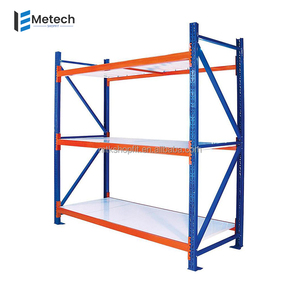
Heavy Duty Metal Warehouse Rack 500kg Load Bearing Storage Shelf
Engineered cold-rolled steel profile shelving with multi-hole vertical adjustment for flexible manual replenishment and picking lanes.
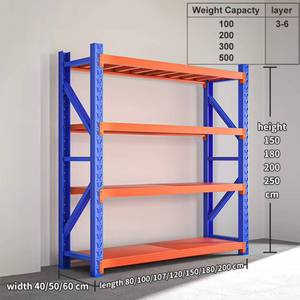
Customizable Industrial Steel Metal Shelving Shelves Adjustable Bolts Garage Warehouse Rack For Pallet Stacking Racks Shelves
Versatile modular shelving architecture compatible with secondary carton flow lane integration for high-density light carton sorting.
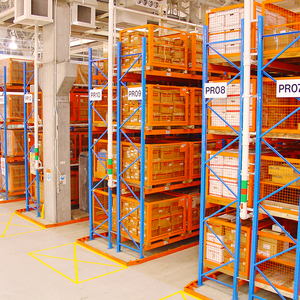
Customized OEM ODM Heavy Duty Steel Warehouse Storage Rack Shelves Factory Warehouse Narrow Aisle Rack Shelving
Optimized for high-clearance distribution centers requiring structural upright calculations and narrow aisle crane access.
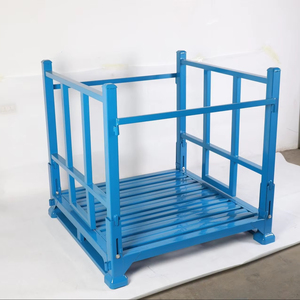
Factory Direct Multi-Level Steel Mobile Tire Transport Stacking Rack Pallet Tyre Rack from China Warehouse Demountable
Heavy-gauge tubular steel construction designed for inter-facility shipping and batch FIFO handling of high-turnover automotive tires.
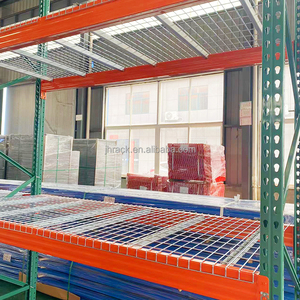
Easy Bolt-Free Teardrop Pallet Racking | Heavy Duty Selective Rack For High-Density Warehouse Storage & Distribution Centers
Industry-standard teardrop pattern compatible with gravity roller bed retrofits to instantly convert static bays into dynamic FIFO tracks.
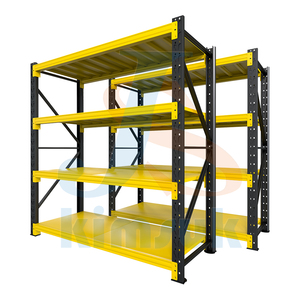
Boltless Adjustable Heavy Duty Load-Bearing 500kg/Layer Steel Racks Warehouse Industrial Stack Storage Racking Shelving System
Rapid-assembly industrial shelving unit supporting pick-to-light modules, divided SKU bins, and high-frequency order preparation.
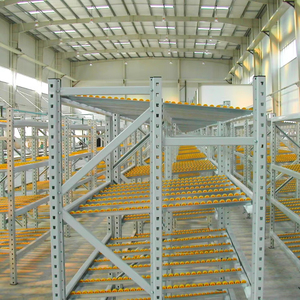
Picking Flow Racking Carton Flow Rack Logistics Storage Racks Roller Racking
High-density carton live storage utilizing aluminum or sheet-metal roller tracks. Ensures ergonomic case picking and continuous replenishment.
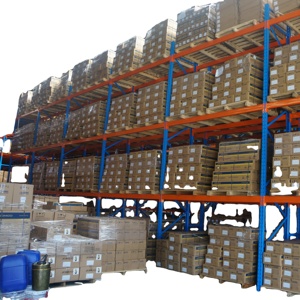
China Manufacturer Heavy Duty Warehouse Shelving/Storage Pallet Rack /Selective Heavy Duty Racking System
Heavy-duty structural upright frames engineered with reinforced box-beams, designed as the robust foundation for high-capacity warehouse racking.
Engineering Principles of Pallet & Carton Flow Systems
Dynamic FIFO systems rely on gravitational potential energy balanced precisely against kinetic damping forces. Engineering an industrial gravity roller bed requires exacting calculations involving gradient slopes, rolling resistance, centrifugal brake regulation, and load-dependent end separators.
Critical Slope Calculation & Speed Regulation
A standard pallet flow bed is calculated with an inclination gradient between 3.0% and 4.0% (1.7° to 2.3°) depending on the pallet bottom board quality (wooden euro-pallets, perimeter-base CHEP pallets, or molded plastic runners). Excessive slope generates uncontrolled runaway acceleration, while insufficient incline causes pallet stalling mid-lane. To maintain a constant descent speed under 0.30 m/s (approx. 1 ft/s) regardless of whether a pallet weighs 250 kg or 1,500 kg, centrifugal brake rollers are calibrated and embedded at regular intervals along every lane.
| Performance Dimension | FIFO Gravity Flow Racking | Drive-In Pallet Racking (LIFO) | Standard Selective Racking |
|---|---|---|---|
| Inventory Turnover Rule | Strict FIFO (First-In, First-Out) | Strict LIFO (Last-In, First-Out) | Arbitrary / Operator-Dependent |
| Aisle Surface Efficiency | Up to 75% - 85% footprint utilization | Up to 70% footprint utilization | 35% - 45% footprint utilization |
| SKU Selectivity | 1 SKU per lane, instant picking accessibility | 1 SKU per deep block; high honeycombing risk | 100% immediate individual pallet access |
| Forklift Aisle Interaction | Dedicated load vs. pick aisles; zero traffic conflict | Trucks enter rack structure; frequent collision risk | Shared multi-traffic aisles; frequent bottlenecking |
| Ideal Industry Application | Perishables, Pharmaceuticals, High-Velocity FMCG | Long-term bulk commodities, seasonal storage | Diverse SKU warehouses with variable throughput |
Guangzhou HEDA Shelves: Engineered Reliability Since 2001
With more than two decades of dedicated research, manufacturing prowess, and precision structural fabrication, Guangzhou Heda Shelves Co., Ltd. delivers direct factory engineering to logistics enterprises in over 120 countries.
End-to-End Control Over Heavy Steel Fabrication
Unlike trade intermediaries who outsource fabrication across multiple jobbing shops, HEDA controls every metallurgical and mechanical stage within our dedicated 30,000 square meter factory. Equipped with continuous automated roll-forming lines, robotic CNC beam welding clusters, automated punching presses, and high-adhesion electrostatic powder coating tunnels, we sustain a formidable monthly throughput exceeding 30,000 tons of structural steel components.
Every single column upright, load connector claw, and dynamic roller track is stamped from certified high-strength cold-rolled structural steel (Q235B / Q355B). Before dispatch, each production run undergoes strict dimensional tolerance audits, tensile yield verification, and complete salt-spray corrosion analysis to safeguard performance under grueling industrial conditions.
Traceable Certification & Compliance Standards
- CE Conformity Certificate: Validated under standard No. 2435-CPR-8605159 for European structural steel execution (EN 15512 & EN 15620 compliance).
- ISO 9001:2015 Quality Management: Certificate No. 18624Q00169R0M (verified valid through 2027-06) governing raw material traceability and manufacturing quality.
- RoHS & Heavy Metal Free Powder Finishing: Advanced phosphating and non-toxic electrostatic curing resistant to high humidity, coastal salinity, and abrasion.
- Free Engineering CAD & 3D Modeling: Full finite-element analysis (FEA) seismic load simulations delivered within 24 to 48 hours from initial site drawing receipt.
Our 10-Step Precision Manufacturing Process
Raw Material Metallurgy
Certified steel coil inspection testing chemical composition, yield threshold, and surface flatness.
Precision CNC Slitting
Automated decoiling and longitudinal cutting with continuous laser gauge dimensional tolerances.
Automated Upright Punching
High-speed punch presses stamping 50mm / 75mm pitches for teardrop and omega column forms.
Continuous Cold Roll-Forming
Multi-station roll tooling profiles cold steel gradually, preventing structural micro-cracks.
Custom Beam Seaming
Automated interlocked roll-forming forming heavy-gauge boxed step-beams with internal reinforcing ribs.
Robotic Claw Welding
CO2 gas-shielded robotic arm clusters weld beam connection claws with zero porosity defects.
Surface Shot-Blasting
Mechanical blasting removes scale, oil, and rust, establishing an anchor profile for powder adhesion.
Pretreatment & Phosphating
Multi-stage ultrasonic chemical wash creating an inert nano-ceramic layer against rust.
Electrostatic Powder Coating
Reciprocating spray guns coat 80-120μm of thermoset epoxy resin, baked in a 200°C curing oven.
Load Verification, Bundling & Export Container Palletization
Pre-assembly mockups verify roller clearances and structural plumbness before custom shrink-wrapping and steel-strapping into numbered bundles matching the on-site erection blueprints.
Future Procurement Trends in FIFO Warehouse Storage Systems
Enterprise warehouse procurement is moving away from low-cost static steel and toward lifecycle ROI, dynamic throughput density, and automated material handling compatibility. Supply chain directors are preparing for three distinct shifts through 2030:
Convergence with Autonomous Mobile Robots (AMR / AGV)
Traditional gravity flow beds were designed exclusively for human-operated counterbalanced forklifts. Modern procurement contracts now mandate AMR drop-and-retrieve interfacing. This requires self-centering entry funnels, precision end-of-lane optical sensors, and zero-backpressure pneumatic separators to ensure robotic lifters can extract discharged pallets without snagging adjacent loads.
IoT-Enabled Smart Gravity Beds
Procurement teams are seeking real-time visibility within gravity lanes. Upcoming systems integrate embedded axle strain sensors and passive RFID track gates. These capture exact transit velocities, detect pallet hangs mid-lane before picking jams occur, and send instant WMS replenishment triggers the millisecond a carton flow queue reaches its critical threshold.
Demand for Cold-Chain Optimized Metallurgies
The rapid expansion of temperature-controlled pharmaceutical cold chains and blast-freeze food hubs has exposed the limitations of standard steel alloys. Future specifications require specialized steel that maintains ductile strength down to -30°C without embrittlement, combined with synthetic lubricant-sealed roller bearings and galvanized zinc or epoxy coatings.
Key Technological Advancements in FIFO Systems
The transition from primitive gravity chutes to high-precision structural racking has produced several key technological breakthroughs that minimize maintenance costs and prevent mechanical failure:
Eddy-Current Magnetic Speed Dampeners
Traditional friction brake rollers rely on internal mechanical pads that wear out under continuous duty cycles, leaving particulate dust across cleanroom floors and demanding frequent replacement. Next-generation systems use eddy-current magnetic retardation. Non-contact neodymium magnetic arrays create a resisting counter-torque proportional to pallet velocity, providing lifelong maintenance-free braking that will never freeze or glaze over.
Mechanical Load-Separation Catch Mechanisms
In long gravity lanes holding 10 to 20 pallets in series, the accumulated hydrostatic line pressure of rear pallets pushing against the front pallet can exceed 15,000 kg. This backpressure can pin the lead pallet against the discharge stop, making extraction dangerous or impossible for standard lift trucks. Modern mechanical separators automatically isolate the lead pallet by locking back the trailing queue, releasing subsequent pallets only after the first load is clear.
Universal Multi-Wheel Split-Track Geometry
Where traditional pallet flow beds utilized solid full-width steel rollers susceptible to bending when concentrated point-loads strike, current designs favor heavy-duty modular skate-wheel or staggered split-roller channels. This split-track layout accommodates mixed pallet bottom configurations (skids, 9-block euro-pallets, and perimeter boards) without tracking drift or derailment.
Modularity & Hybrid Dynamic Combinations
Modern engineering merges pallet flow, carton flow, and multi-tier mezzanine floors into integrated picking environments. Lower structural tiers feature carton live roller tracks illuminated by pick-to-light LED address systems, while upper tiers support full-pallet dynamic gravity flow tracks feeding lower lanes directly. This reduces case picking travel steps by up to 70%.
Frequently Asked Questions: Global Industrial Buyer's Guide
Comprehensive engineering insights address structural tolerances, certification proofs, fire safety compliance, and long-distance containerization logistics.
What specific structural certifications are provided with HEDA FIFO racking systems?
Every industrial racking system manufactured by Guangzhou HEDA Shelves Co., Ltd. is certified under CE Certificate No. 2435-CPR-8605159, attesting conformity with EN 15512 (Steel static storage systems – Adjustable pallet racking systems – Principles for structural design) and EN 15620 (Tolerances, deformations and clearances). Our production facility operates in strict adherence to ISO 9001:2015 (Certificate No. 18624Q00169R0M), ensuring batch-level traceability for steel metallurgy, weld integrity, and coating chemical safety (RoHS compliance).
How does your design account for varying pallet weights within the same gravity lane?
Variable pallet weights (e.g., 300 kg to 1,200 kg) are handled through a calibrated combination of slope control and responsive speed controllers. Centrifugal brake rollers use internal weighted flyweights: when a heavier pallet accelerates, the centrifugal mechanism increases braking force proportionally. For lighter pallets, the brake exerts minimal drag, preventing stalls. When lane weight variance exceeds 3:1, we can add dual-action magnetic eddy-current dampeners to ensure uniform speed across all pallet loads.
What warehouse floor slab specifications are required for high-density FIFO pallet flow?
Because dynamic FIFO arrays consolidate immense concentrated live loads onto relatively few floor contact plates, the concrete slab must generally sustain compressive strengths of at least 25 to 30 MPa (C25/30 to C30/37) with an absolute minimum thickness of 180mm to 250mm, depending on frame height and local seismic design categories. Our engineering department calculates specific baseplate surface areas and dynamic anchor bolt shear values (Hilti / Fischer heavy-duty anchors) to ensure the concentrated load per column leg remains well within your slab's point load limits.
Can HEDA FIFO flow racking support in-rack fire sprinkler systems (NFPA / Civil Defense)?
Yes. Dense pallet flow blocks eliminate the transverse internal flue spaces found in selective racking. To comply with international fire protection codes (such as NFPA 13) and municipal Civil Defense approvals (such as UAE Civil Defense or KSA guidelines), our 3D CAD design incorporates structural mounting brackets for internal vertical and longitudinal in-rack sprinkler pipework. These are positioned beneath the roller tracks where they are fully protected from impact during pallet transit.
How do the finishes perform under extreme temperatures, humidity, and coastal environments?
Before painting, all components pass through an automated 7-stage chemical pretreatment line featuring immersion degreasing, acid pickling, and micro-crystalline zinc phosphating. We then apply an electrostatic dry thermosetting epoxy-polyester powder coat, cured at 200°C to achieve an average dry film thickness of 80 to 120 microns. For extreme applications—such as open outdoor staging yards or coastal ports with high salinity—we offer pre-galvanized cold-formed profiles or complete hot-dip galvanization conforming to ISO 1461, providing decades of maintenance-free corrosion resistance.
What lead times should international buyers expect for custom-engineered export orders?
Initial CAD approval plans and 3D FEA structural calculations are returned within 24 to 48 hours of project data receipt. Fabrication of standard containerized orders (typically 5 to 10 forty-foot high-cube containers) is completed within 15 to 22 working days. Long-haul ocean transit from major hubs (Guangzhou / Shenzhen) to primary global ports (e.g., Jebel Ali, Dammam, Rotterdam, Long Beach) typically takes 14 to 32 days. Detailed installation manuals, annotated component tags, and live video engineering support are provided for every project.
What maintenance is required to keep a FIFO gravity flow system running safely?
Because the system is gravity-powered, routine maintenance is minimal compared to automated shuttles. We recommend an annual operational review: check brake rollers for free rotation and debris buildup, inspect lead-pallet separation latches and discharge stops for mechanical wear, ensure anchor bolts remain torqued to specification, and wipe roller tracks clear of pallet splinters or packaging film. All roller bearings are lubricated and sealed for life, eliminating the need for periodic grease replenishment.
Transform Your Warehouse Throughput with Factory-Direct FIFO Engineering
Send us your building layout, pallet dimensions, weight profiles, and turnover targets. Our structural engineering team will prepare an optimized 2D CAD layout, 3D rendering, and comprehensive budget calculation within 24 hours.