CE Certified
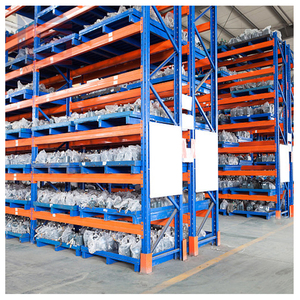
Industrial Pallet Storage Rack Steel Warehouse Adjustable Shelving
High Flexibility
Beam Adjustable
Q235B Steel
Explore our heavy-duty, factory-direct storage systems manufactured to ISO 9001 and CE execution classes. Built for high-density palletizing, linear profile handling, and multi-tier logistics hubs.
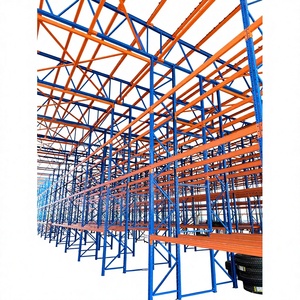
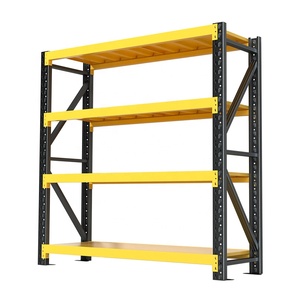
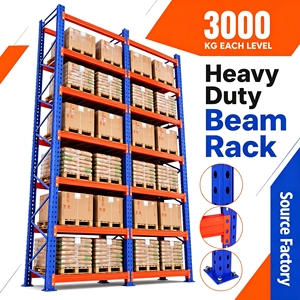
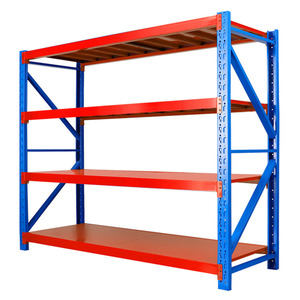
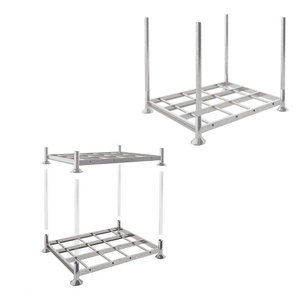
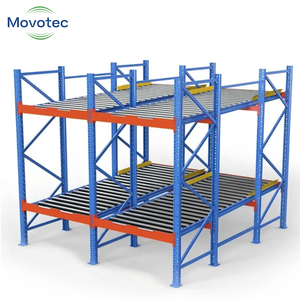
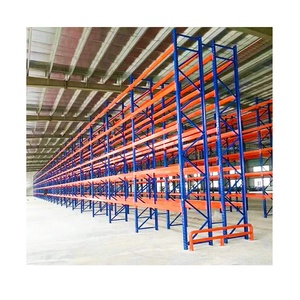
In modern industrial facilities handling long-span bar stock, structural steel shapes, timber bundles, extrusions, and heavy industrial coils, conventional pallet racks present severe loading obstructions. Cantilever systems eliminate front uprights, yielding unobstructed horizontal access.
Cantilever structures undergo combined bending moments and compressive axial loads. Columns are hot-rolled IPE or HEA structural profiles, or welded box-sections tailored to negate torsional flutter under unilateral arm loading conditions.
Under EU Construction Products Regulation (CPR 305/2011), structural steel cantilever racks permanently installed in industrial buildings must carry verifiable CE marking complying with EN 1090-1 (Execution Class EXC2 or EXC3).
Cantilever engineering mandates compliance with FEM 10.2.09 (Design of Cantilever Racking). Arm deflection under full working load must remain strictly constrained within L/200, or L/300 when utilized in high-density automated crane corridors.
| Class Specification | Structural Profile Type | Arm Capacity Rating | Column Height Range | Standard Surface Finish | Compliance Directives |
|---|---|---|---|---|---|
| Light-to-Medium Duty | Cold-Formed C/U Profiles | 250 kg – 600 kg / Arm | 2,000 mm – 4,500 mm | Electrostatic Polyester (60-80μm) | EN 15620 / ISO 9001 |
| Heavy Duty (Standard) | Hot-Rolled IPE 140–220 | 600 kg – 1,800 kg / Arm | 3,500 mm – 7,500 mm | Pretreated Hybrid Coating | CE EN 1090-1 / FEM 10.2.09 |
| Extra Heavy-Duty Structural | Hot-Rolled IPE 240–360 / HEB | 1,800 kg – 3,500 kg / Arm | 5,000 mm – 12,000 mm | Hot-Dip Galvanized (ISO 1461) | CE Class EXC2 / EN 1993-1-1 |
| Extreme Heavy Coil / Die | Custom Built-up Welded Box | 3,500 kg – 6,000+ kg / Arm | 4,000 mm – 10,000 mm | Duplex Marine-Grade Barrier | CE Class EXC3 / Seismic Eurocode 8 |
Procurement directors and supply chain engineers are no longer purchasing raw tonnage; global procurement models emphasize structural reliability, verifiable supply chain traceability, lifecycle maintenance yield, and operational adaptability.
Global procurement teams in Europe, the Middle East, and North America now demand documented structural calculations, third-party mill test certificates, and CE marking per EN 1090-1. Racking manufacturers without verified Factory Production Control (FPC) certifications face outright disqualification in municipal logistics bids.
High relative humidity, desert airborne salinities, and outdoor timber yards accelerate coating breakdown. Enterprise procurement is shifting toward hot-dip galvanization (ISO 1461) or multi-stage zinc phosphating with cathodic epoxy primers, extending structural service lifespans past 25 years with minimal maintenance capital expenditure.
Warehouse developers prioritize integrated manufacturers capable of delivering FEA structural modeling, building CAD coordination, container-optimized packing schemes, and local installation guidance under unified contractual accountability.
Next-generation cantilever racking incorporates automated material handling interfaces, finite element optimization, structural telemetry, and high-density rack-clad architecture.
Cantilever bays are increasingly fitted with mechanical guidance rails and magnetic floor-track sensors to interface seamlessly with multidirectional side-loaders and autonomous guided vehicles (AGVs), enabling picking aisle widths as narrow as 2,100 mm while elevating vertical lift heights up to 12 meters.
Silo-style rack-supported construction is replacing traditional steel buildings. Cantilever uprights double as primary roof and wall load-bearing structural columns, drastically reducing civil construction timelines, optimizing footprint land utilization, and accelerating commercial depreciation benefits.
Pioneering cantilever installations deploy strain-gauge transducers along high-stress column-to-base junctions. Real-time telemetry notifies warehouse management systems (WMS) of eccentric overloads, forklift impact stresses, or structural fatigue before micro-fractures compromise system integrity.
With more than two decades of advanced structural steel manufacturing, Guangzhou HEDA Shelves Co., Ltd. provides factory-direct fabrication, turnkey engineering, and worldwide logistics deployment across 120+ countries.
Holding official CE certification (No. 2435-CPR-8605159), ISO 9001:2015 quality management (No. 18624Q00169R0M), and RoHS compliance across all surface coatings.
End-to-end processing under one roof: automated CNC punching, precision cold roll-forming, robotic welding, acid pickling, phosphating, and electrostatic powder coating.
Our structural design team delivers custom 2D layout drawings, 3D photorealistic renderings, and FEA finite-element stress calculations tailored to your site's floor slab capacity.
Container-optimized bundling matching technical layout tags, guaranteeing rapid customs processing and erect-ready sorting at Jebel Ali, Dammam, Jeddah, Hamad, and European ports.
Essential technical, legal, and operational considerations for warehouse directors, structural consultants, and industrial procurement professionals.
Under EU Regulation 305/2011, cantilever racks categorized as permanent building fixtures must bear CE marking under EN 1090-1. This legally certifies that steel raw materials, welder performance (ISO 9606-1), and factory production controls (FPC) comply with stringent structural execution criteria.
Cold-formed arms suit lighter payloads (< 500 kg/arm). However, heavy-duty applications (1,000 kg – 5,000 kg/arm) mandate hot-rolled IPE, HEA, or structural box sections. Hot-rolled profiles provide superior ductile resilience, resisting point-load torsional twisting and heavy forklift impact.
Arm spacing depends on load flexibility and allowable sag. The product must overhang arm ends by no more than half the center-to-center distance between arms. For rigid loads like structural steel bundles, wider centers suffice; for flexible plastic extrusions or thin timber, closer centers prevent sag.
Because cantilever columns generate concentrated overturning moments at their bases, the warehouse floor must be engineered reinforced concrete (typically C20/25 to C30/37), with a slab depth of 180 mm to 250+ mm, secured with chemical or mechanical expansion anchors engineered for dynamic pullout loads.
Electrostatic polyester powder coating (60–90 microns) is ideal for dry indoor warehouses. For outdoor lumber yards, coastal environments with airborne chlorides, or corrosive chemical facilities, batch hot-dip galvanizing to ISO 1461 (minimum 70–85 microns) provides superior sacrificial cathodic protection.
Single-sided cantilever columns are placed against walls and bear asymmetric vertical and horizontal overturning moments. Double-sided columns feature a central spine loaded on both faces; when symmetrically loaded, horizontal forces balance, significantly increasing structural efficiency and floor area utilization.