EN 15512 & CE Certified Heavy Industry Standards

CE Certified Heavy Duty Cantilever Racking System Factory & Exporters

Engineered for Structural Rigidity, Long-Span Cargo Stability, and Unobstructed Material Handling Across Global Industrial Supply Chains.

Enterprise Heavy Racking Portfolios

Heavy-Duty Industrial Storage & Cantilever-Integrated Systems

From high-tensile hot-rolled structural cantilever configurations to dynamic high-bay pallet operations, discover purpose-built storage architectures engineered for high-density payloads, non-standard dimensional profiles, and maximum warehouse throughput.
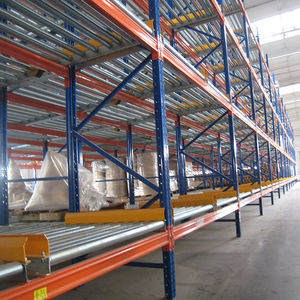
High Throughput High Efficient Steel Selective Gravity Pallet Racks

High Efficient Steel Selective Gravity Pallet Racks with High Storage Capacity
Engineered with inclined roller tracks and centrifugal speed controllers for strict FIFO product turnover. Handles pallet weights up to 1,500 kg per position with automatic brake rollers for delicate warehouse stock.
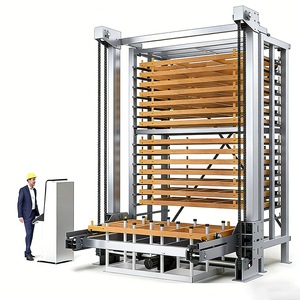
Automated Drawer Intelligent Vertical Sheet Metal Storage Warehouse Heavy Duty Industrial Racking System

Intelligent Vertical Sheet Metal Storage Heavy Duty Industrial System
Designed for space-saving vertical crane access and roll-out cassette drawers. Safely accommodates flat steel plates, aluminum coils, and laser-cutting blanks with up to 3,000 kg capacity per level.
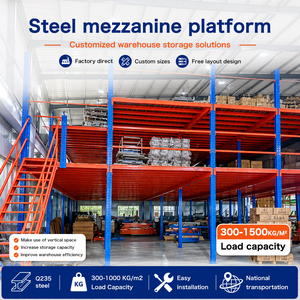
Multi-Tier Hub Heavy Duty Industrial Steel Mezzanine Floor Storage System

Heavy Duty Industrial Steel Mezzanine Floor Storage Multi-Level System
Doubles or triples usable floor footprint without structural building expansions. Heavy-duty universal columns and beams support loads ranging from 300 kg/m² to 1,200 kg/m² with modular stairwells.
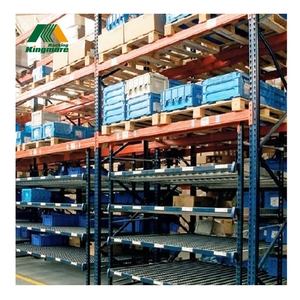
Textile & Roll Core Fabric Roll Pallet Carton Flow Racking

Fabric Roll Pallet Carton Flow Racking for Stacking Racks & Shelves
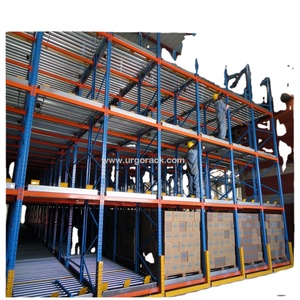
Engineered cradles and heavy-duty flow tracks dedicated to cylindrical loads, long fabric rolls, and textile carpets. Eliminates creasing, contact indentation, and manual handling accidents.
Fast Picking Gravity Flow Roller Order Picking Racking System

High Efficiency Order Picking Gravity Flow Roller Racking System
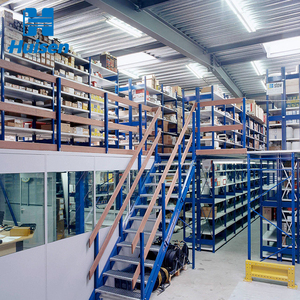
Incorporates modular aluminum roller tracks and adjustable lane dividers for fast split-case order picking. Separates loading corridors from picking corridors, boosting operative safety and workflow speed.
Multi-Level Loft Industrial Steel Mezzanine Flooring Retail Shelving Loft

Industrial Steel Mezzanine Flooring Loft Type Multi-Level Racking
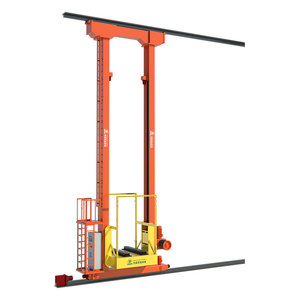
A hybrid mezzanine framework integrating upright racking pillars as load-bearing structural columns. Features anti-skid galvanized steel mesh or perforated steel decking for safety and fire suppression access.
AS/RS Integrated Automatic Pallet Stacker Crane Racking

Automatic Pallet Stacker Crane Racking Intelligent Steel Warehouse System
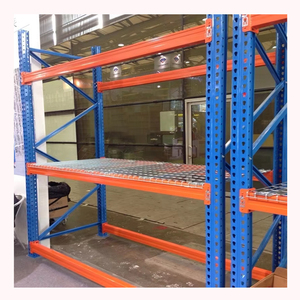
Ultra-high precision cold-rolled profile uprights for automated crane interface tolerances. Designed for bay heights up to 40 meters, featuring anti-corrosion finishes for chilled or pharmaceutical plants.
Heavy Storage Heavy Duty Warehouse Storage Industrial Shelf Rack

Heavy Duty Warehouse Storage Industrial Shelf Rack Metal Shelving

Box-beam profile framework fitted with reinforced drop-in steel panels. Capable of supporting up to 5,000 kg per tier for heavy casting dies, machine tooling, and bulky industrial component storage.
Engineering Whitepaper & Structural Mechanics

Structural Architecture of CE-Certified Heavy Cantilever Racks

Unlike conventional pallet racks that rely on front upright columns, cantilever systems must counteract extreme eccentric moment forces through unyielding base-to-column welded connections, precision-tapered arms, and rigorous torsional bracing.

Structural Engineering Note: Cantilever racking systems designed under European standard EN 15512 and FEM 10.2.09 enforce strict elastic deflection parameters: maximum vertical arm deflection under uniform distributed load (UDL) cannot exceed L/200, while lateral column displacement under full load combinations must stay within H/350.

Hot-Rolled I-Beam vs. Roll-Formed Profiles

For extreme payload applications (>1,000 kg up to 5,000 kg per arm), solid hot-rolled steel profiles (IPE, HEA, or HEB sections in European Q355B grade) outperform thin-gauge cold-formed sheet. The solid flange eliminates local buckling risks under sudden forklift shock loads and heavy pipe impact.

Tapered Arm Geometry & Articulated Pivots

Engineered cantilever arms feature an upward 2-degree taper to compensate for elastic deflection under load. Our patented pivot-pin and high-tensile bolted arm attachments allow the arm to swing upward and absorb accidental forklift collisions without transferring destructive bending moments to the vertical column.

Cross & Longitudinal K-Bracing Systems

Cantilever row stability depends entirely on the longitudinal plane bracing towers. High-tensile RHS tube spacers combined with adjustable turnbuckle X-braces lock individual vertical masts into monolithic rigid frames capable of resisting transverse seismic accelerations and dynamic forklift braking shear.

Engineering Parameter Light / Medium Duty Heavy-Duty Structural I-Beam Extra Heavy Outdoor Mast
Column Section Profiles Cold-Formed C-Profile (200 × 60 × 2.5 mm) Hot-Rolled IPE 240 / 300 / 360 Profiles Hot-Rolled HEA / HEB 400 to 500 Sections
Safe Arm Capacity (UDL) 250 kg – 600 kg per arm 1,000 kg – 2,500 kg per arm 3,000 kg – 5,000+ kg per arm
Maximum Free-Standing Height Up to 4,500 mm Up to 9,000 mm Up to 15,000 mm (Crane / Guided VNA)
Primary Steel Grades Q235B Cold Rolled (Yield 235 MPa) Q355B Hot Rolled (Yield 355 MPa) High-Strength S355JR / ASTM A572 Gr 50
Standard Surface Finishing Epoxy Powder Coat (60–80 μm) Electrostatic Polyester (80–110 μm) Hot-Dip Galvanized (ISO 1461, ≥85 μm)
Market Forecast & Technology Shifts

Future Procurement & Technological Trends in Heavy Racking

Industrial supply chains are moving away from ad-hoc floor staging toward high-density vertical automation, parametric building information modeling (BIM), and life-cycle asset resiliency.

1. Automated AS/RS & 4-Way Multidirectional AGVs

Manual forklift operations in long-span material storage (pipes, profiles, timber) are being superseded by cantilever-integrated AS/RS cranes and multidirectional 4-way side-loading AGVs. Procurement is shifting toward tight tolerance uprights (±1.0 mm) capable of optical scanner alignment and high-speed robotic retrieval.

2. Parametric BIM Integration & Digital Twin Compliance

Global EPC contractors and logistics planners now demand native Revit and IFC parametric 3D families prior to procurement. These data assets incorporate dynamic load deflection simulations, sprinkler head hydraulic clearances, and warehouse floor slab deflection calculations directly into the facility's digital twin.

3. Climate-Resilient Duplex Galvanized Systems

With industrial expansion in coastal areas, extreme thermal regions (such as the GCC), and corrosive chemical zones, procurement specifications increasingly mandate duplex finishes: hot-dip galvanization to EN ISO 1461 combined with salt-resistant epoxy topcoats, rated for over 1,500 hours of continuous ASTM B117 salt spray exposure.

4. Real-Time Structural Health Monitoring (IoT Sensors)

Smart cantilever racks now integrate embedded strain-gauge sensors along primary load-bearing arms and column bases. Real-time telemetry detects asymmetrical overloading, fork truck impact fatigue, and foundation settlement before micro-fissures jeopardize occupational safety or trigger warehouse collapses.

Enterprise Manufacturing Capabilities

Factory-Direct Quality: Guangzhou Heda Shelves Co., Ltd.

Established in 2001, HEDA Shelves operates a modern 30,000 m² production facility with over 300 technical engineers. We export factory-direct industrial racking to over 120 countries, delivering complete turnkey design, static calculation, and CE/ISO compliant manufacturing.

25+
Years Engineering Expertise (Est. 2001)
30,000 m²
Automated Smart Factory Site Area
30,000 t
Monthly Structural Steel Production
120+
Global Export Countries & Ports Served

Traceable In-House 10-Stage Production Protocol

Every beam, mast, and cantilever arm passes through strict dimensional and metallurgical checkpoints under our ISO 9001:2015 quality management system.

Stage 01
Steel Inspection
Spectrometric & tensile verification of raw Q235B/Q355B coils.
Stage 02
Laser Cutting
High-precision CNC cutting of base plates, gussets, and stiffeners.
Stage 03
Auto Punching
Continuous hole-pitch punching with sub-millimeter indexing accuracy.
Stage 04
Cold Roll Forming
Multi-pass roll-forming lines shaping high-rigidity open & closed sections.
Stage 05
Profile Forming
Straightening, calibration, and edge trimming to eliminate residual stress.
Stage 06
Shot Blasting
Surface polishing to Sa 2.5 standard for maximum coating adhesion.
Stage 07
Robotic Welding
Dual-shield MIG robotic welding ensuring defect-free fillet welds.
Stage 08
Phosphating Wash
Multi-stage pickling, zinc-phosphating, and deionized passivating bath.
Stage 09
Powder Coating
Nordson electrostatic coating with 200°C curing for scratch resistance.
Stage 10
Export Packing
Color-coded bundle banding, steel skid crating, and marine moisture barrier.
CE Certified Conformity Certificate No. 2435-CPR-8605159 (EN 1090-1 / EN 15512)
ISO 9001:2015 Management Certificate No. 18624Q00169R0M (TUV/SGS Audited)
RoHS & Green Guard Compliant Zero Lead, Cadmium, or VOC Off-Gassing Topcoats
Procurement Engineering FAQ

Frequently Asked Questions by Global Racking Buyers

Critical engineering, statutory compliance, load safety, and shipping considerations answered directly by our structural engineering and export logistics team.

What specific criteria distinguish CE-certified cantilever racks from uncertified systems? +
Under European Construction Products Regulation (CPR 305/2011) and standard EN 1090-1 / EN 15512, CE certification mandates comprehensive Factory Production Control (FPC). For heavy-duty cantilever racks, this requires certified raw materials with 3.1 mill test certificates (MTC), qualified robotic welding procedures (WPS & WPQR), continuous non-destructive testing (NDT) of critical base-to-column welded moments, and verified static load calculations under finite element analysis (FEA). Uncertified racks frequently use low-ductility secondary steels and unverified weld seams that are prone to brittle failure under eccentric moment overloading.
How is safe load center of gravity (CoG) determined for non-uniform long cargo? +
Cantilever arm load ratings assume a uniformly distributed load (UDL) acting at the midpoint (L/2) of the arm. For example, on a 1,200 mm arm rated at 1,500 kg, the load center of gravity must align precisely at 600 mm from the column face. If bundled structural pipes, timber, or extrusions are loaded eccentrically toward the arm tip, the resulting bending moment increases linearly, reducing the safe working capacity by up to 50%. Our engineering team includes visual load warning plates, bolted arm end-stops, and pipe retention pins to maintain cargo CoG stability.
When should an engineer specify single-sided vs. double-sided cantilever columns? +
Single-sided cantilever columns are typically anchored against building walls or property perimeters where loading occurs exclusively from one face. Because the load is entirely eccentric, single-sided columns require longer base outriggers and deeper slab anchoring to resist overturning moments. Double-sided (central island) cantilever columns support arms extending in opposite directions. When both sides are evenly loaded, the bending moments neutralize each other, placing the vertical mast under pure axial compression. However, double-sided designs must still be calculated for 100% single-side asymmetric load cases to ensure stability during full loading or picking operations.
Can cantilever racking layouts meet Civil Defense and municipal fire regulations? +
Yes. Municipal fire authorities (such as UAE Civil Defense, Saudi Civil Defense, or NFPA 13 authorities in the Americas) enforce strict longitudinal flue spaces and transverse aisle clearances to enable effective overhead sprinkler penetration. Because cantilever racks do not have front vertical columns, open-air clearances between cantilever arms can create distinct water shadowing risks. Our design office provides 2D/3D CAD layouts explicitly detailing in-rack sprinkler feed routing, flue clearance boundaries, and flame-retardant mesh wire decking when loose or small materials are stored on continuous arm tiers.
What slab depth, concrete strength, and anchoring are required for heavy cantilever racks? +
Cantilever racking creates substantial point uplift and compressive punch loads at the baseplate anchor positions. A typical 6,000 mm tall heavy-duty column carrying 6,000 kg total payload requires an industrial concrete slab with a minimum compressive strength of C20/25 or C25/30 (3,000 to 4,000 PSI) and an uncracked depth of at least 180 mm to 250 mm. We supply ETA-certified (European Technical Assessment) M16 or M20 high-tensile chemical wedge anchors or mechanical torque-controlled expansion anchors, with embedment depth calculations verified by dynamic finite element software.
How do you protect cantilever racks against corrosive outdoor storage conditions? +
For external timber yards, steel stockholding sites, and coastal operations exposed to marine salt fog and UV radiation, electrostatic powder coating alone is insufficient. We specify full hot-dip galvanization performed to EN ISO 1461. Steel components are fully submerged in molten zinc at 450°C, forming an internal and external zinc-iron alloy barrier with a minimal thickness of 85 microns. For outdoor cantilever systems, we also incorporate weather canopies (roof brackets), drainage slope holes in horizontal bases, and hot-dip galvanized arm pivot pins.
How does container loading optimization reduce sea freight costs on long components? +
Cantilever components—particularly vertical columns (up to 11.8 meters) and extended base assemblies—can quickly lead to lost container volume if packed improperly. Our logistics department models 3D container stuffing simulations for 40-foot High Cube (40HC) containers. We nest tapered arms into customized steel frames, interlock I-beam columns with protective corrugated padding, and pre-assemble heavy baseplates using structural bolts to avoid open-top container surcharges. This maximizes weight utilization toward the 26-ton container payload limit, reducing freight cost per kilogram.
What is the standard production lead time and global engineering support workflow? +
Upon receipt of warehouse CAD drawings and storage requirement specifications, our engineering team provides a fully detailed 2D CAD layout, 3D render, and static calculation package within 48 hours. Standard manufacturing lead time for standard profiles is 15 to 20 business days from drawing freeze and deposit confirmation. Every export shipment includes bilingual erection blueprints, piece-marked assembly tags matching the packing manifest, and dedicated WhatsApp/Teams video support for local mechanical contractors. For complex multi-tier mezzanine and cantilever installations, on-site supervisory engineers can be deployed globally.
Direct Factory Engineering Engagement

Ready to Engineer Your High-Density Heavy Cantilever System?

Connect directly with Guangzhou Heda Shelves structural engineers. Receive free static analysis, 2D/3D CAD layouts, civil defense clearance evaluations, and transparent factory-direct B2B export pricing.