Technical Architecture & System Selection
Engineering High-Density Pallet Storage: Optimizing Volumetric Utilization
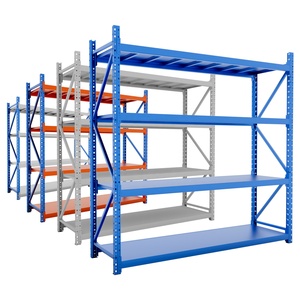
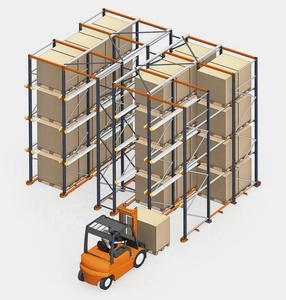
In modern industrial logistics, floor area acquisition and facility cold-chain maintenance represent substantial operational expenditures. Traditional selective pallet racking, while offering universal SKU accessibility, allocates up to 65% of the total warehouse floor footprint purely to forklift operating corridors. High-density racking architectures overcome this geometric limitation by eliminating intermediate aisles, condensing pallet storage into deep contiguous blocks, and increasing cubic storage density by 60% to 250%.
Core Storage Equation: Realized Volumetric Storage Density = (Pallet Positions × Pallet Height × Pallet Width) ÷ (Facility Footprint × Clear Ceiling Eaves Height). High-density architectures routinely achieve volumetric occupancy ratios exceeding 78%, compared to just 35%–42% for wide-aisle selective systems.
System Selection Matrix: Technical Performance Benchmark
Specifying the optimal high-density structure requires engineering trade-offs between dynamic throughput capacity, SKU velocity, capital expenditure index, and pallet selectivity. The following comparative data provides an empirical foundation for warehouse design engineers and industrial procurement teams:
| Racking Topology |
Volumetric Density Index |
Pallet Selectivity |
Stock Rotation Rule |
Lane Depth Capability |
CapEx / Pallet Index |
Cold Store Suitability |
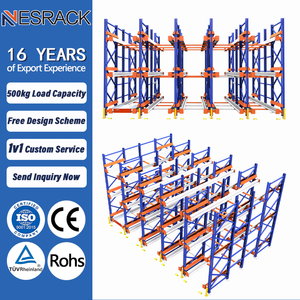
| Radio Shuttle System |
Ultra-High (85%–90%) |
Low-Medium (Per Lane) |
FIFO / LIFO Hybrid |
Up to 40 Pallets Deep |
Medium-High |
Exceptional (-30°C Ready) |
| Drive-In / Drive-Through |
High (70%–80%) |
Low (Batch SKUs) |
LIFO (Drive-In) / FIFO |
Up to 10 Pallets Deep |
Low-Medium |
High (Reduced Volume) |
| Double Deep Racking |
Medium-High (60%–65%) |
Moderate (50% Direct) |
LIFO (2-Deep Cell) |
Strictly 2 Pallets Deep |
Lowest |
Moderate |
| Gravity Pallet Flow |
Very High (80%–85%) |
Moderate (Per Lane) |
Strict FIFO Automatic |
Up to 20 Pallets Deep |
High (Braked Rollers) |
High (Fast Turnover) |
| Automated ASRS Matrix |
Maximum (92%–95%) |
Programmable Auto |
Dynamic Software FIFO |
Up to 40+ Meters High |
Highest |
Optimal (Unmanned) |
Structural Mechanics, Steel Quality & Deflection Thresholds
A CE certified racking installation manufactured to EN 15512 standards is an engineered structural framework subject to rigorous dynamic loading calculations. Unlike standard civil building frames, industrial pallet racks operate under high live-to-dead load ratios, where stored merchandise accounts for over 92% of the aggregate mechanical load. The physical performance of cold-formed thin-walled steel depends heavily on Yield Strength (ReH), Tensile Strength (Rm), and Plastic Elongation (A5).
Our production facilities utilize certified Q235B and high-yield Q355B hot-rolled steel strip, which is cold-formed into multi-faceted omega-shaped upright columns with 11–13 fold lines. These cold-worked bends impart continuous strain-hardening, substantially elevating the buckling resistance of the column without adding parasitic self-weight. In accordance with European FEM regulations and SEMA guidelines, maximum vertical deflection on our load beams under full rated design load is held within δ ≤ L/200, ensuring zero risk of irreversible plastic deformation during fork entry and withdrawal.
Strategic Forward Guidance (2025–2030)
Procurement Trends & Technological Innovations Shaping Racking Infrastructure
Industrial storage procurement is transitioning from fragmented, cost-driven component purchasing to integrated, digitized intralogistics infrastructure. Warehouse developers and enterprise supply chain directors must evaluate five macro trends when allocating capital expenditure for high-density storage:
Automation
Autonomous Mobile Robot (AMR) & Shuttle Synergies
Static storage racks are evolving into hybrid docking platforms. Next-generation facilities are combining radio shuttle dense channels with autonomous picking shuttles and AMR ground runners, eliminating manual counterbalanced forklift traffic entirely.
Sustainability
Low-Carbon Green Steel & Eco-Coating
Global carbon border adjustment mechanisms (such as EU CBAM) are compelling suppliers to utilize EAF (Electric Arc Furnace) recycled green steel coil and VOC-free, low-temperature curing electrostatic powder, slashing embodied carbon footprints by up to 35%.
Digital Twin
Real-Time Structural Health Telemetry
Smart rack uprights now incorporate embedded piezoelectric impact sensors and wireless strain gauges. Warehouse management systems (WMS) receive instant alarms if a reach truck impacts an upright protector or if live loading exceeds structural limits.
Cold Chain
Cryogenic Embrittlement-Resistant Alloys
With pharmaceuticals and frozen grocery distribution booming globally, racks deployed in -30°C blast-freezer setups require special micro-alloyed structural steels that retain high Charpy V-notch impact toughness (ensuring zero brittle fracture failure modes).
Safety & Compliance
Integrated In-Rack Fire Suppression Topologies
Modern insurance regulations (such as NFPA 13 and FM Global 8-9) mandate dedicated in-rack sprinkler conduits and calculated vertical/horizontal flue spaces for multi-deep storage, shifting rack design from purely mechanical to fire-safety integrated.
Modularity
Brownfield Retrofittability & Scalability
Logistics operators prefer modular connector matrices that allow existing selective configurations to be converted into push-back or shuttle lanes with minimal downtime, protecting long-term capital investments against changing SKU demand.