Standard & Heavy-Duty Storage Configurations
Explore factory-direct racking assemblies, industrial shelving systems, and specialized multi-tier solutions configured for FMCG distribution, cold chains, heavy components, and high-density fulfillment.
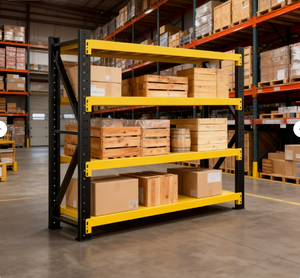
Adjustable Steel Industrial Storage Shelves
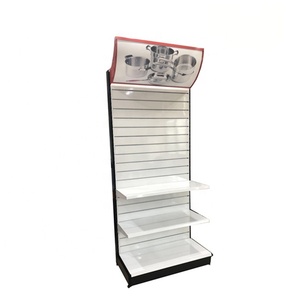
Modular Slatwall Display & Gondola Shelving
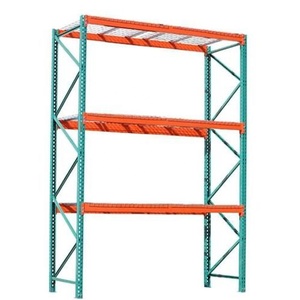
Heavy Duty American Teardrop Selective Pallet Rack
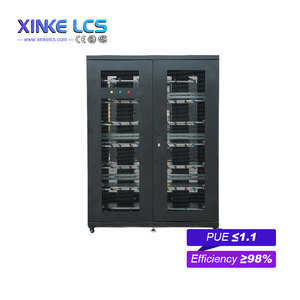
42U Liquid Cooling Server Enclosure Rack
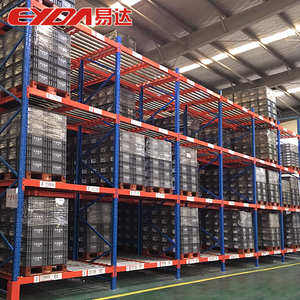
Heavy Duty Gravity Pallet Flow Dynamic Rack
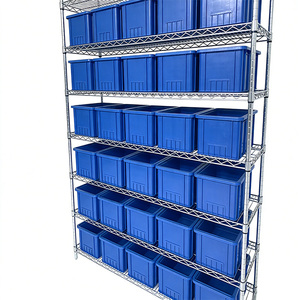
7-Layer High-Density Factory Warehouse Rack
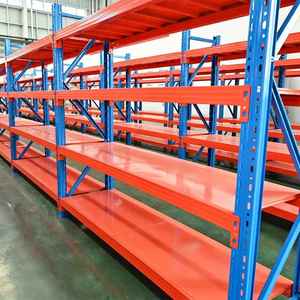
Heavy Duty Powder Coated Pallet Rack System
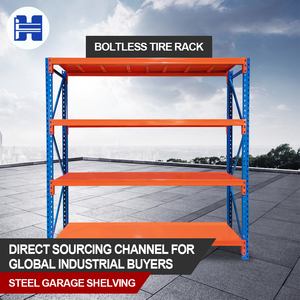
Long Span Medium Duty Boltless Storage Rack
Structural Engineering Standards for Global Racking Procurements
An authoritative evaluation of yield tolerances, mechanical fatigue life, seismic load calculations, and CE certification protocols governing heavy-duty pallet rack systems in modern intra-logistics operations.
Industrial pallet racking is not merely static factory shelving; it is an engineered structural system subjected to dynamic impact loads, live operational stresses, cyclic deflection, and seismic ground accelerations. In high-density modern facilities where clear building heights often exceed 12 to 30 meters, pallet racking performance dictates worker safety, business continuity, and structural insurance compliance. As international commerce integrates logistics corridors across Europe, the Middle East, Asia-Pacific, and the Americas, compliance with harmonized European standards—specifically EN 15512:2020 (Racking Design Principles), EN 15620 (Tolerances, Deformations, and Clearances), and EN 15635 (Application and Maintenance of Storage Equipment)—has become the mandatory baseline for international tender specifications.
1. Mechanical Metallurgy & Cold-Formed Profile Geometries
The structural integrity of a heavy-duty upright column depends on high-tensile cold-rolled steel coils, predominantly certified Q235B and Q355B structural carbon steel (corresponding to European S235JR and S355JR). The manufacturing process utilizes advanced progressive multi-station roll-forming lines that gradually shape the flat strip into an optimized multi-flange, Omega (Ω) or closed C-profile. Every cold-forming pass introduces cold-work hardening, enhancing the material's yield strength while maintaining the requisite elongation parameters (>15%) to avoid brittle failure under instantaneous forklift collisions.
Beams are engineered utilizing continuous double-C interlocking profiles welded seamlessly to 3-hook, 4-hook, or 5-hook heavy-gauge end connectors. The design incorporates an engineered safety locking pin capable of resisting vertical dislodgement forces exceeding 5.0 kN per connector, as mandated by the Storage Equipment Manufacturers’ Association (SEMA) and RMI (Rack Manufacturers Institute) safety mandates.
| Engineering Attribute | Standard Selective Pallet Rack | Drive-In / Drive-Through Rack | Radio Shuttle High-Density System | Automated High-Bay (ASRS) Rack |
|---|---|---|---|---|
| Governing Standard | EN 15512 / FEM 10.2.02 | EN 15512 / FEM 10.2.07 | EN 15512 / EN 528 Machinery | EN 528 / FEM 9.831 / EN 15620 |
| Primary Raw Steel Grade | Q235B / S235JR cold-rolled | Q355B / S355JR heavy coil | High-strength structural Q355B | Micro-alloyed ultra-flat steel |
| Payload Range Per Pallet | 500 kg – 2,000 kg | 800 kg – 1,500 kg | 500 kg – 1,800 kg | 300 kg – 1,500 kg |
| Deflection Limit Ratio | L/200 standard (L/300 high spec) | L/250 longitudinal rail | L/400 dynamic shuttle rail | L/500 stringent crane track |
| Surface Pretreatment | Acid Pickling & Phosphating | Phosphating + Hot-dip option | Electrophoresis / Powder coat | Continuous high-adhesion powder |
| Inventory Rotation Model | 100% Selective (FIFO / LIFO) | Strictly LIFO (FIFO in Drive-Thru) | Flexible FIFO / LIFO Software-set | Fully Automated Real-Time WMS |
2. Environmental Adaptation: Thermal Stress & Corrosion Kinetics
Warehousing operations in equatorial zones, Gulf Cooperation Council (GCC) territories, and coastal logistics nodes experience extreme ambient working environments: temperatures oscillating between 10°C and +50°C, ambient relative humidity reaching 90%, and fine airborne particulate contamination (silica dust and marine aerosol chlorides). Ordinary commercial paints degrade rapidly under these conditions, leading to micro-cracking, under-film blistering, and accelerated galvanic corrosion at connection bolts and floor baseplates.
To eliminate these catastrophic risks, our industrial manufacturing line incorporates an automated multi-stage chemical pretreatment cycle: ultrasonic degreasing, multi-rinse de-ionized neutralization, chemical acid pickling to strip mill scale, and zinc-iron phosphating to passivate the structural surface. This is directly followed by automated electrostatic deposition of thermosetting polyester epoxy powder, cured at 180°C–200°C. The resulting dry film thickness (60–90 μm) delivers cross-hatch adhesion tested to ISO 2409 Class 0 and salt spray resistance exceeding 500 hours (ASTM B117), guaranteeing 15+ years of operational structural service without structural degradation.
Factory-Direct Quality, Verified Safety, End-to-End Ownership
From initial site survey and 3D structural CAD modeling to precision CNC roll-forming, global maritime container packing, and on-site assembly guidance—we retain total quality control under one roof.
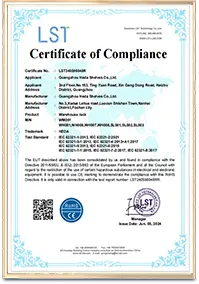
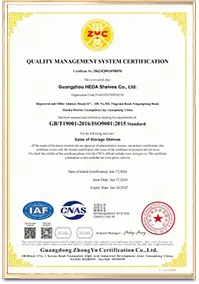
Accredited CE & ISO Certification
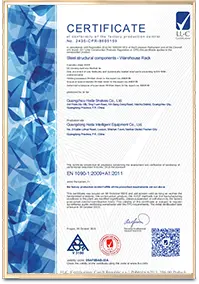
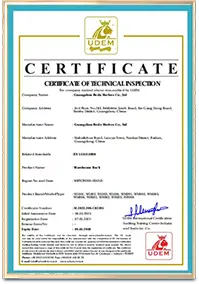
Holding CE Certification No. 2435-CPR-8605159, ISO 9001:2015 Quality Management (No. 18624Q00169R0M), and comprehensive RoHS environmental compliance. Every production batch undergoes destructive tensile testing and deflection yield verification.
Complimentary 2D CAD & 3D Modeling
Our dedicated engineering team of 30+ structural designers produces complete 2D layout plans, column grid clearance studies, forklift turning radius simulations, and 3D photorealistic renderings within 24 to 48 hours for rapid civil authority approvals.
Precision Export Container Packaging
Heavy structural uprights and box beams are banded using high-strength steel strapping, cushioned with corner edge guards, moisture-resistant shrink wrapping, and tagged with individual barcoded piece marks matching project assembly drawings for swift port clearance.
The 10-Stage Precision Manufacturing Workflow
Strict stage-by-stage quality assurance guarantees that every upright, connector, and beam meets the stringent mechanical thresholds demanded by global logistics hubs.
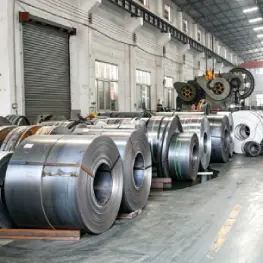
Raw Steel Inspection
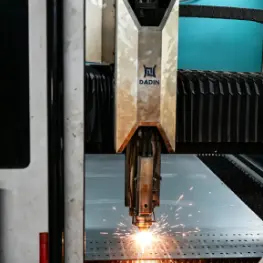
Precision Slitting
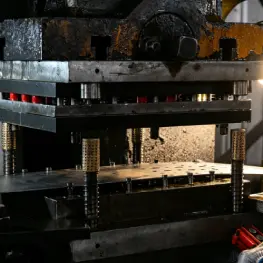
CNC Hole Punching
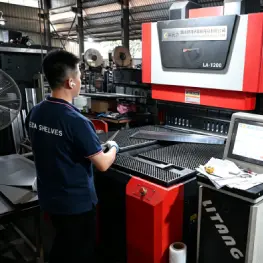
Continuous Roll-Form
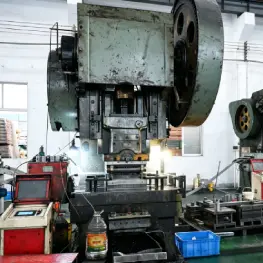
Length Calibration
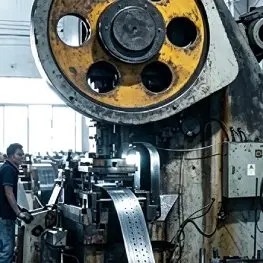
Edge Deburring
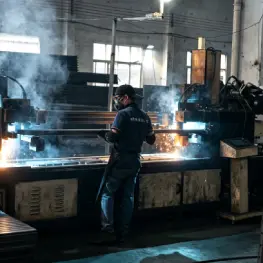
Robotic CO2 Welding
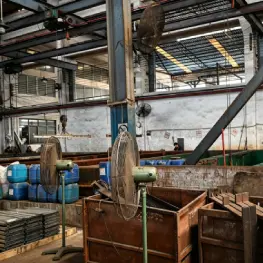
Chemical Phosphating
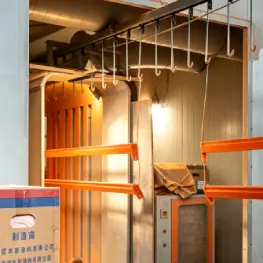
Electrostatic Coating
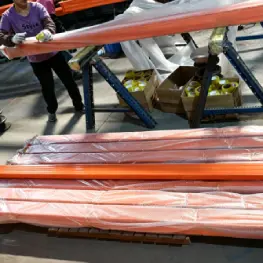
QC & Ocean Packing
Future Racking Procurement Trends: 2025 to 2030
Macroeconomic supply-chain dynamics, rising industrial real estate costs, and decarbonization mandates are radically reshaping how international procurement directors evaluate steel racking contracts.
1. Total Cost of Ownership (TCO) Over CapEx
Supply chain leaders no longer prioritize initial hardware purchase cost alone. Procurement models now incorporate the full lifecycle equation: installation speed, floor slab anchor durability, post-impact repair ease, corrosion longevity, and the salvage value of modular boltless components.
2. Automation-Ready Hybrid Infrastructure
Purchasers are specifying "Automation-Ready" selective and drive-in racks capable of seamless retrofitting into semi-automated 4-way Radio Shuttle systems or Autonomous Mobile Robot (AMR) dynamic picking environments without requiring total facility teardown.
3. Traceability, ESG & Low-Carbon Steel
European and international green building codes (LEED, BREEAM) now mandate Environmental Product Declarations (EPD) and quantifiable mill test certificates tracking recycled steel scrap ratios, non-toxic heavy-metal-free powder coatings, and recyclable packaging.
Technological Innovations Reshaping Industrial Storage Systems
How finite element simulation, sensorized health monitoring, and modular mezzanine engineering are transforming passive racks into intelligent warehouse assets.
Nonlinear FEA Structural Modeling
Advanced computer-aided engineering utilizes non-linear Finite Element Analysis (FEA) to simulate 3D portal frame behavior under full live load, forklift mast impact, second-order P-Delta geometrical effects, and seismic spectrum responses specific to localized geotechnical conditions.
Smart IoT Structural Health Monitoring
Pilot warehouse installations now integrate wireless MEMS strain gauges and 3-axis accelerometer sensor pods directly onto vulnerable baseplates and lower upright sections. The sensors provide real-time alerts upon exceeding safety threshold impact parameters, preventing progressive collapse.
High-Bay Rack-Supported Building Enclosures
Moving beyond independent racking inside pre-engineered metal buildings, modern mega-logistics parks employ rack-supported buildings (clad-rack warehouses). The high-precision racking structure itself carries roof trusses, wall claddings, and insulated sandwich panels, reducing structural civil investment by 20% to 35%.
Traceable CE Marking & Quality Management
For tier-1 infrastructure general contractors, sovereign supply chain ministries, and international logistics corporations, regulatory approval hinges upon verifiable compliance. Guangzhou Heda Shelves Co., Ltd. provides certified, unalterable documentation suitable for third-party audits (SGS, TÜV, Bureau Veritas) and national Civil Defense building plan permissions.
- CE Certification No. 2435-CPR-8605159: Harmonized European standard conformity for structural steel components.
- ISO 9001:2015 Certification No. 18624Q00169R0M: Fully audited quality management system in continuous compliance through June 2027.
- RoHS & Heavy-Metal Testing: Zero toxic volatile organic compounds (VOC) or lead contents in powder coat resins.
Frequently Asked Questions by Industrial Engineers & Buyers
Detailed technical, logistical, and structural answers to simplify engineering appraisals, customs clearance, and warehouse layout planning.
1. What technical data is mandatory to calculate beam load capacities and upright sections? +
2. How do your CE-certified racks comply with seismic load codes (Eurocode 8 & RMI MH16.1)? +
3. How does the factory ensure weld integrity between beam box profiles and end connectors? +
4. What surface treatment options are available for outdoor yards or corrosive chemical stores? +
5. Can HEDA layout designs be submitted for local Civil Defense and fire authority approvals? +
6. What are the key operational differences between Drive-In and Radio Shuttle storage systems? +
7. How do you package goods to prevent damage during long-haul multimodal ocean freight? +
8. What are your standard delivery lead times and production capacities? +
9. Do you provide on-site installation support or supervision for international projects? +
10. What warranty terms and lifecycle inspection protocols apply to your racking systems? +
Optimize Your Warehouse Capacity & Structural Safety
Connect directly with our senior racking design engineers. Submit your warehouse floor plan today for a comprehensive, complimentary 2D CAD engineering layout, 3D visualization rendering, and itemized factory-direct commercial quotation.