Factory Direct Catalog
Engineered Industrial Storage Systems & Heavy-Duty Components
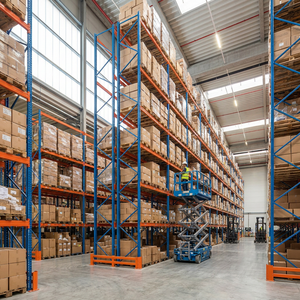
Explore our core CE-certified structural profiles, pallet load-bearing modules, and dynamic inventory systems customized for high-bay logistics facilities and global distribution hubs.
25+
Years Manufacturing Experience
30,000t
Monthly Steel Capacity
10,000+
Global Installations Completed
120+
Export Destination Countries
Engineering Paradigms in Modern Warehouse Pallet Racking Systems
As international supply networks navigate volumetric volatility and surging land procurement costs, industrial logistics infrastructure faces unprecedented structural and operational performance demands. Selecting a CE-certified racking system for pallets requires a comprehensive understanding of static and dynamic structural behavior under severe operational conditions. For large-scale manufacturing facilities, port distribution complexes, and third-party logistics (3PL) aggregators, warehouse racking represents a critical structural asset that directly dictates site throughput efficiency, life-safety risk profiles, and operational margins.
The Structural Imperative of CE Certification (EN 15512 & EN 15620)
Within international procurement frameworks, CE marking serves as verified verification that structural steel assemblies satisfy stringent European mechanical calculation, deflection tolerance, and factory production control benchmarks. European standard EN 15512:2020 governs structural design principles for steel static storage systems, dictating load application factors, partial safety limits, and seismic design rules. Coupled with EN 15620 tolerances, which dictate allowable beam deflections under maximum operational capacity (limiting deflection to L/200 for standard configurations and L/300 or L/400 for automated narrow-aisle deployments), certified manufacturers must maintain end-to-end traceability across raw coil sourcing, multi-stage cold profile forming, precision laser hole-punching, and controlled robotic welding.
For cross-border export projects—particularly across Europe, the Middle East, and Latin America—specifying non-certified racking exposes logistics developers to severe operational risks: uncalculated micro-deflections leading to mast-binding in Automated Guided Vehicles (AGVs), premature weld joint stress fracture, and uninsurable warehouse facilities. Certified racking guarantees that structural steel components, predominantly manufactured from cold-formed Q235B, Q355B, or equivalent high-yield steel coils, exhibit the yield tensile ductility and torsional resistance necessary to absorb transient forklift collisions and dynamic floor vibrations.
Surface Protection Chemistry for Aggressive Environments
A primary failure point in industrial storage systems is premature oxidation induced by ambient environmental factors. Coastal logistic corridors, temperature-controlled sub-zero cold chain facilities, and chemical staging zones exhibit elevated relative humidity and chemical corrosion rates. High-tier industrial manufacturers mitigate these degradation mechanisms through advanced surface metallurgy:
Prior to coating, steel members undergo multi-stage chemical pretreatment, including acidic pickling and zinc-phosphating washes. This process strips all rolling scale and lays a conversion layer optimized for cross-linked bond formation. The subsequent electrostatic powder coating—cured in controlled ovens between 180°C and 200°C—delivers a minimum coating thickness of 60 to 80 microns. For external applications, corrosive fertilizer warehouses, or outdoor staging zones, back-to-back strut channels and decking systems utilize heavy-duty Hot-Dip Galvanizing (HDG) meeting ASTM standards, delivering zinc weights exceeding 500 g/m² for decades of rust-free service life.
Market Forecast 2026-2035
Future Sourcing & Procurement Trends in Pallet Racking
Evaluate emerging engineering requirements reshaping international warehouse investments, automation retrofitting, and high-density material handling.
ASRS & Automation Alignment
Procurement is shifting away from purely manual selective bays toward hybrid, automation-ready structures. Tolerances must accommodate automated shuttle carrier travel, crane mast interfaces, and millimetric positioning sensors.
Decoupled Cold Chain Footprints
High chilling and electrical overheads in cold storage are driving buyers to demand ultra-dense Radio Shuttle and Gravity Flow configurations that reduce refrigeration cube-loss per pallet position by up to 40%.
Life-Safety & Civil Compliance
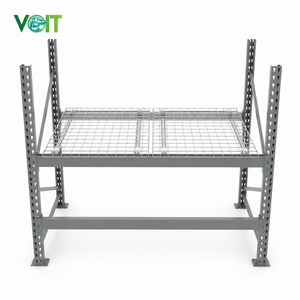
Municipal fire defense departments and industrial insurers require factory documentation proving transverse and longitudinal flue spaces, certified fire sprinkler wire mesh decks, and seismic anchorage calculations.
Total Lifecycle Engineering
Procurement teams increasingly evaluate Total Cost of Ownership (TCO) over baseline purchase price. Durable phosphated coatings, modular bolted assemblies, and standardized component interchangeability reduce maintenance costs over decades.
Engineering Evolution
Technological & Material Innovations in Modern Racking
The manufacturing of pallet racking systems has advanced from simple manual rolling operations to automated precision cold-forming engineering. Key industrial innovations include:
1. Finite Element Analysis (FEA) Modeling: Structural engineers analyze complex frame geometries to calculate dynamic stress concentrations, post-buckling performance, and seismic displacement behaviors. This calculation process optimizes profile thickness without compromising safety margins.
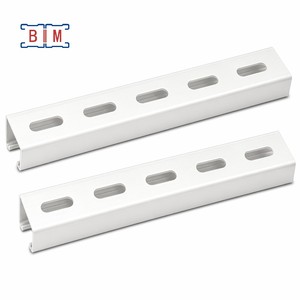
2. Advanced Upright Profile Geometry: Contemporary uprights feature multi-bend cross-sections (often up to 12 to 14 rolling passes) that maximize the radius of gyration. This geometry delivers higher load-bearing limits per kilogram of steel compared to traditional 4-bend configurations.
3. Heavy-Duty Connectors with Integrated Locking Pins: Beams are engineered with 3-claw or 4-claw stamped connectors welded across both flanges. High-shear safety locking pins prevent accidental beam dislodgement caused by erratic forklift operator lifting.
Factory Qualifications & Strengths
Why Global Logistics Operators Rely On Our Production
Guangzhou HEDA Shelves brings direct manufacturing capabilities, verified certifications, and turnkey engineering services to industrial clients worldwide.
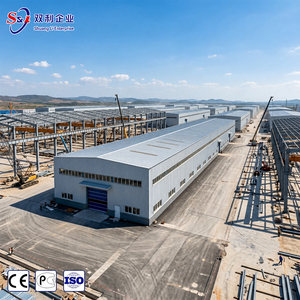
30,000 m² Manufacturing Complex
In-house precision cold roll-forming lines, automated column punching lines, laser sheet profiling, and high-capacity electrostatic powder coating facilities operating in Guangzhou.
CE & ISO 9001 Certified Quality
Fully compliant with CE Certificate (No. 2435-CPR-8605159), ISO 9001:2015 management system (No. 18624Q00169R0M), and RoHS environmental standards for complete traceability.
Free 3D Layout & CAD Design
Senior structural engineering teams deliver comprehensive 2D architectural CAD layouts and 3D operational simulations tailored to your concrete slab capacity and lift equipment.
Export-Grade Container Packing
Components are bundled with protective wrapping, labeled to match structural installation schematics, and packed to prevent marine moisture and transit damage.
Procurement Intelligence
Frequently Asked Questions on Pallet Racking Procurement
Direct technical answers addressing critical planning, engineering compliance, and international shipping factors.
Q: What documentation validates authentic CE certification for imported racking?
An authentic CE mark must be supported by a Declaration of Performance (DoP) referencing standard EN 15512 or EN 1090-1, issued by an accredited notified body. The certificate must indicate the manufacturer's Factory Production Control (FPC) audit status. Our CE Certificate No. 2435-CPR-8605159 verifies consistent mechanical performance and manufacturing quality.
Q: How do engineers calculate maximum allowable load limits for pallet rack beams?
Allowable loads are calculated under uniformly distributed load (UDL) conditions, accounting for the steel section modulus, moment of inertia, and allowable deflection limits (commonly L/200). Design calculations apply a safety coefficient (typically 1.5 to 1.65) to protect against unexpected shock loads during pallet placement.
Q: Can your structural layouts support local Civil Defense and fire authority approvals?
Yes. Our engineering department prepares comprehensive 2D CAD architectural plans detailing aisle widths, vertical clearance, escape paths, transverse and longitudinal flue spaces, and wire mesh decking ratings. These technical submittals give local structural consultants the data needed to secure municipal and insurance permits.
Q: What essential floor slab information must be evaluated before racking installation?
Engineers require concrete floor compressive strength (such as C25/30 or C30/37), slab thickness, joint locations, flatness tolerances (DIN 18202 or TR34 standards), and rebar reinforcement data. This information determines baseplate dimensions, anchor bolt embedment depths, and allowable point loads.
Q: How does surface treatment prevent rust in coastal and cold-storage facilities?
Components receive an automated multi-stage chemical wash, including pickling and phosphating, to remove scale and oil. An electrostatic powder coating creates an impervious polymer skin. For humid coastal operations or sub-zero environments, we offer hot-dip galvanized finishes that deliver lasting cathodic protection.
Q: What is the standard manufacturing lead-time and shipping preparation workflow?
Standard production cycles run 15 to 25 working days depending on project tonnage. Uprights, beams, and bracing are bundled in numbered shipping lots matching the structural installation drawings. Heavy wooden crating and protective wrapping protect painted surfaces and fasteners during ocean transit.
Upgrade Your Warehouse Storage With Certified Engineering
Submit your facility dimensions, floor slab profile, and storage requirements. Our engineering team will prepare an optimized 2D CAD floor plan, 3D structural model, and detailed quotation tailored to your operational targets.
Get Catalog