Engineered Heavy-Duty & Dynamic Storage Solutions
Factory-direct structural steel warehouse systems manufactured under CE Certificate No. 2435-CPR-8605159 and international load deflection standards.
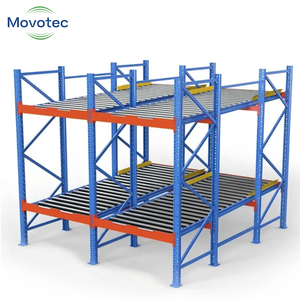
Warehouse Storage Gravity Roller Flow Racking MTG100
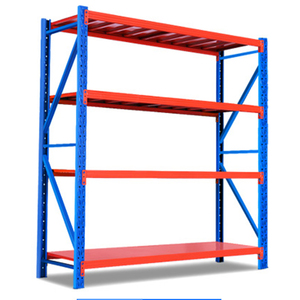
200kg/Layer Boltless Steel Q235 Shelving System HD036
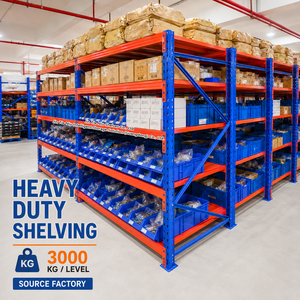
3000KG Custom Steel Deck Heavy-Duty Storage Rack
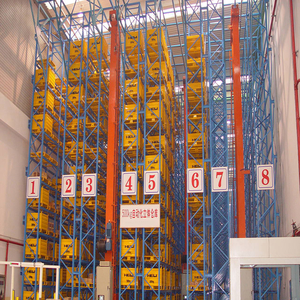
AS/RS High-Bay Automated Warehouse Pallet Racking
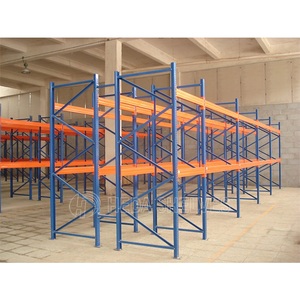
Europe Style Heavy Duty Q235 Steel Industrial Pallet Rack
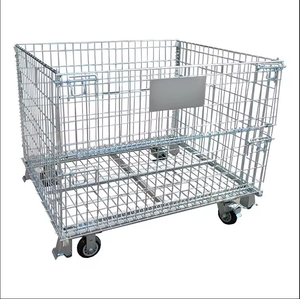
Steel Wire Mesh Foldable Metal Storage Logistics Cage
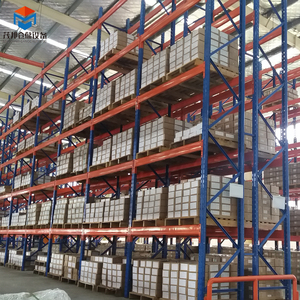
Heavy Duty Selective Pallet Racking with Adjustable Beam
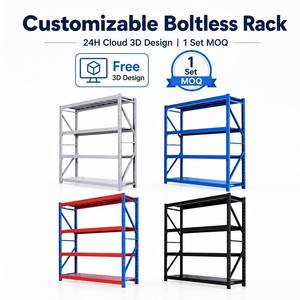
Selective Light Duty Boltless Industrial Metal Shelving
Comprehensive Engineering Matrix: Industrial Racking Types
Selecting the optimal warehouse racking topology requires evaluating mechanical load limits, aisle accessibility, volumetric cubic efficiency, and stock rotation economics.
| Racking Typology | Operating Principle | Storage Density Index | Selectivity | Ideal Applications & Environments |
|---|---|---|---|---|
| Selective Pallet Racking | Single/Double-deep configuration with longitudinal beams supporting unit loads on pallet supports. | Moderate (40% - 45% floor usage) | 100% Direct Pick | High SKU counts, 3PL logistics facilities, general distribution centers requiring immediate accessibility. |
| Drive-In / Drive-Through | Continuous pallet support rails allowing lift trucks to drive directly into deep structural lanes. | High (Up to 75% floor footprint) | Low (LIFO / FIFO lanes) | Cold storage facilities, bulk homogenous products, seasonal beverage/agriculture stock. |
| Radio Shuttle Automation | Semi-automated robotic cart running on sub-rails beneath pallet runners driven by RF remote/PLC. | Very High (80%+ floor usage) | Flexible (LIFO & FIFO) | High-throughput cold chain, FMCG distribution, labor-constrained warehouses, buffer picking. |
| Gravity Roller Flow Racking | Inclined roller beds (3-4% slope) utilizing controlled gravity brakes and separation devices. | High (70% - 80% cubic footprint) | Strict FIFO | Perishable goods, pharmaceutical cold stores, dairy, food processing with strict expiration tracking. |
| Cantilever Racks | Free-standing upright columns with variable-pitch load arms without frontal column obstruction. | Linear / Scalable | 100% Open Access | Long, non-palletized stock: steel pipes, structural timber, drywall sheets, extrusions, rebar bundles. |
| Mezzanine & Multi-Tier Systems | Heavy structural I-beam columns or rack-supported multi-level steel catwalks and decking. | Extreme Vertical Multiplication | Individual Layer Access | E-commerce fulfillment centers, automotive parts distribution, spare parts picking hubs. |
Emerging Trends in Global Racking Procurement
How structural standards, warehouse automation, geopolitical climate factors, and supply chain decarbonization are reshaping capital expenditure decisions.
1. Integration of Shuttle & Autonomous AMR Fleets
Procurement teams are shifting from pure manual forklift selective racking to semi-automated shuttle systems and autonomous mobile robot (AMR) compatible low-level interfaces. Facilities anticipate labor cost escalations by sourcing racking configurations engineered with tighter structural tolerances (±1.5mm) to support laser-guided autonomous vehicles without structural field retrofits.
2. Extreme Climate Finishes & Pretreatment
In regions such as the GCC (UAE, Saudi Arabia, Qatar) and Southeast Asia, conventional thin-film painting fails within 24 months due to coastal ambient salinity, fine airborne dust, and high relative humidity. Modern tender specifications require multi-stage pickling, iron phosphating, and electrostatic epoxy-polyester thermoset powders exceeding 80–100μm thickness to guarantee corrosion longevity.
3. Strict EN 15512:2020 Limit State Verification
International insurance auditors, Civil Defense bodies, and third-party inspectors no longer accept simple nominal load ratings. Capital projects demand structural calculation packages adhering strictly to EN 15512:2020 limit-state design principles, incorporating full second-order P-Delta structural analysis, seismic vulnerability calculations, and cold-formed steel torsional flexural buckling simulations.
Technological Evolution: From Raw Coil to Load-Bearing Assembly
Why automated in-house roll forming and continuous quality verification define the operational lifespan of heavy-duty industrial storage racks.
Continuous CNC Roll-Forming
Uprights fabricated on automated 24-station continuous rolling lines prevent internal micro-fractures in high-tensile Q235B and Q355B strip coils, maintaining structural cross-section uniformity across heights up to 15 meters.
Automated Robot Welding
Beam connector claw plates are joined to double-C interlocked box profiles using robotic CO₂ gas-shielded continuous welds, eliminating cold-lap defects and guaranteeing dynamic shear resilience under cyclical loading.
Acid Washing & Phosphating
A full 10-step immersion bath removes residual mill scale, oil, and oxides prior to electrostatic coating. This chemical pretreatment provides a microscopic crystalline bond that prevents sub-surface paint blistering.
Curing & Strict QC Testing
Components bake in a 200°C curing oven for high hardness. Batches undergo beam deflection tests, cross-hatch paint adhesion checks, and ultrasonic weld flaw detection before seaworthy bundle packing.
Direct Manufacturing Competence & Engineering Edge
Delivering verified structural capacity, factory-direct pricing, and turnkey international delivery from our 30,000 square meter manufacturing base.
30,000 Tons Monthly Capacity
With multiple automated lines, CNC punching matrices, and automatic powder-coating tunnels, we handle large multi-thousand-pallet projects with reliable 15 to 25-day production cycles, avoiding intermediary trading delays.
Free 2D CAD & 3D Modeling
Our in-house structural engineering group delivers complete building bay calculations, slab loading assessments, flue space configurations, and 3D virtual walkthroughs before purchase commitments, accelerating internal and regulatory sign-offs.
Seaworthy Bundling & Field Support
All beams and uprights are color-coded, labeled, and wrapped in protective heavy-duty film with steel dunnage to prevent transport friction during oceanic shipping. Detailed isometric drawings make installation straightforward for local contractors.
Frequently Asked Questions by Industrial Buyers
Technical answers addressing loading limits, certifications, environmental resistance, and international site integration.
Full CE conformity requires compliance with CPR (Construction Products Regulation) under standard EN 1090 / EN 15512. Valid certificates must display the notified body registration code (such as CE No. 2435-CPR-8605159) together with factory production control (FPC) audit documentation and mill test reports (MTR) demonstrating mechanical yield strength of the steel grades utilized.
According to international standards (SEMA, RMI, and EN 15512), maximum allowable vertical beam deflection under static working load is typically 1/200th of the clear bay span (L/200), though high-precision automated systems often require L/300 or stiffer. For a standard 2700mm beam bay, permissible mid-span deflection under design load must not exceed 13.5mm, recovering completely elastically when unloaded.
Temperatures down to -30°C cause embrittlement in lower-grade steels. For sub-zero operations, certified Q235D or specialized cold-tough impact-tested alloys are used. Coatings must be thermoset polymers applied over zinc phosphated substrates, or pre-galvanized components must be selected to prevent embrittled paint flaking and corrosion from freezing condensation.
To calculate safe clearances, frame depths, and aisle dimensions, supply: architectural CAD floor plan, lowest roof clearance height, slab thickness and concrete compressive strength, pallet specifications (width × depth × height, including overhang), maximum loaded pallet weight, lift truck model (mast collapsed height, maximum lift height, and minimum right-angle stacking aisle requirement), plus local seismic design category.
Yes. Upright column patterns are punched with standard 50mm or 75mm continuous pitch increments. Beams can be unhooked and re-pinned without structural cutting. However, changing the vertical position of the lowest beam level impacts the unsupported column buckling length (effective length), which requires our engineering department to re-verify the frame capacity tables.