Engineered Portfolio
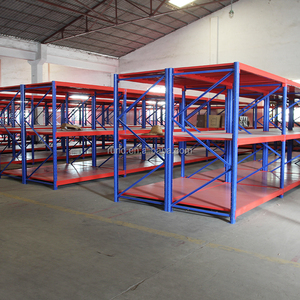
Industrial-Grade Light Duty & Adaptive Warehouse Storage Solutions
Engineered to bridge the structural threshold between ultra-dense industrial racking and high-velocity picking tiers. Tested according to CE and ISO 9001 global manufacturing parameters.
Technical Whitepaper
Modern Engineering Standards for Light Duty Pallet Racking
Understanding structural deflection tolerances, load dynamics, and metallurgic specifications for high-throughput secondary distribution facilities.
Demarcation of Light Duty Pallet Racking in Modern Logistics
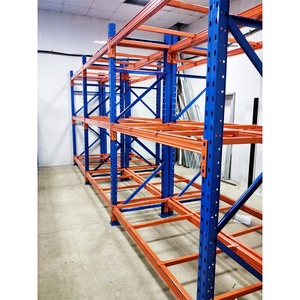
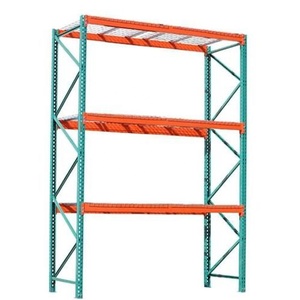
Within warehouse spatial architecture, the term light duty pallet racking designates dynamic and static racking arrays engineered to support distributed loads spanning from 300 kg to 1,500 kg per storage plane. While heavy-duty selective systems handle extreme industrial cargo (up to 4,500 kg per level), light duty systems resolve a crucial operational inefficiency: handling medium-density pallet loads, split-case consolidation, automotive components, and retail cartons without excessive dead-weight structural overhead.
By deploying high-tensile Q235B cold-rolled steel coils processed through continuous precision roll-forming lines, manufacturers can drastically reduce the cross-sectional steel thickness without compromising structural rigidity. The result is an optimized strength-to-weight profile that minimizes floor slab pressures, satisfies stringent building codes, and allows rapid field reconfigurability as SKU velocity changes.
Load-Bearing Dynamics and Structural Deflection Formulas
The engineering validation of racking uprights and horizontal step beams adheres strictly to Finite Element Analysis (FEA) and international standards including EN 15512, ANSI MH16.1, and AS 4084. When assessing beam deflection under full static loading, the industry benchmark enforces a maximum deflection limit of L/200 (where L is the clear span distance between upright frames). For automated guided vehicle (AGV) or narrow-aisle picking interfaces, tighter limits of L/300 are typically mandated.
| Structural Profile | Material Specification | Nominal Capacity per Tier | Target Deflection Threshold | Primary Application |
|---|---|---|---|---|
| Light Pallet Step Beam (50x30x1.5mm) | Q235B Cold-Rolled Steel | 300 kg - 600 kg (UDL) | < L/250 max span | E-Commerce Split Picking |
| Medium Box Beam (60x40x1.5mm) | High-Yield Low Alloy Steel | 600 kg - 1,200 kg (UDL) | < L/200 max span | Automotive Parts & Hardware |
| Heavy-Light Hybrid (80x50x1.8mm) | Cold-Drawn Structural Tube | 1,200 kg - 1,800 kg (UDL) | < L/200 max span | Electronics & Fast-Moving FMCG |
| Modular Longspan C-Channel | Galvanized / Powder Coated | 200 kg - 500 kg (Manual) | < L/250 max span | Carton-Flow Mezzanines |
Accurate design calculations incorporate comprehensive seismic co-efficient mapping, dynamic impact resistance for lift trucks, and floor anchor tensile tolerances. Uprights are formed with diamond-shaped, teardrop, or butterfly punch profiles at 50mm or 75mm pitches, enabling mechanical wedging that increases joint stiffness as the load increases.
Surface Pretreatment and Environmental Metallurgy
Industrial racking systems installed across challenging maritime, arid, or sub-tropical supply chain environments must resist accelerated oxidation, galvanic corrosion, and abrasion. Certified manufacturing facilities implement a rigorous 10-stage preparation process prior to coating:
Automated immersion degreasing, ultrasonic water rinsing, acid pickling to eliminate mill scale, and chemical phosphating establish a micro-crystalline iron phosphate base layer. After drying, thermosetting electrostatic epoxy-polyester powder is uniformly sprayed at 60 to 90 microns thickness and cured at 180°C to 200°C. This process ensures salt-spray resistance exceeding 500 hours according to ASTM B117, preventing micro-crack propagation under constant mechanical friction from pallet skids.
Industry Foresight
Future Procurement & Engineering Trends (2025–2030)
Global fulfillment hubs are transitioning from passive static shelves to data-coupled dynamic ecosystems. These technological shifts are redefining light duty pallet racking investments.
Autonomous Mobile Robot (AMR) Integration
Warehouses are replacing standard reach trucks with low-profile AMRs and autonomous tuggers. Light duty racking now features elevated bottom beam clearances, floor-level scanning targets, and cantilevered lower stages designed for direct robot-to-shelf payload exchange without manual pallet handling.
Hybrid Multi-Tier Mezzanine Optimization
Urban logistics real estate constraints are driving rack-supported platforms higher. Light duty racking is increasingly engineered as the primary structural column grid for 2-to-4-tier catwalk mezzanines, effectively doubling or tripling floor area without expanding the building footprint or incurring capital construction taxes.
Carbon Footprint Transparency & Circularity
Enterprise tier-1 procurement guidelines now require verified Environmental Product Declarations (EPD). Modern Chinese mills and manufacturers utilize recycled secondary scrap steel, closed-loop powder recovery booths (98% efficiency), and dry phosphating lines that cut industrial wastewater discharge to zero.
Enterprise Authority
Why Global Supply Chains Trust Our Production Infrastructure
Founded in 2001, Guangzhou Heda Shelves Co., Ltd. delivers direct engineering control across layout planning, structural calculation, precision roll forming, and certified export execution.
Established in 2001
Over two decades of pure-play focus on storage logistics. We have solved complex warehousing challenges across more than 10,000 completed installations worldwide.
CE & ISO 9001 Certified
Rigorous quality control matching CE (No. 2435-CPR-8605159) and ISO 9001:2015 management systems. Full traceability from steel heat numbers to container lashing reports.
120+ Global Export Ports
Factory-direct exports shipped smoothly to major hubs worldwide, including Jebel Ali, Khalifa, Dammam, Jeddah, Singapore, Rotterdam, and Los Angeles.
Free 3D & CAD Layouts
Our in-house design engineers model your warehouse in CAD and provide full 3D rendering views, verifying aisle clearances and sprinkler zones before steel production starts.
30,000 m²
In-House Manufacturing Facility
30,000 t
Monthly Steel Processing Capacity
300+
Certified Engineers & Technicians
10,000+
Global Projects Installed
Procurement Due Diligence
Frequently Asked Questions for B2B Importers & Contractors
Technical, operational, and logistics details to support your procurement reviews, site audits, and customs filings.
What is the difference between light duty pallet racking and heavy-duty industrial shelving?
While terminology can overlap, light duty pallet racking is engineered specifically for palletized loads handled by reach trucks, stackers, or order pickers, with rated capacities between 300 kg and 1,500 kg per level. In contrast, heavy-duty shelving (longspan) is designed primarily for manual carton or item loading, often featuring wire mesh decks or solid steel panels with capacities up to 800 kg per shelf. Pallet racking frames include engineered footplates bolted into structural concrete slabs to absorb pallet impact forces, whereas shelving often uses lighter base fittings.
How do you ensure structural integrity and seismic compliance for overseas sites?
Every layout is custom engineered using SAP2000 and custom FEA modeling software to evaluate axial compression, shear, and torsional buckling across uprights and beam ties. We calibrate our engineering against international standards, including European EN 15512/15620, American RMI (ANSI MH16.1), and Australian AS 4084. When clients provide their local seismic zone coefficients, site soil classes, and concrete slab specifications, our engineers adjust baseplate dimensions, anchor bolt diameters (typically M12 to M16 chemical or mechanical wedges), and column gauges to comply fully with local civil defense and structural safety regulations.
What surface coatings are used to prevent rust in high-humidity or sub-zero facilities?
For standard temperature-controlled warehouses, our 10-step powder coating line provides durable, abrasion-resistant protection with a 60–90 micron thick layer of cured epoxy-polyester powder. For high-humidity coastal sites, open exterior staging yards, or cold-storage facilities operating at -30°C, we provide continuous hot-dip galvanized components (meeting ISO 1461 standards with coating thicknesses of 60 to 110 microns) or pre-galvanized high-yield steel coils, preventing corrosion caused by moisture and condensation.
What documents and details are required to generate a free 2D/3D warehouse layout?
To produce an accurate CAD design and 3D rendering within 24 to 48 hours, our engineering team requires:
1. Building architectural CAD file (.dwg/.dxf) or an accurate dimensioned PDF showing internal columns, clear height under roof beams, access doors, and sprinkler manifold elevations.
2. Pallet specifications: Width × Depth × Maximum Overall Height (including cargo overhang), and maximum weight per pallet.
3. Material handling equipment (forklift or stacker model, turning radius, maximum mast elevation, and required operational aisle clearance).
4. Operating environment details (ambient, cold storage, outdoor staging) and target delivery ports for shipping calculations.
How are long upright columns and beam components packed for ocean freight?
All upright columns and heavy beams are assembled into rigid, timber-battened bundles strapped with high-tensile steel banding and protected by water-resistant multi-layer polyethylene stretch film. Small parts, footplates, safety pins, and wedge anchor bolts are sealed in labeled export-grade crates. Bundles are systematically coded to match the provided installation drawings, speeding up container unloading, port clearance, and on-site assembly.
Do you offer third-party testing reports and verified factory audits?
Yes. We regularly facilitate SGS, TÜV, and Bureau Veritas quality and load-bearing audits upon client request. Our factory holds an active CE certification (No. 2435-CPR-8605159), ISO 9001:2015 quality management accreditation (No. 18624Q00169R0M, valid through June 2027), and RoHS environmental compliance documentation. Raw steel mill test certificates (MTC) detailing mechanical yield points and chemical heat numbers are supplied with each export production batch.
Optimize Your Warehouse Geometry Today
Connect directly with our engineering team in Guangzhou. Receive a complimentary 2D CAD layout, structural static load calculation, and comprehensive factory-direct quotation within 24 hours.