Heavy-Duty
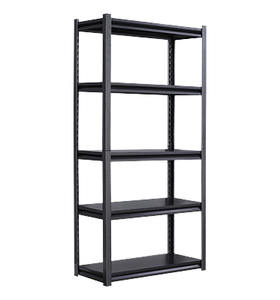
Heavy Duty Boltless Rivet Warehouse Shelves 5-Layer Easy-to-Assemble Commercial Storage Shelving Racks Steel for Electronic
500kg / Layer
Rivet Lock
Q235B Steel
Precision-formed structural steel racks and boltless shelving units designed to European FEM 10.2.02 and US RMI safety standards. Explore our core lineup configured for high-capacity logistics centers, industrial spare parts repositories, and cold storage facilities.
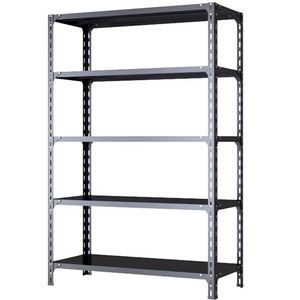
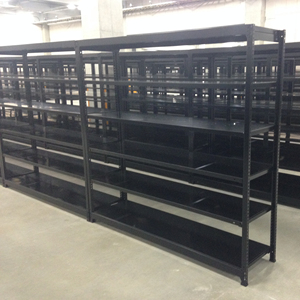
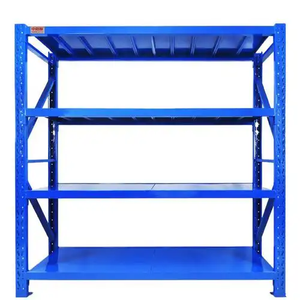
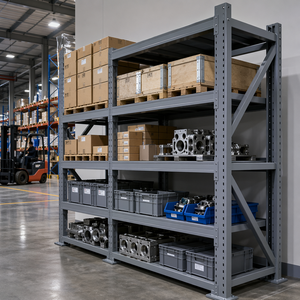
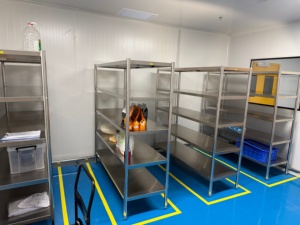
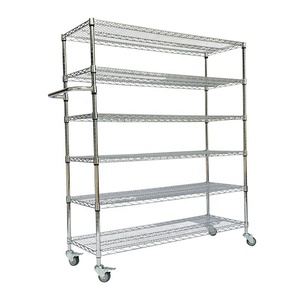
In modern industrial logistics, metal warehouse shelving is no longer treated merely as passive storage furniture; it represents a primary structural asset that directly dictates volumetric efficiency, picker safety, building dead-load distributions, and automated material handling system (AMHS) ROI. As China’s premier industrial shelving manufacturer, Guangzhou Heda Shelves Co., Ltd. (operating since 2001) manages the entire value chain from certified cold-rolled steel coil slitting to automated continuous roll forming, robotic MIG/TIG beam bracket welding, 10-stage pre-treatment surface passivation, and automated electrostatic powder curing.
Procuring metal shelving systems directly from an OEM/ODM source eliminates intermediary markups while delivering structural accountability. Our Guangzhou facility maintains comprehensive control over steel chemical compositions, mechanical tensile testing, and finite element analysis (FEA) deflection simulation. When engineering medium-duty longspan shelving or heavy-duty boltless multi-tier pick towers, structural integrity depends upon the precise balance of high-yield carbon steel alloys, hole-punch geometry in the upright posts, and cold-formed beam locking mechanisms designed to mitigate progressive structural collapse.
Structural Reliability Guarantee: Every metal shelving system fabricated by HEDA complies with strict international engineering standards, holding valid CE Certification (Certificate No. 2435-CPR-8605159), ISO 9001:2015 Quality Management Accreditation (No. 18624Q00169R0M, valid through 2027), and full RoHS compliance across all polymer powder coatings and surface passivation chemicals.
A critical divergence in metal shelving performance lies within base metallurgical specifications. Low-cost market alternatives frequently utilize scrap-contaminated hot-rolled strip steel, which suffers from uneven grain boundaries, high internal residual stresses, and micro-cracking during cold punch-forming. HEDA exclusively sources prime prime-grade cold-rolled steel coils from tier-1 Chinese steelmakers (such as Baosteel and Shougang Group).
For standard light-to-medium industrial shelving (150 kg to 500 kg per shelf tier), high-ductility Q235B carbon steel delivers an ideal balance of yield strength (minimum yield point $R_e \ge 235 \text{ MPa}$) and elongation capacity ($A \ge 26\%$), absorbing dynamic impact loads caused by manual tote drops or picking carts. In ultra-tall pick modules, automated shuttle mezzanines, and structural steel cantilever installations, we incorporate Q355B low-alloy high-strength steel ($R_e \ge 355 \text{ MPa}$, tensile strength $R_m$ between 470 and 630 MPa). This elevated yield point allows our engineers to thin the wall gauge safely, reducing dead load on concrete warehouse slabs without violating allowable deflection ratios under maximum permissible working loads.
Corrosion failure in metal warehouse shelving is insidious, often starting from within concealed upright column cavities, slotted drop-in punch holes, and beam connector welds. Standard single-stage spray coatings deteriorate rapidly when exposed to high ambient humidity, cyclic coastal maritime environments, or temperature swings common in regional distribution hubs throughout Saudi Arabia, the UAE, Southeast Asia, and Europe. HEDA implements an intensive 10-stage continuous automated pretreatment protocol:
1. Heavy-duty alkaline hot degreasing; 2. Primary circulating water rinse; 3. Ultrasonic pickling de-rusting bath to strip all mill scale; 4. Secondary industrial water neutralizing rinse; 5. Micro-crystalline zinc-iron chemical phosphating; 6. Deionized pure water seal rinse; 7. High-velocity hot air moisture dry-off; 8. Automated robotic electrostatic powder application (80–120 μm film thickness); 9. High-temperature infrared polymer polymerization curing at 180°C–200°C; 10. Non-destructive magnetic thickness testing and cross-hatch adhesion verification.
| Shelving Category | Material Standard | Load Range (Per Level) | Deflection Limit ($\delta$) | Surface Treatment | Standard Connection |
|---|---|---|---|---|---|
| Light-Duty Angle Shelving | Cold-Rolled Q235B Steel | 100 kg – 180 kg UDL | $\le L / 200$ | Electrostatic Powder (60-80μm) | Corner Plate & M8 Bolted |
| Medium-Duty Boltless Shelving | Formed Q235B Carbon Steel | 200 kg – 500 kg UDL | $\le L / 250$ | Thermoset Hybrid Epoxy-Polyester | Butterfly / Teardrop Clip |
| Industrial Longspan Shelving | Q235B / Q355B Structural | 500 kg – 1,000 kg UDL | $\le L / 300$ | Heavy Zinc-Phosphate Powder | Safety Pin Locked Step Beams |
| Stainless Cleanroom Shelves | SUS304 / SUS316 Austenitic | 250 kg – 600 kg UDL | $\le L / 250$ | Electrolytic Polished / Satin Finish | Continuous TIG Welded Frames |
| Commercial Wire Shelving | Carbon Steel Drawn Wire | 150 kg – 350 kg UDL | $\le L / 200$ | Bright Nickel-Chrome Plating | Split-Sleeve Tapered Wedges |
Global warehouse real estate pressures, soaring urban land costs, and supply chain volatility have transformed how enterprise procurement directors, EPC contractors, and distribution network planners evaluate metal shelving systems. The industry is moving away from static, commoditized shelf specifications toward agile, modular, and climate-hardened structural platforms.
Industrial facility footprints are shrinking in urban perimeters while clear heights increase to 10–14 meters. Procurement is shifting aggressively toward rack-supported multi-tier mezzanine floors and heavy-duty shelving pick towers that multiply usable surface area by 300% without consuming additional real estate footprint.
Rapid logistics expansion across GCC coastal hubs (Jebel Ali, Dammam, Jeddah) and tropical seaports requires shelving finishes capable of withstanding extreme humidity, ambient saline fog, and temperatures above 45°C. Hot-dip galvanization and micro-zinc phosphate coatings are superseding conventional paint layers.
Supply chain turbulence demands dynamic shelving re-spacing. E-commerce logistics operators are abandoning fixed nut-and-bolt angle irons for precision drop-in rivet and butterfly-clip boltless connections that reduce installation downtime by up to 65% while maintaining structural rigidity.
Furthermore, ESG (Environmental, Social, and Governance) compliance criteria are actively shaping international procurement contracts. Tier-1 buyers demand zero-VOC, heavy-metal-free thermosetting powder coatings that emit negligible off-gassing, alongside fully traceable steel scrap recycling metrics. Sourcing from manufacturers utilizing closed-loop water treatment facilities and green electrostatic application tunnels ensures adherence to global corporate sustainability mandates.
The transition from conventional structural hot-rolled channels to ultra-optimized, high-strength cold-formed thin-walled steel profiles represents the single most consequential engineering leap in metal shelving history. Modern finite element analysis (FEA) allows engineers to calculate localized buckling, distortional buckling, and flexural-torsional buckling across cold-formed steel sections under high eccentric loading.
HEDA utilizes continuous computerized 18-to-24-station cold roll-forming lines. When strip steel passes progressively through successive pairs of contoured rollers, the metal bends gradually at ambient room temperature. This mechanical deformation process triggers work hardening (strain hardening) in the bends and corners of the upright posts. This localized increase in yield strength allows the profile to achieve superior section modulus ($Z_x, Z_y$) and moments of inertia ($I_x, I_y$) without adding base raw material thickness.
Precision punching tolerances are kept within $\pm 0.3 \text{ mm}$ over an 11-meter continuous upright column. Maintaining this microscopic pitch consistency guarantees that multi-level shelf beams lock squarely into position without residual torsional stress, preventing column out-of-plumb deviations that compromise structural safety during warehouse seismic events or accidental material handling equipment strikes.
Under the European standard EN 15512 (Steel static storage systems) and the US Rack Manufacturers Institute (RMI) specification MH16.1, allowable vertical deflection of shelf beams under uniformly distributed load (UDL) must not exceed $\delta = L / 200$, where $L$ is the clear span distance between upright columns. For delicate automated electronic picking systems or high-accuracy optical barcode verification aisles, HEDA engineers standard systems to an even more stringent deflection limit of $\delta \le L / 300$.
To eliminate beam dislodgement risks caused by upward forklift tines or manual lifting errors, our connection design features an integrated, spring-loaded safety locking pin made of zinc-plated hardened carbon steel. This locking pin automatically snaps into place upon beam engagement, delivering immediate auditory and visual inspection cues for warehouse safety compliance officers.
Authoritative technical answers to critical engineering, logistics, customs clearance, and building code considerations compiled by our senior structural engineering team.
Submit your warehouse layout drawings or material specifications. Our structural engineers provide complimentary 2D CAD floor plans, 3D parametric renderings, and itemized structural calculations within 24 hours.