High-Density Pallet Flow & Industrial Racking Systems
Manufactured strictly in compliance with international standard structural tolerances, featuring heavy-gauge roll-formed uprights, zinc-coated self-braking rollers, and dynamic flow physics.
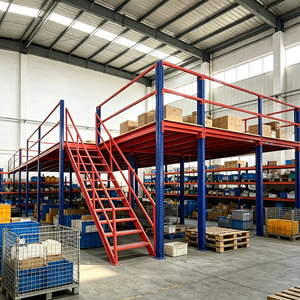
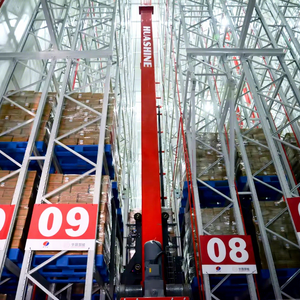
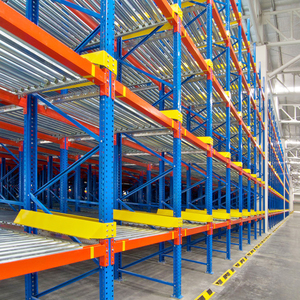
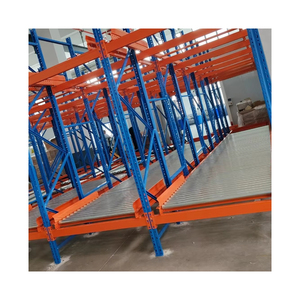
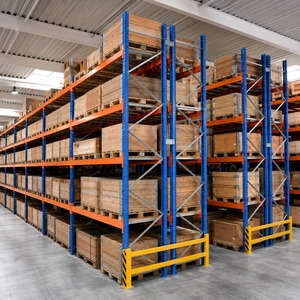
Structural Anatomy of Industrial Pallet Flow Systems
Unlike static selective racks, pallet flow racking functions as a dynamic machine relying entirely on calibrated gravity vectors, controlled friction dynamics, and centrifugal safety braking systems.
Calibrated Gravity Gradient
The standard operating angle for gravity pallet flow ranges strictly between 3.0% and 4.0% (1.7° to 2.3°). Incline gradients are mathematically paired against pallet bottom configurations—such as 9-block European timber skids versus perimeter-base US GMA pallets—eliminating uncontrolled acceleration or mid-lane stall.
Centrifugal Speed Controllers
To safely manage pallet momentum across depths exceeding 20 positions, indirect-drive centrifugal brake rollers engage autonomously. As pallet rolling velocity reaches 0.3 m/s, inner planetary brake shoes expand outward, transferring kinetic energy into heat and guaranteeing terminal impact forces under 50 Joules.
Positive Pallet Separation
Picking operations generate hydraulic back-pressure when back-pressure relief is absent. Our systems incorporate mechanically actuated pallet separators that physically isolate the first pick pallet from trailing dynamic forces, shielding operators and lift-truck masts during extraction cycles.
| System Parameter | Conventional Pallet Flow Rack | HEDA Heavy-Duty Dynamic Pallet Flow | ASRS Automated Package Flow Integration |
|---|---|---|---|
| Raw Steel Grade | Standard Commercial Q235 | Certified High-Yield Q235B / Cold-Rolled Plate | Precision Drawn Structural Micro-Alloy |
| Lane Depth Potential | 2 to 10 Pallets | Up to 25 Pallets Deep (Brake Controlled) | Unlimited Buffer Depth (MES / WCS Coupled) |
| Braking Mechanism | Direct Friction Pads | Encapsulated Centrifugal Speed Retarders | Dynamic Continuous Motorized / Flow Modulation |
| Pretreatment Standard | Basic Degreasing Wipe | Complete 8-Step Pickling & Phosphating | Continuous Automated Anti-Corrosion Immersion |
| Coating Thickness | 40–60 Microns Standard Paint | 80–120 Microns Electrostatic Powder Coat | Epoxy Hybrid High-Wear Hardened Finish |
Strategic Sourcing & Technology Roadmaps: 2026–2030
Procurement departments are moving away from treating static racks as low-tech commodities, shifting toward capital deployment centered on lifecycle longevity, thermal resilience, and digital traceability.
Near-Ambient and Cold Chain Boom
Global pharmaceutical validation standards and cold-chain investments across high-heat corridors like the UAE, Saudi Arabia, and Southeast Asia have accelerated the adoption of deep-lane FIFO storage. Because refrigerated warehouse space costs up to 4× more per cubic meter to condition, pallet flow delivers up to 60% floor space conservation while minimizing forklift refrigeration egress.
IoT-Enabled In-Lane Telemetry
Modern mega-hubs increasingly request factory-integrated sensor nodes directly embedded within roller frames. Real-time vibration sensors track bearing degradation, optical dwell sensors immediately signal lane-stoppage anomalies to the WMS, and load sensors map actual bay deflections against safe working load (SWL) limits to pre-emptively mitigate racking fatigue failures.
Total Lifecycle Value Engineering
Enterprise procurement now accounts for container-stowage engineering and field-assembly time. China factories that ship pre-assembled roller track beds and modular beam connectors save customers thousands of dollars in mechanical rigging hours, mitigating the downstream labor costs commonly experienced with loose-component assembly.
Why Global EPCs & 3PLs Source Direct from HEDA Shelves
Headquartered in Guangzhou with a 30,000 m² modern manufacturing plant, Guangzhou Heda Shelves Co., Ltd. controls the end-to-end industrial lifecycle with complete metallurgical and fabrication mastery.
10-Step Controlled Production
From raw coil decoiling, precision punching, continuous roll forming, to robotic welding, pickling, phosphating, and electrostatic polymer baking.
Verified Quality Compliance
Fully certified under CE Mark (No. 2435-CPR-8605159), ISO 9001:2015 (Certificate No. 18624Q00169R0M), and strict RoHS eco-finish testing standards.
Free 3D Layout & Structural CAD
Dedicated structural engineering team yields rapid 2D aisle layouts, beam deflection calculations, and 3D BIM visualizations for tender submissions.
Climatic Extreme Protection
Engineered for high humidity, marine salt spray, and extreme desert heat (45°C+) via chemical phosphating pretreatment and specialized powder chemistries.
Frequently Asked Questions: Industrial Pallet Flow Procurement
Authoritative guidance on operational clearances, engineering parameters, safety margins, and overseas transport packaging direct from factory engineers.
What criteria govern whether a pallet is suitable for gravity pallet flow racking?
Pallet flow systems rely completely on consistent surface contact with underlying steel rollers. Optimal performance is achieved using flat-bottom wooden or composite pallets (such as 1200×1000mm full-perimeter or 1200×800mm EUR euro-pallets) that present continuous bottom runners perpendicular to the roller axis. Broken, cracked, warped, or missing bottom bottom boards induce excessive point-loading, track wander, or wheel hang-ups. For operations utilizing steel containers, plastic slip-sheets, or non-uniform bottoms, dual-track or triple-track high-density full-roller beds with specialized roller pitches must be engineered.
How do factory engineers determine the required roller pitch and diameter for heavy loads?
The cardinal rule of gravity conveyor engineering states that a minimum of three rollers must bear the pallet's bottom skids at all times during its transit. For a standard 1200mm depth pallet, roller center distances (pitch) typically measure 75mm, 100mm, or 150mm depending on total cargo weight. Roller diameters generally range from 50mm to 60mm with cold-drawn zinc-plated steel tube bodies and precision ground radial ball bearings. Heavy-duty lanes carrying 1,500kg per position employ reinforced tubular shafts and heavy wall thicknesses (1.5mm to 2.0mm) to eliminate axle bending and binding under continuous static load.
How is cargo momentum controlled and runaway acceleration prevented in deep lanes?
Deep-lane gravity flow tracks (ranging from 4 to 25 pallets deep) integrate indirect or direct speed controllers (brake rollers) every 1 to 2 pallet positions along the lane. These internal centrifugal units contain internal fluid or mechanical governor shoes that remain disengaged at slow crawling speeds, but instantly apply proportional braking resistance when roller rotational velocity exceeds pre-set limits. This keeps downstream velocity uniform at approximately 0.2 to 0.3 m/s, preventing terminal impact collisions with extraction stops or staging forklifts.
Can HEDA Shelves pallet flow systems withstand harsh ambient environments like cold storage or coastal heat?
Yes. Temperature differentials and atmospheric moisture severely degrade substandard racking. Every upright, beam, and bracket fabricated at our factory undergoes an 8-stage pre-treatment wash consisting of immersion chemical pickling (to strip all mill-scale and surface oxides), phosphate crystal coating (for molecular mechanical adhesion), and continuous high-temperature electrostatic powder application. For cold-chain operations down to -30°C, low-temperature synthetic lubricants are injected into sealed roller bearings to prevent internal freeze-up. For coastal logistics facilities (such as Jebel Ali or Dammam), hot-dip galvanized tracks and heavy-gauge zinc coatings resist marine salt-fog corrosion.
What engineering documentation is supplied to satisfy local Civil Defense and structural permits?
Every commercial procurement bundle includes comprehensive structural calculation portfolios showing upright column profiles, dead load, live dynamic load distributions, and floor slab point-loading matrices. Our CAD layouts clearly depict longitudinal/transverse flue spaces, escape corridors, sprinkler clearance heights, and seismic restraint bracing systems to streamline sign-off with municipal engineers, industrial building consultants, and Civil Defense inspection authorities across all global jurisdictions.
How are pallet flow rack systems packaged for long-haul ocean container export?
Dynamic flow beds and structural uprights require precise crating to avoid shipment transit damage. Uprights are bundled with protective corrugated paper buffers and strapped via high-tensile PET bands, with dedicated dunnage corners to prevent flange deformation. Roller tracks are pre-assembled on rigid structural steel jigs at the factory, labeled with individual bay coordinates, and palletized in moisture-barrier wrap. Fasteners, brake rollers, speed governors, and entry guides are boxed in reinforced export crates matched directly to color-coded installation schematics.
Optimize Your Warehouse Density with Turnkey China Manufacturing
Connect directly with the structural engineering department at Guangzhou Heda Shelves Co., Ltd. Provide your warehouse dimensions, pallet configurations, and SKU turnover metrics for a complimentary 2D CAD layout, 3D structural simulation, and FOB/CIF quotation.
Inquire Now