Industrial Pallet Racking & High-Density Storage Solutions
Manufactured from high-grade Q235B/Q355B structural steel, optimized for intensive logistics, distribution hubs, cold chain storage, and high-throughput manufacturing facilities.
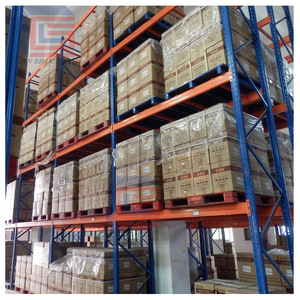
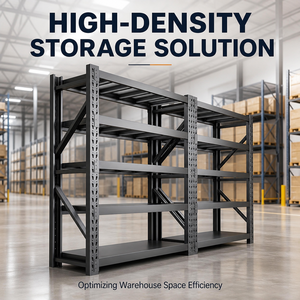
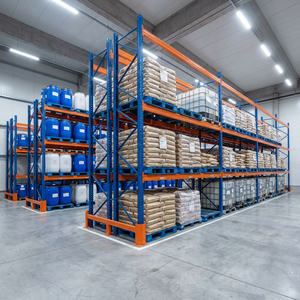
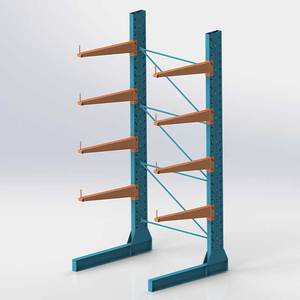
The Mechanics of High-Density Push Back Racking Systems
An exhaustive structural evaluation of dynamic nested cart kinematics, load gradient physics, and fail-safe velocity management in heavy-duty logistics operations.
Low-Profile Telescopic Nesting Carts
Push back racking utilizes a series of nested rolling steel carriages mounted on inclined structural channel rails. Pallet 1 is positioned directly on the top carriage. When pallet 2 is pushed back by the reach truck or counterbalance forklift, it smoothly glides the first carriage rearward, exposing the nested secondary cart underneath. This nested cart geometry saves vertical cubic space, enabling up to 6 pallets deep without excessive lift clearance penalties.
Precision Gravity Incline & Kinetic Velocity
Our structural rail pitch is calibrated at an optimal slope of 1.5% to 2.5% gradient, engineered using thermodynamic modeling to overcome initial static friction while controlling coasting velocity upon pallet retrieval. Precision-machined, shielded ball bearings and heavy-wall polyurethane wheels ensure that pallets advance smoothly to the aisle face at a safe, controlled speed of less than 0.3 m/s, completely preventing carriage derailment.
Cold Storage & Harsh Environment Performance
In temperature-controlled environments from ambient 45°C dry heat down to -30°C deep blast freezers, conventional plastic components embrittle and fail. We utilize specialized low-temperature synthetic lubricants, CNC-punched high-strength Q235B steel carts with hot-dip galvanized or zinc-rich thermoset powder coatings, eliminating structural binding caused by frost heave, condensation, and chemical corrosion.
Comparative Analysis: Push Back vs. Alternative High-Density Systems
Benchmarking volumetric efficiency, SKU selectivity, equipment investment, and throughput velocity to guide logistics directors and warehouse planning consultants.
| Storage Racking System | Depth Range (Pallets) | Stock Rotation Model | Space Utilization | SKU Selectivity Index | Risk of Forklift Damage | Capital Expenditure ROI |
|---|---|---|---|---|---|---|
| Push Back Pallet Rack (Nested Cart) | 2 to 6 Pallets Deep | LIFO (Last-In, First-Out) | 75% - 85% Density | Moderate-High (By Lane) | Extremely Low (Outside Aisle) | Rapid (12–18 Months) |
| Selective Pallet Racking | 1 Pallet Deep (Single) | FIFO / LIFO Direct | 40% - 50% Density | 100% Immediate Selectivity | Moderate (Standard Aisles) | Low Initial / High Footprint Cost |
| Drive-In / Drive-Thru Racking | Up to 10+ Pallets Deep | Strict LIFO (Drive-In) | 80% - 90% Density | Very Low (Single SKU / Bay) | High (Trucks Enter Structure) | Moderate / Ongoing Maintenance |
| Radio Shuttle Cart Racking | 2 to 30+ Pallets Deep | FIFO & LIFO Flexible | 85% - 92% Density | Medium-Low (Channel Based) | Extremely Low (Cart Auto-Drives) | High CapEx / Battery Maintenance |
| Pallet Live Gravity Flow | 2 to 20+ Pallets Deep | Strict FIFO (Flow Lane) | 85% - 90% Density | Moderate (Lane Specific) | Low (Separate In/Out Faces) | High (Requires Full Roller Beds) |
The Next Decade of High-Density Storage: Procurement & Engineering Trends
How automation compatibility, seismic resilience criteria, and carbon-neutral material tracking are reshaping international warehouse infrastructure tenders.
AGV & AMR Integration Interfaces
Automated guided vehicles and autonomous reach trucks are migrating into high-density push-back lanes. Future procurement specifications require sub-millimeter cart landing alignment, specialized optical vision reflectors on carriage fronts, and calibrated damping stops that interface seamlessly with robotic mast pushing algorithms.
Sensorized Dynamic Health Telemetry
Smart push-back installations now feature non-powered RFID and IoT vibration monitors embedded inside structural guide rails. These autonomous sensors detect irregular bearing resistance, rail deflection under overloading, or abnormal cart impact shock, alerting maintenance managers before a mechanical jam occurs.
Total Cost of Ownership (TCO) Shift
Global buyers are moving away from evaluating purchase price alone. Lifecycle evaluations weigh structural beam steel tensile strength (Q355B vs inferior recycled scrap steel), dry epoxy powder adhesion in extreme coastal humidity, and container cube stuffing efficiencies that slash ocean shipping freight expenditures by up to 28%.
Stringent Seismic & Wind Resistance Codes
In accordance with updated RMI (Rack Manufacturers Institute) MH16.1 standards and European EN 15512 norms, procurement protocols for high-bay push-back installations require FEA (Finite Element Analysis) simulated modal responses under dynamic seismic shaking, verifying column footplate anchor bolt shear safety factors.
Why Partner with Guangzhou HEDA Shelves Co., Ltd.?
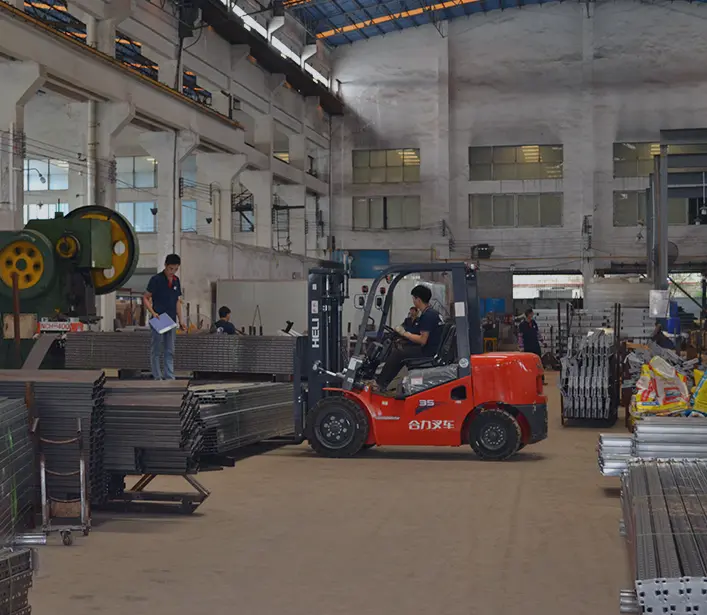
Established in 2001, Guangzhou HEDA Shelves Co., Ltd. has grown from a specialized cold-roll forming enterprise into an internationally recognized warehouse racking manufacturer. Spanning a state-of-the-art 30,000 square meter production facility equipped with high-precision automated CNC profile roll-forming lines, robotic continuous welders, and an advanced 120-meter pre-treatment electrostatic powder-coating conveyor, we produce up to 30,000 metric tons of certified storage equipment each month.
-
Rigorous Engineering & Free 3D CAD/BIM Layouts: Our veteran engineering department computes precise rail load clearances, seismic baseplate anchoring, and aisle turning radiuses, delivering complimentary CAD layouts within 24 hours.
-
Certified Quality Assurance: Compliant with CE (No. 2435-CPR-8605159), ISO 9001:2015 Quality Management Systems (No. 18624Q00169R0M), and strict RoHS eco-compliance for heavy metal-free powder finishes.
-
Complete OEM / ODM Customization: Tailored cart footprints to fit non-standard pallets (Australian 1165x1165mm, European 1200x800mm, North American 48x40in), custom load capacities up to 1,500 kg per pallet, and bespoke corporate RAL hues.
Frequently Asked Questions by Global Racking Buyers
Technical, logistical, and commercial inquiries answered by senior structural racking engineers.
What is the maximum depth and load capacity achievable in push back pallet racking systems?
How does push back racking mitigate forklift damage compared to drive-in racking?
Can push back racking handle weak, damaged, or non-standard wooden and plastic pallets?
What happens if a pallet gets stuck or derails inside a push back lane?
What engineering information is required to receive a customized 2D CAD & 3D layout?
How does Guangzhou HEDA Shelves manage container loading and long-distance ocean freight protection?
Transform Your Warehouse Storage Density & Throughput Today
Whether you require a turnkey 5,000-pallet push-back cold storage facility or an optimized regional distribution center layout, consult directly with Guangzhou HEDA Shelves' senior structural engineers for factory-direct quotations and complimentary 3D CAD modeling.