Engineered Stackable Racks & Industrial Systems
Explore our certified heavy-duty stackable frames, foldable post racks, and specialized warehouse shelving designed to optimize cubic utilization while drastically reducing empty return transport volume.
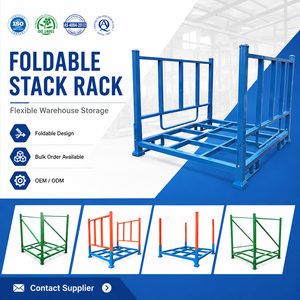
Foldable Stack Rack Heavy Duty Steel Storage Frame Stackable Warehouse Shelving Powder Coated
Engineered with a heavy-gauge tubular base and folding posts, this unit provides 100% volumetric recovery during reverse transit. Ideal for bulk tyre, fabric roll, and seasonal agricultural warehousing.
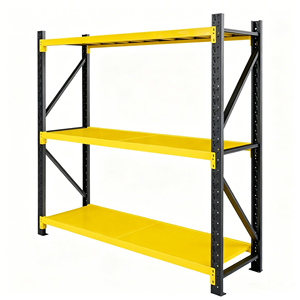
High Quality Boltless Adjustable Steel Racks 500kg/Layer Industrial Storage Corrosion Protection Warehouse Stack Shelving System
Precision cold-rolled keyhole post connectivity allows beam elevation adjustment on 50mm pitches without fastening hardware. Finished with anti-corrosion electro-deposition powder coating.
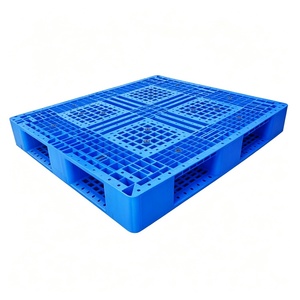
Industrial 4-Way Single Faced Stackable Warehouse Pallets 1000kg Dynamic Load Heavy Duty European Single Deck Storage Rack
Full perimeter steel deck reinforced with channel runners to absorb high-impact mechanical stress from reach trucks and counterbalance forklifts. Prevents splintering and pallet deformation.
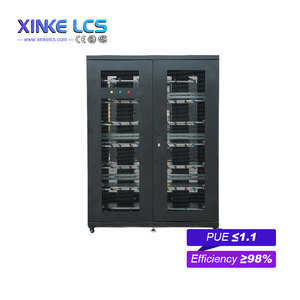
Xinke Intelligent 36 Positions 42U Steel Server Rack Cabinet Liquid Cooling PDU 19 Inch Floor Standing Standard Type Stable Low
High-precision cold-rolled steel server infrastructure enclosure engineered for centralized warehouse IoT management nodes, edge distribution tracking systems, and automated sorting centers.
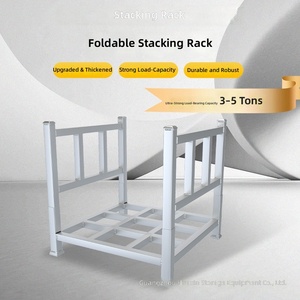
Guangzhou Custom-Made Stackable Folding Steel Pallet Racking Storage Racks Model 202537001 for Warehouse Organization Cold
Engineered specifically for low-temperature food preservation, blast freezers, and cold distribution centers. High-adhesion powder coating resists micro-cracking and rust blistering under thermal cycling.
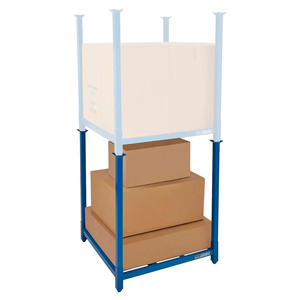
China Made Portable Stacking Racks Shelves Warehouse Storage Rack With Low Price
Modular nesting post pallet system allowing rapid seasonal reconfiguration. Posts unseat instantly from conical base sockets to stack up to 20 bases into an ultra-compact single bay footprint.
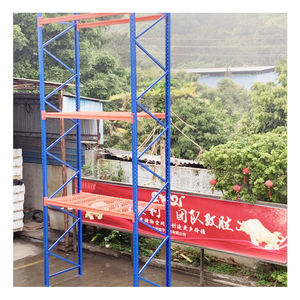
Adjustable Heavy Duty Pallet Rack System Selective Steel Beam Racking For Industrial Warehouse Storage Management
Heavy-duty teardrop and box-beam selective racking engineered for high-bay logistics centers requiring continuous single-pallet accessibility, variable beam configurations, and heavy pallet buffering.
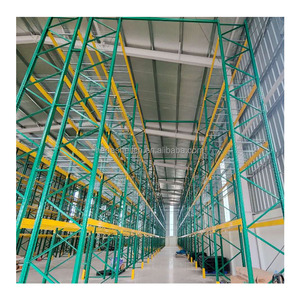
Heavy Duty Steel Racking System Industrial Warehouse Storage Shelving Unit Manufacture Factory Stacking Racks & Shelves
Industrial-grade hybrid storage module engineered to interface directly with stackable post racks and automated conveyors. Features robotic-welded base gussets for extreme torsional rigidity.
Why Stackable Racks Are Replacing Fixed Warehouse Infrastructure
Modern supply chain logistics, marked by high facility square-footage lease rates, surging e-commerce SKU velocity, and unpredictable seasonal stock surges, has exposed the fundamental structural rigidity of permanently anchored selective pallet racking. Global procurement officers and supply chain engineers increasingly turn to Heavy-Duty Stackable Steel Warehouse Racks (Post Racks / Manuracks) to establish an agile, footprint-neutral storage ecosystem. Unlike floor-bolted racking that creates permanent aisle gridlocks, stackable racks function as both rigid storage frames and mobile handling units, eliminating redundant double-handling between delivery containers, buffer yards, and sorting stations.
| System Architecture | Dynamic / Static Load | Aisle Reconfigurability | Floor Density Efficiency | Reverse Transit Volume | Structural Compliance |
|---|---|---|---|---|---|
| HEDA Heavy Stack Racks | 1,500 kg / 6,000 kg | Instant 100% Agile | Up to 82% Cubic Fill | 1:4 to 1:6 Folddown | CE / ISO 9001 / EN 15512 |
| Standard Selective Racks | 1,000–4,000 kg / Level | Fixed (Bolted to Slab) | 40%–50% (Wide Aisles) | N/A (Permanent Install) | RMI / ANSI MH16.1 |
| Drive-In High Density | 1,000–1,500 kg / Pallet | Fixed Monolithic Block | 70%–75% (LIFO Risk) | N/A (Permanent Install) | EN 15620 Tolerances |
| Standard Wooden Pallets | 500–1,000 kg | Floor Stacking Only | Poor (Crush Hazard >2) | 1:1 High Freight Cost | ISPM 15 Phytosanitary |
Through comprehensive Finite Element Analysis (FEA) and dynamic stress cycle tests, HEDA engineers reinforce base sockets and conical post receivers using hot-rolled Q235B/Q355B structural steel. This guarantees that when units are stacked 4 to 5 tiers high under full static load, structural deflection remains strictly within safe industrial tolerances (≤ L/250). The resulting layout eliminates pallet shelf crush damage, accommodates non-standard oversized or crushable goods (such as textiles, rubber tires, and agricultural sacks), and delivers an immediate 40% reduction in total cost of ownership (TCO) compared to dedicated high-bay racking investments.
Future Procurement Trends in Warehouse Storage Systems
Global logistics procurement is undergoing a paradigm shift driven by macroeconomic pressures, international compliance requirements, and automated handling compatibility. Sourcing managers must evaluate suppliers against four critical emerging benchmarks.
Total Landed Lifecycle Cost (TCO)
Progressive procurement leads are pivoting away from raw ex-factory unit pricing to calculate Total Landed Lifecycle Cost. This incorporates sea-freight packing cube density, nesting ratios, and structural corrosion lifespans.
- Nesting Ratios: Achieving 1:5 nesting collapses return freight by over 70%.
- Durability Index: 15-year service life vs. 3-year recurring wooden replacement.
CBAM & ESG Traceability Verification
With the enforcement of the EU Carbon Border Adjustment Mechanism (CBAM) and strict global Scope 3 emissions reporting, enterprise buyers require authenticated mill test certificates (MTC) and low-emission coating verification.
- Traceable Steel: Baosteel & Ansteel grade Q235B/Q355B chemistry compliance.
- RoHS Finishes: Zero heavy metals and VOC-free cured polyester powders.
AGV & Automated Logistics Interfacing
Next-generation stacking rack procurements require dimensional tolerances within ±1.5mm to allow Autonomous Mobile Robots (AMRs), automatic guided vehicles, and robotic palletizers to seat posts without optical sensor rejection.
- Precision Tolerances: Robotic laser fixture welding preserves post alignment.
- Under-Clearance: Optimized fork pockets tailored for automated lifters.
Product Development Trends in Stacking Rack Systems
Modern industrial design has elevated stackable racking from basic steel cages into high-precision structural assemblies. Innovations in metallurgical chemistry, interlocking geometric profiles, and smart tracking redefine industry performance.
Conical Cup-and-Cone Interlocking Geometry
Traditional slip-fit square posts are vulnerable to lateral tipping when uneven floor settlement occurs. Advanced systems incorporate deep-drawn conical inverted cups at post bases that lock over flanged target receivers. This creates self-centering alignment during forklift drop-off, delivering 400% higher lateral shear resistance under dynamic warehouse movements.
Cold-Room Sub-Zero Metallurgy (-30°C)
Standard structural steel undergoes ductile-to-brittle transitions at sub-zero temperatures, causing micro-fracturing along weld seams under forklift impact. Modern cold chain stack racks utilize fine-grain modified Q355D micro-alloyed steel with guaranteed Charpy V-notch impact toughness tested down to -40°C, paired with low-temperature curing electrostatic coatings.
Embedded RFID & Digital Fleet Asset Tracking
Post racks frequently travel between central manufacturing hubs, third-party cold stores, and open transshipment yards. Manufacturers now integrate flush-recessed UHF RFID chips and laser-etched DataMatrix QR codes directly into the tubular steel chassis, allowing overhead automated scanners to catalog unit location, maintenance age, and tare payload in real-time.
Why Global Supply Chains Trust Guangzhou HEDA Shelves
Founded in 2001, Guangzhou Heda Shelves Co., Ltd. has grown over a quarter-century into one of China's premier racking design and structural manufacturing powerhouses, serving GCC infrastructure projects, European 3PL operators, and global distributors.
Operating out of our 30,000 m² integrated manufacturing facility in Guangzhou, China, HEDA combines end-to-end roll forming, high-precision automated punching, multi-axis robotic welding, and an automated continuous powder-coating line capable of handling 30,000 metric tons of structural steel per month.
Because we maintain complete in-house control from raw coil slitting to pre-shipment container packing, overseas clients benefit from absolute dimensional consistency, traceable metallurgy, and competitive direct-factory pricing unburdened by intermediary markups.
Direct Global Export Infrastructure
HEDA ships hundreds of 40-foot High Cube (40HC) containers monthly directly through major South China maritime hubs (Guangzhou Nansha, Shenzhen Yantian, and Hong Kong) to key logistics gateways worldwide:
- Middle East & GCC: Jebel Ali, Dammam, Jeddah, Khalifa, Hamad, Sohar.
- Europe & UK: Rotterdam, Hamburg, Felixstowe, Antwerp, Valencia.
- Americas: Los Angeles, Long Beach, Houston, Santos, Manzanillo.
Frequently Asked Questions (FAQ) for Global Buyers
Straightforward technical, logistical, and commercial answers to the questions most frequently raised by international supply chain engineers, EPC contractors, and procurement directors.
What engineering safety factors are calculated into your stackable racking load ratings? +
All HEDA stackable post racks and storage frames are engineered with a minimum static structural safety factor of 1.5:1 to 2.0:1 in compliance with European EN 15512 and American ANSI MH16.1 guidelines. This means that an industrial rack certified for a 1,500 kg unit working payload is destructively tested under controlled laboratory conditions to sustain a minimum of 2,250 kg to 3,000 kg before yield deflection. When stacked 4 to 5 tiers high, base sockets and upright posts are calculated to bear up to 7,500 kg of cumulative superimposed static load without exceeding the elastic limit of the Q235B/Q355B structural steel.
How does HEDA authenticate raw steel quality and chemical composition? +
We source prime certified hot-rolled and cold-rolled carbon steel coils exclusively from premier domestic state mills including Baosteel, Ansteel, and Shougang. Every inbound coil delivery is cross-checked against original Mill Test Certificates (MTC) verifying yield strength, tensile rupture thresholds, and chemical elements (Carbon ≤ 0.20%, Silicon ≤ 0.35%, Manganese ≤ 1.4%, Sulfur ≤ 0.045%, Phosphorus ≤ 0.045%). In-house ultrasonic weld flaw detection and spectrometer alloy analysis guarantee zero inclusion voids or material fatigue points across production batches.
How are stackable racks protected against corrosive outdoor, maritime, or cold room conditions? +
Our steel finishing process utilizes a continuous 10-stage automated pre-treatment system that includes high-pressure chemical degreasing, dual acid pickling to eliminate mill scale, followed by iron-phosphate passivation and a deionized water seal. Components are then coated on a robotic line using premium electrostatic thermoset polyester powders baked at 200°C. This yields a dense 60–90 μm coating thickness compliant with ASTM B117 salt-spray tests up to 500 hours without blistering. For harsh maritime environments or outdoor yards, we provide full Hot-Dip Galvanizing (HDG) per ISO 1461, delivering a 70–120 μm zinc barrier with over 25 years of corrosion resistance.
What is the optimal container nesting ratio for 40ft High Cube (40HC) export shipments? +
Maximizing container cubic space is vital to lowering unit landed cost. Our collapsible and demountable post racks are engineered with specific nesting geometry: posts are unseated and bundled within the base cavity, or the upright frames fold flat over the bottom runners. A standard 40HC container accommodates 180 to 240 units of foldable stack racks (depending on exact platform dimensions), compared to just 40–50 assembled rigid frames. Our logistics department provides 3D container packing load blueprints prior to dispatch to ensure zero cargo shifting during maritime transit.
Can stackable racking be deployed safely in seismic zones or unanchored facility floors? +
Because stackable racks are free-standing modular units that rest on the floor without chemical or mechanical slab anchors, seismic design requires rigorous height-to-depth (H:D) aspect ratio management. International warehouse safety protocols mandate that free-standing unanchored stack racks maintain an H:D ratio not exceeding 4:1 under static conditions, or 3:1 in seismic risk zones (UBC Zone 3/4 or Eurocode 8). HEDA's engineering team provides specific floor load spread calculations and FEA overturning moment simulations to ensure full compliance with local municipal and insurance regulations.
What documentation does HEDA supply for international tender clearance and insurance reviews? +
We supply complete engineering and commercial documentation packages for municipal and insurer approvals, including: (1) Factory CE Declaration of Performance (DoP) under EN 1090 / EN 15512; (2) ISO 9001:2015 Quality Management Certificates; (3) Raw Steel Mill Test Certificates (EN 10204 Type 3.1); (4) Independent Third-Party Destructive Load Test Reports (SGS / TÜV Rheinland); (5) Stamped 2D AutoCAD fabrication schematics and 3D finite element stress distribution maps; (6) Certificate of Origin (Form E, CO, or Arab-China Chambers of Commerce documentation).
What are typical production lead times for custom-dimension OEM/ODM racking orders? +
Standard catalogue models (such as standard tire racks, 1200 × 1000 mm Euro base frames) maintain a rapid turnaround of 10 to 15 working days for full container loads (FCL). Fully custom OEM/ODM designs requiring unique foot cup tooling, integrated wire mesh decking, or specific non-standard powder coat RAL colors require 20 to 25 working days from formal CAD shop drawing sign-off. Expedited batch production can be coordinated for emergency warehouse expansion and post-disaster logistics replenishment projects.
Accelerate Your Warehouse Volumetric Efficiency Today
Send us your warehouse CAD floor plan, target pallet sizes, and load requirements. Our senior structural racking engineers will return a complete 2D layout design, finite element load analysis, and competitive factory-direct quotation within 24 hours.