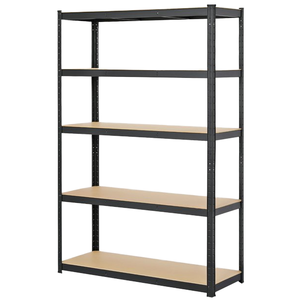
Light/Medium Duty
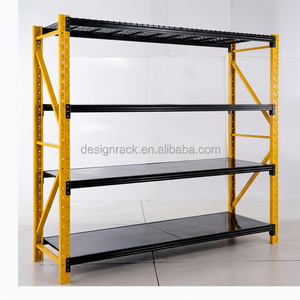
Engineered with Q235B high-tensile carbon steel, certified for high seismic zones, abusive forklift terminals, and ultra-high dynamic load warehouse environments.
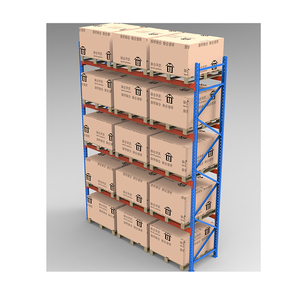
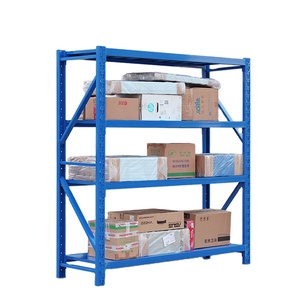
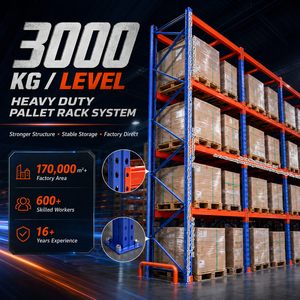
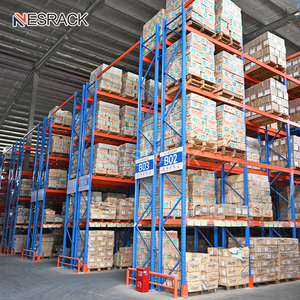
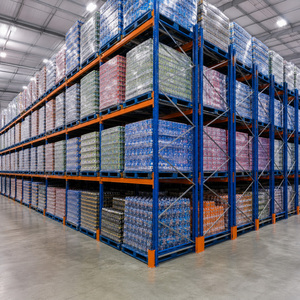
Operating a modernized 30,000 square meter factory base equipped with automated high-precision roll forming lines, robotic GMAW welding stations, and automated electrostatic powder coating lines.
Full adherence to global structural benchmarks: CE Certification (No. 2435-CPR-8605159), ISO 9001:2015 Quality Management (No. 18624Q00169R0M), RoHS compliance, and design conformance with EN 15512 and RMI standards for seismic load margins.
Every racking layout is modeled in 2D CAD and rendered in full 3D, accompanied by finite element analysis (FEA) evaluating beam deflection thresholds (1/180 or 1/200), upright torsional resistance, and slab concentrated load dispersion prior to steel fabrication.
Zero subcontracting risk. All 10 fabrication stages—from prime cold-rolled steel slitting, automated multi-head CNC column punching, roll forming, robot welding, to multi-stage pickling, phosphating, and electrostatic polymer baking—are executed inside our Guangzhou facility.
An architectural comparison to assist procurement engineers, 3PL consultants, and supply chain directorship in determining total cost of ownership (TCO) and structural resilience.
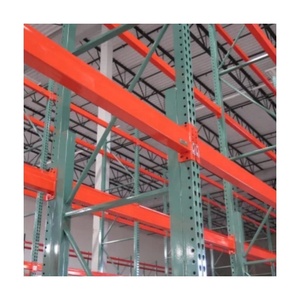
While standard roll-formed tear-drop or diamond-slot racking dominates lightweight warehousing due to lower initial purchase costs, true structural pallet racking utilizes hot-rolled structural steel C-channels for columns and beams.
Roll-formed racks in high-throughput 24/7 fulfillment centers suffer replacement cycles every 3-5 years due to forklift frame strikes. Structural racks reduce maintenance shutdowns by over 80%, guaranteeing a lower 10-year TCO.
Unlike pin-and-clip teardrop connections which can pop out or loosen during heavy vibrations or small seismic tremors, structural C-channel frames rely on heavy-duty Grade 8.8 structural bolts for unwavering lateral stiffness.
Industrial structural steel requires chemical pickling and phosphating to eliminate micro-scale mill scale before thermoset epoxy powder is baked at 200°C, providing ASTM B117 salt spray resistance exceeding 500 hours.
How automation, warehouse height densification, and supply chain decarbonization are reshaping capital expenditures for intralogistics infrastructure through 2030.
Procurement teams are moving away from purely manual selective setups toward hybrid configurations that can seamlessly transition into Radio Shuttle Pallet Racking, automated 4-way shuttles, and crane-operated ASRS rack-supported building systems.
With massive industrial park buildouts in high-temperature, hyper-saline, and high-dust regions (such as GCC countries like UAE, Saudi Arabia, and Qatar), procurement demands high-durability epoxy powders, hot-dip galvanized outdoor racking, and verified Civil Defense clearance.
Insurance underwriters and municipal building regulators demand rigorous verification: load warning placards, certified slab anchoring calculations, integrated column wrap protection, wire mesh decking, and pallet backstops compliant with EN 15635 inspections.
From floor stacking to autonomous cognitive warehouses: understand where your logistics footprint lands.
Floor-bound counterbalance and reach trucks operating in 3.5m aisles. Maximum accessibility, but limited cube space utilization (under 40% floor cubic storage ratio).
Push-back, drive-in, and radio shuttle solutions eliminating operational forklift aisles. Increases floor cube utilization up to 75-80%, critical for cold rooms and limited land parcels.
The rack is the building. High-bay structural racking supports the wall cladding and roof, fully automated with automated stacker cranes, conveyor interfaces, and WMS software integration.
Authoritative technical answers to assist enterprise procurement directors, project contractors, and freight logistics managers.
Consult directly with our structural engineering team. Get free 2D CAD architectural plans, 3D renderings, and certified load capacity calculations within 24 hours.