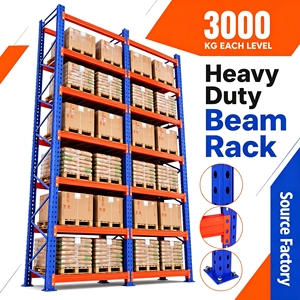
Engineering-Grade Warehouse Racking & Bin Platforms
Precision cold-rolled profiles, multi-tier load optimizations, and heavy-duty structural components certified for maximum structural safety and modular warehouse expansion.
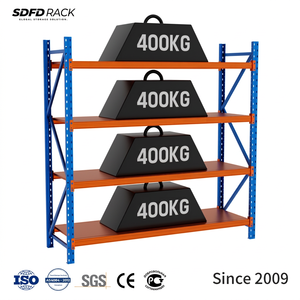
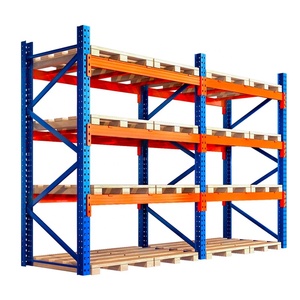
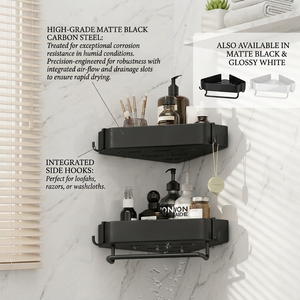
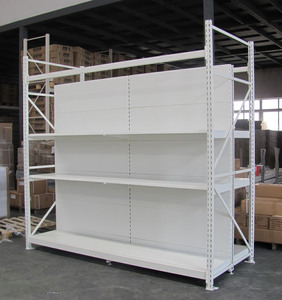
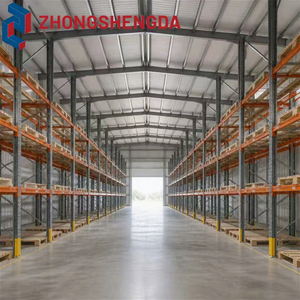
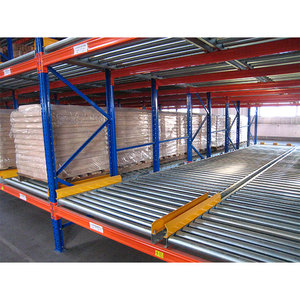
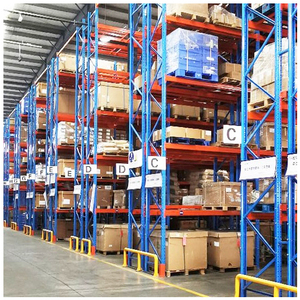
2001
Established Year
30,000 m²
Manufacturing Plant
30,000 Tons
Monthly Production Output
120+
Global Export Countries
Engineering Precision & Certified Supply Integrity
Comprehensive metallurgical testing, cold-form precision tooling, and multi-tier quality assurance designed for high-throughput distribution environments.
In global supply chain infrastructure, warehouse racking systems and storage bins operate as critical structural elements directly dictating operating efficiency, worker safety, and building cube utilization. Sourcing factory-direct warehouse storage components requires rigorous verification of material standards, yield strengths, and dimensional tolerances. Certified cold-rolled carbon steel, primarily premium-grade Q235B and Q355B profiles, undergoes precision roll-forming to retain high structural rigidity under dynamic and seismic loading. From high-density selective pallet racking to modular picking shelves and flow lanes, components must adhere to certified quality management frameworks such as ISO 9001:2015 and CE certification (EN 15512 standards).
Traceable Metallurgical Standards
Every structural column and step beam is fabricated from verified high-tensile steel coils with clear batch mill certificates, ensuring specified load limits withstand rigorous warehouse duty cycles without permanent structural deflection.
Advanced Anti-Corrosion Finishing
Multi-stage chemical pre-treatment, including automated acid pickling and phosphating lines, precedes electrostatic epoxy-polyester powder coating cured at 200°C, providing long-lasting corrosion resistance in demanding logistics climates.
Certified Compliance & Testing
All load-bearing profiles are independently validated against international structural norms (CE Certificate No. 2435-CPR-8605159 and ISO 9001:2015), providing full engineering transparency for local regulatory and fire clearance reviews.
Future Procurement Trends: Modern Intralogistics & Automation Integration
Strategic structural shifts and material engineering patterns shaping global warehouse installations through 2026 and beyond.
High-Density & Vertical Expansion
Rising land costs and urban distribution requirements drive procurement toward taller, narrow-aisle (VNA) and multi-tier rack platforms. Warehouses optimize the vertical cube up to 15 meters, utilizing specialized structural mezzanine and deck setups to maximize cubic square meters.
Robotics & AGV-Ready Tolerances
With the integration of autonomous mobile robots (AMRs), automated storage and retrieval systems (AS/RS), and radio shuttles, racking tolerances have evolved from static requirements to ultra-precise millimetric standards for smooth robotic interaction.
Modular Bins & Pick-Face Agility
High-SKU micro-fulfillment hubs require dynamic pick-faces with adjustable modular carton bins, tilted roller-track flow channels, and drop-in divider partitions that allow warehouse teams to reconfigure shelving in minutes without cutting or welding.
End-to-End Production & Delivery Workflow
A standardized manufacturing pipeline ensuring project accuracy from blueprint validation to containerization.
01
CAD & 3D Modeling
Engineering review of clear ceiling heights, floor slab capacities, and aisle dimensions with complete 2D/3D layout drawings provided prior to fabrication.
02
Continuous Roll Forming
Automated punch lines cut precise upright pitch slots (e.g., 50mm/75mm intervals) followed by multi-station roll-forming for beam and frame profiles.
03
Automated Coating & QC
Continuous pre-treatment lines remove surface impurities before electrostatically applied powder coats are applied, inspected for thickness, adhesion, and finish.
04
Export Pack & Logistics
Components are bundled with protective wrapping, labeled to match assembly diagrams, and secured in shipping containers for efficient destination customs clearance.
Frequently Asked Questions for Procurement Engineers
Critical structural, operational, and commercial insights for facility designers and warehouse project managers.
Q1 How are beam and frame load capacities calculated?
Load ratings are calculated using structural analysis software and destructive test protocols compliant with EN 15512 and RMI standards. Capacities assume uniformly distributed loads (UDL) per pair of beams with standardized safety factors (typically 1.5 to 1.65). Upright load capacities account for specific vertical beam tier spacing.
Q2 Can your racking accommodate regional seismic and building codes?
Yes. Custom baseplates, heavy anchor bolts, row spacers, and vertical cross-bracing are engineered according to site-specific seismic zone requirements and building codes worldwide, providing structural calculations to support local civil defense and engineering approvals.
Q3 What surface treatments are recommended for cold storage or outdoor facilities?
For standard temperature-controlled warehouses, our electrostatic polyester powder coating delivers reliable anti-corrosion protection. For freezing environments, high humidity, or outdoor yard storage, we supply hot-dip galvanized finishes according to ISO 1461 standards to safeguard against long-term oxidation.
Q4 What lead times are standard for full container load (FCL) orders?
Standard selective racking profiles typically run on a 15–20 day production cycle for 1–3 40ft High Cube containers. Complex automated shuttle systems, multi-tier mezzanines, or customized bin configurations generally require 25–30 days from final approved CAD drawings to container loading.