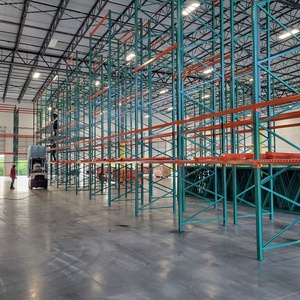
US Teardrop Heavy Duty Q235B Pallet Racking
- Universal boltless teardrop punch profile
- High-yield Q235B roll-formed structural steel
- Electrostatic corrosion-resistant powder coating
From self-indexing dynamic pallet flow lines to deep-reach structural beams and selective frames, discover China's precision-engineered industrial shelving portfolio built to international RMI and FEM specifications.
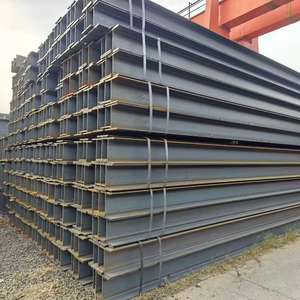
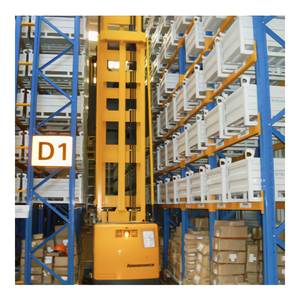
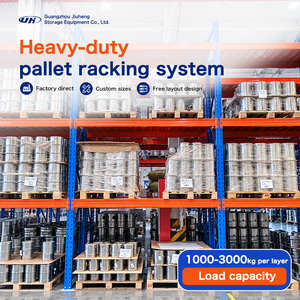
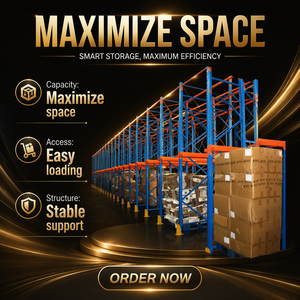
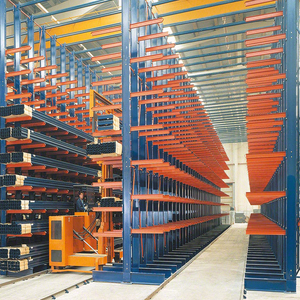
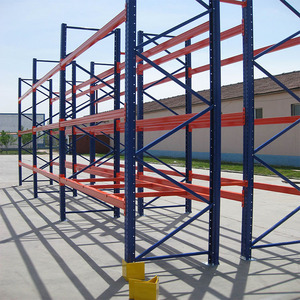
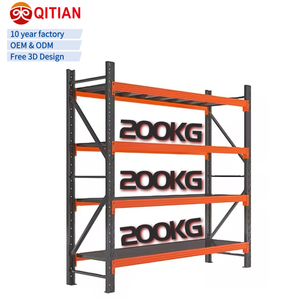
Gravity-fed racking (frequently categorized as Pallet Flow, Dynamic Roller Racking, or Live Storage) represents the pinnacle of non-powered high-density intralogistics. Utilizing inclined roller beds engineered precisely between a 2.5% to 3.5% incline (1.5° to 2°), these self-operating systems leverage kinetic gravity to advance loaded unit pallets from a designated loading (replenishment) face to a dedicated picking (unloading) face. This physical separation of loading and picking traffic solves internal traffic jams, reduces forklift cycle times by up to 45%, and enforces rigorous First-In, First-Out (FIFO) stock rotation.
In real-world operations, dynamic pallet flow systems handle loads varying from 500 kg to over 1,500 kg per pallet position. Without engineered friction control, accelerating pallets present severe catastrophic impacts to terminal stops and facility personnel. Leading Chinese manufacturing utilizes centrifugal speed controller rollers (centrifugal brake rollers) interspersed at fixed 1-pallet intervals along the gravity bed. These mechanical governors modulate descending velocity to a safe terminal speed of ≤ 0.3 meters per second (18 m/min) regardless of weight differences.
| High-Density System | Storage Density | Stock Rotation | Forklift Travel Time | Energy Requirement | Ideal Industry Application |
|---|---|---|---|---|---|
| Gravity Fed Pallet Flow | Ultra-High (Up to 85%) | Strict FIFO (100%) | Minimal (Separated Aisles) | Zero (Kinetic Gravity) | Cold Store, FMCG, Pharma, Perishables |
| Radio Shuttle System | Ultra-High (Up to 90%) | FIFO & LIFO Capable | Moderate (Machine Waiting) | Electric (Lithium Batteries) | Dry Bulk, Raw Materials, Seasonal FMCG |
| Drive-In / Drive-Thru | High (Up to 75%) | Strict LIFO | High (Inside Bay Driving) | Zero (Forklift Dependent) | Low SKU, Uniform Non-Perishables |
| Push-Back Racking | Moderate (Up to 65%) | Strict LIFO | Moderate (Single Aisle) | Zero (Spring / Gravity Cart) | Medium SKU Distribution, Buffer Zones |
A frequent structural issue in basic gravity flow racks is "line pressure." In deep lanes (e.g., 10 to 20 pallets deep), cumulative dynamic weight pushes against the lead pallet at the discharge end, pinning it firmly against the extraction stop and causing forklift tines to drag or split pallets. Tier-one Chinese manufacturers incorporate heavy-duty mechanical separation devices (pedal separators or spring-loaded rocker arms). When the leading pallet reaches the end stop, the separator automatically activates, holding back the rear queue of pallets until the front unit is lifted clear, eliminating line pressure and ensuring safe, effortless extraction.
Analyzing the macro shifts across Middle East logistics hubs (Dubai, Riyadh, Dammam), European clean-tech logistics, and North American industrial supply networks.
With refrigeration power costs climbing worldwide, regional hubs in the UAE, Saudi Arabia, and Europe are transitioning from low-density selective racks to deep gravity-fed lanes. By condensing ambient cooling footprints by up to 60%, operators amortize their racking procurement investments purely through mechanical cooling energy savings within 24 to 36 months.
As corporate ESG directives penalize excessive kilowatt-hour operational consumption, passive gravity-driven kinetic systems are being specified over powered conveyor matrices. Procurement directors are favoring high-durability steel gravity beds requiring zero battery maintenance, zero motor replacements, and zero electrical cabling inside hazardous or volatile environments.
General-purpose catalog shelving is becoming obsolete. Sourcing teams now demand custom frame depth-to-pitch engineering, pre-shipment 3D BIM/CAD integration, and finite element analysis (FEA) validating local seismic load conditions and Civil Defense compliance before structural rolling begins.
Established in 2001, Guangzhou HEDA Shelves Co., Ltd. has evolved into an authoritative global producer of high-performance racking, industrial mezzanine platforms, and dynamic material handling solutions. With over 25 years of structural metal fabrication expertise, we engineer turnkey warehouse architectures for blue-chip clients across the Middle East, Southeast Asia, the Americas, and Europe.
Every beam, upright column, roller chassis, and safety interlock is formed inside our centralized 30,000 m² smart manufacturing plant. We implement strict whole-chain quality governance—from initial spectral testing of hot-rolled Q235B steel coils to precision multi-station continuous roll-forming, robotic welding, 8-stage chemical pre-treatment, and automated electrostatic powder curing.
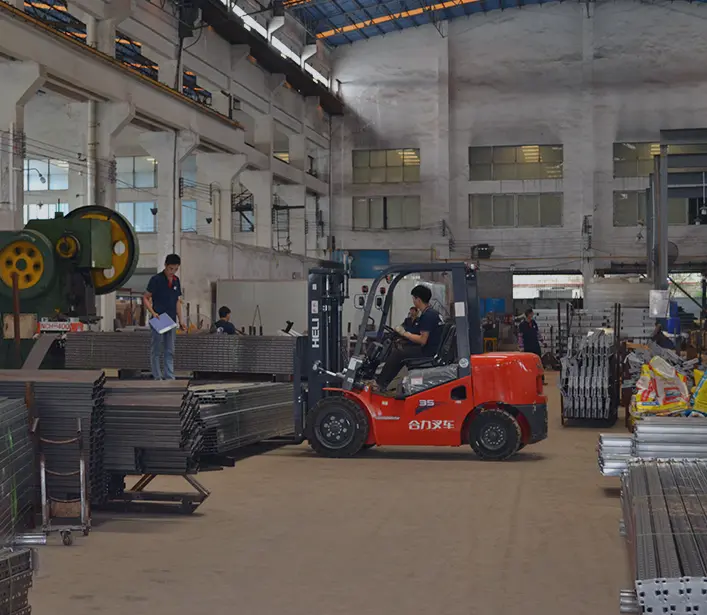
Traceable metallurgical integrity guaranteed through continuous precision manufacturing.
Strict yield and tensile testing of incoming certified Baosteel Q235B/Q355B coils before entering the uncoiler.
High-precision laser and mechanical slitting maintaining width tolerances within ±0.1mm for roll forming.
Continuous hydraulic stamping lines punch 50mm/75mm adjustment holes with absolute center-point precision.
Gradual 24-station cold-bending lines shape complex omega-uprights without micro-fissures or stress points.
Automated beam seam joining rolls double-C profiles into robust box beams engineered for zero vertical deflection.
Carbon-dioxide gas shielded robot welders fuse beam connector jaws with complete penetration and smooth fillets.
An 8-stage immersion pre-treatment strips scale, oil, and micro-rust, bonding a dense zinc-phosphate barrier.
Nordson automated spray booths coat thermosetting polyester-epoxy powder, baked at 200°C for high impact durability.
Dynamic testing of every gravity roller assembly to verify speed governing and anti-jam brake release under load.
Addressing concrete operational, structural, customs, and installation parameters.