Featured Heavy-Duty Racking & Storage Systems
Precision-engineered cold-rolled steel solutions manufactured to EN 15512 and FEM standard specifications for modern regional logistics hubs, cold chain centers, and fulfillment facilities.
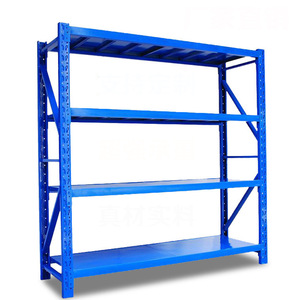 Corrosion-Resistant
LIANGZO 5-Layer Chrome Plated Steel Shelf
Heavy-duty corrosion-resistant chrome surface protection tailored for cold rooms, light/medium industrial display, and cleanroom inventory.
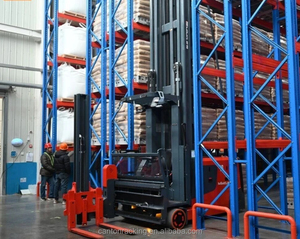 Ultra High-Bay
Very Narrow Aisle (VNA) High-Density System
Compresses working aisle footprints down to 1.6 meters, maximizing cubic volumetric warehouse utilization up to 90% with wire guidance.
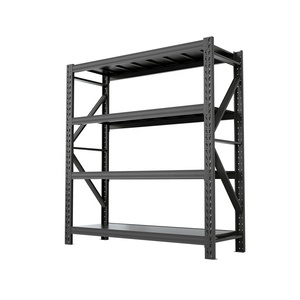 Modular Boltless
Boltless Industrial 5-Layer Storage Shelving
Interlocking butterfly-hole structure allowing rapid tooling-free assembly and flexible shelf pitch adjustments for industrial parts and cartons.
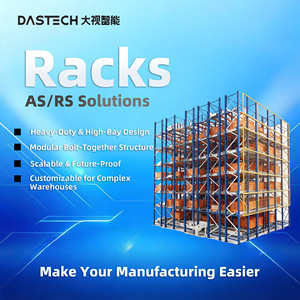 ASRS Integration
Automated High-Density Pallet Racking
Engineered structural steel matrix designed to interface directly with continuous conveyor loops, stacker cranes, and automated shuttle systems.
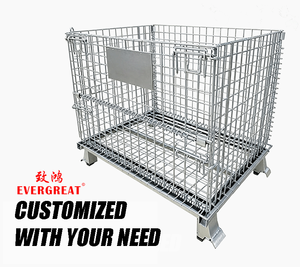 Logistics Cage
Heavy-Duty Foldable Steel Storage Cages
Collapsible wire mesh containers equipped with reinforced forklift stirrups, supporting 4-high stacked loads with drop-gate picking ergonomics.
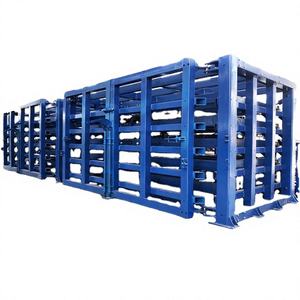 Motorized Rail
Electric Mobile High-Density Pallet Racking
Motorized floor-rail racking arrays that open singular active service aisles on command, doubling storage capacity in cold storage and document vaults.
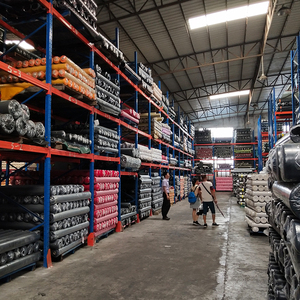 OEM Heavy-Duty
Customized Heavy Load Racks (1000-4000kg)
Bespoke upright profiles engineered with Q235B/Q355B cold-rolled steel, custom upright perforation geometries, and certified seismic base plates.
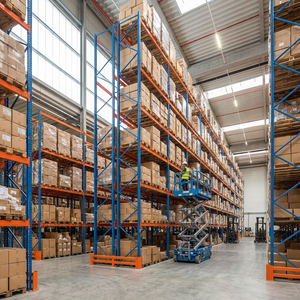 Multi-Tier Mezzanine
Multi-Level Industrial Warehouse Pallet Racks
Multi-tier structural rack-supported mezzanine platforms integrating pallet drop gates, safety staircases, and floor gratings for mixed logistics.
Structural Engineering & Operational Physics of Push Back Racking Systems
Push back pallet racking (often designated in intralogistics as push racks, nested cart racking, or dynamic accumulation storage) represents a premier high-density mechanical storage solution engineered around Last-In, First-Out (LIFO) inventory dynamics. Unlike static drive-in racking that requires lift truck operators to navigate deep inside storage channels, push racks employ a telescoping series of inclined nested carts that glide smoothly along inclined structural steel channel rails mounted inside the rack bays.
When loading the push back system, the forklift places the initial pallet onto the uppermost nested trolley cart. When the subsequent pallet is staged, the forklift gently utilizes the second pallet to push back the first pallet, exposing the second cart beneath it. This loading cycle continues across 2-deep, 3-deep, 4-deep, 5-deep, or 6-deep configurations. During retrieval, gravitational inertia carries trailing pallets smoothly forward toward the aisle discharge face as soon as the lead pallet is lifted away, controlled by precision-engineered inclination angles ranging strictly between 1.5% and 3.0%.
Structural Nesting Cart Kinematics
Fabricated using heavy-gauge structural plate steel and low-profile tubular beams. Each cart level is nested incrementally lower than the next to maintain maximum vertical pallet clearance while providing rigid lateral resistance against pallet deflection under 1,500 kg unit weights.
Dual-Bearing Flanged Wheel Arrays
Wheels incorporate sealed double-row precision ball bearings with hardened outer flanges that lock directly into structural guide tracks. Engineered specifically to withstand severe dynamic impact loading, dust ingress, and -30°C deep freeze environment cycling.
Fail-Safe Kinetic Energy Absorbers
Integrated mechanical safety stops, flow restrictors, and lift-off prevention catches ensure that runaway pallet acceleration is physically impossible, mitigating operator collision hazards and securing structural integrity across seismic zones.
Comprehensive System Comparison: High-Density Warehousing Architectures
Selecting the optimal warehouse storage architecture requires an empirical evaluation of space utilization efficiency, selectivity, structural rack safety, equipment compatibility, and total cost of ownership (TCO). The comparative table below demonstrates where push back racks deliver superior operational ROI compared to selective, drive-in, radio shuttle, and gravity flow systems.
| Storage System Type | Space Utilization | SKU Selectivity | Handling Speed & Cycle Time | Forklift Rack Collision Risk | Cold Room / FMCG Suitability |
|---|---|---|---|---|---|
| Push Back Racking (2-6 Deep) | 75% - 85% (High) | Medium-High (1 SKU per lane) | Fast (No rack entry) | Very Low (External only) | Optimal (Zero electronics) |
| Selective Pallet Racking | 40% - 50% (Low) | 100% (Individual access) | Standard | Moderate (Narrow aisles) | Costly floor space utilization |
| Drive-In Pallet Racking | 80% - 85% (High) | Low (1 SKU per bay channel) | Slow (Mast entry required) | High (Frequent upright strikes) | Acceptable for bulk lots |
| Radio Shuttle Automation | 85% - 90% (Maximum) | Medium (Automated LIFO/FIFO) | High Throughput | Very Low (Shuttle handled) | High Battery & PLC Maintenance |
| Gravity Flow Racking (FIFO) | 80% - 85% (High) | Medium (Dual-aisle access) | High Continuous | Low | High Roller & Brake Cost |
Strategic Sourcing Insights: Push Rack Procurement Trends (2026-2035)
Procurement directors and supply chain engineers evaluating China's industrial manufacturing ecosystem face a rapidly shifting operational paradigm. Strategic investments in storage infrastructure are no longer judged solely on initial steel tonnage prices; modern supply chains prioritize lifecycle durability, structural flexibility, thermal efficiency, and carbon intensity.
Decoupling Cold Chain Thermal Footprints
With electric refrigeration costs soaring across hyper-arid Middle Eastern logistics hubs (Dubai, Riyadh, Dammam) and European distribution hubs, push back systems reduce refrigerated cubic chamber footprints by up to 50% compared to selective racking without requiring motorized components.
Hybridization with AMR and AGV Fleets
Modern push rack discharge faces are being re-engineered with laser-aligned optical docking stops and magnetic centering plates, permitting Autonomous Mobile Robots (AMRs) and automated counterbalance forklifts to load and discharge nested carts seamlessly.
Seismic Resilience & Slab Optimization
Advanced Finite Element Method (FEM) modeling enables push rack manufacturers to distribute high static footprint weights across widened structural footplates, allowing installations in retrofit facilities without costly floor re-piling or slab reinforcement.
Behind the Factory Floor: 10-Stage Precision Manufacturing Workflow
As a premier Chinese heavy-duty storage equipment manufacturer operating from Guangzhou since 2001, Guangzhou Heda Shelves Co., Ltd. controls every metallurgical and mechanical manufacturing phase in-house across a 30,000 square meter plant. Our production conforms rigorously to CE certification (No. 2435-CPR-8605159) and ISO 9001:2015 quality frameworks.
Prime Steel Inspection
Certified Baosteel Q235B and Q355B hot-rolled structural steel coils undergo ultrasonic thickness verification and tensile yield testing.
CNC Slitting & Cutting
Automated uncoiling, slitting, and CNC laser profiling guarantee cross-section tolerances within ±0.2mm along lengths exceeding 11 meters.
Automated Punching
High-speed multi-stage hydraulic presses punch structural 50mm and 75mm teardrop, hexagonal, or diamond hole patterns with absolute pitch fidelity.
Multi-Roll Cold Forming
Continuous 24-station rolling profile lines form rigid, multi-fold omega upright profiles without residual internal structural micro-cracking.
Robotic Laser Welding
Dual-robot welding cells fuse beam connectors, nested cart chassis, and rail brackets under shielding gas to achieve 100% seam penetration.
Mechanical Surface Buffing
Shot-blasting and mechanical polishing remove all scale, mill oil, and weld spatter to prepare raw steel for chemical pretreatment.
Pickling & Phosphating
A continuous automated 7-tank chemical dip cycle removes microscopic oxides and establishes a dense zinc phosphate adhesion layer.
Electrostatic Powder Line
GEMA automatic powder spray guns apply a uniform 70–110 micron thermo-hardened epoxy-polyester coating cured at 200°C for extreme scratch defense.
Dimensional & Load QC
Destructive weld testing, deflection verification under 125% test loads, and cart roll-resistance friction audits prior to lot approval.
Export Palletization
Structural bundles are steel-strapped with heavy edge protectors, moisture barrier wraps, and barcoded labeling matching assembly CAD plans.
30,000 Tons Monthly Capacity
Our automated production lines process over 30,000 metric tons of certified structural steel monthly, ensuring dependable container delivery lead times for giga-projects across the UAE, Saudi Arabia, Europe, and North America.
Full Engineering CAD/3D Support
Our 300+ technical and engineering staff deliver full 2D layout planning, 3D parametric simulations, and structural calculations to secure municipal Civil Defense and insurer structural clearances.
Turnkey OEM/ODM Customization
From custom rail inclinations for warped pallets to food-grade stainless-steel nested trolleys and galvanized outdoor storage systems, we fabricate to custom technical specifications.
Frequently Asked Questions: Push Back Racks & Factory Procurement
In-depth answers addressing structural specifications, pallet dynamics, facility safety, and global container shipping logistics.
What is the maximum lane depth achievable in push back pallet racking?
Standard industrial engineering establishes 2 to 5 pallets deep per lane as the ideal operational envelope. While 6-deep configurations are technically viable, they demand substantial lift-truck pushing capacity and heavier structural nesting carts. For channels requiring 6 to 25 pallets deep, our engineering team recommends radio shuttle automation.
What happens if pallets are poor quality, broken, or dimensionally irregular?
Unlike carton flow or pallet flow systems where pallet bottom boards ride directly on exposed rollers, push back racks carry pallets completely supported upon rigid steel nested carts. This isolates defective, warped, or non-standard wooden skid runners, preventing jams caused by missing bottom boards.
How does the system perform in -30°C cold storage and deep freeze rooms?
Push back racks are highly regarded for cold chain operations because they operate with zero electrical motors, sensors, or lithium battery systems that fail in low temperatures. We utilize low-temperature impact-resistant steel grades, freeze-rated synthetic wheel lubricants, and hot-dip galvanized or zinc-rich powder finishes.
How much vertical clearance (headroom) is required per push back level?
Because push back carts nest hierarchically inside each other, each additional cart level consumes roughly 35mm to 55mm of additional vertical height. A 4-deep push back system typically requires an additional 150mm to 200mm of vertical beam spacing compared to a standard selective pallet rack beam level.
What specific forklift types are required to operate push back racks?
Standard counterbalanced forklifts, reach trucks, and narrow-aisle trucks are fully compatible. The forklift must have sufficient residual lift capacity to push the combined weight of all staged pallets up the 1.5% to 3.0% incline during loading operations. Tilt mast functions are helpful to match the cart plane during pallet staging.
Can push back rack drawings support Middle East Civil Defense approvals?
Yes. Our engineering department delivers comprehensive structural packages including beam deflection diagrams, steel mill tensile certificates, transverse flue space allocations, and sprinkler pass-through clearances complying with NFPA 13 and local GCC Civil Defense safety requirements (UAE, KSA, Qatar).
What are the maintenance requirements of nested cart systems?
Push back racks feature extremely low operational overhead. Quarterly preventative checks involve inspecting front mechanical stops, clearing guide rails of packaging debris, verifying anchor bolt torque, and checking flanged wheel bearing free-rotation. Wheels are sealed and self-lubricating for extended operational lifespans.
How are push back rack components packed for ocean freight shipping?
Uprights are bundled with protective timber spacers and steel band strapping. Nested carts are packed in pre-assembled nesting sets within heavy-duty steel skeleton crates to eliminate container transit friction and damage. Pre-labeled components correspond directly to our detailed assembly blueprint manuals.
Accelerate Your Warehouse Storage Density Today
Consult with our senior intralogistics structural engineers. Share your building CAD drawings, pallet loading dimensions, and SKU turnover metrics for a free comprehensive 2D/3D layout proposal and factory-direct price quotation.