Engineered Static Pallet Racking Systems
Precision-manufactured with Q235B/Q355B structural steel, automated continuous roll forming, and 12-stage pre-treatment anti-corrosive powder finishes for global supply chains.
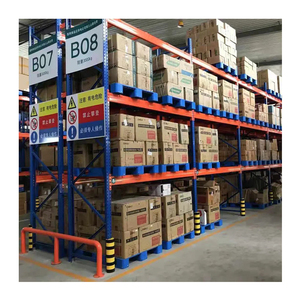
Heavy Duty Selective Pallet Rack 5 Ton Capacity Industrial Warehouse Storage Shelving
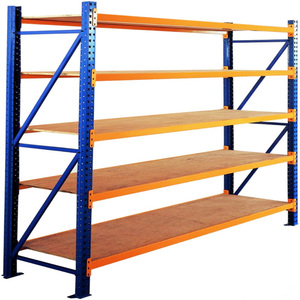
HUAWU 5 Ton Heavy Duty Selective Pallet Rack Steel Q235 Industrial Storage System PR-05
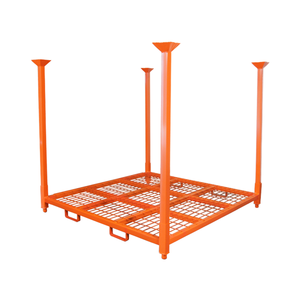
Mracking Corrosion-Protected Steel Stacking Racking & Post Pallet System
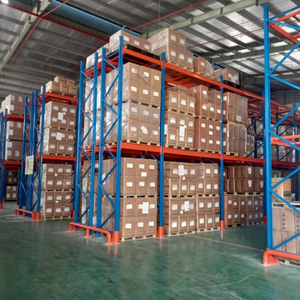
Wholesale Heavy Duty Selective Pallet Racking System for Cold Storage Facilities
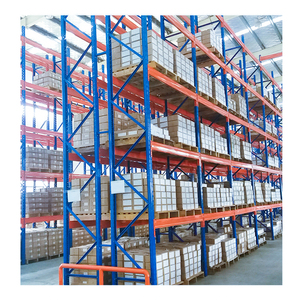
Factory Industrial Warehouse Storage Heavy Duty Selective Steel Pallet Racking
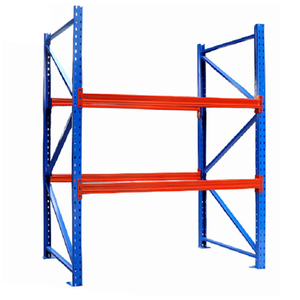
Adjustable Steel Selective Beam Pallet Rack With Powder Coated Finish
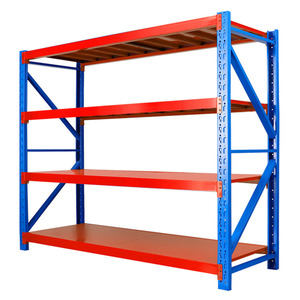
China Factory Warehouse Metal Pallet Racking Boltless 5-Layer Steel Units
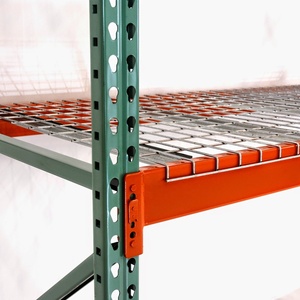
Warehouse Selective Storage Teardrop Pallet Rack (RMI MH16.1 Standard)
1. The Strategic Landscape: Why Static Pallet Racking Anchors 80% of Modern Distribution Centers
In high-throughput supply chains, warehouse layout engineers constantly weigh the trade-offs between automated high-density storage (such as automated storage and retrieval systems - ASRS, or multi-deep radio shuttle setups) and static pallet racking systems. Despite the rapid proliferation of automated material handling equipment, static selective pallet racking remains the uncontested backbone of global distribution hubs, third-party logistics (3PL) operations, and manufacturing bonded zones.
The operational primacy of static pallet racking is driven by fundamental economic and material handling axioms:
- 100% Pallet Accessibility (Selectivity): Unlike drive-in, push-back, or gravity flow systems operating on FIFO/LIFO batching, static selective racking offers unconstrained, immediate access to every single SKU pallet position without requiring honeycombing reorganizations or repositioning cycles.
- Zero Mechanical Downtime: Static systems contain no moving mechanics, sensor chains, or electrified busways. Operational uptime is determined entirely by forklift battery management and structural maintenance schedules, eliminating the catastrophic financial risk of automated crane stoppages.
- Unmatched Capital Expenditure (CapEx) Efficiency: The installed cost per pallet position of heavy-duty static selective racking from top-tier Chinese manufacturers averages between $35 and $65 per pallet position, compared to $350 to $900+ for automated ASRS high bays.
- Fleet Interoperability: Static systems are universally compatible with standard counterbalance forklifts, reach trucks, articulated narrow aisle trucks (e.g., Bendi, Aisle-Master), and automated guided vehicles (AGVs) using standard 2D laser or optical navigation.
As international supply chain velocity accelerates and SKU fragmentation intensifies due to omnichannel retail, procuring static pallet racking directly from premier Chinese engineering exporters provides corporate procurement teams with rapid installation timelines, bespoke structural profiling, and rigorous conformity to European (EN 15512), American (RMI ANSI MH16.1), and Australasian (AS 4084) structural codes.
High-Yield Hot-Rolled Steels
Utilizing prime-certified Q235B and Q355B (equivalent to ASTM A36 and S355JR) coils sourced from Tier-1 mills (Baosteel, Ansteel). Certified chemical compositions guarantee stable carbon-manganese ratios for maximum cold-bending yield thresholds.
Continuous CNC Roll-Forming
Equipped with 24-station automated roll-forming lines producing multi-bend Omega (Ω) upright profiles. The cold-work hardening induced along structural radiuses enhances load-bearing cross-sectional stiffness while reducing torsional deflection.
Pre-Treatment & Anti-Corrosion
State-of-the-art 12-stage automated pre-treatment immersion including degreasing, ultrasonic water washing, acid pickling, and micro-crystalline zinc phosphating before electrostatic curing at 200°C for extreme coastal salt-mist resilience.
2. Engineering Specifications Matrix: Metallurgical and Structural Standards
Global logistics consultants require rigorous verification of structural load paths, allowable deflections, and material limits. When evaluating tenders from Chinese pallet racking exporters, structural engineers reference cross-sectional geometries, moment-resisting beam-to-column connections, and baseplate anchoring dynamics.
| Structural Parameter | European Standard (EN 15512) | American Standard (RMI MH16.1) | HEDA Shelves Heavy-Duty Spec |
|---|---|---|---|
| Base Steel Grade | EN 10025-2 S235JR / S355JR | ASTM A36 / ASTM A1011 HSLAS | Q235B & Q355B Hot-Rolled Coils |
| Yield Strength (Fy) | ≥ 235 N/mm² (S235) / ≥ 355 N/mm² | ≥ 36,000 psi (~248 MPa) / 50 ksi | 235 - 355 MPa Certified with MTC |
| Beam Deflection Limit | 1/200th of Clear Span (L/200) | 1/180th of Clear Span (L/180) | L/200 Strict Deflection Threshold |
| Upright Column Profile | Omega (Ω) with stiffener folds | C-Channel or Open Tube with return | Multi-Rib Omega (80/90/100/120mm) |
| Hole Pitch Adjustment | 50mm or 75mm standard pitch | 76.2mm (3 inches) Teardrop pitch | Dual CNC Capability: 50/75mm & Teardrop |
| Beam Connection Type | Multi-Claw Interlocking Lug + Pin | Gravity Shaved Pin Lock / Teardrop | 4-Claw Stamped End Connectors + Safety Pins |
| Corrosion Resistance Class | ISO 12944 C2 to C4 (Powder Coated) | ASTM B117 500-Hour Salt Spray | Epoxy-Polyester Hybrid (60-80μm) / HDG |
Under EN 15512, rack stability requires finite element analysis (FEA) accounting for second-order p-delta effects and semi-rigid connection looseness. Chinese manufacturers operating at the top tier maintain dedicated testing rigs where full-scale upright stubs, beam end connectors, and baseplate anchor assemblies undergo cyclic static and dynamic shear tests.
3. Future Procurement Trends in Industrial Storage (2025–2035)
The next decade of static racking procurement is governed by warehouse height optimization, automated mobile robot (AMR) navigation tolerances, and stringent carbon-accounting directives. Sourcing directors must anticipate five macro-trends redefining procurement contracts:
HSLA Steel Lightweighting
Adoption of High-Strength Low-Alloy (HSLA) Q355B and Q420 cold-formed steels, reducing tare steel weight by 12-18% without compromising beam shear capacity, directly compressing ocean freight expenses.
AMR / AGV Compatibility
Static racks re-engineered with micro-tolerances (±1.0mm upright verticality) and reinforced bottom guide rails, allowing vision-guided automated narrow-aisle reach trucks to pick safely at 14m heights.
Cold Chain Blast Metallurgy
Growth in pharmaceutical and frozen food cold chain requires special structural steel formulations exhibiting high Charpy V-notch impact toughness at -30°C to eliminate brittle catastrophic fracture.
Low-Carbon & Traceable ESG
Mandatory Environmental Product Declarations (EPDs), heavy metals-free (RoHS compliant) thermoset powders, and recycled steel melt documentation required for LEED and BREEAM-certified warehouse projects.
Trend Analysis: Freight Density Optimization and Knock-Down Economics
Ocean freight rates remain a primary cost driver in international racking tenders. Leading Chinese exporters have refined modular knock-down nesting systems. By engineering boltless or modular bolted upright frames where bracing members nest flush within upright omega contours, container utilization rates have surged from 18 metric tons to the maximum permissible 26 to 28 metric tons per 40ft High Cube container. This logistical innovation directly dilutes landed unit costs by 15% to 22% for overseas project sites.
4. Industry Evolution: The Rise of Intelligent Chinese Fabrication Hubs
Over the past twenty-five years, China's static racking industry transitioned from low-cost manual welding workshops to highly automated, vertically integrated manufacturing complexes. Today, the world's most technically demanding infrastructure, logistics, and mega-retail facilities source structural steel racking from Chinese production centers for three distinct reasons:
- Continuous Upstream Metallurgical Integration: Proximity to major steel manufacturing clusters ensures instant access to high-grade coils with uniform thickness tolerances (±0.05mm), eliminating supply chain latency and protecting project delivery milestones.
- Robotic Robotic Laser Cutting & Dual-Torch Welding: Automated robotic welding stations ensure complete, uniform weld penetration on beam end connectors and heavy baseplates, eliminating human fatigue variance and micro-porosity defects.
- Digital 3D CAD to CNC Manufacturing Loops: Advanced production systems convert approved warehouse Revit/BIM models directly into CNC punch codes, guaranteeing that bolt holes, connector tabs, and anchor slots match field foundations with zero reaming or field modifications required.
Frequently Asked Questions for Warehouse Engineers
In-depth technical answers addressing load limits, metallurgical equivalencies, seismic calculations, and installation compliance.
How do Chinese steel grades Q235B and Q355B compare to ASTM A36 and European S235JR?
Q235B and Q355B are carbon structural steels governed by the Chinese national standard GB/T 700 and GB/T 1591. In structural engineering performance, Q235B is functionally and metallurgically equivalent to ASTM A36 (USA) and EN 10025-2 S235JR (Europe), exhibiting a nominal yield strength of 235 N/mm² and tensile strength between 370 and 500 N/mm².
For high-bay installations exceeding 8 meters or beam spans supporting heavy seismic forces, top manufacturers utilize Q355B (equivalent to EN 10025 S355JR or ASTM A572 Grade 50), which delivers a yield strength ≥ 355 N/mm². Mill Test Certificates (MTC) detailing chemical composition (carbon, manganese, silicon, phosphorus, sulfur) and mechanical elongation accompany every production batch.
What calculation methodologies are applied for seismic rack design under IBC and Eurocode?
Seismic design for static pallet racking must satisfy the local building code (e.g., International Building Code [IBC], ASCE 7, or Eurocode 8). Because static racks carry live pallet loads that interact dynamically with the uprights, racking behaves as a semi-rigid unbraced moment frame in the down-aisle direction and a braced truss in the cross-aisle direction.
Top Chinese exporters utilize dynamic response spectrum analysis or equivalent lateral force (ELF) calculations. Engineering adjustments include thickened baseplates (e.g., 8mm to 16mm Q235B steel), double mechanical wedge anchors or chemical epoxy capsules (such as Hilti HIT-HY), increased column section depths (up to 120mm Omega profile), and specialized heavy-duty back-to-back row spacers with cross-aisle portal bracing.
What is the distinction between European 50mm/75mm hole pitch and American Teardrop configurations?
The distinction lies in punching geometry, beam connector kinematics, and regional interchangeability:
- European Pitch (50mm / 75mm): Features square, rectangular, or teardrop-slot cuts punched along the upright face. Beams utilize heavy stamped steel end connectors with 3, 4, or 5 welded connector claws that wedge downward into the slots. Safety pins lock through alignment holes to prevent accidental uplift from forklifts. This format dominates EMEA, Southeast Asia, and South America.
- American Teardrop Pitch (76.2mm / 3-inch): Uses keyhole-shaped teardrop punchings. The beam end connectors feature round conical pins that slide down into the teardrop slot. Because teardrop profiles are largely standardized across the North American market, components from different fabricators can be interchangeably installed in existing warehouses.
Premier Chinese manufacturers operate flexible multi-axis tooling lines capable of cold-punching both metric European and imperial American Teardrop profiles on the same roll-forming line.
How is corrosion prevented in sub-zero cold chain and high-humidity coastal environments?
Corrosion mitigation depends directly on the ambient atmospheric classification defined under ISO 12944:
- Climate-Controlled Dry Warehouses (C1-C2): Standard automated electrostatic polyester-epoxy hybrid powder coating applied at 60-80 microns thickness after an acid pickling and phosphating wash delivers 500+ hours of salt spray resistance (ASTM B117).
- Cold Storage & Blast Freezers (-30°C): Standard powder coating remains structurally intact provided the air is dehumidified. However, components near dock doors subject to condensation cycles require an upgraded primer coat or high-impact low-bake powder resins to prevent micro-cracking and steel embrittlement.
- Coastal Open Yards & Chemical Storage (C4-C5): Racking components are Hot-Dip Galvanized (HDG) in accordance with ASTM A123 or ISO 1461, achieving a zinc coating thickness of 65 to 85 microns for multi-decade cathodic protection.
What are the permissible beam deflection limits under full design load?
Under European Standard EN 15512 and FEM 10.2.02, the maximum permissible vertical deflection of a pallet rack beam under uniformly distributed load (UDL) is 1/200th of the clear span (Deflection ≤ L/200). In the United States, RMI MH16.1 permits a slightly higher deflection threshold of 1/180th of the span (L/180).
For example, for a standard 2700mm beam span designed to hold two 1000kg pallets, the mid-span downward sag under full 2000kg load must not exceed 13.5mm (under L/200). Furthermore, upon unloading, the beam must exhibit zero residual plastic deformation, confirming that steel stress levels remain well within the elastic deformation regime with an overall safety factor of ≥ 1.5.
What container packaging standards are necessary to eliminate ocean transit damage?
Due to the length and weight of static racking members (uprights up to 11.8m to fit 40ft containers; beams between 2.3m and 3.9m), export packing is an engineering discipline in itself:
- Upright Frames: Shipped as assembled frames or nested knock-down bundles banded with high-tensile steel strapping, isolated with wooden dunnage, and wrapped in water-resistant plastic stretch film.
- Step and Box Beams: Bundled in layers separated by timber runners, secured with corrugated protective corner channels, and fitted with hoist slings for rapid unloading with slip-sheet forklifts or container ramps.
- Small Hardware: Baseplates, anchor bolts, safety pins, and shims are packed in labeled plywood crates or reinforced cardboard boxes secured to fumigated wooden pallets.
Can static selective pallet racking be repurposed or upgraded to semi-automated systems later?
Yes. A major advantage of static pallet racking is its structural modularity. A standard wide-aisle static selective configuration can later be converted into:
- Very Narrow Aisle (VNA) Racking: By tightening aisle clearances from 3.5m down to 1.7m and retrofitting bottom mechanical guide rails or floor induction wire guidance, warehouse storage density can increase by up to 40% using the same upright frames and beams.
- Pick Modules & Rack-Supported Walkways: Static frames can be integrated with floor joists, staircases, and open steel planking to create multi-tier picking platforms for e-commerce small parts sorting.
Upgrades must be cross-checked by structural engineers to ensure the upright frame's buckling capacity and baseplate concrete slab contact pressures are not exceeded.
What documentation is necessary for overseas local authority (e.g., Civil Defense, Building Dept) approvals?
For municipal, fire safety (e.g., NFPA 13 sprinkler clearances), and structural engineering approvals, Chinese suppliers must furnish:
- Stamped architectural 2D CAD floor plans detailing egress corridors, flue spaces (transverse and longitudinal, minimum 75mm to 150mm), and fire hose reel clearances.
- Structural calculation reports signed by qualified civil/structural engineers indicating dead loads, live loads, wind/seismic coefficients, and slab punch shear checks.
- Factory Mill Test Certificates (MTC) and Third-Party Testing Certificates (CE, ISO 9001, RoHS) for structural steel coils and powder coatings.
Initiate Your Warehouse Engineering Layout
Whether you are procuring heavy-duty pallet racking for an international 3PL logistics hub, an industrial cold storage facility, or a regional distribution center, our factory engineering team provides comprehensive design-to-delivery support.
Submit your warehouse CAD drawings, ceiling clearance heights, pallet dimensions, and forklift fleet parameters to receive an optimized 3D layout and landed container cost proposal within 24 hours.