Direct OEM/ODM Factory • Engineering Excellence Since 2001

China Top Warehouse Racking Manufacturer & Factories

Certified Heavy-Duty Pallet Racks, Automated Intralogistics Systems, and Custom Industrial Storage Engineering for Global Supply Chains.

30,000 m²
Automated Smart Factory
30,000 t
Monthly Steel Capacity
ISO & CE
EN 15512 & RMI MH16.1
120+
Export Nations Served
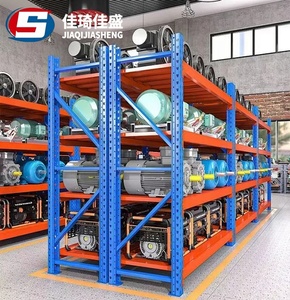
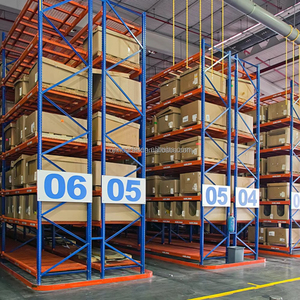
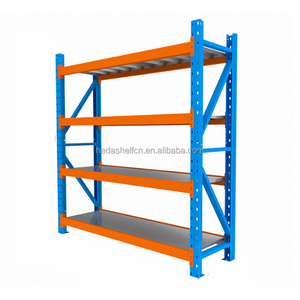
Enterprise Product Portfolio

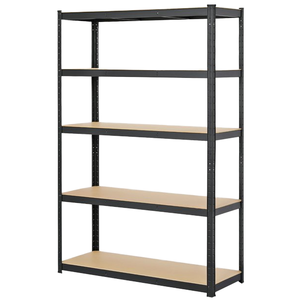
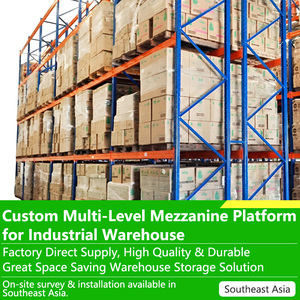
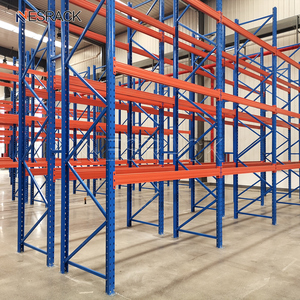
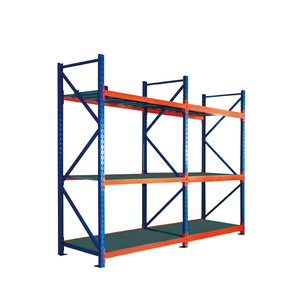
Engineered Industrial Racking & Storage Systems

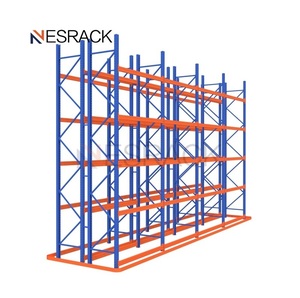
Engineered precisely to structural standards with premium cold-rolled Q235B/Q355B structural steel. Each system delivers maximum pallet density, seismic stability, and seamless forklift/ASRS accessibility.

Technical Engineering White Paper

Global Procurement Analysis: Sourcing Industrial Racking from China

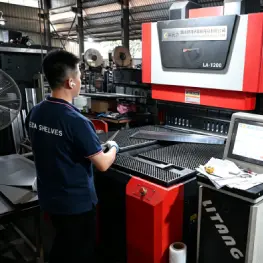
In modern supply chain architecture, modern storage racking is no longer treated as passive metal shelving; it is a load-bearing, dynamically stressed structural foundation engineered to protect personnel, assets, and operational continuity. Sourcing direct from tier-one Chinese manufacturers such as Guangzhou Heda Shelves Co., Ltd. (operating over 30,000 square meters of automated workshops with monthly output exceeding 30,000 tons) grants global enterprises significant cost advantages, accelerated lead times, and certified structural reliability.

Procurement engineers must evaluate structural rack safety through rigid mechanical frameworks. Under international testing directives, racking frames must be calculated not only for static deadweight (pallets, cargo, dead steel load) but also for critical dynamic stresses: seismic ground acceleration factors, forklift impact energy absorption (EN 15512 requires impact design resistances of 400 Nm in directions parallel and perpendicular to the aisle), and asymmetric live load distributions. High-grade Chinese manufacturers employ finite element analysis (FEA) modeling to simulate torsional stress concentrations on upright-to-beam connectors before cold roll-forming begins.

Mechanical Structural Matrix: Racking Engineering Standards

The table below details cross-regional engineering parameters applied across European, American, and Australasian warehouse implementations:

Design Criterion European Norm (EN 15512 / FEM 10.2.02) American Standard (RMI MH16.1 / ANSI) Australian Code (AS 4084-2023)
Primary Steel Grade S235JR, S355MC, Q235B equivalent ASTM A1011 / A36, High Strength Q355B AS/NZS 1365 structural grade strip
Beam Deflection Limit L/200 maximum vertical deflection L/180 or max 0.5 inch (12.7 mm) L/200 under design gross load
Safety Factor (Material/Load) Partial factors: γM = 1.1, γG = 1.4, γQ = 1.4 LRFD / ASD dual design safety factors Limit state design philosophy
Impact Resistance Mandate 400 Nm front, 200 Nm corner column guards Base column reinforcement up to 48 in. Upright column protection minimum 400 mm
Beam-to-Column Locking Locking pin with minimum 0.5 kN pull-out Positive locking shear device Tamper-resistant shear-lock mechanism

Future Procurement Trends (2025–2030)

Warehouse racking investments span 10 to 25 operational years. Forward-thinking Chief Logistics Officers (CLOs) and Facility Directors must design racking layouts aligned with emerging operational shifts:

  • Automation Readiness (AMR & AGV Floor Interfaces): Traditional human-operated forklift aisles are being re-engineered for Autonomous Mobile Robots (AMRs) and automated high-bay turret trucks. This requires higher structural precision: floor deflection limits must not exceed 1:1000, and rack vertical plumb lines must stay within ±3mm per 10 meters of height.
  • Cold Chain & Energy Conservation Density: High cold storage operating costs demand dense cube utilization. Multi-deep Radio Shuttle systems and automated Push-Back racks reduce chilled volume per pallet by up to 40%, cutting refrigeration power consumption significantly.
  • Advanced Surface Anti-Corrosion Formulations: Due to rapid coastal logistics hub expansions (e.g., Jebel Ali UAE, Dammam KSA, Rotterdam, Long Beach), standard single-layer paints fail prematurely. Buyers now mandate multi-stage pickling, zinc phosphating, and thick (60–90μm) electrostatic epoxy-polyester coatings, with optional hot-dip galvanizing for open yards and sub-zero blast freezers.
  • Structural Modularity & Carbon Neutrality: Modular cold-formed profiles reduce steel consumption by 12% without sacrificing load capacities, significantly shrinking the embodied carbon footprint of warehouse racking projects.

Our 10-Stage High-Precision Manufacturing Methodology

Every structural component produced in our Guangzhou factory undergoes ten strictly monitored manufacturing steps to guarantee structural integrity from raw steel coil to packed container:

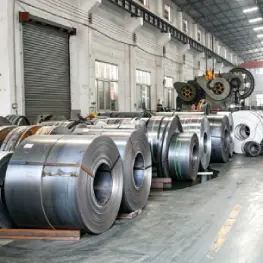
Raw Materials Inspection 01

Raw Materials

Direct coil testing from certified steel mills; spectral testing for carbon, manganese, and yield strength.

Precision Steel Cutting 02

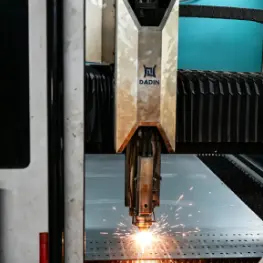
Precision Cutting

High-speed CNC slitting and shearing lines providing micro-tolerance cuts without edge burrs.

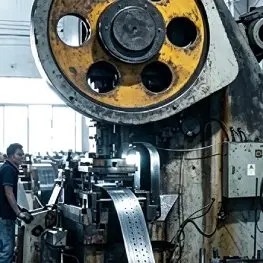
Automated Column Punching 03

Column Punching

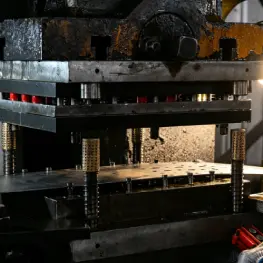
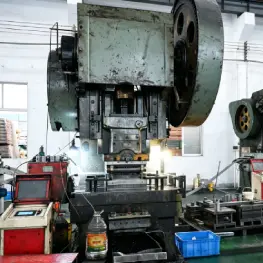
Continuous servo multi-stage punches delivering exact 50mm/75mm pitch diamond and teardrop holes.

Cold Bending Forming 04

Cold Roll-Bending

18-pass progressive cold roll-forming machines shaping upright profiles with up to 12 stiffening bends.

Profile Roll Forming 05

Profile Forming

Interlocking twin-C box beam welding providing high torsional stability and deflection resistance.

Surface Polishing 06

Robotic Polishing

Mechanical deburring, shot blasting, and robotic weld dressing ensuring smooth contact points.

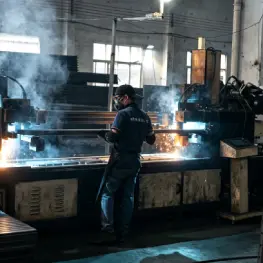
Automatic Welding 07

Robotic Welding

Automated Panasonic twin-torch MIG welding joins beam connector jaws with penetration uniformity.

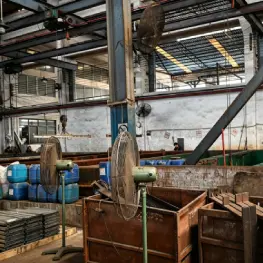
Pickling & Phosphating 08

Pickling Pretreatment

9-stage automated immersion degreasing, acid rust descaling, and micro-crystalline zinc phosphating.

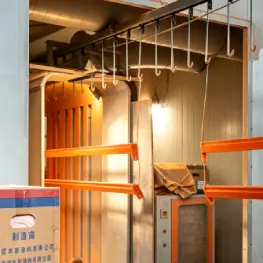
Powder Coating 09

Electrostatic Powder

Automated Gema powder spray booths; thermosetting curing at 200°C for strong cross-link adhesion.

QC and Shipping 10

QC & Bundling

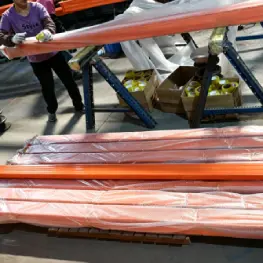
Thickness calipers, cross-cut adhesion tests, ultrasonic weld checks, and export pallet wrapping.

Third-Party Verification & Enterprise Compliance

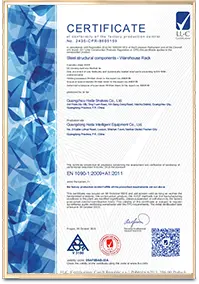
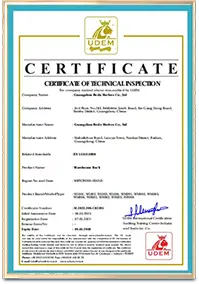
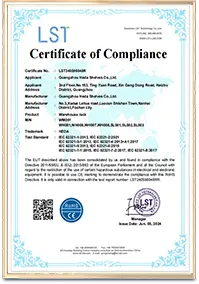
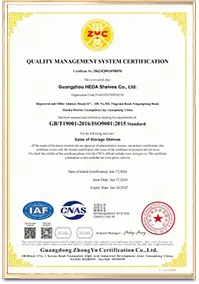
Structural reliability requires independent, documented proof. HEDA Shelves maintains certified manufacturing processes meeting European CE specifications (EN 15512:2009 under Certificate No. 2435-CPR-8605159), comprehensive ISO 9001:2015 quality management systems (Certificate No. 18624Q00169R0M), and full environmental RoHS compliance.

Every export container includes comprehensive mill test certificates (MTC), coating thickness verification logs, and engineering calculation dossiers to expedite Civil Defense and municipal structural approvals.

Procurement Knowledge Base

Frequently Asked Technical Questions

Technical guidance for warehouse directors, structural consultants, and procurement managers evaluating factory-direct supply chains.

How do you calculate safe beam deflection limits for high-density pallet racks?
Under international standards (EN 15512 and RMI MH16.1), the maximum permissible vertical deflection for load beams under uniform distributed load (UDL) cannot exceed L/200 (European standard) or L/180 (US standard), where L is the clear span distance between uprights. For example, on a 2700mm beam carrying two 1,200kg GMA pallets, vertical sag must not exceed 13.5mm. Our in-house FEA engineers calculate beam profile dimensions (box beam thickness, connector claw depth, and weld throat) so deflection remains within standard limits, preventing dangerous weld fatigue and pallet slip.
What are the key steel grade differences: Q235B vs. Q355B in racking manufacturing?
Q235B is an industry-standard carbon structural steel offering yield strength of 235 MPa, excellent cold-roll ductility, and reliable weldability, ideal for medium-duty beams and light uprights. Q355B is a low-alloy, high-strength structural steel providing minimum yield strength of 355 MPa (over 50% stronger). We specify Q355B for tall high-bay upright columns (above 8 meters), heavy-duty drive-in cantilever arms, and structural mezzanine base columns. This increases load-bearing capacity while lowering gross steel deadweight, reducing container shipping costs for overseas buyers.
How does your powder coating prevent rust in humid, saline, or sub-zero environments?
Untreated steel rapidly corrodes along structural seams when exposed to humidity or cold-room condensation. We address this using a 9-stage chemical pretreatment line: components undergo high-pressure alkaline degreasing, twin rinses, acid pickling to eliminate mill scale, and micro-crystalline zinc phosphating. This forms an insoluble protective conversion layer before applying a 60–90μm electrostatic thermoset epoxy-polyester powder coat cured at 200°C. This process delivers salt-spray resistance over 500 hours (ASTM B117) and cross-hatch adhesion tested to Class 0 (ISO 2409).
Can your engineering team support local building code, NFPA 13, and Civil Defense approvals?
Yes. We routinely provide engineering submittal packages for local authority reviews across North America, the EU, Australia, and the GCC. Our engineering team supplies AutoCAD 2D dimensioned floor plans, 3D BIM/Revit models, longitudinal flue space layouts meeting NFPA 13 fire sprinkler clearance requirements (minimum 6-inch vertical flue spaces), transverse aisle egress calculations, and structural PE-stamped load capacity placards matching your warehouse slab anchor specifications.
What information is required to get a free 2D/3D warehouse layout proposal?
To generate an optimized structural layout and itemized bill of materials (BOM) within 24 to 48 hours, our engineering office requires: (1) Architectural warehouse CAD drawing or internal dimensions including clear ceiling height under beams and column grid layout; (2) Pallet specifications (width × depth × height, including cargo overhang) and maximum loaded weight; (3) Forklift model, turning radius, and maximum reach height; (4) Operating environment temperatures (ambient dry, chilled, or -25°C blast freezer); (5) Targeted total pallet positions and inventory turnover model (FIFO vs. LIFO).

Request Your Turnkey Warehouse Layout & Factory Quote

Connect directly with our engineering department. Receive an optimized 2D/3D AutoCAD layout design, structural load calculations, and a direct manufacturing quotation within 24 hours.