Dynamic FIFO
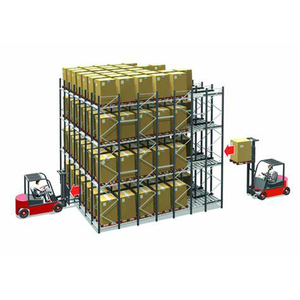
Precision-formed roll profiles, automated ASRS totes, and structural hollow sections engineered to BS EN 15512, RMI, and FEM structural specifications.
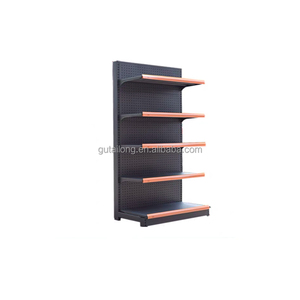
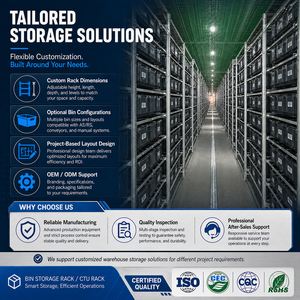
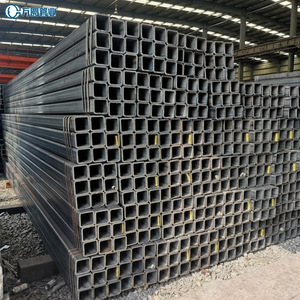
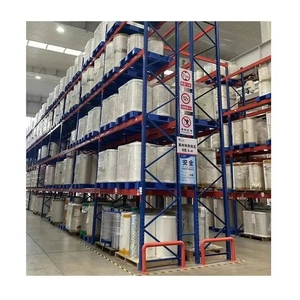
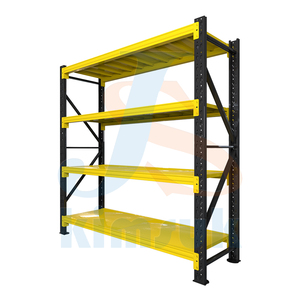
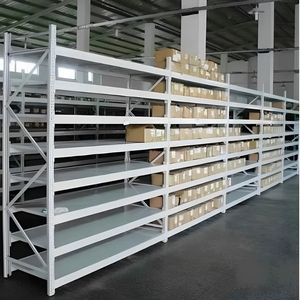
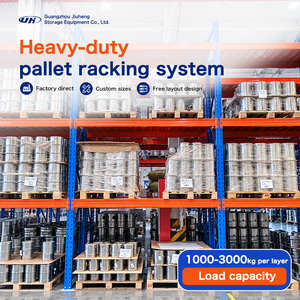
As a premier Chinese manufacturer established in 2001, we bridge the gap between heavy structural engineering, competitive pricing, and strict international quality standards.
Our Guangzhou facility features end-to-end automated manufacturing lines: CNC slitting, precision cold-roll beam roll formers, automated punching units, and multi-axis welding robots ensuring zero cumulative tolerance drift across massive structural spans.
Our in-house design engineering team eliminates installation friction before production begins. We analyze your clear warehouse heights, concrete slab load deflection, seismic zones, and forklift specifications to provide compliant 2D layouts and realistic 3D renderings within 24 to 48 hours.
Unlike trading intermediaries, HEDA Shelves holds traceable CE certification (No. 2435-CPR-8605159), ISO 9001:2015 Quality Management Accreditation (No. 18624Q00169R0M), and full RoHS compliance, passing strict third-party audits and municipal civil inspections.
To resist corrosive sea freight and extreme desert or tropical operating environments, our raw steel profiles undergo automated multi-stage immersion pickling, surface passivating phosphating, and electrostatic powder curing ensuring exceptional scratch resistance.
All beams, upright columns, and bracing panels are bundled, marked, and containerized according to engineering drawings. Color-coded modular bundles align directly with our structural bill of materials, saving up to 35% on local contractor erection costs.
From modern free-trade logistics parks in the UAE and Saudi Arabia to extensive retail networks across Southeast Asia, Africa, Europe, and the Americas, HEDA Shelves has completed over 10,000 successful racking and structural mezzanine installations.
Modern global logistics is experiencing rapid structural realignments. Escalating industrial land values, regional nearshoring dynamics, cold chain expansion, and automated fulfillment require supply chain directors to reassess their physical storage infrastructure. Selecting an enterprise racking manufacturer in China has transitioned from a routine cost-saving exercise into a strategic technical partnership requiring rigorous evaluation of metallurgical integrity, engineering validation, and system integration.
Historically, overseas procurement managers evaluated racking on steel tonnage alone. Today, sophisticated logistics engineering requires structural racking to integrate seamlessly with automated material handling equipment (MHE). Forward-looking procurement strategies exhibit three defined trajectories:
A. Direct Engineering Sourcing Over Third-Party Brokers: Tier-1 distribution operators are bypassing intermediary trading agents to contract directly with large-scale factories that operate in-house rolling and fabrication lines. Direct engagement with engineering teams prevents miscommunications regarding critical dimensions, beam deflection tolerances, dynamic loading capacities, and bay clearances.
B. High-Bay Verticality and Floor Footprint Compression: Real estate costs in primary logistics corridors have made horizontal facility expansion cost-prohibitive. As a result, procurement orders are transitioning toward extra-tall uprights (12 to 24 meters) paired with Very Narrow Aisle (VNA) or automated retrieval systems. This shift increases demand for higher yield steel grades, such as EN 10219 S355J0H structural sections, which provide superior rigidity and reduced cross-sectional deflection.
C. Comprehensive Compliance Documentation for Civil Defense and Insurers: Local authorities and industrial property insurers enforce strict verification of structural calculations, fire safety flue spacing, and certified sprinkler run-offs. Global buyers now require structural finite element analysis (FEA) reports, material mill test certificates (MTCs), and standardized quality credentials alongside physical equipment deliveries.
The technical architecture of industrial racking systems is undergoing steady technological advancements:
A. Integration of Semi-Automated and Autonomous Bin-to-Person Architectures: While static selective pallet racking remains foundational for high-SKU inventory, high-density operations increasingly favor hybrid setups. Semi-automatic radio shuttle racks and Mini-Load ASRS tote structures decouple forklift speeds from deep-lane retrieval times. By utilizing shuttle vehicles traveling inside rail corridors, operations eliminate rack collision hazards while achieving exceptional volumetric storage density.
B. Multi-Tier Rack-Supported Catwalk Mezzanines: Driven by e-commerce picking velocities, rack-supported multi-tier mezzanines have emerged as high-ROI upgrades. By using the uprights themselves to carry overhead catwalk platforms, industrial operations gain two to four functional floors dedicated to manual parcel sorting, returned goods handling, and value-added kitting, eliminating the need for expensive structural concrete floors.
C. Resilient Surface Treatments for Climatic Extremes: International distribution hubs increasingly operate under challenging environmental conditions—from high humidity in coastal deep-water ports to elevated ambient temperatures in arid industrial corridors. As a result, high-durability electrostatic powder coatings, zinc-rich primers, and hot-dip galvanization have become standard engineering requirements to prevent corrosive degradation and structural fatigue.
Clear, direct engineering answers addressing common questions regarding international customs, structural load safety, and site commissioning.
To produce an exact 2D architectural CAD plan, 3D structural rendering, and engineering quote, our design engineers require: (1) Architectural CAD floor plans or building dimensions showing clear column grid placements; (2) Maximum usable ceiling clearance height under ceiling obstacles or roof trusses; (3) Pallet specifications including overall length, width, height, and maximum dynamic load per pallet (including pallet tare weight); (4) Model and operating parameters of your forklift fleet (lift height, turning radius, and minimum operating aisle width); and (5) Ambient operational conditions (e.g., standard ambient warehouse, cold store, or coastal outdoor yard).
Every racking system engineered by HEDA Shelves complies with international structural codes, including European EN 15512, RMI, and FEM guidelines. We verify tensile yield parameters across all raw carbon steel coils, perform continuous mechanical bend and punch monitoring, and conduct in-house load testing to establish exact deflection metrics (maintaining safety factors between 1.5 to 2.0 under uniform distributed loads). Structural calculations and mill test certificates accompany each commercial shipment.
Long-haul ocean freight introduces risks of salt fog corrosion, vibration friction, and container handling impacts. We bundle all upright frames, beams, and horizontal brace members with high-tensile steel strapping, corner edge protectors, and multiple moisture-barrier stretch wrap films. Each structural bundle is assigned a distinctive code corresponding with the project's assembly drawing, enabling local installation teams to unpack and erect structural bays in logical sequence.
Yes. Every project includes comprehensive structural assembly schematics, numbered component bill of materials (BOM), step-by-step engineering guidelines, and detailed video instructions. For major distribution centers, high-density shuttle bays, or multi-level mezzanines, we provide real-time remote video engineering coordination or can dispatch experienced structural installation engineers to supervise local construction teams.
Thanks to our 30,000-ton monthly capacity, standard pallet racking and industrial shelving orders are manufactured and packaged within 15 to 25 working days following layout approval. Specialized custom configurations, structural hollow sections, or complex automated tote systems usually take 25 to 35 days. We coordinate freight directly to key international ports including Jebel Ali, Dammam, Singapore, Rotterdam, Los Angeles, and Durban.
Submit your facility layout, pallet load profiles, and target timeline. Our senior design team will deliver an optimized CAD storage schematic and detailed structural quote within 24 hours.
Inquire Now