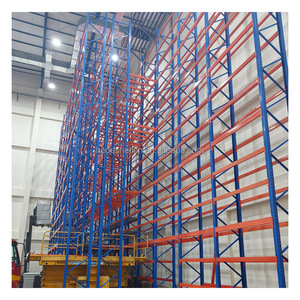
High-Performance Racking Ensembles
Engineered Heavy-Duty Racking & Specialized Foot Assembly Systems
Explore our flagship heavy-duty storage racks and industrial shelving systems, engineered with high-yield upright posts and robust footing configurations to maximize stability across heavy dynamic loads.
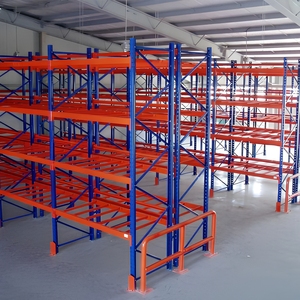
Anti-Rust Conventional Heavy Duty Steel Storage Racks
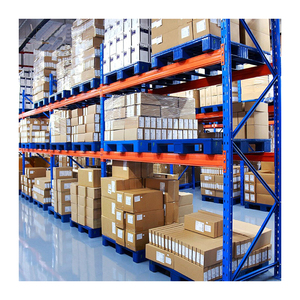
HUAWU 5-Ton Q235 Selective Warehouse Storage System
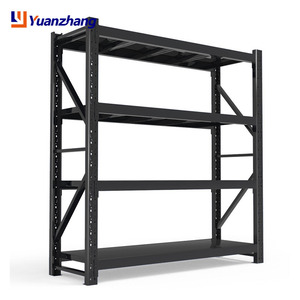
Warehouse Wide Span Industrial Storage Rack & Metal Shelves
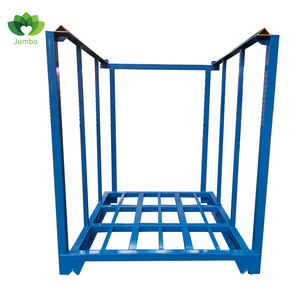
Plug-In Heavy Duty Storage Rack with Anti-Corrosion Finish
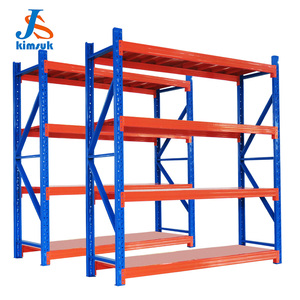
Boltless Heavy-Duty Warehouse Storage Shelving Unit
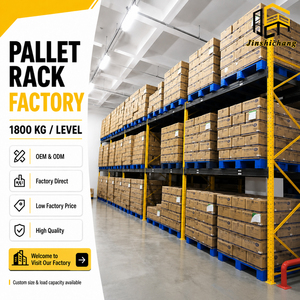
3000KG Heavy Duty Powder-Coated Pallet Rack System
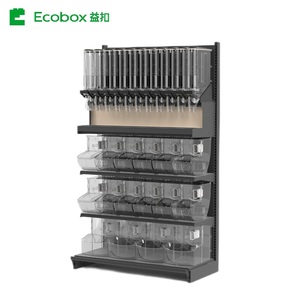
Ecobox Commercial Heavy Iron Base Display Rack
Engineering Whitepaper: Structural Mechanics & Load Dissipation in Pallet Racking Feet
In structural logistics engineering, the pallet rack footplate (also termed the upright column baseplate) serves as the primary critical boundary interface between the cold-formed steel racking superstructure and the concrete industrial floor slab. Often overlooked in basic procurement tenders, the footplate is subjected to complex multi-axial forces: vertical static dead loads, dynamic live pallet loads, forklift impact shears, and overturning moments generated by seismic vibrations or localized building deflections.
When high-bay pallet racking reaches elevations from 8 to over 30 meters, the axial compressive load transferred through an upright column can readily surpass 150 kN to 280 kN per leg. Without a mathematically optimized baseplate footprint, this concentrated vertical stress will easily exceed the localized compressive yield strength of the underlying concrete slab (typically 25 to 35 MPa for standard C25/30 or C30/37 industrial slabs), leading to microscopic concrete crushing, anchor bolt loosening, structural listing, and catastrophic progressive rack collapse.
As a leading Chinese original equipment manufacturer (OEM) and tier-1 supplier of heavy-duty pallet racking components, Guangzhou HEDA Shelves Co., Ltd. designs and fabricates pallet racking feet strictly conforming to EN 15512 (European Racking Code), RMI ANSI MH16.1 (Specification for the Design, Testing and Utilization of Industrial Steel Storage Racks), and AS 4084 (Steel Storage Racking Standards). Our baseplates are engineered with finite element stress analysis (FEA) to disperse point loads over broad surface areas while anchoring down through precision-drilled mechanical wedge or chemical capsule anchors.
High-Yield Steel Grades (Q235B & Q355B)
Our racking feet are stamped or robotically welded from certified prime hot-rolled or cold-rolled strip steel. We utilize high-ductility Q235B for standard selective racks and high-tensile Q355B structural plate (yield strength ≥ 355 MPa) for seismic and high-bay clad-rack installations.
Seismic Overturning Moment Absorption
During seismic events, dynamic lateral shaking subjects outer baseplates to alternating cyclic tension (uplift) and compression. HEDA baseplates incorporate elongated anchor bolt slots and perimeter gusset stiffeners that prevent flange tears under severe ductile shear forces.
Automated Robotic Flange Welding
Heavy-duty seismic footplates are joined to column boots via automated dual-torch robotic CO2 gas-shielded arc welding. Continuous full-penetration fillet welds guarantee zero structural voiding, providing 100% shear transfer from column to baseplate.
| Baseplate Configuration | Typical Steel Grade | Plate Thickness (mm) | Anchor Hole Diameter | Maximum Axial Capacity | Recommended Applications |
|---|---|---|---|---|---|
| Standard Light Stamped Foot | Q235B Cold Rolled | 2.5 mm – 3.5 mm | 12 mm (1 or 2 holes) | Up to 45 kN | Manual Shelving, Medium Longspan, E-Commerce Totes |
| Conventional Selective Baseplate | Q235B Hot Rolled | 4.0 mm – 6.0 mm | 14 mm – 16 mm (2 holes) | 80 kN – 140 kN | Standard Selective Racks, Retail Backrooms, FMCG Logistics |
| Heavy-Duty Welded Base Shoe | Q355B Structural Steel | 8.0 mm – 10.0 mm | 18 mm (2 or 4 holes) | 160 kN – 240 kN | Drive-In, Double Deep, Pallet Flow, Heavy Tooling Racks |
| Seismic / High-Bay Clad Footplate | Q355B / S355JR | 12.0 mm – 20.0 mm | 20 mm – 24 mm (Multi-Pattern) | 320 kN+ | Automated ASRS Systems, High-Bay Cold Stores, Seismic Zones |
Industrial Authority & Scale
Why Global Supply Chains Source Directly from HEDA Shelves
Founded in 2001 in Guangzhou, China, HEDA Shelves has expanded into a global powerhouse in warehouse racking manufacturing, operating modern rolling, punching, and coating facilities.
Rigorous International Certification
Our quality management systems are fully certified under ISO 9001:2015 (Certificate No. 18624Q00169R0M, valid through June 2027), CE Certification (No. 2435-CPR-8605159), and strict RoHS material safety guidelines. Full raw-material mill test certificates (MTC) accompany every container.
10-Step In-House Production Line
From uncoiling, precision CNC steel slitting, automated column punching, and roll forming to automated robotic welding, 8-stage pickling and phosphating, and electrostatic epoxy-polyester powder coating, our 300+ technicians control every phase within our Guangzhou factory.
Global Engineering & Export Reach
We routinely supply massive turnkey operations across the Middle East (Jebel Ali, Khalifa Port, Jeddah, Dammam, Doha, Sohar), Southeast Asia, Africa, and the Americas. Every shipment features barcode-tagged bundles engineered for swift customs clearance and job-site staging.
Forward-Looking Industry Insights
Future Procurement & Technological Trends in Pallet Racking Components
As logistics environments accelerate toward automation, increased slab-density, and volatile seismic compliance, the engineering of pallet racking feet is evolving rapidly. Smart buyers are adapting their component sourcing around these emerging industry trends.
1. Sensor-Integrated Smart Baseplates (IoT Structural Health)
Modern mega-fulfillment centers are beginning to specify smart racking feet embedded with wireless piezoelectric load sensors and strain gauges. These IoT nodes monitor dynamic post loads and detect micro-settlement or slab cracking in real-time, warning warehouse managers of structural fatigue before mechanical failure occurs.
2. Shift Toward Ultra-Ductile Micro-Alloyed Steels
To reduce overall tare weight without sacrificing load ratings, European and North American procurement teams are increasingly mandating high-strength, low-alloy (HSLA) steels for baseplates. These micro-alloyed compositions offer superior cold-temperature fracture toughness, making them ideal for sub-zero cold chain facilities down to -30°C.
3. AMR & AGV Navigational Flange Clearances
With Autonomous Mobile Robots (AMRs) and Automated Guided Vehicles (AGVs) operating in ultra-narrow aisles, traditional bulky baseplate designs that protrude into the travel paths are obsolete. Next-generation baseplates feature flush-mounted, low-profile, beveled geometries that prevent robotic sensor trips and wheel collisions.
4. Stringent Carbon-Accounting & Green Galvanizing
Under cross-border carbon adjustment mechanisms (CBAM), logistics operators are scrutinizing the carbon footprint of structural steel. Wholesale manufacturers are rapidly phasing out toxic hot-dip plating baths in favor of zero-emission continuous galvanizing lines and lead-free thermoset powder coatings that yield exceptional salt-spray resistance.
5. Modular Dual-Purpose Foot-to-Guard Integration
Instead of installing separate upright column protectors that require independent drilling into the concrete floor, future racking projects demand baseplates with integrated wrap-around impact absorbing shoes. This reduces installation labor, prevents anchor interference, and eliminates floor micro-cracking caused by clustered holes.
Direct Buyer Knowledge Base
Frequently Asked Questions: Sourcing Pallet Racking Feet
Everything procurement directors, warehouse engineers, and installation contractors need to know about structural footplates, anchor physics, and custom manufacturing.
What factors determine the required thickness and surface dimensions of a racking footplate?
The surface area and thickness of the footplate are determined by four primary structural parameters: maximum factored column load (axial compression), the compressive strength of the warehouse concrete slab (MPa or PSI), the anchor bolt uplift capacity under seismic or wind moments, and the punching shear stress of the column profile. In high-load selective racking with upright loads exceeding 100 kN, engineering calculations typically require a minimum 6mm to 8mm thick baseplate measuring at least 120mm × 150mm to distribute stresses safely beneath the 20–30 MPa slab crushing threshold.
When should warehouse engineers specify chemical resin anchors versus mechanical wedge anchors?
Mechanical wedge anchors (expansion bolts) are the industry standard for sound concrete slabs with low seismic risk and typical dynamic loads. However, chemical capsule or injection resin anchors are mandatory in seismic zones (Categories D, E, F), post-tensioned concrete slabs, high-bay ASRS installations, or in cold storage facilities where continuous thermal contraction can cause mechanical expansion rings to lose friction grip. Chemical anchors create a stress-free bond along the entire drilled depth, providing significantly higher pull-out and shear ratings near slab edge boundaries.
How do leveling shims affect the structural stability of the racking foot assembly?
Because industrial concrete slabs rarely meet Class FM2 floor tolerances naturally, steel shims are placed beneath the baseplate to plumb the upright frame vertically. According to EN 15512 and RMI specifications, shims must match the material grade and overall perimeter profile of the baseplate. Stack heights exceeding 20mm require specialized anchor bolt length calculations to prevent reduction in concrete embedment depth. Furthermore, stacks greater than 25mm must be seam-welded together or secured by non-shrink structural grout beneath the plate to prevent inter-shim sliding under lateral vibrations.
Can HEDA Shelves customize baseplate hole patterns for retrofits and existing floor slab re-anchoring?
Yes. Guangzhou HEDA Shelves operates flexible CNC fiber laser cutting and multi-ton hydraulic punching machines. We can manufacture custom baseplates with bespoke bolt-hole centers, triangular seismic patterns, offset holes, or multi-slot openings. This flexibility is invaluable during warehouse retrofits where contractors must avoid hitting old truncated anchor studs or post-tensioned reinforcement tendons embedded inside the existing concrete slab.
What surface finish provides the highest corrosion protection for racking feet in coastal or cold-room settings?
Standard indoor dry logistics facilities utilize an 8-stage pickling and phosphating pre-treatment followed by 60–80 microns of electrostatic epoxy-polyester powder coating. For cold storage facilities (-30°C) with heavy condensation, or for coastal warehouse regions like Dubai, Jeddah, or Singapore with high ambient salinity, we strongly recommend pre-galvanized sheet stamping or post-fabrication hot-dip galvanizing conforming to ISO 1461 (minimum 55–70 microns zinc coating). This prevents moisture penetration at the concrete-to-steel junction line, which is notorious for crevice corrosion.
Do your racking baseplate designs support third-party approvals and local Civil Defense inspections?
Yes. Every structural racking system supplied by HEDA Shelves is backed by comprehensive CAD floor plans, 3D renderings, and structural engineering calculation reports. Our drawings clearly denote baseplate surface areas, concentrated floor loadings (kN/m²), anchor embedment depths, and aisle flue clearances. This comprehensive technical documentation directly assists local structural engineers and consulting firms in securing Civil Defense, OSHA, and regional municipal insurance approvals.
Looking for Factory-Direct Pallet Racking Feet & Upright Assemblies?
Partner directly with Guangzhou HEDA Shelves Co., Ltd. Gain access to 25+ years of certified manufacturing expertise, rapid custom tooling, and free professional 3D layout calculations for your next warehouse project.