International Logistics Infrastructure Whitepaper

China Wholesale Racks Carton Flow Exporter & Exporters

High-Density Gravity-Driven Dynamic Picking Systems, Automated Roller Mechanics & Global Warehouse Engineering Standards

Export Solutions Portfolio

Direct-from-Factory Heavy-Duty Industrial & Flow Racking Systems

Engineered according to international safety and load deflection tolerances (EN 15512 and FEM 10.2.02). Explore our specialized gravity bed and high-bay storage portfolio manufactured for tier-one logistics operators.
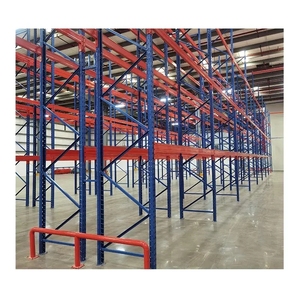
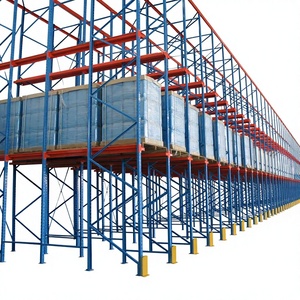
High Density 2-Layer Steel Through-Aisle Drive-In Heavy-Duty Warehouse Shelving System

[Rongle] 2-Layer Steel Through-Aisle Drive-In Heavy-Duty Warehouse Shelving System (Blue/Red)

Drive-In / LIFO Q235B Steel Pallet Rail Bed
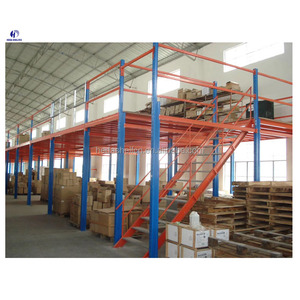
Space Multiplier Wholesale Supplier Mezzanine Rack Heavy Duty Industrial Shelving

Wholesale Supplier Mezzanine Rack Heavy Duty Industrial Shelving Warehouse Shelf Racks

Multi-Tier Level 500-1500kg/m² Modular Beam
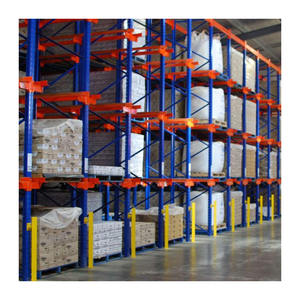
Through-Aisle Customizable Heavy Duty Drive Through Pallet Racking System

Customizable Heavy Duty Drive Through Pallet Racking System 5 Layer Steel Drive in Racking for Sale

5-Layer Structure Bulk Uniform SKU Cold Storage Ready
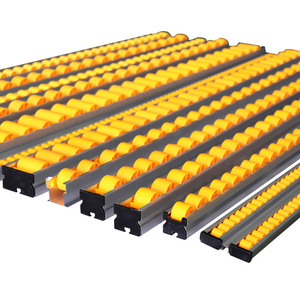
Core Product Gravity Flow Rail Roller Track PE ABS Wheel 200KG Load Carton Flow Rack

Gravity Flow Rail Roller Track PE ABS Wheel 200KG Load Carton Flow Rack FIFO Storage Sliding Shelf

200KG/Bed Load PE/ABS Rollers FIFO Strict Dynamic
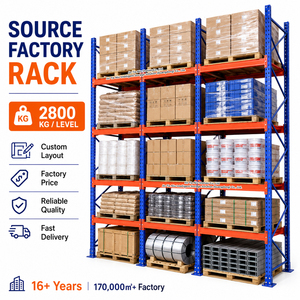
High Bay 2800KG 5 Levels High Bay Industrial Pallet Racking

2800KG 5 Levels High Bay Industrial Pallet Racking Heavy Duty Warehouse Rack System

2800kg Capacity Beam Step 50mm Narrow Aisle Ready
Selective Warehouse Racking System Heavy Duty Industrial Steel Shelving

Warehouse Racking System Heavy Duty Industrial Steel Shelving Warehouse Pallet Racks For Sale

100% Pallet Access Epoxy Powder Coat Anti-Seismic Bracing
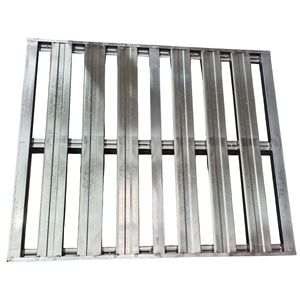
Rust-Proof 1000KG Heavy Duty Steel Pallet Rust-Proof Zinc Galvanized

1000KG Heavy Duty Steel Pallet Customized Industrial Grade Rust-Proof Zinc Galvanized Stackable

Hot-Dip Galvanized Four-Way Entry Cleanroom Compliant
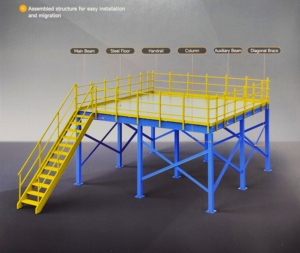
Structural Nova Steel Customized Heavy-Duty Industrial Mezzanine Metal Floor Rack

Nova Steel Customized Heavy-Duty Industrial Mezzanine Metal Floor Rack for Warehouse Storage

Heavy I-Beam Spans Integrated Stairwells Safety Handrails
2001
Established Year
30,000 m²
Modern Production Base
30,000 T
Monthly Steel Output
120+
Global Export Markets

Executive Summary: Engineering Gravity Carton Flow Racks for Modern Supply Chains

In modern high-density intralogistics, spatial economics and pick-cycle velocity dictate operational margins. As an experienced China wholesale racks carton flow exporter, Guangzhou Heda Shelves Co., Ltd. architects and manufactures dynamic carton flow storage infrastructures that transform standard static shelving footprints into continuous First-In, First-Out (FIFO) material transit ecosystems.

Carton flow racking—frequently designated in materials handling engineering as dynamic live storage or gravity-fed wheel bed systems—utilizes inclined roller tracks mounted across structural upright bays. By exploiting controlled kinetic gravity, inventory introduced at the posterior loading face advances smoothly toward the anterior discharge face. This uncouples physical stocking maneuvers from manual pick operations, eliminating up to 75% of wasted picker travel transit time, drastically mitigating internal traffic collisions, and elevating split-case throughput across e-commerce fulfillment, cold chain supply facilities, third-party logistics (3PL) nodes, and automotive line-side sub-assembly corridors.

Kinematic Principles, Roller Tribology & Load Architecture

A reliable carton flow rack depends on a balanced structural equilibrium: resolving the dynamic friction coefficient of variable packaging materials against gravitational acceleration vectors, structural deflection tolerances, and the rotational drag of engineered polymers. Our manufacturing baseline relies on high-grade structural cold-rolled steel, specifically selected Q235B and high-yield Q355B alloys, shaped on computerized continuous cold roll-forming lines.

Gravitational Gradient Calibration

Our gravity roller beds support dynamic angular adjustment from 2.5° to 5.0° (a 4.5% to 8.5% pitch). This calibration allows safe transit speeds (0.25 to 0.45 m/s) across diverse packaging mediums—including wax-impregnated fiberboard, injection-molded HDPE tote boxes, and polyolefin shrink-wrapped parcels—preventing carton deceleration arrest or destructive collision impact.

High-Durability Polymer Rollers

Formulated from virgin polyethylene (PE) and impact-modified acrylonitrile butadiene styrene (ABS), our roller assemblies resist flat-spot deformation under sustained static point loads up to 15 kg per single wheel. Fitted with anti-corrosion galvanized steel axle pins, our wheels retain dynamic rotation down to -30°C in blast-freezing environments.

Deflection Control Engineering

Conforming strictly to EN 15512 and RMI standards, carton flow shelf frame profiles and cold-formed intermediate cross-ties are engineered to a maximum elastic deflection benchmark of L/200 under maximal working payloads. This rigidity guarantees zero track sagging, eliminating cross-lane migration and dead-zone stalling across runs up to 4,500 mm deep.

Comprehensive Technical Specification Matrix

The operational resilience of our carton flow racking beds is validated through comprehensive finite element analysis (FEA) and physical dynamic fatigue testing. Below are the standard export manufacturing parameters for our gravity-fed flow platforms:

Engineering Attribute Standard Dynamic Spec Heavy-Duty Industrial Spec Sub-Zero Cold Chain Spec
Primary Structural Steel Q235B High-Tensile Steel Q355B Structural Alloy Low-Temp Impact Q355D / E
Bed Uniform Load Capacity 100 kg – 250 kg / m² 250 kg – 600 kg / m² 150 kg – 400 kg / m²
Roller Wheel Formulation Impact PE (Shore D 65) Reinforced ABS / High-Load POM Cold-Stabilized Polyketone Polymer
Track Guide Framework Extruded 6063-T5 Aluminum Roll-Formed Galvanized Steel 1.5mm Passivated Galvanized DX51D+Z275
Operational Pitch Adjustment 2.5° – 4.5° (Incremental 15mm) 2.0° – 5.5° (Continuous Stepless) 3.5° – 5.0° (Calibrated Anti-Freeze)
Pick Tray Orientation Horizontal or 15° Knuckle 0° / 10° / 20° Ergonomic Tilt 15° Ergonomic Tilt Discharge
Surface Protective Finish Electrostatic Epoxy-Polyester Thermoset Hybrid Powder Coat Dual Zinc Rich Primer + TGIC Powder

Future Procurement Trends in Carton Flow Racking (2025–2030)

Procurement directors and supply chain strategists are transitioning from basic equipment purchasing toward integrated modular intralogistics ecosystems. Over the next five years, the global carton flow export segment will be reshaped by four primary technical drivers:

1. Hybridization with Autonomous Mobile Robots (AMRs) & Automated Guided Vehicles (AGVs): Static warehouse topologies are obsolete. Contemporary carton flow layouts are increasingly designed with automated posterior induction zones where AGVs continuously load flow lanes, while human pickers or autonomous robotic picking arms draw stock from the front. This design requires strict frame perpendicularity tolerances (within ±1.0 mm) and reinforced baseplates to absorb localized floor vibration.

2. Pervasive Digital Integration (Pick-to-Light & Sensorized Bins): Traditional manual picking is rapidly giving way to Pick-to-Light (PTL), Put-to-Light, and wireless pick-by-voice technologies. As an advanced exporter, our carton flow shelf designs incorporate integrated busway cable tracks, sensor-clip extruded profiles, and low-voltage digital display snap channels within the front pick trays, removing the need for field modifications and third-party mounting brackets.

3. Micro-Fulfillment Center (MFC) Urbanization: The explosive demand for ultra-fast grocery delivery and same-day e-commerce has led to micro-fulfillment centers occupying high-rent urban retail space. These facilities demand custom, narrow-bay, multi-tier carton flow mezzanine systems that maximize vertical cubic space up to 10 meters, requiring high-density multi-lane dividers and integrated zero-pressure safety stops.

4. Total Lifecycle Sustainability & Energy Conservation: Unlike power-driven conveyors, carton flow racks harness ambient kinetic gravity, requiring zero electrical power for horizontal case movement. Modern carbon accounting initiatives across Europe, the Americas, and the Middle East are incentivizing large 3PL logistics facilities to transition intermediate buffer picking zones from powered conveyance lines to engineered gravity carton flow tracks, cutting kWh consumption and carbon footprints.

Technological Development Trends: Engineering Next-Gen Flow Systems

The manufacturing architecture of carton flow racks has shifted from labor-intensive cut-and-weld shops to computerized, flexible roll-forming and robotic welding systems. Key innovations include:

Modular Clip-In Wheel Tracks

Modern layouts require rapid lane reconfigurations to accommodate seasonal SKU size changes. Our universal extruded guide channels permit tool-free lane width adjustments in 10 mm increments, allowing pick lines to rebalance in minutes rather than days.

Integrated Kinetic Brake Rollers

For deep-lane carton flow runs exceeding 6 meters, heavier cartons can build destructive momentum. We integrate centrifugal and viscous speed controllers directly into the roller tracks, maintaining a smooth descent speed under 0.35 m/s regardless of carton weight fluctuations.

Cold-Formed Knuckle Trays

Ergonomic studies confirm that a 15-degree down-angled discharge tray improves picker wrist positioning, minimizes lumbar flexion strain, and expands line-of-sight into split cases, lifting manual picking speeds up to 35% without operational fatigue.

Enterprise Advantage: Guangzhou Heda Shelves Co., Ltd.

Procuring industrial racking systems directly from a China manufacturer requires verified engineering capabilities, strict quality assurance, transparent production metrics, and dependable containerized logistics. Guangzhou Heda Shelves Co., Ltd. provides over two decades of specialized manufacturing and turnkey global execution:

01. Heavy Capacity

30,000 m² Facility

Our dedicated Guangzhou manufacturing complex features multiple continuous cold roll-forming lines, automated CNC robotic welding arrays, and high-volume laser cutting systems, delivering a monthly capacity of 30,000 metric tons.

02. Verified Trust

CE & ISO Certified

Certified to international quality standards: CE Factory Production Control (Certificate No. 2435-CPR-8605159) and ISO 9001:2015 Quality Management System (Certificate No. 18624Q00169R0M, valid through 2027-06), alongside RoHS compliance.

03. Harsh Climate

Pre-Treatment Line

Steel parts undergo a 10-stage immersion process—degreasing, pickling, zinc phosphating, and deionized rinses—followed by electrostatic thermoset powder curing. This protects against severe coastal humidity, desert salt air, and cold-store moisture.

04. Engineering First

Free 3D & CAD Design

Our in-house engineering team of 300+ technical personnel develops bespoke 2D architectural CAD layouts, structural deflection calculations, and 3D walkthrough models, helping clients secure fast local building and Civil Defense approvals.

Having successfully executed over 10,000 warehouse projects across 120+ countries—spanning North America, Europe, Australia, Southeast Asia, and major GCC trading hubs including the UAE (Jebel Ali, Khalifa Port), Saudi Arabia (Dammam, Jeddah), Qatar (Hamad Port), Kuwait, and Bahrain—we deliver dependable, container-optimized export packaging with clear assembly guides and remote video installation support.

Industrial Procurement FAQ: Technical & Operational Inquiries

Here are detailed engineering and procurement answers to the questions most frequently raised by international supply chain directors, structural engineers, and warehouse logistics buyers:

1. How do you calculate the precise inclination angle (pitch) for carton flow beds across diverse packaging materials?
The required track gradient depends on package rigidity, total weight, roller diameter, and base material friction. The fundamental equation balances gravitational force against static friction: F_gravity = m · g · sin(θ) > F_friction = μ · m · g · cos(θ). For rigid plastic returnable totes (HDPE/PP), a shallower pitch of 2.5° to 3.0° (approx. 4.5% to 5.2% slope) is sufficient. For standard double-wall corrugated cardboard, we configure beds to 3.5° to 4.0°. For soft, recycled, or slightly sagging cartons, an inclination of 4.5° to 5.0° ensures reliable travel without hang-ups. Our engineers conduct empirical roller ramp testing on your packaging samples before finalizing production specs.
2. What are the key load-bearing and wear differences between PE and ABS rollers in high-throughput operations?
Polyethylene (PE) wheels provide excellent impact absorption, smooth rotation, and reliable crack resistance in sub-zero applications down to -30°C, making them well-suited for chilled FMCG, food distribution, and pharmaceutical handling up to 10 kg per wheel. Acrylonitrile Butadiene Styrene (ABS) wheels offer higher surface hardness (Rockwell R 105–110), superior tensile strength, and minimal elastic deformation under heavy static loads up to 15 kg per wheel, making them ideal for automotive kitting, cast-metal parts, and dense hardware cartons. We also manufacture hybrid beds with steel entry/exit wheels paired with ABS body tracks to withstand the shock of heavy dropped totes.
3. Can your carton flow and high-density racking meet Civil Defense and international fire safety codes (NFPA 13)?
Yes. Fire protection compliance is integral to our structural engineering. Under international building standards and NFPA 13 requirements, deep high-density racking structures require open vertical flue spaces to allow in-rack fire sprinkler penetration. We design our carton flow track layouts with distinct, unencumbered transverse and longitudinal flue corridors, and we supply heavy-gauge perforated steel sheet decking or wire grid trays that exceed the 50% open area threshold required by municipal Civil Defense authorities (including UAE Civil Defense and KSA Civil Defense) and global property insurers.
4. How does your surface treatment withstand extreme heat, coastal humidity, and sub-zero cold storage?
All steel upright frames, cross beams, and brackets undergo an automated 10-stage chemical pre-treatment process: alkaline degreasing, clean-water cascade rinse, acid rust removal pickling, zinc-iron phosphating, and passivating deionized rinses. This creates an inorganic crystalline conversion layer that maximizes coating adhesion. Components then receive an electrostatic application of high-durability epoxy-polyester hybrid powder coat cured at 180°C to 200°C. The resulting 70–90 micron dry film finish passes 500-hour ASTM B117 salt spray testing, preventing blistering, delamination, and corrosion in coastal port cities, tropical environments, and sub-zero cold rooms.
5. What CAD/BIM data is required to generate custom 2D/3D layouts and structural load calculations?
To supply an accurate turnkey design, our engineering team requires: (1) Architectural floor plan in DWG/DXF or clear PDF with dimensions, showing building column locations, dock positions, and clear height under roof trusses; (2) Concrete slab thickness, compressive strength (e.g., C25/30), flatness class, and rebar reinforcement specifications; (3) Detailed carton and tote data—Length, Width, Height, minimum/maximum weight, packaging type, and bottom surface design; (4) Required storage capacity, total SKU count, target picks per hour, and replenishment schedules; (5) Material handling equipment specs, such as forklift clear mast height, turning radii, or AMR integration requirements.
6. How do carton flow systems integrate with automated picking systems like AMR, AGV, and Pick-to-Light (PTL)?
Our carton flow systems are purpose-built for automated intralogistics integration. For Pick-to-Light (PTL), front beam sections feature dedicated snap-fit channels that shield low-voltage bus cables, allowing tool-free installation of digital displays directly adjacent to pick faces. For AMR/AGV integration, our rear loading bays can be outfitted with tapered mechanical docking guides, optical sensor brackets, and smooth ramp transits that accommodate autonomous robotic roller decks and lifting forks. This enables fully automated, lights-out replenishment at the posterior face while manual pickers operate along the front aisle.
7. What are the container stuffing optimization standards for long-distance sea freight to GCC, Europe, and the Americas?
Export cargo protection is central to our quality assurance. Upright frames are nested into heavy structural steel timber-padded cradles banded with high-tensile steel strapping. Horizontal beams, flow tracks, and lane dividers are bundled in protective shrink film, cushioned with corrugated interleaving, and reinforced with corner edge protectors to eliminate transit scuffing. Hardware and small fittings are boxed in labeled wooden crates with desiccants to counter maritime condensation. Our logistics engineers calculate precise 40ft High-Cube container volume distribution, ensuring balanced axle loading, zero shifting during transit, and simple forklift de-stuffing at receiving ports.
8. What warranty, structural fatigue testing, and quality documentation are supplied with export shipments?
Every export order includes a formal Manufacturer Quality Certificate, raw steel material mill test certificates (chemical analysis and yield strength), static load deflection reports, and a 5-year structural warranty against manufacturing defects. As a CE and ISO 9001:2015 certified manufacturer, each shipment includes full traceability documentation: batch production tracking, ultrasonic weld defect inspection logs, dry film coating thickness tests, and comprehensive exploded CAD assembly drawings. Load warning plaques and safe operating limit signs are supplied with every installation.
9. How does carton flow compare with static shelving in terms of picking travel time and labor ROI?
In conventional static shelving, an order picker spends up to 60–75% of their working shift walking between aisles searching for split SKUs, with replenishment personnel frequently blocking aisles and slowing fulfillment. Carton flow dynamic beds compress linear picking lines by 50–70% by presenting multiple SKUs across high-density vertical profiles. Because replenishment happens behind the racks, pickers work without interruption. Operational field data shows carton flow installations lift manual pick rates from 60–80 picks per hour up to 180–250 picks per hour, yielding full capital payback (ROI) within 9 to 18 months.
10. What on-site installation support or supervision does HEDA provide for overseas projects?
We provide comprehensive global installation support tailored to your project scope. Every project is accompanied by 3D exploded layout drawings, piece-by-piece packing lists, and step-by-step video installation guides. For large-scale mezzanine platforms, complex multi-tier carton flow structures, and automated warehouse projects, HEDA can deploy experienced site installation supervisors to manage, guide, and certify your local labor force on-site. We also maintain remote technical video teams available throughout construction to address slab anchor questions, alignment checks, and final commissioning adjustments.

Architect Your High-Throughput Warehouse Flow Bed

Partner directly with Guangzhou Heda Shelves Co., Ltd. for factory-direct engineering, free 2D/3D CAD layout development, and proven CE/ISO-certified carton flow and pallet racking systems tailored to your distribution requirements.