Engineered Racking Systems & Space-Yield Portfolios
Select an industrialized modular configuration optimized for structural load distributions, robotic guided aisles, and high-cube cubic conversions.
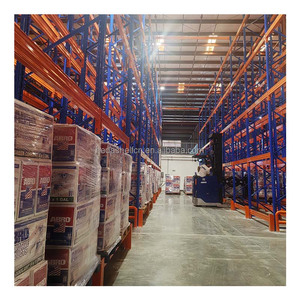
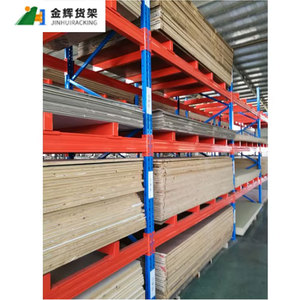
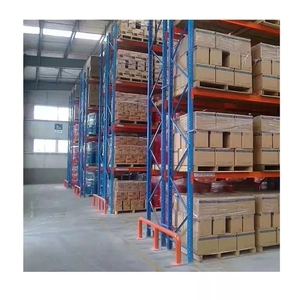
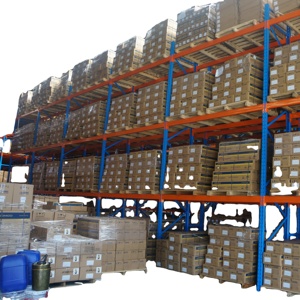
Technical Engineering Assessment: Very Narrow Aisle (VNA) Architecture
An empirical analysis of high-density cubic storage, mechanical floor interfaces, and structural load tolerances.
Global Procurement & Technological Trends in High-Bay Racking
Strategic horizon scanning for supply chain directors, industrial EPC contractors, and cold-chain stakeholders.
1. Sub-Millimeter Slab-to-Rack Integration
Global procurement teams now evaluate racking hand-in-hand with concrete slab tolerances (DIN 18202 and TR34 specifications). The procurement vector has fundamentally shifted toward structural frameworks designed to absorb localized deflection without compromising mast verticality at heights exceeding 15 meters.
2. Decoupled Modular Lifecycle Procurement
Forward-thinking distribution hubs now reject fixed, static configurations in favor of modular beam-to-frame locking nodes. The future lies in reversible structural conversions that allow a standard selective distribution center to morph into a semi-automated VNA or multi-tier mezzanine without hot-work permits or field re-welding.
3. Climatic Resilience & Pre-Treatment Coatings
High ambient heat, coastal salt fog, and dry sand particulate exposure across the Middle East, Southeast Asia, and Africa have elevated metallurgical pre-treatment requirements. Modern procurement enforces multi-stage pickling and phosphating cycles followed by electrostatic polyester powder curing that withstands 500+ hours of continuous salt-spray exposure.
Guangzhou Heda Shelves Co., Ltd.: Manufacturing Supremacy
An institutional partner delivering turn-key structural stability since 2001.
CE Certification Architecture
Formally certified under CE Certification No. 2435-CPR-8605159, confirming full conformity to European structural standard EN 15512 for steel static storage systems, frame deflection criteria, and dynamic safety margins.
ISO 9001:2015 Quality Regimes
Audited through international verification under Certificate No. 18624Q00169R0M (valid through June 2027). Complete batch traceability covers incoming hot-rolled coils, tensile rupture verification, automated punching precision, and cured film thickness.
End-to-End Export Logistics
Custom containerization packing methodology designed for zero sea-transit distortion. Component packages are labeled to correlate directly with client CAD schematics, streamlining port processing through Jebel Ali, Dammam, Khalifa, Jeddah, Hamad, and global deepwater terminals.
Industrial Procurement & Engineering FAQ
Technical and commercial clarity addressing real-world international engineering inquiries.
What are the concrete floor tolerance requirements for a VNA installation?
VNA installations operating at heights above 9 meters mandate strict compliance with DIN 18202 (Group E) or TR34 Superflat (DM1/DM2) standards. Deviations must not exceed 1.5 mm across a 2-meter straightedge to ensure high-lift turret truck mast stability and prevent racking frame collisions during high-speed travel.
Mechanical guide rails vs. wire guidance: Which should be selected?
Low-profile mechanical steel guide rails (75x75x6 mm angle or embedded channels) provide absolute mechanical fail-safe protection and simple physical alignment. Inductive wire guidance systems embedded in the concrete floor eliminate trip hazards, speed up pick rates, and facilitate zero-clearance access for multi-directional order pickers.
How are vertical load capacities certified for seismic and high-tier operations?
Every project configuration utilizes finite element analysis (FEA) software to calculate second-order (P-Delta) structural effects, combined axial-bending loads, and cyclic seismic parameters per AS4084 and RMI specifications. Frame bracing layouts, baseplate anchorage depths, and beam profiles are individually calculated based on regional geotechnical coordinates.
What data is required from our engineering team to generate a free layout?
We require warehouse architectural CAD layouts, clear underside beam clearance heights, slab load capacities, pallet envelope dimensions (width, depth, overall overhang, total palletized height), gross pallet weights, and detailed mast data for your specified forklift/turret fleet.
Initiate Your Warehouse Spatial Transformation
Collaborate directly with our senior structural engineers to obtain free 2D spatial layouts, complete 3D structural renderings, and precision manufacturing budgets directly from our Guangzhou facility.
Get a Quote