Engineering Whitepaper: The Technical Architecture of Custom OEM Drive-In Pallet Racking
In modern supply chain engineering, cubic warehouse efficiency represents a primary determinant of operational profitability. Standard selective pallet racking configurations allocate approximately 60% of available warehouse cubic footprint to operating forklift aisles, leaving merely 40% for actual product holding capacity. For high-throughput cold-storage facilities, raw ingredient hubs, fast-moving consumer goods (FMCG) distribution centres, and bulk homogeneous material repositories, this spatial inefficiency inflates thermodynamic refrigeration overhead and drives land amortization expenditures to unsustainable peaks.
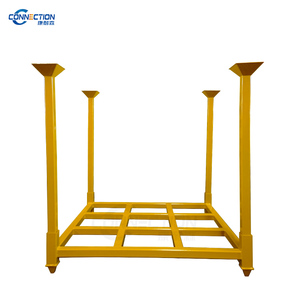
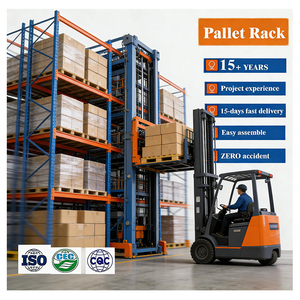
As premier custom OEM drive-in pallet racking manufacturers and exporters, our structural engineering focuses on eliminating superfluous operational aisles. Custom drive-in racking operates on a high-density accumulation philosophy where counterbalance, reach, or narrow-chassis forklifts navigate directly into longitudinal storage lanes. By deploying cantilevered support rails rather than continuous horizontal cross-beams, drive-in systems increase spatial volume utilization to an impressive 75% to 85%, multiplying pallet count capacity by up to 2.5 times compared to conventional single-deep setups.
Structural Reliability Insight: Drive-in racking operates as a semi-continuous open spatial structure without transversal beam bracing along the forklift transit paths. Consequently, system integrity hinges entirely upon 3D spatial rigidity provided by top transverse cross-ties, back-wall diagonal bracing trusses, and moment-resisting baseplate anchors. Our OEM configurations integrate high-ductility Q235B and Q355B cold-rolled structural steel to withstand dynamic impact vibrations and cyclic forklift loads.
Mechanical Topography & Key Engineering Subsystems
A structurally sound drive-in pallet racking system requires meticulous integration of cold-formed structural members designed to distribute vertical gravity dead loads and horizontal operational impacts:
Omega-Section Uprights
Continuous automated 12-fold roll-formed vertical profiles punched at 50mm or 75mm pitch, engineered to withstand high vertical compression stresses and localized buckling loads.
Stiffened Cantilever Rails
Precision-pressed continuous pallet support rails equipped with asymmetric leading tapered guides, providing secure seat surfaces for both EN 13698 Euro pallets and 1200x1000mm industrial pallets.
Multi-Directional Bracing
Overhead portal tie-beams coupled with heavy-gauge horizontal and diagonal cross-bracing armatures eliminate lateral lane sway and suppress harmonic vibrations under seismic excitations.
Technical Comparison: High-Density Warehouse Racking Systems
Procurement engineers and facility directors must balance access selectivity, inventory SKU depth, and financial capital expenditure. The following engineering matrix contrasts Custom Drive-In Racking with alternative high-density configurations:
| System Dimension | Custom Drive-In (LIFO) | Drive-Through (FIFO) | Radio Pallet Shuttle | Selective Racking |
|---|---|---|---|---|
| Volumetric Efficiency | 80% – 85% | 75% – 80% | 85% – 90% | 40% – 45% |
| Inventory Movement | Last-In, First-Out (LIFO) | First-In, First-Out (FIFO) | FIFO or LIFO flexible | 100% Direct Selectivity |
| Structural Capex | Cost-Effective (Low $/Position) | Moderate (Two Aisles) | Higher (Robotic Units + Rail) | Lowest Initial Setup |
| MHE Forklift Impact | Medium (Operates inside bay) | Medium (Dual Entry) | Minimal (Operates at face) | Minimal (Standard Aisle) |
| Ideal SKU Matrix | Low SKU count / Massive Batches | Time-sensitive high-volume batches | Deep lane cold storage / High SKU volume | High SKU diversification |
| Safety Accessories | Floor guide rails & column shields | End-frame heavy protectors | Sensor calibration & pallet stops | Corner post bumpers |
Future Strategic Procurement Trends (2025–2030)
Global supply chains face unprecedented volatility, driving warehouse asset managers away from off-the-shelf catalog racks toward custom-engineered, application-specific infrastructure. Based on our international manufacturing export analytics across Europe, North America, Southeast Asia, and the GCC region, four dominant procurement paradigms have emerged:
1. Hybridization & Shuttle-Ready Rails
Global logistics operators now demand drive-in channel profiles with pre-engineered notchings that permit seamless field-upgrades to automated radio shuttle carriers without system deconstruction.
2. Climatic Coating Resilience
Severe thermal swings in coastal deserts (such as Jebel Ali, Dammam, and Doha) require 10-stage automated surface pretreatments with anti-corrosive thermosetting polyester powder coatings exceeding 70–90 microns.
3. Dynamic Fire Flue Architecture
Strict regional Civil Defense and FM Global standards necessitate engineered vertical and transverse flue space dimensions within deep drive-in bays, integrating certified in-rack deluge sprinkler passages.
Technological Advancements in Drive-In Structural Design
Historically, the primary risk of drive-in systems was localized damage from forklifts working inside tight corridors. State-of-the-art manufacturing innovations have resolved these structural vulnerabilities through advanced metallurgical and mechanical innovations:
Cold-Formed High-Tensile Steel Profiles: By employing premium grade structural coils tested via automated tensile spectrometry, uprights achieve high yield stress limits (yield strength ≥ 355 N/mm²) while reducing unnecessary deadweight load on warehouse concrete foundation slabs.
Integrated Laser-Aligned Floor Guide Rails: Structural OEM designs now integrate continuous heavy-duty cold-formed C-channel or angle guide rails anchored securely along the warehouse concrete slab floor. These rails safely align forklift truck travel, protecting column frames from mast impacts and enabling faster driver transit times.
FEA (Finite Element Analysis) Seismic Simulation: Every custom OEM project undergoes 3D elastic-plastic structural modeling adhering to European FEM 10.2.02, EN 15512, and American RMI MH16.1 specifications, ensuring adequate structural ductility factors under peak seismic shear waves.
Enterprise Manufacturing Strengths & Global Export Credibility
Operating since 2001, our specialized heavy industrial manufacturing facility encompasses over 30,000 square meters of state-of-the-art production infrastructure with a dedicated team of over 300 veteran engineers, certified welders, and logistics managers. With a stable monthly steel transformation capacity reaching 30,000 metric tons, we handle expansive multi-tier warehouse projects with rapid delivery timelines.
Steel Inspection
Spectrometric and mechanical tensile verification of raw structural steel coils ensuring zero metallurgical voids.
CNC Roll-Forming
Automated continuous multi-station cold-roll forming lines guaranteeing micro-millimeter profile consistency.
Chemical Pretreatment
Automated dip-tank immersion pickling and phosphating guaranteeing supreme bond adhesion for coatings.
Export Containerization
Precision bundling with corrosion-resistant wrapping, labeled directly against erection shop drawings for fast customs clearance.
Our complete production system is audited under ISO 9001:2015 Quality Management Standards (Certificate No. 18624Q00169R0M), alongside CE Structural Performance Certification (No. 2435-CPR-8605159) and international RoHS Compliance. We offer fully customized OEM & ODM solutions, providing free 2D CAD layouts and full 3D BIM spatial renderings before commercial commitment.
We maintain dedicated export trade corridors to key international ports including Jebel Ali and Khalifa Port (UAE), King Abdulaziz Port Dammam and Jeddah Islamic Port (Saudi Arabia), Hamad Port (Qatar), Shuwaikh (Kuwait), Sohar (Oman), as well as central hubs across Europe, Latin America, and Southeast Asia.
Procurement Engineering FAQ: Custom OEM Drive-In Pallet Racking
What specific structural data is necessary to engineer a custom drive-in pallet racking layout?
How does drive-in racking accommodate different pallet styles, such as Euro vs. ISO standard?
How do your surface coatings endure harsh industrial environments and sub-zero cold stores?
What safety features protect upright frames from forklift mast collisions inside the lanes?
Can our drive-in racking layouts satisfy local fire safety codes and Civil Defense approvals?
What are the typical manufacturing lead times and ocean transport packaging protocols?
Do you provide structural calculation sheets and third-party testing reports for commercial tenders?
Accelerate Your Facility Storage Density Today
Consult directly with our veteran structural racking engineers. Request a complementary 2D layout calculation, detailed seismic engineering estimate, and complete OEM product specification matrix for your warehouse.
Get Catalog