Featured OEM Galvanized Racking & Pallet Systems
Precision cold-roll formed, hot-dip galvanized (HDG), and modular warehouse systems fabricated strictly compliant with EN 15512, RMI ANSI MH16.1, and ISO 9001 quality specifications.
Metallurgical Superiority: Hot-Dip Galvanizing (HDG) vs. Pre-Galv vs. Powder Coating
Selecting warehouse pallet racking finishes requires evaluating ambient micro-environments, corrosion classes (ISO 12944 C1 to C5-M), impact vulnerability, and thermodynamic variations across complex supply chains.
| Performance Parameter | Hot-Dip Galvanized (ASTM A123 / ISO 1461) | Pre-Galvanized (Sendzimir Mill ASTM A653) | Standard Electrostatic Epoxy Coating |
|---|---|---|---|
| Coating Thickness & Weight | 65 – 100 μm (450 – 700 g/m²) metallurgically bonded | 15 – 25 μm (120 – 275 g/m²) continuous strip | 60 – 90 μm polymer film without galvanic bonding |
| Sacrificial Cathodic Protection | Active self-healing barrier; protects exposed steel cuts | Moderate cut-edge sacrificial protection on thin gauge | None; underlying steel corrodes immediately upon scratch |
| Abrasion & Impact Resistance | Extreme; zinc-iron alloy layers harder than parent steel | Moderate; easily scraped off by aggressive pallet fork contact | Low-Medium; brittle chipping exposes cold-rolled substrate |
| Cryogenic Performance (-30°C Cold Stores) | Zero delamination; perfectly matched thermal expansion | Excellent thermal stability, minimal micro-cracking | Risk of polymer micro-fracture & condensation debonding |
| Outdoor Yard & Coastal Durability (C4/C5) | 25 to 50+ Years maintenance-free service life | 3 to 7 Years before red rust emergence on cut edges | 1 to 3 Years before blistering, flaking, and oxidation |
Metallurgical Intermetallic Bonding
During the molten zinc immersion process at 450°C, a series of zinc-iron alloy layers (Gamma, Delta, and Zeta phases) are created through natural atomic diffusion. The inner Zeta layer reaches an astonishing diamond pyramid hardness (DPH) of 208 HV, which is measurably harder than base structural steel (159 HV). This unique metallurgical property gives our OEM galvanized uprights unmatched defense against scraping from heavy steel container corners, timber skids, and reckless forklift impacts.
Severe Microclimate Longevity
Warehouse installations located across coastal regions like Dubai, Jeddah, Dammam, and Southeast Asia face lethal combinations of atmospheric chloride deposition, high relative humidity (RH > 85%), and blistering heat exceeding 48°C. Conventional painted racks suffer premature corrosion through paint micro-pores within 18 to 24 months. Our OEM hot-dip galvanized coating cures through natural carbonation into a resilient zinc hydroxycarbonate patina, insulating steel members from airborne salts and industrial chemicals.
Cathodic Self-Healing Protection
When a structural racking upright is struck and punctured by a forklift tine, standard coatings peel away and initiate subsurface iron oxidation that compromises structural integrity. Under hot-dip galvanization, the surrounding zinc acts as a sacrificial anode, giving up electrons to protect exposed raw iron. Zinc corrosion by-products (zinc hydroxide and carbonate) migrate across small scratches up to 2.5 mm wide, spontaneously resealing wounds and maintaining load safety without manual painting.
Engineered Pallet Racking Systems for Every Operational Profile
As a direct OEM/ODM manufacturer with 25+ years of specialized engineering experience, we design structural rack profiles matching individual warehouse floor slabs, pallet weights, forklift reaches, and automated material handling integrations.
1. Heavy-Duty Selective Pallet Racking (HDG & Pre-Galv)
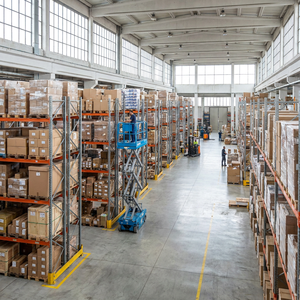
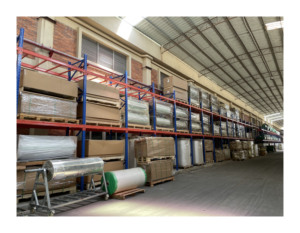
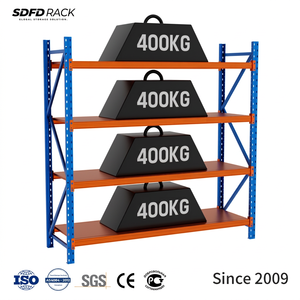
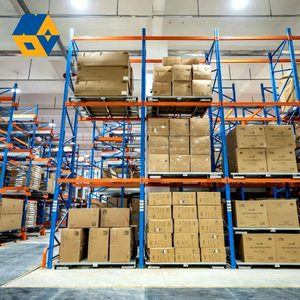
Selective pallet racking remains the cornerstone of modern industrial warehousing, offering immediate, 100% direct access to every stored unit load. Designed with cold-rolled Omega (Ω) upright profiles ranging from 80 mm to 140 mm section depths and steel thicknesses from 1.5 mm to 3.0 mm (utilizing high-tensile Q235B and Q355B structural steel), our uprights handle bay loads exceeding 25,000 kg. High-durability interlocking box beams with integrated 3-claw or 4-claw cold-stamped connectors guarantee high torsional stiffness, while zinc-plated safety locking pins prevent accidental beam dislodgment from vertical forklift movements.
2. Semi-Automated Radio Shuttle Pallet Racking
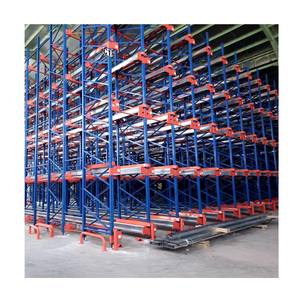
Designed for high-density storage within cold-chain facilities, beverage plants, and bulk buffer hubs, our galvanized radio shuttle racks eliminate the structural collision damage typical of traditional drive-in racking. Uprights and continuous guide rails are manufactured with high-precision hot-dip galvanized or Sendzimir galvanized profiles that maintain millimetric running tolerances for battery-powered auto shuttle cars. Operating smoothly at temperatures as low as -30°C, the shuttle vehicles travel at speeds up to 1.1 m/s loaded and 1.5 m/s unloaded, supporting both FIFO (First-In, First-Out) and LIFO (Last-In, First-Out) operations while boosting storage density by 80% over standard selective layouts.
3. Modular Detachable Post Pallet Stacking Racks (Stillages)
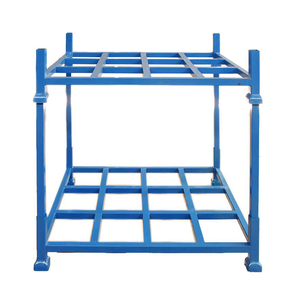
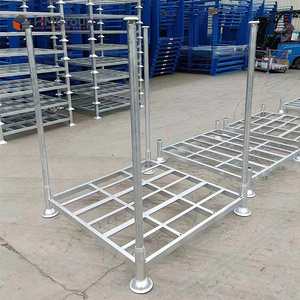
For dynamic staging zones, seasonal buffer inventory, and cross-docking operations where fixed anchor racking is unfeasible, our galvanized stacking post pallets provide a versatile, floor-friendly solution. Each heavy-duty stillage features a structural base framed with CNC cold-bent square steel tubes (50x50 mm up to 80x80 mm) and 4 detachable circular or tubular upright posts, handling individual payload capacities from 1,000 kg to 2,500 kg per basket. Finished with 85 μm hot-dip galvanization, these stacking racks nest neatly when disassembled (reducing return freight volume by 80%) and stack safely 4 to 6 units high in outdoor marshaling yards under heavy monsoon or desert conditions.
4. Structural Steel Mezzanine Platforms & Multi-Tier Systems
Maximizing vertical cubic volume is essential in premium logistics real estate. Our engineered rack-supported and structural steel mezzanines double or triple usable floor surface areas without expanding a building's physical footprint. Engineered with hot-dip galvanized I-beams, cold-formed C/Z secondary purlins, and slip-resistant perforated galvanized steel plank decking (rated for uniformly distributed loads of 300 kg/m² to 1,200 kg/m²), our multi-tier mezzanine layouts combine high-bay pallet racking on lower levels with upper manual picking galleries, staircase towers, vertical reciprocating conveyors (VRC), and safety pivot gates.
Future Procurement Trends in Galvanized Warehouse Racking (2025–2035)
Global warehouse logistics is undergoing massive transformations driven by climate resilience, carbon accounting, automation integration, and rising urban real estate costs. Below are key shifts industrial procurement managers must evaluate.
Total Cost of Ownership (TCO) Replaces Capex
Procurement managers are moving away from comparing simple upfront steel tonnage prices. Independent lifecycle cost modeling proves that conventional painted racking inside humid or cold environments incurs re-painting and downtime repairs equivalent to 65% of the original installation cost by Year 7. Hot-dip galvanized systems carry an initial 18-25% price premium over powder coating, but their 30+ year maintenance-free lifespan slashes total operational lifecycle costs by 42%, making HDG the primary choice for enterprise 3PL and cold chain facilities.
Outdoor Yard Warehousing to Offset Space Scarcity
Industrial land costs in port-adjacent logistic zones (e.g., Jebel Ali, Rotterdam, Los Angeles) have surged over 60% since 2020. Warehouse operators are shifting raw materials, construction steel, and weather-resistant FMCG inventory out of indoor facilities into exterior marshaling yards. Standard painted racks deteriorate outdoors within single seasons, leading to rapidly rising demand for heavy-duty galvanized cantilever and selective racks capable of enduring continuous UV exposure, windblown rain, and seasonal freeze-thaw cycles.
AS/RS & Automated Shuttle Integration
With escalating warehouse labor expenses, automated pallet shuttles and stacker cranes (AS/RS) are replacing manual counterbalanced forklifts. Automated systems demand rigid fabrication tolerances: beam deflections cannot exceed 1/200th of clear span length under full design load. Galvanized structures eliminate the risk of flaking paint particles that foul optical laser sensors, photo-electric eyes, and guide wheels, making galvanized racking the standard for automated pharmaceutical and food facilities.
Why Global Supply Chains Trust Guangzhou Heda Shelves
Founded in 2001, Guangzhou Heda Shelves Co., Ltd. operates as a factory-direct heavy storage rack designer, manufacturer, and international exporter. We control every facet of steel processing under rigorous quality oversight.
30,000 m² Mega Factory
Our specialized manufacturing facility in Guangzhou features 12 continuous roll-forming lines, automated CNC laser profiling centers, multi-axis robotic welding stations, and a modern electrostatic coating and galvanizing finishing line.
300+ Engineering Staff
Our multidisciplinary engineering team utilizes advanced finite element analysis (FEA) software to perform structural calculations, seismic load simulations, slab point-load verifications, and custom 2D/3D CAD building integration.
Certified Global Standards
Full traceability from raw steel coils to loaded export containers. We hold formal CE Certification (No. 2435-CPR-8605159), ISO 9001:2015 Quality Management certification (No. 18624Q00169R0M), and comprehensive RoHS environmental compliance.
Full GCC & Global Logistics
We handle direct, container-optimized export packaging with clear numbered bundle labeling to facilitate local erection. We deliver regularly to Jebel Ali, Dammam, Jeddah, Hamad, Sohar, Shuwaikh, European ports, and the Americas.
Frequently Asked Technical Questions (FAQ)
Direct, expert engineering answers to the critical structural, mechanical, and logistical questions raised by warehouse developers, facility engineers, and procurement directors.
What are the main engineering differences between hot-dip galvanized (HDG) and pre-galvanized pallet racks? +
How does galvanized pallet racking perform in sub-zero cold chain and blast freezer environments? +
Can your engineering team support structural calculations for local Civil Defense and seismic approvals? +
What steel grades are used in HEDA galvanized racking, and how are deflection limits verified? +
How are galvanized racking bundles packaged to prevent transit corrosion (white rust) during ocean voyages? +
What essential warehouse information is required to receive an engineered 2D/3D layout and quotation? +
Request a Custom Engineering Layout & Factory Quote
Connect directly with our senior racking design engineers. We prepare free 2D warehouse layout floor plans, 3D structural visual models, and comprehensive static load calculations tailored specifically to your operational demands.