Engineered Racking Systems & Warehouse Dynamic Solutions
Explore our custom OEM product line-up. Every gravity flow roller lane, structural upright frame, and auxiliary material handling assembly is manufactured under rigorous ISO 9001:2015 process controls.
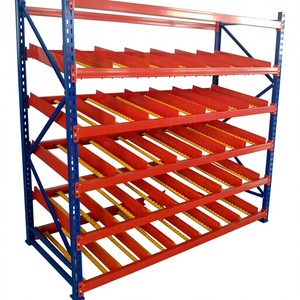
Gravity Carton Level Tilt Flow Rack FIFO Warehouse Roller

Good Price Q235 Drive-in Racking Heavy Duty System

Industrial Electric Pallet Stacker 1-2 Ton 3500mm Lift

CE Certified 2000kg Heavy Duty Gravity Roller Pallet Rack

Adjustable Boltless Industrial Steel Storage Shelving
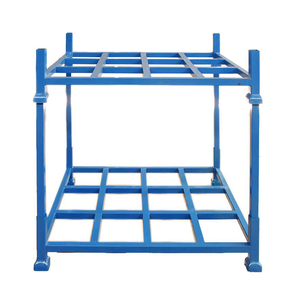
Custom Detachable Galvanized Post Pallet Stacking Rack

Heavy Duty Adjustable Warehouse Pallet Racking Systems

Intelligent High-Throughput Rack Data Hub & Flow Sensor
Kinetic Dynamic Principles of Gravity Flow Pallet Storage
Gravity flow pallet racking—universally classified in modern intralogistics as dynamic live storage—operates on an unpowered, slope-assisted mechanical continuum. Pallets are inducted on the higher charge face (loading side) and advance down an engineered pitch gradient ranging between 3.0% and 4.0% (1.7° to 2.3°) toward the discharge picking interface under controlled gravitational force.
Unlike conventional static drive-in or selective racking arrays, an OEM gravity flow system enforces absolute First-In, First-Out (FIFO) rotational compliance. This operational logic is vital for cold chain logistics, pharmaceutical reserves, dairy, beverage distribution, and fast-moving consumer goods (FMCG) subject to batch traceability and stringent expiration schedules.
- Self-Energized Flow Physics: Operates entirely without electrical drive chains or ongoing kilowatt expenditure within the lane beds, minimizing building operating costs.
- Flawless FIFO Rotation: Segregates replenishment lanes from operational pick faces, reducing internal forklift collisions by up to 68%.
- Floor Footprint Minimization: Reclaims up to 60% of idle forklift aisle geometry compared to traditional wide-aisle selective installations.
- Controlled Acceleration Braking: Incorporates centrifugal dynamic friction governors that limit uncontrolled pallet velocity across deep runs up to 30 pallets deep.
Structural Steel Composition & Metallurgy
All structural uprights and step beams are cold roll-formed using high-strength Q235B and Q355B low-carbon structural steel alloys conforming to EN 15512 and RMI standards. Minimum yield strengths range from 235 MPa to 355 MPa, ensuring deflection safety factors exceeding 1:200 under maximal rated payload conditions.
Centrifugal Speed Controllers & End Separators
Equipped with heavy-gauge galvanized rollers mounted on precision sealed ball bearings. Mechanical centrifugal brake rollers are positioned at calculated intervals (typically every 1 to 2 pallet lengths). Furthermore, an automatic load separator device physically decouples the leading pick-face pallet from the queuing line, preventing hydrostatic backpressure and allowing forklifts to safely extract pallets without pinching or load hang-ups.
Engineering Architecture Benchmark Matrix
Comparative analysis of industrial warehouse storage typologies evaluated across space efficiency, picking velocity, equipment operating costs, and FIFO integrity.
| Evaluation Parameter | OEM Gravity Flow System | Drive-In Racking | Push-Back Cart Racking | Radio Shuttle AS/RS |
|---|---|---|---|---|
| Inventory Stock Rotation | Strict FIFO (First-In, First-Out) | LIFO (Last-In, First-Out) | LIFO (Last-In, First-Out) | Hybrid FIFO / LIFO Software Control |
| Volumetric Space Utilization | 85% - 90% (Maximum Floor Density) | 70% - 75% | 65% - 75% | 85% - 92% |
| Aisle Geometry Demands | 2 Dedicated Aisles (Charge & Pick) | 1 Front Loading Aisle | 1 Front Loading Aisle | 1 or 2 Service Aisles |
| Energy Requirement | 0.0 kWh (Passive Gravity Driven) | 0.0 kWh | 0.0 kWh | Continuous Battery Charging Cycles |
| Forklift Mast Collision Risk | Extremely Low (Trucks Never Enter Lanes) | Severe (High Upright Impact Hazard) | Low | Very Low |
| Typical SKU Capacity Depths | 2 to 30+ Pallets Deep | 2 to 10 Pallets Deep | 2 to 6 Pallets Deep | 2 to 50+ Pallets Deep |
| Total Cost of Ownership (10-Yr) | Low Maintenance, High ROI | High Structural Upright Repairs | Moderate Cart Wear | High (Sensors, Motors, Batteries) |
Product Evolution & Future Global Procurement Trends
In response to expanding e-commerce logistics, geopolitical supply chain realignment, and heightened warehouse real-estate costs, procurement executives must factor in significant engineering transformations shaping the 2025–2030 gravity flow marketplace.
Zero-Power Passive Carbon Reduction
With industrial environmental compliance and ESG reporting mandates intensifying across Europe, North America, and the GCC, dynamic gravity flow racking is superseding electrically driven conveyor and high-energy AS/RS buffers. Gravity systems utilize pure potential energy to propel multi-ton payloads down thousands of lane meters, delivering profound carbon abatement and insulating facilities against grid downtime and peak power rate surges.
Smart Sensor & Telemetry Integration
Modern OEM custom orders increasingly require integration with automated guided vehicles (AGVs) and warehouse management software (WMS). Optical beam break sensors, piezoelectric lane occupancy monitors, and passive RFID-tagged roller governors are engineered directly into factory lane beds. This gives enterprise dispatchers real-time digital visibility over pick-face depletion, lane jamming alerts, and precise pallet staging velocity.
Extreme Cold-Chain & Coastal Metallurgy
Global investment in perishable food parks and deep-freeze logistics (-30°C) is compelling OEM factories to advance steel alloy chemistry. Future-proof procurement dictates pre-treatment with micro-crystalline zinc phosphating, high-grade electrostatic powder finishes, or heavy continuous pre-galvanized roller sleeves. These resist internal crystallization, roller seal brittleness, and coastal salt-spray corrosion seen in primary export destinations.
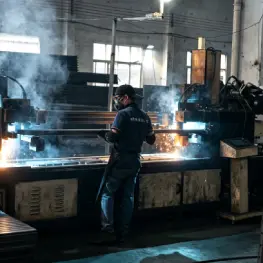
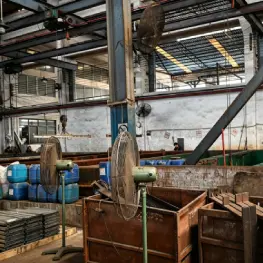
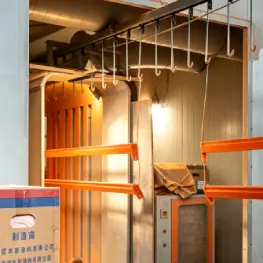
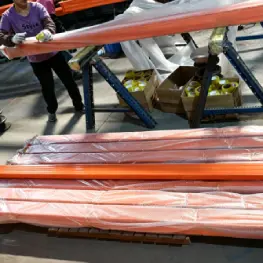
10-Step Precision Manufacturing Process
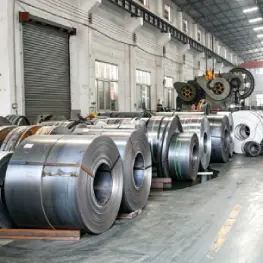
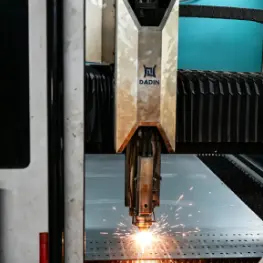
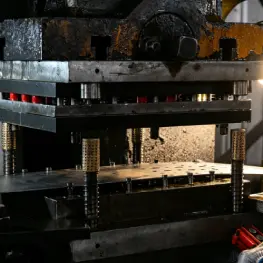
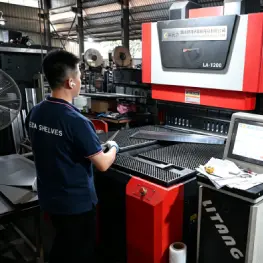
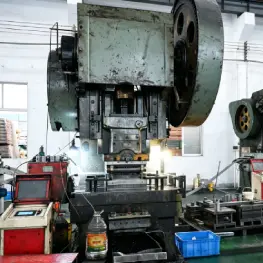
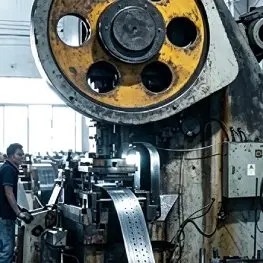
At our 30,000 m² factory in Guangzhou, every structural upright, beam connector, and precision roller channel progresses through an end-to-end, in-house fabrication protocol. Traceable quality control from raw steel coil to container dispatch ensures zero defect tolerances.
International Engineering Verifications & Quality Accreditations
Procurement teams and civil safety authorities mandate certified compliance. HEDA Shelves maintains verifiable, documented certifications including European CE (No. 2435-CPR-8605159), ISO 9001:2015 Quality Management (No. 18624Q00169R0M), and comprehensive material toxicity RoHS compliance. Our designs align directly with FEM 10.2.02 and EN 15512 structural parameters.
 CE CPR-8605159
 ISO 9001:2015
 RoHS Compliant
Frequently Asked Technical & Purchasing Questions
Direct answers to the critical engineering, layout, maintenance, and logistics questions asked by international buyers, facility directors, and EPC contractors.
Request Full Engineering Catalog & 3D Warehouse Layout Design
Consult directly with our structural engineering team. Provide your building dimensions, clear slab height, pallet specifications, and throughput targets to receive a comprehensive 2D CAD layout, structural calculation report, and competitive factory-direct export quotation.