Recommended High Bay Pallet Racking & Storage Architectures
Explore our certified industrial structural systems configured for heavy palletized loads, robotic unit picking, and dense cubic volume utilization across multi-echelon supply chain facilities.
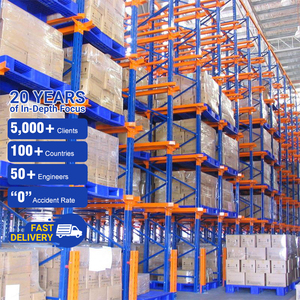
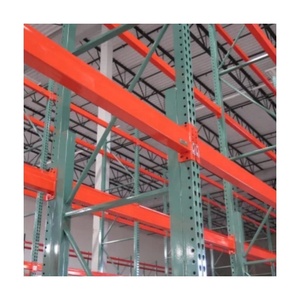
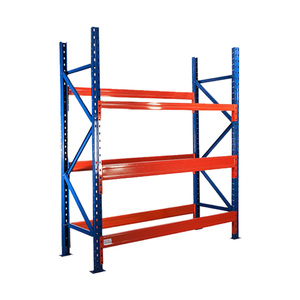
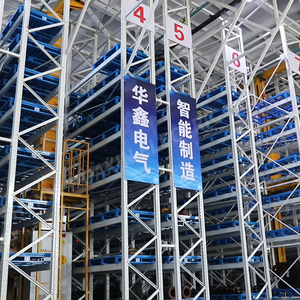
Engineering Whitepaper: Structural Optimization for High Bay Racking
Navigating dynamic live loads, structural deflection, seismic stability, and custom OEM manufacturing tolerances in industrial storage infrastructure.
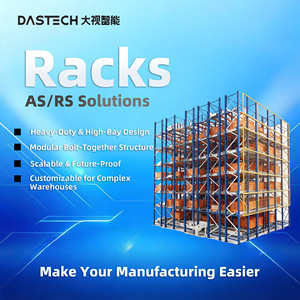
In contemporary logistics architecture, warehouse clear heights routinely surpass 12 meters, extending into 30 to 40-meter vertical envelopes in clad-rack and high-bay configurations. Selecting and commissioning an industrial high-bay racking system is not merely a shelving purchase; it is a critical structural engineering endeavor. As a dedicated OEM supplier and global exporter, Guangzhou Heda Shelves Co., Ltd. applies advanced structural design protocols, finite element analysis (FEA), and continuous material qualification to guarantee structural reserve capacities under demanding operational stresses.
1. Mechanical Principles of High Bay Racking Stability
The structural behavior of high bay pallet racking differs markedly from standard low-profile industrial shelving. With elevated upright frames, the primary design challenges center on axial compression, sway stability, torsional buckling, and joint stiffness under dynamic live loads. When a Very Narrow Aisle (VNA) forklift or an automated crane places a 1,500 kg pallet load at a 15-meter elevation, the resulting moment arms amplify the lateral forces transferred through the uprights, beam connectors, and baseplates.
Under international building codes (including EN 15512 and ANSI MH16.1), the allowable vertical beam deflection is strictly limited to L/200 (where L equals beam length) to prevent mechanical binding during automated extraction. For upright frames, global lateral drift must not exceed building clearance limits or cause structural second-order effects (P-Delta effects) that could destabilize the entire matrix.
Certified Q235B & Q355B Steel
Formulated from prime hot-rolled coils slit to exacting tolerances, delivering yield strengths up to 355 MPa to withstand severe cyclic loadings and low-temperature cold storage brittleness.
FEA Stress Simulations
Every custom OEM profile undergoes rigorous computer-aided finite element modeling to verify nodal point connectivity, beam-to-column connector semi-rigidity, and seismic dispersion.
Industrial Corrosion Defense
10-step surface pretreatment including spray pickling, zinc phosphating, and electrostatic polyester powder curing creates an impenetrable barrier against coastal humidity, dust, and chemicals.
2. Material Selection & Continuous Roll-Forming Tolerances
The integrity of a high bay installation depends on the precision of cold roll-forming. Minor dimensional variances across a 12-meter upright profile can result in cumulative out-of-plumb deviations at the top tier. Our Guangzhou manufacturing plant operates multi-station computer-controlled continuous roll-forming lines that maintain cross-sectional tolerances within ±0.2 mm across column webs and flanges.
Upright columns feature complex multi-flange cross sections (e.g., 90mm to 140mm profiles with thickness options up to 3.0mm) designed to maximize the moment of inertia without adding unnecessary deadweight. Connectors utilize 3, 4, or 5-claw drop-forged and precision-stamped hook configurations with integral spring-locking pins that resist accidental unseating from forklift impact forces exceeding 5 kN.
| Engineering Attribute | Standard Selective Pallet Racking | Heavy-Duty High Bay Racking | Automated High Bay (ASRS / Clad) |
|---|---|---|---|
| Typical Clear Height | 3.0m – 7.5m | 8.0m – 16.0m | 16.0m – 40.0m |
| Structural Steel Grade | Q235B (Yield ≥ 235 MPa) | Q235B / Q355B (Yield ≥ 355 MPa) | High-Tensile Q355B / S355JR |
| Design Deflection Limit | L/200 | L/250 – L/300 | L/400 (Ultra-Strict Automation Spec) |
| Aisle Width Envelope | 3.0m – 3.8m (Counterbalance) | 1.6m – 1.9m (VNA Forklift) | 1.3m – 1.5m (SRM / Robotic Crane) |
| Out-of-Plumb Tolerance | 1/500 total height | 1/750 total height | 1/1000 total height |
| Seismic Compliance | Zone 0 to 2 Standard Anchor | Multi-Anchor Baseplate + Bracing | Full 3D Dynamic Modal Analysis |
3. Future Procurement Trends in High Bay Systems (2025–2030)
The procurement of industrial racking systems has transitioned from simple spot buying of hardware to long-range capital asset lifecycle planning. Procurement directors, 3PL leaders, and EPC contractors must account for distinct market shifts:
- The Convergence of ASRS and Semi-Automated Shuttle Technology: Traditional wide-aisle storage is rapidly giving way to dense radio-shuttle high bay structures and automated crane channels. Buyers demand modular upright perforation patterns that can accommodate manual operations today and seamlessly convert to robotic AGVs or shuttles tomorrow.
- Environmental Footprint & Low-Carbon Steel Accounting: Leading global enterprises require supply chain traceability, including low-energy coil processing, heavy-metal-free thermosetting powder coatings (RoHS compliance), and localized shipping container pack optimization to cut transoceanic freight emissions.
- Civil Defense, NFPA 13, and Fire Suppression Harmonization: High-density high bay racks create vertical fuel loads that demand strict adherence to in-rack sprinkler channels, transverse flue spaces (minimum 75mm), and longitudinal flue corridors (minimum 150mm). Global tenders prioritize suppliers capable of providing pre-engineered CAD integration with municipal fire safety codes.
- Climatic Resilience in High-Thermal and Salt-Air Regions: Storage hubs in the Middle East (UAE, KSA, Qatar) experience operational ambient temperatures exceeding 48°C combined with fine desert silica particulate and high coastal salinity. Procurement parameters require high-durability epoxy-polyester electrostatic coatings resistant to ASTM B117 salt spray exposure for over 500 hours.
4. Technological Evolutions Shaping Next-Generation Warehouses
Looking deeper into warehousing technology, high bay systems are becoming dynamic, data-integrated elements of smart industrial facilities. Real-time structural health monitoring (SHM) using embedded strain gauges and IoT vibration sensors allows facility engineers to instantly identify upright damage caused by forklift strikes before structural failure occurs.
Moreover, the advancement of automated rack-supported buildings (clad-rack architecture)—where the racking framework serves as the structural skeleton of the building itself, bearing wind, roof, and seismic loads—is reducing construction timelines by 30% compared to traditional concrete-frame facilities. Guangzhou Heda Shelves Co., Ltd. continues to engineer heavy upright columns capable of simultaneously acting as load-bearing building pillars and high-density inventory storage lanes.
Corporate Capabilities & OEM Manufacturing Edge
Backed by over two decades of engineering expertise, our fully integrated Guangzhou manufacturing plant provides worldwide clients with end-to-end assurance from structural drafting to container discharge.
Certified Regulatory Compliance
All structural components are fabricated under strict ISO 9001:2015 Quality Management standards (Certificate No. 18624Q00169R0M) and carry official European CE marking (Certificate No. 2435-CPR-8605159) alongside RoHS compliance. Comprehensive mill test certificates (MTC) accompany every export container.
Full OEM/ODM Engineering Suite
We deploy senior engineering teams equipped with proprietary CAD, SolidWorks, and STAAD Pro software. Whether adjusting hole spacing for teardrop profiles, configuring 7-bend heavy columns, or engineering specialty fabric-roll racks, we provide tailored 2D architectural layouts and 3D structural renderings within 24 to 48 hours.
Precision In-House Manufacturing
With 300+ skilled technical workers, automated uncoiling, multi-spindle punching, continuous roll forming, robotic welding, and a dedicated 10-stage automated electrostatic powder coating line, our 30,000 m² factory guarantees consistent batch-to-batch structural integrity, zero pinhole defects, and strict color consistency (RAL system).
Export Packaging & Ocean Logistics
High-bay components require rigorous packing to prevent maritime transport deformation. Uprights and beams are bundled with steel strapping, corrugated corner protection, and waterproof polyethylene wrapping. Component bundling corresponds directly to installation drawings for rapid port clearance and site sorting.
Global Port Delivery Network
Direct export routes from our facility connect seamlessly with key global commercial hubs, including Jebel Ali (Dubai), Khalifa Port (Abu Dhabi), Jeddah Islamic Port, King Abdulaziz Port (Dammam), Hamad Port (Qatar), Shuwaikh (Kuwait), Sohar (Oman), and major terminals across North America, Europe, and Southeast Asia.
Installation Support & Remote Supervision
Every delivered system is supported by detailed 3D exploded assembly diagrams, piece-part packing lists, and step-by-step structural erection guidelines. Our engineering department provides live video technical support, structural load sign verification, and on-site field engineering supervision for high-bay projects.
Frequently Asked Questions: High Bay Procurement
Critical engineering, shipping, and regulatory answers for logistics managers, general contractors, and global supply chain directors.
How do you verify the seismic and dynamic load safety of high bay racks?
What floor slab specifications are required for high bay pallet installations?
Can your high bay rack designs pass local Civil Defense and fire authority approvals?
How do you protect high bay steel racks in extreme heat and humid coastal climates?
What is the standard manufacturing lead time for high-volume custom OEM orders?
Can HEDA Shelves manufacture teardrop or European-style profile interchangeability?
What certifications and mill test reports do you supply with your shipments?
Request an Engineered Layout & Structural OEM Quote
Send our senior engineering team your warehouse architectural floor plans, ceiling clearance heights, pallet load parameters, and material handling fleet specifications. We will calculate structural requirements, verify seismic stability, and deliver a comprehensive 2D/3D quotation.
Get a Quote