Engineered Heavy-Duty Mobile & Industrial Storage Solutions
Precision-formed from certified Q235B/Q355B structural steel, our mobile racking and modular warehouse shelving deliver structural safety, high load tolerances, and turnkey adaptability across logistics hubs, cold chain rooms, and industrial distribution centers.
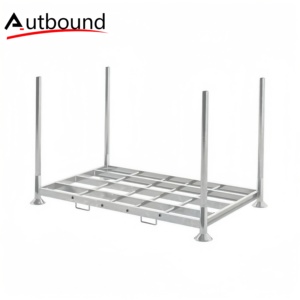
Customized Powder Coating Heavy Duty Metal Steel Industrial Stacking Storage Rack Movable Post Pallet
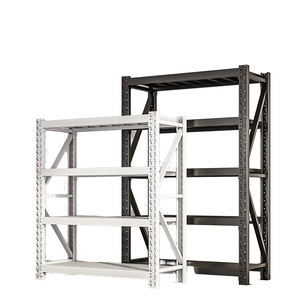
Customized Heavy-Duty Industrial Rack 5-Layer Iron Metal Storage Shelf for Warehouse Storage Steel Display Shelving
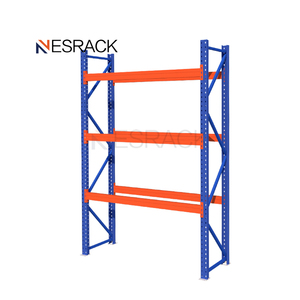
Heavy Duty Pallet Rack Shelving Pallet Racking Dimensions Warehouse Storage Racks Customized Adjustable Steel Q235B Pallet Rack
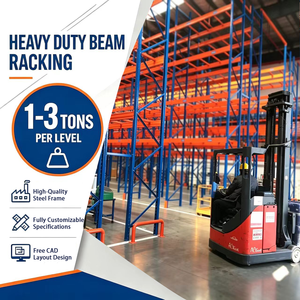
Custom Heavy Duty Steel Pallet Rack Industrial Storage Rack System For Warehouse Warehousing
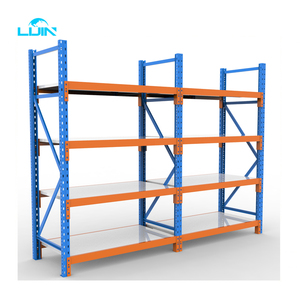
Boltless Adjustable Industrial Heavy Duty Pallet Racking System Warehouse Steel Metal Storage Racks Shelving Units
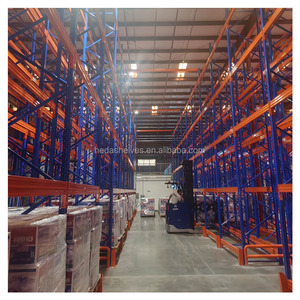
Industrial Warehouse Solutions Conventional Racking Pallet Rack Storage System
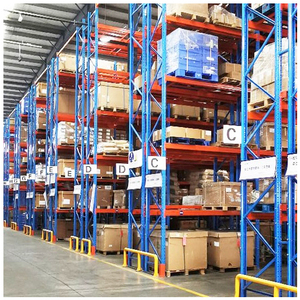
Industrial Storage Rack Warehouse Cold-rolled Steel 5 Layer Heavy Duty Boltless Thickened Durable Stacking Pallet Racks Shelves
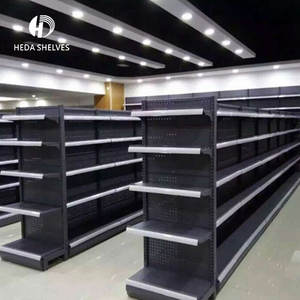
Powder Coating Customized Layer Supermarket Shelving Gondola, Shelf Supermarket
Turnkey OEM Mobile Shelving Manufacturing: From Guangzhou to Global Hubs
As prime manufacturers established in 2001, Guangzhou Heda Shelves Co., Ltd. operates a specialized 30,000 square meter industrial manufacturing plant. Our focus centers on resolving intralogistics footprint bottlenecks through custom-engineered mobile shelving systems, motorized mobile pallet racking (MOVO), heavy-duty conventional racking, and multi-tier structural mezzanines.
Unlike trading brokers, we maintain end-to-end metallurgical and fabrication governance. From raw certified structural steel coil slit-cutting to continuous cold-roll forming, automated punch indexing, multi-axis robotic welding, and an automated 9-stage pickling-phosphating electrostatic powder-coating line, our infrastructure processes up to 30,000 metric tons monthly.
Engineering for Extreme GCC & Coastal Environments
Standard commercial shelving suffers premature degradation in ambient heat exceeding 45°C, airborne salt fog, and abrasive desert silica. HEDA mobile carriages, tracks, and upright columns receive thermal-treated zinc phosphate pretreatment and thermoset polyester powders (60–80 microns), passing stringent 500-hour salt spray ASTM testing to protect installations across Jebel Ali, Dammam, Doha, and global ports.
Certified Global Compliance
Full adherence to CE Certification (No. 2435-CPR-8605159), ISO 9001:2015 Quality Management (No. 18624Q00169R0M), and European FEM 10.2.02 / EN 15512 codes.
Complimentary 2D CAD & 3D BIM Layouts
Certified structural engineers model axle deflection, seismic reaction forces, flue spaces, and NFPA 13 fire sprinkler clearances prior to fabrication release.
Integrated Carriage Drive Assemblies
Precision-machined C45 carbon steel dual-flange guide wheels paired with synchronous geared motor drives, optical safety barriers, and floor-flush embedded rails.
Mobile Shelving Systems vs. Conventional Static Storage
When land acquisition and cold storage refrigeration costs escalate, conventional static racking creates unrecoverable volume loss by allocating over 55% of warehouse floor area exclusively to empty forklift aisles.
| Evaluation Parameter | Conventional Selective Pallet Racking | High-Density Mobile Shelving System (HEDA OEM) | Automated Motorized Mobile Racking (MOVO) |
|---|---|---|---|
| Usable Footprint Utilization | 35% – 42% (Aisle-Heavy) | 80% – 88% (Dynamic Aisle Consolidation) | 85% – 92% (High-Bay Volume Capture) |
| Floor Area Savings / Pallet | Baseline Reference (0%) | Reclaims 45% to 50% Floor Area | Reclaims up to 60% Under-Hook Volume |
| Direct SKU Selectivity | 100% Immediate Direct Access | 100% Selectivity (Aisle Opens in <25s) | 100% WMS-Integrated Automatic Opening |
| Cold Storage Thermal Footprint | High energy waste cooling empty aisles | Reduces refrigerated volume cooling by ~40% | Optimized cubic cooling with night park mode |
| Drive & Wheel Metallurgy | Stationary bolted baseplates | Triple-reduction gear or manual assist; C45 wheels | PLC-controlled SEW Eurodrive gearmotors |
| Safety Sensor Integration | Passive column and corner guards | Mechanical safety foot locks & anti-crush bars | Infrared light curtains, LiDAR safety sweep |
Sub-Floor Rail Engineering
Mobile carriages transfer substantial point loads through rail wheels directly into the concrete floor slab. We manufacture cold-drawn alloy guide rails configured for recessed flush casting, epoxy grouting, or surface ramp installation with leveling tolerances tighter than 1.5mm per 10m run.
- High-carbon tensile rail profiles resist wear
- Zero trip hazard with flush floor screed matching
- Laser-aligned anchoring with chemical capsule studs
Mechanical Assist & Gearbox Physics
Manual mechanical compactors employ CNC-hobbed gearboxes with triple-reduction ratios (up to 1:12), permitting an operator to glide carriages bearing 10,000 kg of cargo effortlessly using ergonomic three-spoke zinc handles with push-button lock releases.
- Roller chain drive enclosed within steel end-frames
- Anti-friction double-shielded deep groove ball bearings
- Mechanical individual brake stops per carriage unit
Intelligent Safety Sensor Curtains
Industrial powered mobile systems integrate multiple safety redundant levels: floor-level safety optical photocells that halt movement instantly if an operative or hand truck enters an opening aisle, plus tactile impact trip bumpers running the full carriage base.
- Category 4 fail-safe optical light grid protection
- Automatic "Night Vent" mode for HVAC distribution
- Emergency battery backup or manual crank override
Key Procurement Trends Reshaping Mobile Shelving Through 2030
Procurement executives and supply chain directors are navigating shifts in land valuation, automated material handling, thermal refrigeration power tariffs, and strict regional safety mandates.
Brownfield Optimization vs. Greenfields
Industrial land acquisition costs across urban prime hubs (Dubai Industrial City, Riyadh Dry Port, European gateways) have increased CAPEX by 25–40%. Corporate procurement teams prioritize high-density retrofits of existing brownfield facilities over speculative new construction.
- Avoids new land leasing costs
- Multiplies pallet locations within original four walls
- Shortens operational commissioning timelines
Cold Chain Thermal Efficiency Focus
With food security initiatives and pharmaceutical biostorage expanding rapidly, refrigerated facilities represent the costliest cubic meters to maintain. Mobile racking eliminates refrigerated dead aisles, yielding direct 30% to 40% electrical savings per chilled pallet position.
- -30°C low-temperature synthetic lubricants
- Optimized air circulation and defrost cycle spacing
- Reduced refrigeration compressor tonnage requirements
AMR & AGV Guided Aisle Interfacing
Forward-looking buyers demand mobile shelving carriages capable of interfacing via API or OPC-UA protocols with Warehouse Management Systems (WMS). Carriages automatically open the designated retrieval aisle before an Autonomous Mobile Robot (AMR) reaches the picking coordinate.
- Zero wait-time dynamic picking routing
- RFID integration directly on upright shelf beams
- Seamless integration with ERP order queues
BIM Structural Simulation Compliance
Modern corporate procurement protocols require manufacturers to provide certified IFC / Revit BIM digital twins. Structural engineers verify floor slab punching shear, dynamic wheel loads, and Civil Defense fire sprinkler dispersion clearance before a single bolt is fastened.
- Detailed dynamic slab deflection calculations
- Civil Defense, NFPA 13, & SCDF approval documentation
- Traceable mill test certificates (EN 10204 3.1)
Engineering Advances in Next-Generation Mobile Compactor Shelving
Mobile storage technology has evolved from manual archive shelving into high-payload intralogistics robotics featuring predictive maintenance diagnostics, synchronized electronic shaft drives, and energy-regenerative braking.
Electronic Shaft Synchronization
Eliminates mechanical drive shafts spanning long mobile bases. Independent micro-inverters communicate over high-speed CAN bus to synchronize wheels to within 0.2mm, preventing carriage skew and rail flange friction.
IoT Condition Monitoring & Telematics
Sensors integrated into carriage wheel hubs continuously track motor current draw, bearing vibration signatures, and rail obstruction resistance, notifying maintenance engineers before downtime occurs.
Adaptive Lighting & Energy Management
Integrated overhead LED busbars illuminate exclusively inside the physically opened mobile aisle. When idle, systems enter low-power sleep mode with uniform ventilation gaps to preserve temperature stability.
The Science of High-Payload Carriage Deflection
Under FEM (Fédération Européenne de la Manutention) 10.2.02 standard guidelines, mobile racking carriages must maintain strict stiffness limits under full rated dynamic loads. When a mobile bank supporting 200 metric tons starts or decelerates, inertial moments induce longitudinal torsion across carriage cross-members.
HEDA OEM carriages leverage boxed structural channel profiles with internally welded torque-tube stiffeners. By distributing rolling point loads through dual spherical roller bearings housed in solid ductile iron pillow blocks, our platforms deliver an L/750 deflection rating, preserving smooth rolling performance across millions of duty cycles.
Precision Roll Forming Upright Geometries
Uprights utilize multi-bend omega (Ω) or closed tubular geometry cold-rolled on 24-station automated roll-forming lines. The 50mm or 75mm pitch diamond hole perforation guarantees boltless beam hook lockage with high torsional rigidity against forklift impacts.
Frequently Asked Questions by Industrial Buyers & Contractors
Detailed engineering answers covering floor slab requirements, fire protection compliance, lead times, and structural certifications for turnkey mobile shelving deployments.
What concrete slab specifications and flatness tolerances are required for mobile racking?
Mobile shelving and mobile pallet racking systems require a concrete slab capable of bearing high concentrated linear and point wheel loads. Slab flatness must comply with DIN 18202 Table 3 (Group 4) or ASTM E1155 F-min 50 standards. For retrofit projects where existing floors have minor slope variations, HEDA engineers utilize leveling shims and non-shrink epoxy grout beneath base rails to maintain a rail horizontal tolerance within ±1mm over 10 meters.
How do mobile shelving and mobile pallet racks comply with Civil Defense fire sprinkler codes?
Our systems integrate automatic "Fire Mode" interfaces with the building's central Fire Alarm Control Panel (FACP). Upon smoke detector activation, an emergency signal triggers the mobile carriages to automatically disperse evenly across the floor area, creating uniform NFPA 13 longitudinal flue spaces (typically 150mm to 300mm) that allow overhead ESFR sprinkler water curtains to penetrate uninhibited down to lower tiers.
What is the typical lifecycle and maintenance frequency for heavy-duty mobile carriages?
HEDA heavy-duty mobile systems are engineered for a minimum 25-year structural service life. Maintenance intervals are minimal: drive chains require bi-annual lubrication with high-viscosity synthetic grease, optical light curtains require monthly lens cleaning, and rail channels should be vacuumed of debris quarterly. Sealed bearings on guide and drive wheels are self-lubricating and rated for 100,000+ continuous operating hours.
Can our existing static pallet racking be converted into a mobile shelving or racking system?
Yes. Provided existing uprights and beams comply with structural integrity standards (EN 15512 or RMI specifications) and have not suffered mechanical deflection, our engineering team can fabricate custom OEM mobile wheel carriages designed precisely to accept your existing upright baseplate bolt patterns. This retrofit eliminates the capital cost of purchasing new upright steel.
How do you protect exported racking systems from maritime transit corrosion?
All shipments depart our Guangzhou factory container-optimized. Critical mechanical components (gearmotors, electrical control enclosures, sensor rails) are vacuum-sealed with desiccant in vapor-corrosion-inhibiting (VCI) foil wrap. Structural uprights and beams are steel-banded, foam-cushioned, and shrink-wrapped with waterproof polyethylene film to resist maritime ocean moisture through transit to Jebel Ali, Dammam, Rotterdam, or Long Beach.
What information is required to produce an initial structural calculation and 3D CAD proposal?
To generate your complimentary 2D CAD layout, 3D rendering, and price schedule within 24–48 hours, our engineering office requires: (1) Warehouse building CAD drawings indicating internal clear height and structural column grid; (2) Pallet dimensions (e.g., 1200x1000mm or 1200x800mm) including overhang and gross load weight; (3) Forklift model, mast height, and turning radius; and (4) Planned daily dispatch throughput.
What fail-safe mechanisms prevent personnel entrapment in closing mobile aisles?
Triple-redundancy safety is standard on all powered mobile shelving installations: (1) Optical photocell light barriers across the open aisle entrance break power if traversed; (2) Full-length mechanical bumper switches stop carriage motion on contact at less than 15kg of pressure; and (3) Illuminated aisle emergency stop pushbuttons allow instant cut-off. In manual mechanical systems, each hand wheel has a push-lock deadbolt engaging the rail.
What are your standard OEM production lead times for 40ft High-Cube container projects?
Standard OEM production lead times range between 15 and 25 working days from engineering drawing sign-off and deposit receipt. Our monthly capacity of 30,000 metric tons across roll-forming, stamping, and automated powder coating ensures that even multi-container projects (10 to 50+ TEU) maintain scheduled factory gate dispatch schedules with staged partial shipping options.
Request Technical Catalog & Custom Mobile Storage Proposal
Consult directly with senior structural racking engineers. Submit your warehouse floor plan to receive a comprehensive structural load calculation, 3D CAD visualization, and competitive factory-direct pricing schedule.
Connect immediately with our technical intralogistics team to download complete load tables, track profiles, and project case studies.
Get Catalog