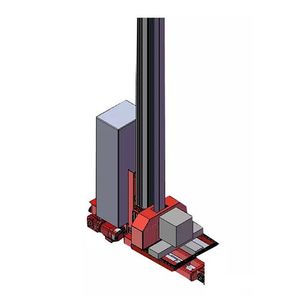
Featured Automated & Heavy-Duty Pallet Racking Portfolios
Every logistics facility demands structural profiles tuned to specific SKU turnover velocities, volumetric floor capacities, and seismic criteria. Review our certified automated shuttles, drive-in structures, and heavy industrial shelving configurations below.
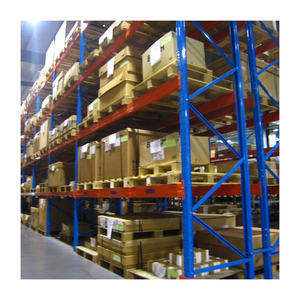
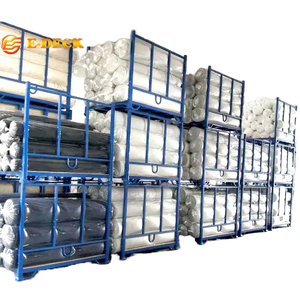
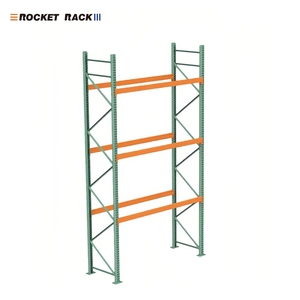
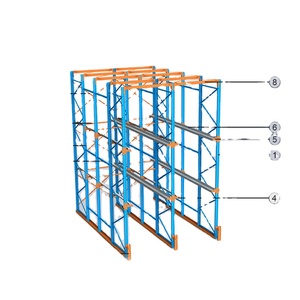
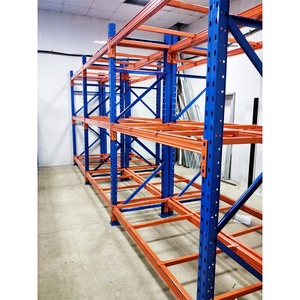
Require Custom Channel Profiles or Shuttle Rail Engineering?
Our structural engineers deliver calculated finite element analysis (FEA) drawings, seismic safety verifications, and custom galvanization or electrostatic coating options within 48 hours.
Structural Mechanics & Kinematic Principles of Semi-Automated Radio Shuttle Systems
A Pallet Shuttle Racking System (often referred to in intra-logistics as a Radio Shuttle or Mole Racking System) operates as an independent, semi-automated deep-lane storage system. By replacing traditional forklift access aisles with precision cold-formed galvanized guide rails, the system allows high-speed electric shuttle carts to traverse within deep storage tunnels. This kinematic separation of forklift mast operations from internal storage lanes virtually eliminates rack collision impacts, substantially reduces cycle times, and boosts volumetric storage density by up to 80% over conventional selective racking.
At the core of custom OEM manufacturing is the structural configuration of the Omega-profile guide rails and heavy-duty load beams. The rails must serve a dual function: providing frictionless, high-traction travel surfaces for polyurethane or vulkollan shuttle wheels while safely carrying pallet loads ranging from 500 kg to beyond 2,000 kg per position. Structural tolerances must be held within ±1.0 mm per 12-meter span to eliminate shuttle binding, sensor misalignment, or unintended friction deceleration under sub-zero or high-temperature operating conditions.
| Storage System Type | Space Utilization | Selectivity & Access | Throughput Speed | Forklift Damage Risk | Cold Room ROI |
|---|---|---|---|---|---|
| Radio Pallet Shuttle | 85% – 92% | Lane-based (FIFO or LIFO) | High (Up to 1.1 m/s loaded) | Extremely Low (Forklift stays out) | Highest (< 24-Month Payback) |
| Drive-In / Drive-Through | 65% – 75% | LIFO strictly (High honeycombing) | Slow (Mast travel inside lanes) | High (Constant upright collisions) | Moderate (High operator overhead) |
| Push-Back Cart Racking | 70% – 78% | LIFO (2–6 pallets deep) | Moderate (Gravity cart pushback) | Moderate (Aisle-facing impacts) | Medium (Cart hang-ups common) |
| Standard Selective Rack | 40% – 50% | 100% Immediate Selectivity | High (Single-deep access) | Moderate to High | Lowest (Heavily wastes refrigeration) |
When sizing custom OEM pallet shuttle uprights, our Guangzhou factory employs advanced roll-forming machinery to stamp 50mm and 75mm pitch teardrop, hexagonal, or diamond hole patterns. Beam connectors feature 3 to 5 multi-point locking claws with integrated safety drop pins that withstand horizontal shear forces during emergency stops of loaded shuttles.
Strategic Procurement Intelligence
Global Procurement & Technological Trends in Shuttle Automation
The intra-logistics equipment industry is undergoing a generational shift from rigid static racking to dynamic, software-integrated multi-dimensional systems. Understanding these macroeconomic and technical vectors enables procurement teams to future-proof their capital investments.
1. Transition to 4-Way Shuttle Architectures
While 2-way radio shuttles remain the gold standard for bulk SKU throughput, global demand is rapidly shifting toward 4-way multi-directional shuttles capable of lane changing via internal vertical lifts. This empowers modern facilities to operate fully automated "lights-out" dark warehouses without heavy, immovable stacker cranes.
2. Lithium-Iron-Phosphate & Supercapacitors
Traditional lead-acid and standard ternary lithium battery units are being displaced by LiFePO4 chemistry and supercapacitor packs. In cold storage facilities (-25°C to -30°C), supercapacitors allow automated fast-charging cycles (30 seconds per charge on busbars) directly inside the racking grid, eliminating battery swapping downtime.
3. Edge IoT Sensor Arrays & Predictive Maintenance
Modern shuttle chassis incorporate LiDAR collision sensors, optical pallet overhang detectors, and accelerometers. Connected via Wi-Fi 6 or 5G private networks, telemetry data feeds predictive maintenance algorithms to schedule rail lubrication, wheel realignment, and brake inspection before structural failures occur.
Hybrid Mezzanine-Shuttle Integrations
Multi-tier configurations that merge heavy-duty structural steel mezzanines with top-tier shuttle racking enable simultaneous ground-level carton picking and high-bay buffer replenishment, cutting horizontal travel distance by 40% in e-commerce fulfillment hubs.
Low-Carbon Steel & Eco-Coating Mandates
Supply chain ESG audits are requiring racking manufacturers to supply Environmental Product Declarations (EPDs). Specifying scrap-recycled electric arc furnace (EAF) steel and zero-VOC electrostatic powder coatings is becoming a standard bidding requirement across the EU and North America.
Nearshore Custom OEM Contracting
To combat volatile ocean freight indices, large-scale EPC contractors and warehouse developers are locking in multi-year OEM partnerships with direct-manufacturing hubs in Guangzhou to guarantee tiered pricing, reserved production lines, and customized pallet profile stamping.
Direct Factory Infrastructure
Why Global Procurement Leaders Choose HEDA Shelves
Established in 2001, Guangzhou Heda Shelves Co., Ltd. operates an integrated 30,000 square meter intelligent manufacturing base. We eliminate intermediary markups by providing factory-direct OEM/ODM engineering, full container load consolidation, and end-to-end technical oversight.
10-Step Controlled Fabrication for Extreme Environmental Resilience
Standard commercial racking often fails prematurely when installed in extreme thermal zones, such as Gulf Cooperation Council (GCC) logistics hubs with ambient temperatures exceeding 45°C and coastal salt-mist humidity, or sub-zero industrial cold chains. Every ton of steel processed through our Guangzhou facility follows a rigid 10-phase manufacturing pipeline:
01. High-Tensile Steel Coil Sourcing: Mill-certified Q235B and Q355B hot-rolled strip steel with strict chemical assay controls.
02. Laser & High-Speed CNC Shearing: High-precision dimensioning ensuring linear rail tolerances within ±0.5 mm.
03. Automated Upright Punching: Multi-station mechanical presses creating uniform 50mm/75mm pitching.
04. Continuous Cold Roll-Forming: 22-station roll-forming lines preventing residual internal micro-cracks along beam profiles.
05. Precision Shuttle Track Bending: Custom asymmetric angle shaping engineered specifically to support dynamic shuttle wheel loads.
06. Robotic Welded Connectors: High-penetration CO2 shielded robotic arc welding eliminating cold-lap defects on beam end-connectors.
07. Shot Blasting & Surface Polishing: Complete removal of mill scale, rust, and oil residues to achieve ISO Sa 2.5 cleanliness.
08. Chemical Pickling & Phosphating: Multi-tank pre-treatment generating an amorphous phosphate conversion layer for superior primer adhesion.
09. Electrostatic Epoxy Powder Coating: Automated reciprocal spray booths applying 60–90 micron thermoset powder cured at 200°C.
10. Bundle Labeling & Export Packing: Heavy-gauge strapping, edge protectors, and barcode labeling corresponding to engineering CAD drawings.
Our quality management systems maintain active third-party certifications including CE Certification (No. 2435-CPR-8605159), ISO 9001:2015 Quality Management System (No. 18624Q00169R0M), and complete RoHS Compliance verifying non-hazardous, non-heavy-metal surface finishes.
Procurement & Technical Consultation
Frequently Asked Questions by Industrial Warehouse Buyers
Examine critical engineering, operational, and commercial questions asked by supply chain executives, warehouse developers, and civil defense consultants prior to commissioning shuttle systems.
What warehouse floor flatness specifications are required for pallet shuttle racking?
Unlike Very Narrow Aisle (VNA) turret trucks which mandate super-flat floors (such as DIN 18202 Table 3 Group 4 or VDMA 15251 guidelines), Pallet Shuttle Racking is significantly more accommodating of existing slabs. Because the forklift mast only deposits pallets at the entrance face and does not travel down deep lanes, standard industrial concrete slabs conforming to DIN 18202 Group 3 (typically ±5 mm across a 2-meter straightedge) are completely adequate. Under the racking baseplates, our engineering teams provide precision steel shims (ranging from 1 mm to 5 mm) to adjust vertical plumbness within 1/1000 of the total rack height during installation.
How does a radio shuttle system handle mixed pallet types and irregular loads?
Custom OEM pallet shuttle rails can be engineered with adjustable width offsets or universal flange channels designed to support both standard Euro pallets (1200 x 800 mm) and ISO/Industrial pallets (1200 x 1000 mm or 48 x 40 inches). The cart itself utilizes dynamic photo-electric sensors that detect the front and rear face of the pallet rather than the load overhang alone. However, bottom pallet construction is paramount: pallets must feature sound bottom runner boards with no protruding nails or broken deck-boards that could trip optical sensors or jam the lifting mechanism.
Can radio pallet shuttles reliably operate in cold storage and blast freezers?
Yes. HEDA Shelves engineers specialized cold-storage configurations operational down to -30°C. Standard off-the-shelf electronics cannot withstand these conditions due to condensation and battery voltage drops. Our cold-store shuttle units utilize IP65-rated moisture-sealed electrical compartments, internal heating elements around optical sensors and encoder bearings, food-grade low-temperature synthetic lubricants, and high-discharge lithium-iron-phosphate (LiFePO4) or nickel-metal hydride power cells.
What is the typical battery lifespan and charging protocol for high-throughput operations?
Under typical ambient operating loads (1,000 kg pallet mass, continuous 8-hour shift), our industrial LiFePO4 batteries deliver approximately 8 to 10 hours of active cycle time. Recharging takes roughly 3 to 4 hours on standard wall-mounted charging stations. For 24/7 tri-shift distribution centers, each shuttle is supplied with two battery packs (one in the cart, one on charge), enabling a seamless 60-second hot-swap. Battery cells maintain over 80% capacity retention after 2,000 complete charge/discharge cycles.
How do pallet shuttle systems comply with local Civil Defense, NFPA 13, and sprinkler standards?
Because shuttle racking structures create massive monolithic pallet blocks, vertical longitudinal and transverse flue spaces must be engineered directly into the CAD layout to satisfy international fire protection codes (such as NFPA 13 or local Civil Defense guidelines in the UAE and Saudi Arabia). Our engineering drawings detail mandatory 150 mm (6-inch) flue spaces between double runs, accommodate in-rack sprinkler pipe drops with welded protective brackets, and provide emergency egress corridors that prevent local permitting delays.
What documentation is required to generate a turnkey 3D layout and structural proposal?
To produce an accurate, site-specific engineering design, our technical team requires: (1) Architectural CAD floor plans showing column grid spacing, building clear heights under roof trusses, and door locations; (2) Pallet specifications (dimensions, maximum weight, bottom board orientation, load overhang); (3) Forklift model, maximum mast reach height, and chassis turn radius; and (4) Projected daily throughput (pallets in/out per hour) and SKU batch counts to calculate whether FIFO or LIFO racking depth is optimal.
What are the average production lead times and shipping packaging practices?
Standard custom OEM orders from our 30,000 m² factory require a 20 to 30-day production lead time, depending on total steel tonnage and powder coat customizations. For export transit, upright frames are nested with protective dunnage, beams are strapped in wood-padded bundles with lifting slings, and shuttle units are shipped in sealed wooden maritime crates with shock indicators. Bundles are systematically coded to match the modular assembly blueprints for straightforward local installation.
Does HEDA Shelves offer on-site installation supervision and operational training?
Yes. We supply detailed 2D/3D step-by-step installation manuals, exploded-view structural schematics, and remote video technical support for local contractor teams. For large-scale automated warehousing developments, we dispatch senior structural engineers and mechanical commissioning technicians to supervise track leveling, test run shuttle carts under loaded conditions, configure RF remote channels, and train warehouse maintenance personnel.
Initiate Your Custom OEM Pallet Shuttle Project Today
Consult directly with our engineering department in Guangzhou. Receive free 2D layout planning, photorealistic 3D warehouse renderings, and competitive factory-direct pricing without distributor overhead.