Featured Industrial Warehouse Storage Systems
Explore our precision-manufactured OEM pallet storage lines, high-bay dynamic systems, and heavy-duty structural warehouse equipment certified to international CE and ISO benchmarks.
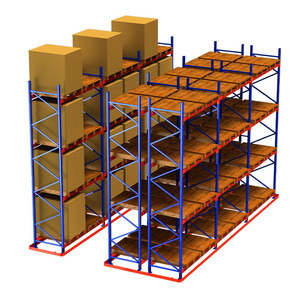
High-Bay Heavy-Duty Beam-Type Cold-Rolled Steel Adjustable Narrow Aisle Shelving
View Details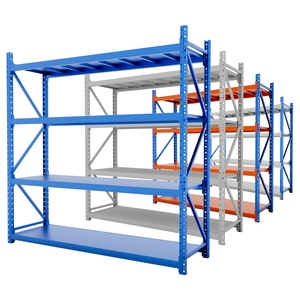
Steel 4-Layer 500kg Load Heavy Duty Pallet Rack Long Span Shelving System
View Details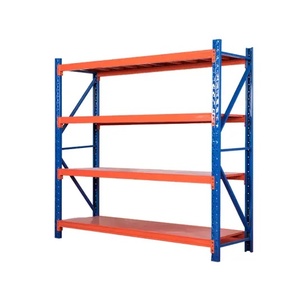
Boltless 4-Tier Medium Heavy Duty 200kg-500kg Corrosion Resistant Rack
View Details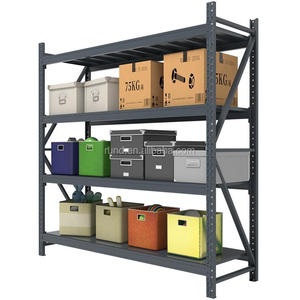
Medium Duty Metal Storage Floor Node Rack with Fall-Free Custom Design
View Details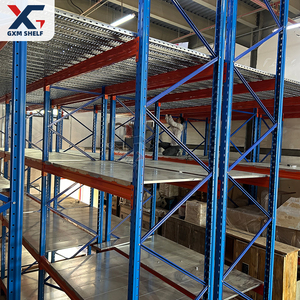
Mezzanine Floor Racking Attic Shelf Multi-Tier Numbered Warehouse System
View Details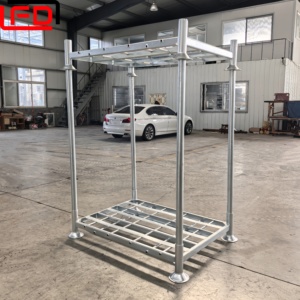
Hot-Dip Galvanized Stackable Post Metal Pallet Logistics Heavy Equipment
View Details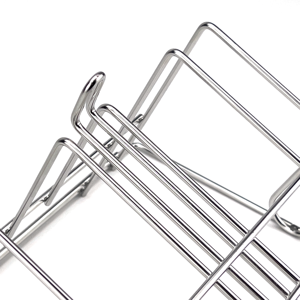
Bulk Custom Modular Metal Wire Heavy Distribution Storage Rack Unit
View Details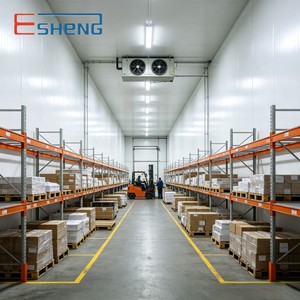
Automated High-Bay Cold Storage -25℃~0℃ 12-24m Racks with WMS & WCS
View DetailsEngineering Principles of High-Density Push Back Racking Systems
A comprehensive architectural briefing for supply chain directors, industrial warehouse developers, and EPC logistics engineers on structural mechanics, nesting carriage kinematics, and OEM manufacturing controls.
In modern industrial warehousing and distribution architectures, footprint optimization without sacrificing selectivity is the paramount engineering challenge. Custom OEM push back racking systems represent the pinnacle of high-density dynamic storage, offering a sophisticated middle ground between selective pallet racking and drive-in systems. Built on an inclined rail configuration carrying a sequence of nested rolling carts, push back racks utilize natural gravitational forces combined with standard counterbalanced or reach forklift propulsion to store pallets from 2 to 6 deep per lane.
Unlike drive-in systems—where lift trucks must physically enter the racking envelope, leading to elevated cycle times and high structural impact risks—push back racking operates strictly from the aisle face on a Last-In, First-Out (LIFO) operational protocol. When the first pallet is deposited by the forklift operator, it rests directly on the outermost nested trolley. When the subsequent pallet is positioned, the operator gently pushes back the first pallet, exposing the underlying second carriage. During pallet retrieval, controlled gravitational incline ensures that subsequent pallets glide smoothly forward to the pick face at an engineered velocity, ready for immediate picking without requiring specialised material handling equipment (MHE).
Structural Reliability Guarantee: Every custom OEM push back rack designed by our engineering department is computed according to FEM 10.2.02 and RMI standards. Our engineers calibrate slope gradients strictly between 2.5% and 3.5% depending on pallet tare weight, bottom runner configuration, and ambient operating temperatures, completely mitigating the risk of runaway pallets or velocity lockouts.
As tier-one OEM manufacturers, our technical teams work closely with global distributors, racking system integrators, and multinational logistics operators to custom-tailor push back racks according to specific seismic acceleration values, cold storage thermal shrink tolerances, and irregular unit loads (such as Euro pallets, GMA pallets, industrial steel cages, and chemical skids).
OEM Push Back Structural Dynamic & Design Criteria
Our cold-formed structural members and multi-tier nested carriages are designed to withstand dynamic shock loads, aggressive forklift impacts, and heavy duty cycles in demanding industrial environments.
Nested Carriage Architecture
Fabricated from heavy-gauge structural box sections and precision-welded Q235B/Q355B steel plate. Low-profile nested profiles ensure minimum vertical flue loss, maximizing usable vertical cubic clearance inside existing facilities.
Hermetically Sealed Bearings
Industrial steel wheels with deep-groove, double-sealed pre-lubricated ball bearings engineered for zero-maintenance performance down to -30°C in blast-freezer operations. Anti-friction shields prevent airborne dust and debris penetration.
Calibrated Gravity Gradient
Inclination tracks engineered at exact 1:30 to 1:40 pitch angles. Precision laser-cut rail interlocks prevent carriage derailing even under emergency forklift braking or sudden dynamic shock loading at maximum rated capacities.
| Storage System Type | Space Utilization Ratio | SKU Selectivity | Inventory Turnover (FIFO/LIFO) | Forklift Cycle Time | Structural Damage Risk |
|---|---|---|---|---|---|
| Custom OEM Push Back (2-6 Deep) | 75% - 85% Cubic Area | 1 Lane = 1 SKU (High) | LIFO (Configurable FIFO by Bay) | Rapid (Aisle-facing only) | Extremely Low (No truck entry) |
| Standard Selective Racking | 40% - 50% Cubic Area | 100% Direct Access | FIFO / LIFO Unrestricted | Moderate (Deep travel aisles) | Moderate (Frequent turns) |
| Drive-In Pallet Racking | 70% - 80% Cubic Area | 1 Bay = 1 SKU (Low) | Strict LIFO | Slow (Deep lane maneuvering) | High (Constant upright collisions) |
| Radio Shuttle Racking | 80% - 90% Cubic Area | Medium to High | FIFO or LIFO | Fast (Automated carrier) | Low (Minimal manual entry) |
| Pallet Flow (Gravity Roller) | 80% - 88% Cubic Area | High Throughput | Strict FIFO | Fast (Dedicated charge/discharge) | Low to Medium (Brake rollers needed) |
Guangzhou HEDA Shelves: State-of-the-Art OEM & ODM Manufacturing
With more than two decades of dedicated R&D and cold-formed fabrication excellence, our Guangzhou production facility sets the benchmark for quality, structural safety, and high-volume delivery across five continents.
Heavy-Gauge Cold Forming & Complete In-House Metallurgical Control
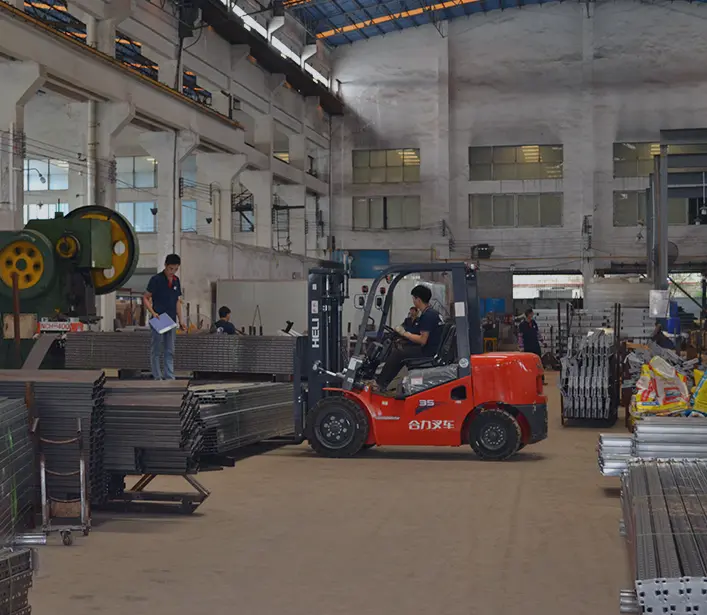
Founded in 2001, Guangzhou HEDA Shelves Co., Ltd. has grown into one of Asia's preeminent warehouse racking manufacturers. Our 30,000 square meter manufacturing plant houses automated CNC upright punch lines, robotic continuous welding cells, and high-precision profile roll-forming machines capable of processing more than 30,000 tons of structural steel every month.
- Certified Raw Materials: High-yield Q235B and Q355B cold-rolled steel sourced exclusively from Baosteel and Shougang with full EN 10204 3.1 chemical & physical mill test certifications.
- Chemical Pretreatment & Anti-Corrosion: 9-stage pickling and phosphating pre-wash followed by automated electrostatic epoxy polyester powder coating (60-80μm thickness) tested for 500+ hours in neutral salt spray.
- Comprehensive Free 2D/3D Engineering Layout: Complete structural modeling, seismic zone deflection calculations (L/200), and custom color OEM branding provided prior to project sign-off.
- Export Containerization: Engineered bundle packaging, precision piece numbering, and shock-resistant crating specifically optimized for damage-free maritime intermodal transport.
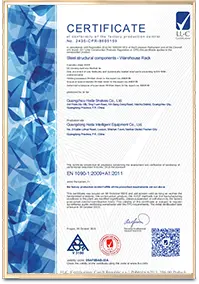 CE Certification
No. 2435-CPR-8605159
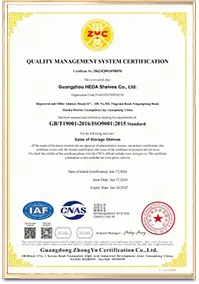
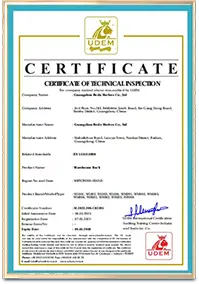 ISO 9001:2015
No. 18624Q00169R0M
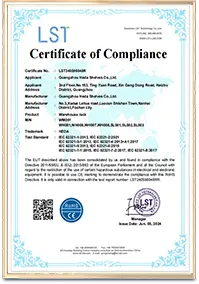 RoHS Compliance
Heavy Metal Free Coatings
 Product Deflection Tested
In-House Destructive Testing
Future Procurement Trends in Dynamic Push Back Racking (2025–2030)
How next-generation material handling trends, cold chain expansion, ESG directives, and automated guided vehicles (AGVs) are reshaping push back rack specifications worldwide.
Integration with Autonomous Reach AGVs
Procurement teams are shifting away from purely manual forklift operations toward optical and LiDAR-guided autonomous forklifts. Push back push-in speeds, bumper alignment, and front-stop sensors are being OEM-customized to allow millimeter-precise AGV drop-off without human intervention.
Sub-Zero Energy Optimization
Rising industrial energy tariffs are compelling refrigerated and frozen food 3PLs to pack maximum pallet density into cooled rooms. Push back racking reduces refrigerated cubic air wastage by up to 60% compared to selective racking, driving immense demand for low-temperature carriage alloys and specialized cryo-greases.
IoT Load Sensing & Cart Velocity Decelerators
Modern push back designs are integrating passive RFID tags and dynamic magnetic velocity brakes inside the incline rail channel. This eliminates cart collision slamming when heavy 1,500kg pallets are disengaged rapidly, safeguarding brittle consumer goods and high-value pharmaceutical packaging.
Low-Carbon Steel & Eco-Coating
Global procurement audits prioritize manufacturers using electric arc furnace (EAF) lower-carbon steel coils and volatile organic compound (VOC)-free thermoset powder coatings. Modular bolted carriage designs allow damaged parts to be exchanged in minutes rather than replacing entire welded bays.
From a global procurement standpoint, dynamic push back racking has experienced unprecedented compound annual growth. Warehouses operating in strategic distribution hubs—such as Dubai (Jafza), Riyadh Industrial Cities, Rotterdam, Antwerp, Chicago, and Singapore—face record land prices and building construction costs. Supply chain managers are finding that converting selective pallet aisles into 3-deep or 4-deep push back bays yields an immediate 40% to 55% increase in total pallet storage positions without expanding the facility envelope or leasing third-party overflow space.
Engineered Push Back Solutions Across Demanding Industries
Demonstrated resilience and throughput efficiency across high-velocity retail, refrigerated storage, automotive components, and bulk industrial chemical logistics.
Cold Storage & Dairy Processing
Implemented 4-deep hot-dip galvanized push back carts inside a -25°C frozen dairy staging facility. Mitigated rack rusting from condensation during defrost cycles and boosted storage capacity from 2,800 to 4,950 pallet locations with zero forklift impact claims over 36 continuous operating months.
Fast-Moving Consumer Goods (FMCG)
Installed a multi-tier 3-deep push back system for a major beverage distributor handling seasonal surges. Achieved a 38% decrease in pallet putaway and extraction cycle times compared to the prior drive-in system, allowing single-shift operations to satisfy peak holiday order demands.
Automotive Spare Parts Staging
Designed heavy-gauge structural channel push back rails for irregular 1,200kg steel post pallets. Enabled precise inventory categorization by automotive vehicle model year across 48 distinct SKU lanes while eliminating cross-aisle forklift traffic congestion.
Frequently Asked Questions by Global Racking Buyers
Clear, technically verifiable answers regarding structural engineering, installation tolerances, maintenance schedules, and OEM supply chain integration.
What are the exact pallet depth limits for custom OEM push back racks? +
How is push back rack incline calibrated, and what prevents pallets from descending too quickly? +
Can a push back rack accommodate bottom-runner pallets or irregular skids? +
What are the floor slab tolerance and structural anchoring requirements? +
How does Guangzhou HEDA Shelves assure quality control during OEM fabrication? +
Can damaged nested carriages or wheels be replaced without dismantling the rack? +
Request an Engineered 3D Layout & Factory-Direct OEM Quotation
Partner directly with Guangzhou HEDA Shelves Co., Ltd. Send your warehouse architectural CAD drawing, pallet dimensions, target unit loads, and clear ceiling height. Our senior structural design engineers will provide a complete 2D/3D storage capacity layout, structural calculation, and competitive factory-direct proposal within 24 hours.
Connect With Technical Sales
Instant engineering consultation and tender documentation support
Contact Us