Engineered Warehouse Racking Solutions
Direct from our precision cold-roll-forming fabrication lines: high-tensile structural pallet racks, boltless shelving modules, wire mesh decking, and semi-automated intralogistics systems.
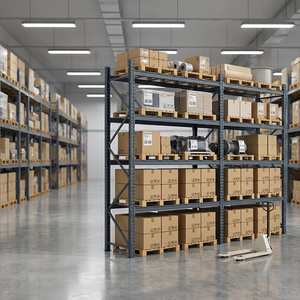
Heavy Duty Steel Multi-Level Boltless Pallet Racking
- Capacity: 1,000–4,500 kg/beam level
- High-grade Q235B roll-formed uprights
- Adjustable pitch with 75mm/50mm increments
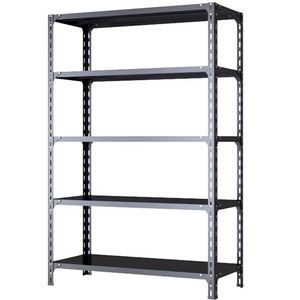
Angle Steel Multi-Tier Industrial Storage Shelf
- Capacity: 150–500 kg per layer
- Modular slotted angle rapid interlocking
- Electrostatic corrosion-inhibiting powder coat
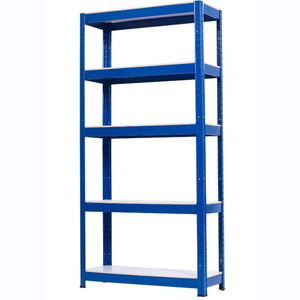
Industrial 5-Layer Corrosion-Protected Boltless Rack
- 5-tier flexible height configuration
- Pre-treatment phosphating & polymer seal
- Rapid 100% boltless knockdown assembly
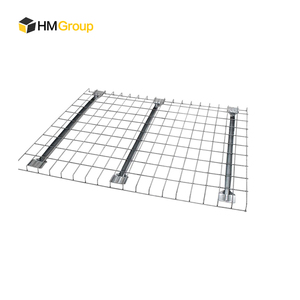
OEM / ODM Heavy-Duty Steel Wire Shelves & Decking
- Meets NFPA 13 sprinkler water-drop codes
- Welded steel U-channel reinforcements
- Zinc galvanised or anti-scratch coated
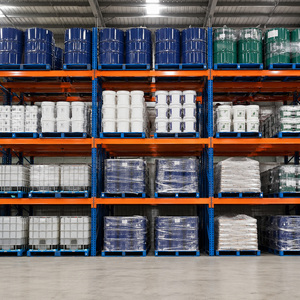
Q235B Heavy-Duty Pallet Racking for Auto Parts Logistics
- Heavy machinery & tier-1 parts rating
- Structural FEA simulation certified
- Heavy upright baseplates & floor anchors
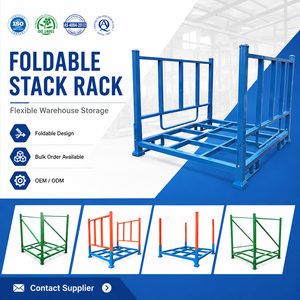
Foldable Heavy Duty Steel Warehouse Stack Rack
- Up to 4–6 layers vertical stacking
- 80% footprint reduction when collapsed
- High dynamic stability post interlocking
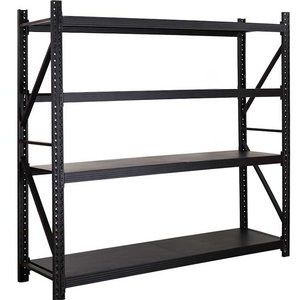
Customized Industrial Pallet Storage Rack System
- Custom beam profiles & column profiles
- Direct factory punch tooling & branding
- Compatible with single/double deep aisles
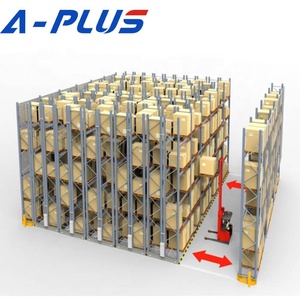
Automatic High-Density Mobile Warehouse Shelving
- Motorized track movement cuts aisles to 1
- Integrated safety optical sensors & PLC
- 200% volumetric storage multiplication
Engineering Blueprint: Metallurgical Precision & Custom OEM Manufacturing
In modern supply chain infrastructures, the structural integrity of industrial warehouse racking is not merely a question of steel fabrication; it is an exact discipline combining continuum mechanics, structural dynamics, cold-formed metallurgical profiling, and automated storage integration. When procurement directors, supply chain VPs, and warehouse project managers seek custom OEM racks from established manufacturing suppliers, the primary mandate centers on mitigating catastrophic structural deflection under extreme seismic, static, and dynamic load conditions.
Custom OEM fabrication begins with the certified metallurgical origin of the coil raw materials. We utilize primary mill-certified structural carbon steels, predominantly GB/T 700 Q235B and high-tensile Q355B (equivalent to EN 10025-2 S235JR and S355JR, ASTM A36 and A572 Grade 50). These alloys provide the critical balance between yield strength (≥ 235 to 355 MPa) and ultimate elongation percentage (≥ 21%), ensuring that under accidental forklift dynamic impact or extreme seismic wave acceleration, the upright profiles undergo plastic deformation rather than instantaneous brittle shear failure.
Unlike generic rack suppliers who rely on static rule-of-thumb span tables, custom OEM engineering mandates 3D shell-element and beam-element Finite Element Analysis under international standardizations EN 15512:2020, RMI ANSI MH16.1, and AS 4084. Perforation patterns (teardrop, diamond, hexagonal, and keyhole slotted profiles) inherently reduce the cross-sectional moment of inertia. Our engineering process accounts for torsional-flexural buckling, distortional buckling modes, and beam-to-column connector semi-rigidity through empirical cyclic stub-column testing.
Cold-Roll Forming Profiling
Multi-stage progressive precision roll formers generate continuous seamless omega and box profiles up to 15 meters without splice weld joints, ensuring precise structural concentricity and zero micro-fissuring across fold radiuses.
Robotic MIG/MAG Welding
All load-bearing beam connector end plates feature multi-claw welded interlocking tabs executed by 6-axis robotic welding cells with argon-CO2 shielding gas, producing continuous structural throats rated for dynamic shear and moment fatigue.
Surface Chemistry & Powder Cure
Pre-treatment involves a 7-stage immersion cycle: alkaline degreasing, twin rinses, acid pickling (rust deoxidization), micro-crystalline zinc phosphating, and deionized bath seal, followed by thermosetting polyester electrostatic powder cured at 200°C.
Strategic Procurement Trends: Sourcing OEM Warehouse Racks (2025–2030)
Industrial procurement of warehouse racking is transitioning from tactical, price-per-kilogram spot buying toward comprehensive Lifecycle Total Cost of Ownership (TCO) and systems integration models. Corporate supply chain directors, enterprise facility developers, and 3PL conglomerates are facing unprecedented shifts in demand patterns, automation adoption, climate impact, and cross-border regulatory compliance.
1. Modular AMR & AGV Floor Synergy
Modern enterprise procurement mandates that static racking arrays feature unobstructed bottom base clearance, ground-guided magnetic/optical path compatibility, and high floor-level clear spans for autonomous mobile picking robots (AMR) and autonomous counterbalanced stackers.
2. Strict Seismic & Dynamic Resilience
Global logistics hubs situated near active seismic fault zones (Middle East, Turkey, US West Coast, Southeast Asia) demand site-specific civil-defense approved dynamic modeling. Buyers specify enlarged baseplates, thick chemical epoxy anchoring, and seismic cross-bracing towers.
3. Factory-Direct OEM Digital Coordination
Contractors bypass layered trading intermediaries to collaborate directly with factory structural engineers. Complete BIM (Building Information Modeling) Revit files, clash detection with fire sprinkler lines (NFPA 13), and structural calculations are expected prior to cutting steel.
4. Circular Economy & Low-Carbon Steel
International environmental directives such as the EU Carbon Border Adjustment Mechanism (CBAM) are compelling Tier-1 warehouse developers to select manufacturers utilizing scrap-electric arc furnace (EAF) steel and zero-heavy-metal powder coatings compliant with RoHS and REACH standards.
5. Cold-Chain Energy Density Optimization
Cold chain logistics consumes significant electrical energy per cubic meter. Procurement trends show a decisive rotation away from standard single-selective layouts toward semi-automated 4-way radio shuttle systems and compact drive-in configurations, cutting conditioned air volume per pallet by over 45%.
6. High-Bay Verticality (Up to 30 Meters)
Skyrocketing industrial real estate valuations in primary gateway markets force warehouse clear heights upward from traditional 8-meter ceilings to 16–30-meter high-bay automated clad-rack warehouses, where the racking superstructure serves simultaneously as building frame and pallet support.
Technological Evolution: From Static Racks to Intelligent Storage Matrices
The industrial racking sector is evolving past passive static storage. In contemporary high-velocity fulfillment facilities, racking operates as the rigid spatial backbone for integrated mechanical, optical, and robotic automation. Understanding these technological vectors is essential when designing custom OEM warehouse profiles.
ASRS Crane & Clad-Rack Engineering
Automated Storage and Retrieval Systems (ASRS) impose ultra-tight horizontal and vertical deflection tolerances (≤ L/1000). Custom OEM towers must maintain plumb tolerances within millimeters across 25 vertical meters while accommodating dynamic mast acceleration and deceleration loads.
Pallet Radio Shuttle Sub-Tracks
Cold-formed running tracks with integrated precision alignment profiles allow multi-directional battery shuttles to navigate deep bays autonomously. High-precision laser-punched positional index points ensure optical docking accuracy within ±1.5mm.
IoT Structural Health Monitoring (SHM)
Next-generation OEM upright frames integrate fiber-Bragg grating strain gauges and wireless 3-axis accelerometer sensor pods. If a forklift impacts an aisle protector or an upright exceeds safety deflection limits under eccentric loading, facility engineers receive real-time alerts.
Direct Factory Manufacturing Capabilities & OEM Authority
Combining 25+ years of dedicated structural steel expertise with large-scale automated manufacturing infrastructure in Guangzhou, China.
Housing 32 automated continuous cold-roll forming lines, 12 robotic arm welding cells, and two 120-meter automated electrostatic powder coating lines under a unified QC system.
Extensive annual steel processing volume guarantees priority raw material supply contracts with premier domestic mills, providing stable project pricing and predictable container lead times.
Fully compliant with CE Factory Production Control (Certificate No. 2435-CPR-8605159), ISO 9001:2015 Quality Management (No. 18624Q00169R0M), and RoHS compliance.
Supplying Fortune 500 logistics parks, cold storage distributors, and government bonded zones across the Middle East (UAE, KSA, Qatar), Southeast Asia, Africa, Europe, and the Americas.
Frequently Asked Questions: Industrial Rack Procurement & OEM Customization
Direct technical answers to the most rigorous architectural, structural, metallurgical, and international export questions presented by procurement teams and consulting engineers.
What specific technical parameters are required to generate an accurate custom OEM rack quotation and structural design?
How do you prevent corrosion and coating delamination in high-humidity or sub-zero cold-storage warehouse environments?
What is the difference between standard roll-formed step beams and structural box beams in heavy-duty pallet racking?
How do HEDA Shelves' engineering calculations ensure compliance with regional civil defense and building codes?
Can you manufacture custom upright perforations, custom beam hook configurations, and match existing warehouse rack profiles?
What packaging and international logistics protocols protect high-gloss powder-coated racking components during maritime container freight?
Ready to Engineer Your Custom Warehouse Facility?
Connect directly with our senior structural intralogistics engineers. Submit your warehouse floor plans or project tender specifications to receive a free, no-obligation CAD layout, 3D structural rendering, and comprehensive factory-direct pricing.