Engineered Heavy-Duty Roller & Pallet Storage Solutions
Direct-from-factory modular pallet racking, teardrop industrial systems, live roller flow tracks, and cold-storage tested structural shelving configured to strict project specifications.
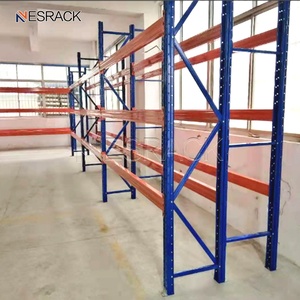 Heavy Industry
High Quality Intelligent Warehouse Storage Equipment Pallet Racking Beams and Uprights
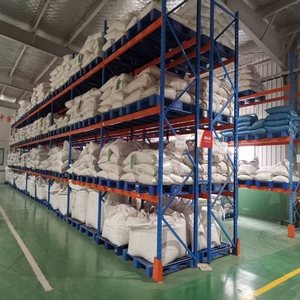 RMI Compatible
Industrial Storage Racks Custom 5 Layer US Teardrop Pallet Rack for Warehouse Cold Room
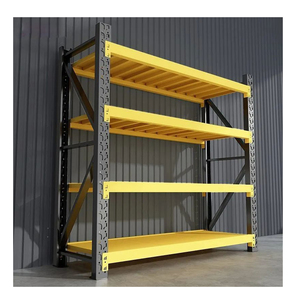 Fast Assembly
Light Duty 4-Tier Steel Metal Storage Rack Shelves Corrosion Protected Garage Racking
 Ultra Heavy
Industrial Factory Custom Super Heavy-Duty Pallet Multi-Layers Support Rack System
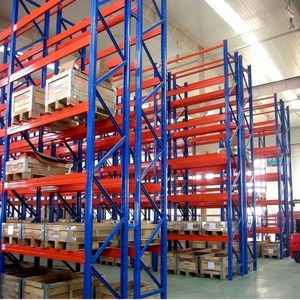 Modular Boltless
Boltless Storage Industrial Shelf Rack Metal Shelving Multi Tier Storage Racking
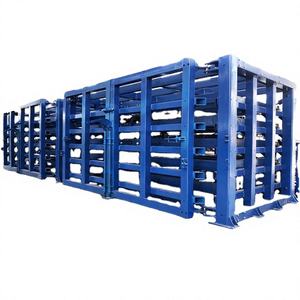 ESD & Motorized
Adjustable Movable Steel Selective Pallet Rack ESD Electric Mobile Racking System
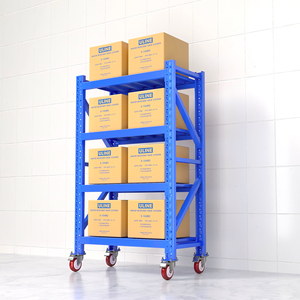 High Bay VNA
Longspan Shelving Rack High Bay Industrial Shelves Narrow Aisle Selective Pallet Racking
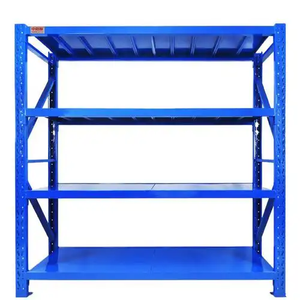 Commercial
Structural Architecture of Custom OEM Gravity Roller Racking Systems
Gravity roller racking—widely recognized across heavy-logistics sectors as dynamic pallet flow racking or live storage racking—operates on an unpowered gravitational gradient, converting the natural potential energy of loaded unit-loads into controlled kinetic velocity. As a specialized original equipment manufacturer (OEM), our facility engineers custom-calibrated roller beds comprising cold-formed structural steel side channels, zinc-plated precision steel rollers, dual-shielded ball bearings, and centrifugal brake drums. This architecture achieves a seamless First-In, First-Out (FIFO) material movement topology that condenses transit lanes into continuous accumulation tunnels.
In dynamic roller racking design, the balance between the slope gradient (customarily engineered between 3.0% and 4.2% or 1.7° to 2.4°) and pallet underside friction coefficients dictates operational reliability. Variations in bottom deckboard configurations—whether standard GMA four-way entry, Euro-pallets with bottom skids, or steel-reinforced plastic platforms—induce differential rolling resistances. Through custom track pitch spacing and customizable entry guidance channels, our manufacturing engineering team eradicates load deflection, lateral drift, and operational derailments under full-bay conditions.
Kinetic Speed Modulation & Load Separation Mechanics
Uncontrolled acceleration inside gravity flow lanes presents a direct threat to personnel, inventory integrity, and structural racking longevity. To guarantee velocity stability across extended runs exceeding 15 meters or 12 pallet depths, our custom OEM roller lanes integrate heavy-duty centrifugal brake rollers directly within the roller track pitch. As a descending pallet approaches a threshold velocity exceeding 0.3 m/s, the internal centrifugal weights within the brake roller expand radially against an oil-damped synthetic brake drum, producing dynamic proportional braking resistance without requiring any external power source.
Furthermore, extraction dynamics at the discharge face require advanced kinetic isolation. Left unbuffered, the cumulative hydrostatic back-pressure exerted by multiple trailing pallets in a high-density lane would clamp the discharge pallet against the exit stops, exceeding forklift drawbar pull capacity and causing bottom-deck tear-out. We solve this by integrating custom mechanical separation devices (time-delay escapement stops or foot-pedal mechanical separators). When the primary pallet arrives at the exit threshold, the separator automatically locks the secondary and trailing pallets 300mm upstream. Only once the forklift clears the lead unit does the separator disengage, allowing the upstream queue to roll smoothly forward one position.
High-Density Warehouse System Engineering Comparison Matrix
| Evaluation Parameter | OEM Gravity Pallet Flow | Radio Shuttle Racking | Drive-In Pallet Racking | Push-Back Cart Racking | Selective Pallet Rack |
|---|---|---|---|---|---|
| Volumetric Space Gain | Exceptional (+75-85%) | Exceptional (+80-90%) | Very High (+65-75%) | High (+55-65%) | Baseline Reference (0%) |
| Stock Rotation Discipline | Strict FIFO (Automatic) | FIFO or LIFO Selectable | Strict LIFO Only | Strict LIFO Only | 100% Random Access |
| Energy / Power Reliance | Zero (Gravity Driven) | Lithium Battery Charging | Zero Power (Truck Drive) | Zero (Gravity Assisted) | Zero Power |
| Throughput Cycles / Hr | Very High (Isolated Aisles) | High (Cart Dependent) | Low (Forklift Enters Rack) | Moderate | High (Aisle Traffic Limited) |
| Forklift Rack Impact Risk | Extremely Low (External) | Low (Face Pick Only) | Extremely High (In-Bay) | Low (Face Pick Only) | Moderate (Column Guards) |
| Cold Room Thermal Profile | Optimal Convection Tunnel | Battery Derating Issues | Restricted Airflow | Moderate Convection | High Cubic Air Waste |
Surface Pre-Treatment & Harsh Climate Metallurgy
Industrial warehouse racking environments in coastal regions, GCC states (such as the UAE and Saudi Arabia), or sub-zero refrigeration distribution facilities encounter severe atmospheric challenges: continuous thermal cycling from 45°C ambient temperatures down to blast-chilled environments, elevated humidity, and corrosive sand particulates. Standard commercial spray coatings rapidly peel, bubble, and suffer under-film rust creep.
At our manufacturing facility in Guangzhou, every structural upright column, diagonal brace, pallet support rail, and roller bracket undergoes an exhaustive 9-stage pre-treatment regimen. The process includes immersion acid pickling to eliminate mill scale, aqueous degreasing, hot alkaline neutralization, and deep zinc phosphating. This molecular crystalline base guarantees optimal mechanical adhesion for our electrostatic epoxy-polyester powder coating, applied at a controlled dry film thickness of 80 to 120 microns and cured in high-temperature infrared convection ovens. For external staging yards, marine terminals, or brine cold stores, components are hot-dip galvanized in conformance with ISO 1461, yielding minimum zinc densities of 500 g/m² for lifetime anti-corrosion defense.
Procurement Trends & Technological Evolution in Flow Racking
Key engineering shifts shaping global warehouse storage specifications from 2026 to 2035, driven by automated logistics, cold-chain expansion, and carbon-reduction initiatives.
1. AMR & AGV Roller Interface Nodes
Traditional forklift-loaded gravity flow tracks are actively shifting toward Autonomous Mobile Robot (AMR) and AGV handoff interfaces. OEM roller beds are now engineered with automated magnetic alignment stops, photo-electric track sensors, and low-profile cantilever entry ramps, allowing driverless vehicles to deposit and retrieve unit loads with millimeter-level precision without operator intervention.
- Precision optical sensor cutouts
- Zero-backlash floor-level docking
- PLC automated pick signals
2. Decarbonized Cold-Chain Concentration
Global energy tariffs and carbon compliance mandates make chilled warehouse volume extraordinarily expensive to operate. Procurement trends show a decisive migration away from wide-aisle selective cold rooms toward deep-lane gravity flow systems. By eliminating access corridors, facilities compress refrigeration cube requirements by up to 60%, drastically slashing kilowatt-hour consumption per pallet stored.
- Cryogenic low-temp bearing grease
- Polyurethane roller impact sleeves
- Non-brittle alloy upright formulas
3. Smart Telemetry & Braking Innovations
Next-generation dynamic storage tracks are incorporating smart magnetic eddy-current brake rollers that eliminate internal mechanical friction plates entirely. By generating repulsive electromagnetic eddy currents proportional to roller angular velocity, these non-contact brake systems eradicate wear, maintenance downtime, and thermal drift over millions of operational rotation cycles.
- Contactless eddy-current brakes
- Extended 10-year MTBF cycles
- Zero brake pad replacement costs
Why Global Supply Chains Rely on HEDA Racking Engineering
From complete 2D/3D BIM layout design to automated CNC cold roll-forming lines, our in-house control guarantees flawless dimensional tolerance and rapid project commissioning.
Certified Structural Verification
Every dynamic racking design is backed by rigorous structural calculation reports. Certified according to CE (No. 2435-CPR-8605159), ISO 9001:2015, and RoHS, our engineering blueprints support seamless Civil Defense, municipal building, and commercial property insurer reviews across the UAE, Saudi Arabia, Qatar, North America, and Europe.
Free 2D CAD & 3D Photorealistic Rendering
We eliminate spatial planning guesswork prior to steel fabrication. Our dedicated warehouse logistics architects provide rapid 2D aisle configuration blueprints and full 3D layout renderings free of charge, cross-verifying building column grids, sprinkler flue clearances, forklift mast reaches, and emergency egress paths.
Direct Port Logistics & Installation Kits
Exporting from our central factory in Guangzhou to major deep-water ports worldwide—including Jebel Ali, Khalifa, Dammam, Jeddah, Sohar, Long Beach, and Rotterdam. Component bundles are systematically numbered, color-banded, and matched to CAD erection diagrams for rapid local contractor assembly without site re-drilling.
Frequently Asked Questions by Warehouse Engineers & Buyers
In-depth answers addressing structural engineering, slope physics, pallet specifications, and international project delivery.
What slope gradient is required for standard wooden and plastic pallets on a gravity roller track?
+
The baseline industrial gradient for conventional wooden pallets (such as 1200x1000mm GMA or 1200x800mm Euro pallets) sits between 3.5% and 4.0% (approximately 2.0° to 2.3° angle of inclination). However, pallet material significantly alters kinetic rolling dynamics:
- Hardwood GMA Pallets (Sound bottom skids): 3.5% gradient provides optimal self-starting gravity flow from standstill.
- Plastic Pallets with Flat Runners: Often require a slightly gentler 3.0% to 3.5% slope due to lower rolling friction, but may necessitate textured polyurethane roller sleeves to prevent slipping.
- Defective, Warped, or Softwood Pallets: Pallets exhibiting bottom deckboard deflection under heavy loads introduce high rolling resistance, requiring testing in our factory simulation track to balance roller center-to-center pitch against brake roller intervals.
How do brake rollers function, and what determines their spacing along the lane?
+
Brake rollers are passive speed-limiting devices equipped with internal planetary gearboxes and centrifugal flyweights immersed in viscous damping fluid. They remain completely disengaged at micro-speeds during manual pallet maneuvering, but engage instantly when surface speed exceeds 0.25–0.30 m/s, regulating descent velocity to a calm walking pace (around 0.2 m/s).
As an OEM rule of thumb, one brake roller is installed for every pallet position in deep lanes (e.g., in a 10-pallet deep lane, 9 to 10 brake rollers are positioned along the track, beginning immediately after the entry zone). In cold storage applications (-20°C to -30°C), specialized synthetic low-viscosity silicone damping fluid is used to prevent the brake mechanism from freezing or becoming overly stiff.
Can roller racking be integrated with existing warehouse sprinkler and fire codes?
+
Yes. Fire protection compliance is integral to our factory CAD layout stage. NFPA 13 (Standard for the Installation of Sprinkler Systems) and European FM Global standards mandate specific longitudinal and transverse flue spaces to facilitate thermal draft upward to ceiling sensors and permit sprinkler water penetration.
In dense gravity flow blocks where multiple lanes sit back-to-back, we design engineered internal vertical flue spaces between rack bays (typically 150mm to 300mm clear gap) accompanied by dedicated in-rack sprinkler pipe support saddles. This allows pipefitters to install Level 1 and Level 2 barrier heads directly within the racking lattice without impeding pallet descent.
What parameters are required to generate an exact OEM engineering quote and 3D layout?
+
To provide an accurate structural calculation report, 2D AutoCAD floor plan, 3D render, and firm factory pricing, our engineering department requires:
- Warehouse Architectural CAD: Clear ceiling height to the lowest beam/sprinkler, column coordinates, floor slab load capacity (kN/m²), and dock door locations.
- Unit Load Data: Pallet dimensions (W x D x H including overhang), pallet bottom-deck design drawings, minimum and maximum gross weight per pallet.
- SKU Profile & Velocity: Number of unique SKUs, pallets per SKU, and target peak hourly pallets-per-hour (PPH) input/output.
- Forklift Specifications: Truck model, maximum mast lift elevation, overall collapsed mast height, and outrigger dimensions.
How does HEDA ensure dimensional tolerance and weld integrity across 30,000 tons/month?
+
Our manufacturing center utilizes automated cold roll-forming rolling mills equipped with continuous in-line servo punching. Upright column pitch tolerances are held strictly within ±0.5mm across a 12-meter continuous span, eliminating field assembly binding.
Beam end connectors are fused using robotic pulse-MIG welding cells under argon-shielded gas mixtures, guaranteeing full-penetration structural welds with zero slag inclusion or cold lapping. Every production batch is logged with mill steel certification numbers, and destructive coupon tensile tests are executed daily in accordance with ISO 9001:2015 quality management procedures.
What is the typical lead time, packing method, and installation support for overseas orders?
+
Standard custom OEM manufacturing lead times range from 15 to 25 working days depending on total steel tonnage. Because dynamic roller racking involves moving mechanical components (bearings, rollers, separators), components are container-packed with extreme care:
Roller tracks are pre-assembled in modular sections, steel-strapped with corner edge protectors, and wrapped in moisture-resistant stretch film with desiccant packs. Structural upright frames are bundled horizontally with timber dunnage. We supply comprehensive English-language CAD assembly schematics, component manifests, and high-definition video walkthroughs. For enterprise-scale logistics hubs, senior installation engineers can be dispatched to supervise local work crews through final alignment and load commissioning.
From Initial Consultation to Global Commissioning
Our four-phase turnkey project management model guarantees on-time delivery, structural safety, and verified operational throughput.
Phase 1: Engineering & BIM Simulation
Parametric analysis of building slabs, pallet dimensions, seismic zones (EN 16681), and throughput targets. We generate custom 2D layouts, load charts, and dynamic gravity simulation models.
Phase 2: Precision OEM Fabrication
Automated roll forming, laser cutting, automated punching, 9-stage phosphating, and electrostatic powder coating. Factory quality control audits every beam connector and roller axle tolerance.
Phase 3: Logistics & Installation
Export packaging optimized for standard 40ft HQ shipping containers. Complete drawing packages, remote digital video supervision, or certified on-site assembly direction for rapid project handover.
Request Your Custom Roller Racking Design & Factory Quote
Connect directly with our senior racking engineering specialists. Receive a bespoke 2D CAD floor plan, static load calculation schedule, 3D visualization, and competitive direct-from-factory pricing within 24 hours.