Specialized Heavy-Duty Racking & Material Handling Equipment
Precision-manufactured pallet storage systems, drive-through mezzanine structures, and heavy industrial wire enclosures built with premium Q235B/Q355B structural steel.
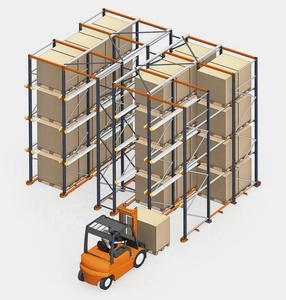
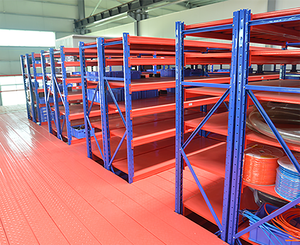
Wholesale Heavy Beam Style Drive-Through Iron Metal Mezzanine Racks ESD Protection Powder Coated Finish
Product Details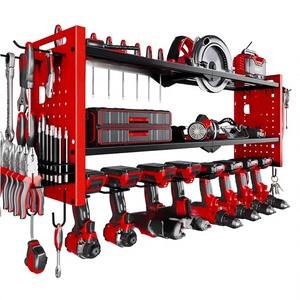
Cross-border Wall-mounted Wrought-iron Heavy-duty Power Tool Rack Garage Storage Shelf Cordless Drill Organizer
Product Details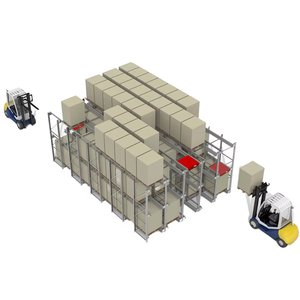
Heavy Duty Drive-In Rack High-Density Pallet Racking System FILO/FIFO Warehouse Storage
Product Details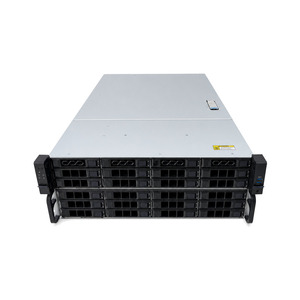
Custom Rackmount Storage Server Chassis 12 Bay LFF Hot Swap Drive Sheet Metal Enclosure OEM
Product Details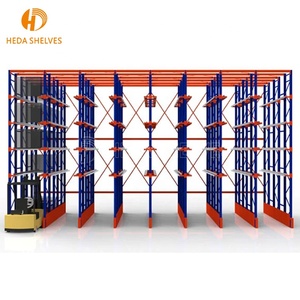
High Density Filo Storage System Warehouse Drive in Rack Van Pallet Racking System
Product Details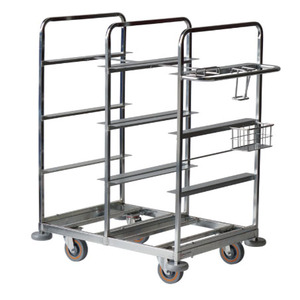
Factory Wholesale Heavy Duty Silver/Golden Galvanized Powder Coated 4 Tier Wire Mesh Containers
Product Details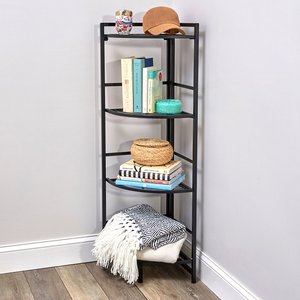
Small Four Layers Corner Storage Rack Narrow Collapsible Metal Wire Kitchen Shelf
Product DetailsStructural Engineering, Load Mechanics & Spatial Kinematics of Drive-In Racking
In high-throughput, modern logistics architecture, warehouse footprint efficiency directly correlates with bottom-line profitability. Drive-In Racking Systems—alongside their dual-access counterpart, Drive-Through Racking—represent the pinnacle of high-density static pallet containment. By eliminating traditional operational operating aisles required by standard selective racking configurations, drive-in structures reduce the required aisle ratio by up to 75%, yielding an overall warehouse volumetric space utilization of up to 85%.
From an applied structural engineering standpoint, drive-in systems present unique static and dynamic deflection characteristics. Unlike standard selective pallet racking where cross-aisle longitudinal beams bridge the upright columns and continuously stabilize the frames along the Z-axis, drive-in systems support pallets on continuous cold-formed cantilever load rails. Forklifts navigate directly into the storage bays to deposit or extract unit loads. Consequently, the structural integrity of the entire racking installation depends entirely on overhead top tie beams, top portal bracing, rear vertical bracing towers (for FILO systems), and heavy-duty seismic floor baseplates anchored to the concrete slab.
| Storage System Type | Space Utilization Ratio | Pallet Selectivity | Inventory Logic | Cold Chain Suitability | Structural Capital Expenditure |
|---|---|---|---|---|---|
| Drive-In Racking | 75% – 85% | Low (Block Batches) | FILO (First-In, Last-Out) | Exceptional (Low Chilled Cost/Pallet) | Cost-Effective / High ROI |
| Drive-Through Racking | 70% – 80% | Moderate | FIFO (First-In, First-Out) | High (Perishables / Expiry Control) | Moderate (Dual Portal Bracing) |
| Standard Selective Racking | 35% – 45% | 100% Direct Access | FIFO / Random Access | Poor (High Thermal Loss per m³) | Baseline Minimum |
| Radio Shuttle Automation | 80% – 90% | Moderate to High | FIFO / FILO Configurable | Excellent (Automated In-Rack) | High CapEx (Robotics + Rails) |
High-Tensile Cold Formed Steel
Fabricated using Baosteel-certified prime Q235B and Q355B structural coil grades, our continuous multi-roll forming profiles deliver enhanced torsional rigidity and yield strengths surpassing 355 MPa for heavy seismic zones.
One-Piece Tapered Support Arms
Heavy-gauge, robotic stamped one-piece cantilever brackets lock securely into slotted uprights without protruding fasteners, eliminating snag hazards while distributing concentrated load moments symmetrically across the column web.
Heavy-Duty Floor Guidance Rails
Continuous hot-rolled angle or structural steel channel floor rails guide forklift mast wheels into narrow lanes, preventing mast collisions with the rack legs while providing positive mechanical centering for rapid loading cycles.
Strategic Sourcing & Procurement Trends in High-Density Storage
Global supply chains are undergoing structural reconfiguration in response to land scarcity, skyrocketing construction costs, and surging cold chain energy consumption. Modern procurement directors and 3PL EPC contractors no longer evaluate racking solely as passive steel commodities; instead, procurement decisions are evaluated through Total Lifecycle Cost (TCO), Seismic Compliance Resiliency, and Automated Material Handling Interface Capabilities.
Energy-Indexed Cold Storage Sourcing
With refrigeration power comprising up to 60% of cold chain OPEX, procurement is aggressively shifting toward maximum-density drive-in systems that compress pallet cubic footage, minimizing thermal dissipation in blast freezers down to -30°C.
Pre-Engineered Automation Readiness
Forward-looking buyers specify convertible drive-in rack channels capable of retrofitting radio shuttles, AGV pallet movers, or optical collision-avoidance sensors without requiring structural teardowns or upright column replacements.
Harmonized Engineering Certification
Strict civil defense, warehouse insurance underwriting, and building permits demand verifiable static calculation reports meeting EN 15512:2020, ANSI/RMI MH16.1, and AS 4084 standards, verified through finite element analysis (FEA).
Direct-from-Mill OEM Integration
Bypassing trading intermediaries, multinational logistics operators partner directly with tier-1 OEM manufacturers capable of producing 30,000 tons monthly, ensuring transparent steel mill traceability and rapid container shipping schedules.
10-Step Controlled Factory Production Protocol
At our Guangzhou manufacturing complex, quality management is governed under stringent ISO 9001:2015 and CE (EN 1090 / CPR) standards. Our fully integrated facility manages the entire value chain in-house—from raw slit coil processing to automated robotic welding, multi-stage chemical pretreatment, and automated electrostatic polyester powder baking.
Raw Material Mill Testing
Precision CNC Slitting
High-Speed Punching
Continuous Cold Roll Forming
Robotic Welded Components
Surface Shot Blasting
Pickling & Phosphating
Electrostatic Powder Coating
High-Temp Curing Oven
QC Verification & Export Bundling
Anti-Corrosion Surface Finishing for Harsh Climates: Standard paint coatings deteriorate rapidly when exposed to tropical coastal humidity (such as Jebel Ali, Jeddah, or Southeast Asian ports) or sub-zero condensation in walk-in freezers. Every drive-in structural member undergoes a rigorous seven-stage chemical dipping cycle (degreasing, acid pickling, rinsing, neutralizing, and zinc phosphating) before receiving an electrostatic thermo-cured epoxy-polyester powder layer (60–90 μm thickness). For extreme corrosive outdoor yards or chemical storage, full hot-dip galvanization conforming to ASTM A123 / ISO 1461 is available.
Frequently Asked Questions for Drive-In Racking Procurement
Clear, authoritative technical answers addressing engineering dimensions, forklift clearance, load capacities, and customs clearance logistics.
What is the critical engineering difference between Drive-In and Drive-Through racking?
The primary engineering distinction lies in the aisle entry accessibility and structural cross-bracing configuration. Drive-In Racking operates on a First-In, Last-Out (FILO) inventory rotation protocol; forklifts enter and exit through the same front loading portal. The rear frame is permanently reinforced with heavy vertical and diagonal X-bracing steel towers, delivering exceptional structural stiffness.
Drive-Through Racking provides access from both ends of the lane, facilitating strict First-In, First-Out (FIFO) stock flow. Because forklifts pass completely through the racking run, rear X-bracing cannot be installed. Instead, structural stability is maintained by heavy-duty overhead portal tie beams and reinforced anchorages, requiring specialized structural calculations to accommodate lateral operational sway.
How do you determine clear bay width, rail spacing, and forklift mast tolerances?
Accurate clearance design prevents dangerous rack impacts during forklift entry. A standard 1200mm (depth) x 1000mm (width) pallet requires an overall bay clear opening that accounts for pallet overhang, forklift chassis width, and mast clearance:
- Pallet Support Lip: Pallets must rest securely on the continuous support rail with a minimum 50mm–75mm seating overlap on both left and right sides.
- Forklift Mast Clearance: A minimum of 75mm–100mm total clearance must be maintained between the widest point of the forklift (including mirror guards, chassis, and outer fork sides) and the inside face of the pallet support arms.
- Top Beam Clearance: When lifting pallets to upper levels, a minimum 150mm vertical clearance between the top of the pallet load and the underside of the overhead guide rail or tie beam is engineered to absorb mast hydraulic bounce.
Can drive-in racking accommodate bottom-entry versus four-way entry wooden or plastic pallets?
Yes, but pallet orientation and structural deck board configuration must be analyzed during the CAD design stage. In drive-in systems, pallets are supported along their bottom outer edges rather than across two cross beams. Therefore, pallets must be placed with their bottom structural skids or bottom runners parallel to the rack guide rails. Two-way, perimeter-base, or 9-leg block pallets must be structurally tested to ensure they do not sag or fracture under unit loads between 500 kg and 1,800 kg. For non-standard pallets or weak wooden skids, our engineering team supplies heavy-gauge galvanized drop-in pallet support pans or wire mesh under-decking.
What safety devices are mandatory to prevent accidental rack collapse during forklift operation?
Because forklift trucks physically enter the storage structure, drive-in systems experience higher impact exposure than traditional racks. We integrate comprehensive safety accessories into every OEM/ODM project:
- Full-Length Floor Guidance Rails: Heavy steel angle (L100x75x6mm or structural C-channel) anchored along the floor surface to align wheels and prevent mast deviation.
- Bull-Nose Column Protectors: Reinforced wrap-around steel guards anchored independently to the slab in front of entry uprights to absorb direct impact energy.
- Pallet Back Stops: Mechanical mechanical stops positioned at the end of each FILO lane to prevent pallets from over-traveling into rear vertical bracing.
- Safety Load Signs: Stamped aluminum or PVC maximum lane capacity warning plaques compliant with OSHA / EN 15635 regulations.
How does Guangzhou Heda Shelves support Middle East Civil Defense and seismic compliance?
Our engineering division delivers comprehensive PE-stamped (Professional Engineer) calculation documentation for municipal approvals across the UAE, Saudi Arabia (SASO compliance), Qatar, and Europe. Every project file includes 2D CAD architectural layouts, 3D structural perspective renderings, finite element stress analysis for dead/live/seismic load combinations, anchor bolt pullout shear calculations, and complete flue space / aisle width verifications for automatic sprinkler NFPA 13 compliance.
What are the standard delivery lead times and container loading specifications for international orders?
Standard production lead time for full container loads (20GP / 40HQ) is typically 15 to 25 calendar days following final CAD layout sign-off and deposit receipt. Upright frames are either shipped knock-down (flat-pack) to maximize container volume or pre-welded depending on project requirements. Uprights, pallet rails, and portal beams are steel-banded with wood-skid cradles, protective corrugated corner guards, and PE moisture-barrier stretch wrap. Bundles are systematically coded to match the supplied erection installation manual for rapid site assembly.
Plan Your High-Density Warehouse with Direct Factory Engineering
Share your warehouse CAD drawing, ceiling clear heights, and pallet specifications. Our senior structural engineers will prepare an optimized 2D layout, 3D rendering, and detailed factory-direct quotation within 24 hours.