Engineering Dynamics: Kinematics and Load-Bearing Physics of Gravity Flow Picking
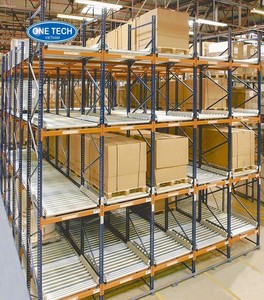
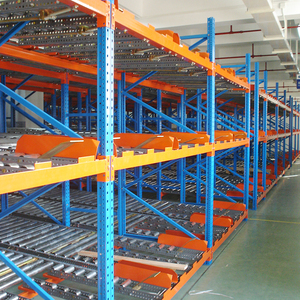
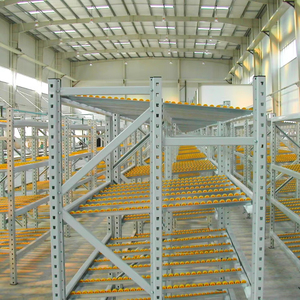
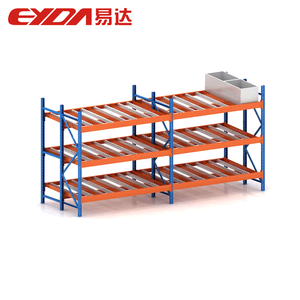
Gravity flow rack systems represent the pinnacle of passive intralogistics efficiency. By operating on a continuous gradient (typically calculated precisely between 2.5° and 4.2° depending on carton bottom coefficient of friction), flow racks transform potential gravitational energy into smooth kinetic feedlines. This guarantees strict First-In, First-Out (FIFO) physical turnover without electrical power or mechanical actuation.
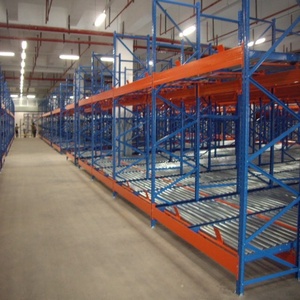
In modern omni-channel fulfilment hubs and automated micro-fulfilment centers, travel time accounts for up to 55% of an order picker's working shift. By separating the replenishment aisle (loading face) from the fulfillment aisle (picking face), live carton flow architecture isolates vehicular traffic (forklifts, tuggers) from foot or automated mobile robot (AMR) picking zones. This structural separation virtually eliminates warehouse aisle bottlenecking, speeds pick face density by 400%, and significantly reduces worker fatigue.
Controlled Gravitational Descent
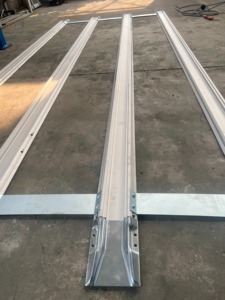
Engineered track inclinations with high-molecular-weight polyethylene (HMWPE) or polypropylene skate wheels allow uniform velocity control ($v \le 0.35\text{ m/s}$), avoiding load impact fracturing or line rebound.
Structural Metallurgy (Q235B & Q355B)
Uprights and horizontal load beds are cold-formed from high-tensile certified structural steel coils, delivering superior elastic deflection tolerance ($< L/250$) under dynamic distributed shelf loads up to 4,500 kg.
100% Uncompromised FIFO Integrity
Perishable food distributions, pharmaceuticals, and date-sensitive retail products strictly maintain rotation cycles. Front-loaded inventory immediately shifts downward to present the oldest inventory to order pickers first.
System Performance Matrix: Carton Flow Racks vs. Alternative Methodologies
| Evaluation Parameter |
Static Wide-Span Shelving |
Carton Live Flow Racks |
Powered Conveyor Buffers |
Automated Carousel / AS/RS |
| Pick Face Density (SKU/m²) |
Low (Requires Dedicated Aisles) |
Extremely High (Continuous Bed) |
Moderate (Fixed Track Footprint) |
Maximum (Vertical Cube) |
| Labor Travel Reduction |
0% (Standard Benchmark) |
60% – 75% Reduction |
40% – 50% Reduction |
80% – 90% Reduction |
| Replenishment Interference |
Direct Collision in Pick Aisle |
Zero Interference (Separate Back) |
Buffer Gapping Dependent |
Scheduled Batch Windows |
| Initial Capital Expenditure |
Very Low |
Moderate (High ROI within 6-11 Mo) |
High to Very High |
Extremely High (5x-10x) |
| Operational Energy Consumption |
0 kWh |
0 kWh (Passive Gravity Driven) |
Continuous Drive Motor Draw |
Substantial Continuous Power |
| Maintenance Overhead |
Minimal |
Virtually Zero (Precision Bearings) |
Frequent Belt/Drive Servicing |
Specialized Preventive Software/HW |
Future Procurement Trends in Flow Rack Picking Systems (2025–2030)
Global supply chain leaders are shifting procurement criteria from static steel hardware toward flexible, cyber-physical picking modules. As warehouse real estate costs increase across major transport corridors, procurement departments prioritize versatile, future-proof gravity racking architectures.
1. AMR & Pick-to-Light Synergy
Tomorrow's flow racks incorporate integrated wiring conduits and digital snap-rails for Pick-to-Light (PTL) sensor arrays. Discharge aprons are designed with optical clearance tolerances for Autonomous Mobile Robots (AMRs) to dock and pick directly from presentation shelves without human intervention.
2. Full-Bed Modular Roller Flexibility
Rather than rigid dedicated physical tracks, buyers now demand universal full-bed roller spans. This allows SKU line reconfiguration within seconds: lane widths are quickly modified by tool-free snap-in guides without unscrewing beams or altering frame geometry.
3. High-Resilience Cold Chain Formulations
With blast-freezer operations surging for pharmaceuticals and temperature-controlled foods (-30°C), roller polymers must resist embrittlement and cracking. Advanced formulations utilize specialized engineering polymers and anti-freeze synthetic lubricants inside sealed carbon-steel roller bearings.
4. Circular Metallurgy & Carbon Accounting
Corporate ESG procurement mandates are requiring verified low-carbon steel profiles, non-toxic lead-free thermoset powder coatings, and fully recyclable roller track components that provide documented lifecycle environmental benefits.
The Evolution of Dynamic Gravity Storage: From Static Shelves to Smart Flow Matrixes
Over the past three decades, intralogistics has shifted through three distinct operational phases:
Phase 1: The Static Heavy Storage Era (1990s–2000s)
Warehouses relied primarily on standard selective pallet racks and wide-span static shelving. This setup suffered from low spatial utilization, excessive dead-aisle real estate, and high travel times as order selectors navigated expansive picking paths with manual pick carts.
Phase 2: Discrete Gravity Carton Channels (2010s)
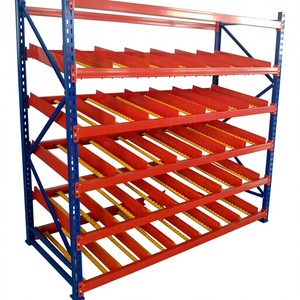
Early flow racks used rigid, sheet-metal formed channels with nylon wheels spaced at set intervals. While this significantly cut travel time, altering channel widths required significant teardown labor. Cartons of inconsistent sizes risked jamming along the flow bed, leading to operational downtime.
Phase 3: The Ergonomic, High-Modularity Intelligent Flow Matrix (Present & Beyond)
Current state-of-the-art systems utilize multi-directional bed assemblies, adjustable drop-tray tilt angles (from 0° to 25° for direct sight-line ergonomic reach), tool-free track positioning, integrated safety braking clips, and structural integration with multi-tier rack-supported mezzanine walkways. Modern flow racks serve as central physical components connecting inventory storage, pick-to-belt conveyors, and automated sortation networks.
Why Partner with Us: World-Class OEM/ODM Manufacturing Infrastructure
Operating since 2001, Guangzhou Heda Shelves Co., Ltd. provides factory-direct engineering and production for distribution centers, third-party logistics (3PL) providers, and industrial supply wholesalers worldwide. We deliver complete, turnkey structural storage systems, handling structural analysis, CAD layout optimization, precision fabrication, containerized export bundling, and complete field installation documentation.
30,000 m² Facility
Massive production hub equipped with continuous CNC cold roll-forming lines, automated laser-guided punching presses, and robotic welding stations.
30,000 Tons Monthly Output
Extensive monthly steel processing capacity guarantees stable raw material procurement pricing, shorter production lead times, and seamless execution of large multi-container projects.
Certified Quality System
CE Certification (No. 2435-CPR-8605159), ISO 9001:2015 quality management (No. 18624Q00169R0M), and strict RoHS-compliant pre-treatment protocols.
10-Stage Surface Treatment
Comprehensive in-house surface prep: chemical degreasing, ultrasonic cleaning, acid pickling, phosphating, pure-water rinsing, and electrostatic powder coating cured at 200°C for superior corrosion resistance.
Our internal design team provides complimentary, customized 2D CAD engineering layouts, FEA stress-deflection calculations, and photorealistic 3D warehouse simulations before production begins. Whether you need custom OEM frame heights, custom roll track pitches for lightweight cosmetics or heavy automotive components, or specialized high-durability electrostatic finishes for hot and humid coastal climates, our engineers provide fully customized, site-ready solutions.