Heavy-Duty & Commercial Storage Implementations
Direct from our automated roll-forming and powder-coating facility: engineered storage systems, boltless garage racks, automated pallet interfaces, and moisture-resistant platforms manufactured to EN 15512 and RMI specifications.
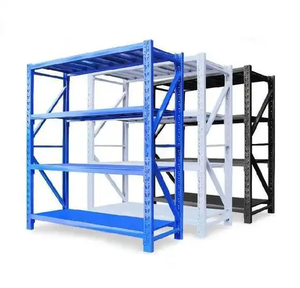
Mracking Light Duty Boltless Garage Storage Shelf Adjustable Metal Steel Racking 4 Tier
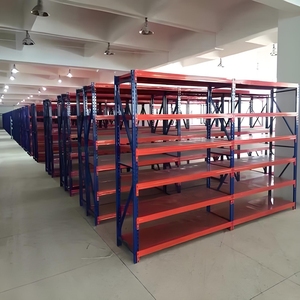
Adjustable 5-Layer Steel Metal Stacking Racks & Shelves Anti-Rust Efficient Warehouse Storage Solution
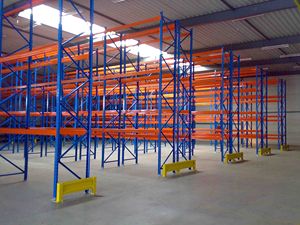
Heavy Duty Pallet Racking System Storage Rack Adjustable Warehouse Shelving for Industrial Logistics
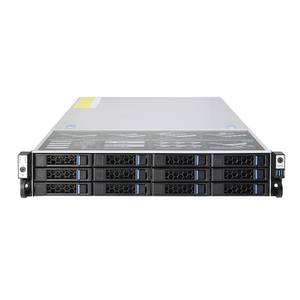
Customizable High-performance Xeon Silver 4214R 12-Core 2.4GHz 32GB DDR4 Backplane Rack Storage
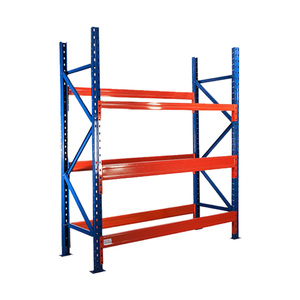
Metal Racks System Warehouse Shelving Storage Equipment with Free Storage Solution Design
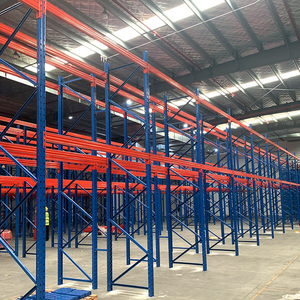
Factory Direct Heavy Duty Warehouse Racking High Load Steel Pallet Rack for Vietnam Thailand Malaysia
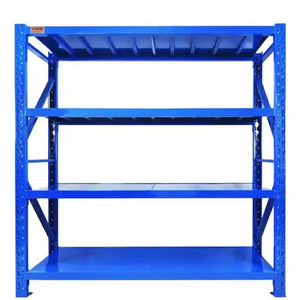
Mracking 4-Level Boltless Angle Steel Shelving Rack White/Black Corrosion Protection Freely Shelves
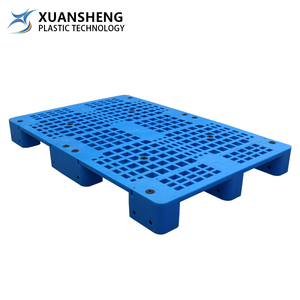
HDPE Grid Nine Foot Forklift-Compatible Pallet 1200*1000*140 MoistureProof Plastic Stacking Platform
Structural Integrity & OEM/ODM Engineering Framework
Industrial racking and shelving systems represent structural steel frameworks that must sustain massive dynamic and static loadings over decades of relentless operational duty cycles. Selecting an OEM/ODM partner requires evaluating metallurgic standards, cold-roll profiling accuracy, surface pretreatment integrity, and finite element modeling (FEM).
High-Grade Certified Metallurgy
Our upright columns and load-bearing horizontal beams are exclusively cold-rolled from certified Q235B and high-yield Q355B structural steel coils. Every batch undergoes ultrasonic testing, tensile yield strain verification, and chemical composition analysis to guarantee zero micro-fracturing during continuous high-bay loading cycles.
- Tensile strength exceeding 510 MPa on heavy uprights
- Traceable Mill Test Certificates (MTC) per EN 10204 3.1
- Optimized yield elasticity for seismic-prone installations
Continuous CNC Roll-Forming
Dimensional tolerances are maintained within ±0.5 mm using automated multi-station cold roll-forming lines. CNC punch matrices produce tear-drop, diamond, and hexagonal pitch patterns at precise 50 mm, 75 mm, and 76.2 mm increments, providing universal backward compatibility with international storage standards.
- Continuous automated upright profiling up to 14 meters
- Box-beam interlocking interlocking clasps with safety locks
- Robotic dual-torch submerged arc connector welding
Pretreatment & Anti-Corrosion
To withstand extreme operating conditions—such as coastal marine humidity in GCC hubs or chemical vapor exposure—all fabricated parts undergo 8-stage immersion pickling and phosphating before electrostatic curing with high-adhesion polyester epoxy powder.
- Salt spray resistance exceeding 500 hours (ASTM B117)
- High-durability 60-90 micron film thickness
- Hot-dip galvanizing available for cold storage (-30°C)
Full-Cycle 10-Stage Fabrication Workflow
From raw coil uncoiling to international containerized bundling, our integrated manufacturing chain eliminates subcontractors to guarantee rigorous batch consistency, predictable lead times, and structural traceability.
| Stage | Manufacturing Phase | Engineering Equipment & Parameters | Quality Assurance & Standard Metric |
|---|---|---|---|
| 01 | Raw Material Receiving | Prime hot-rolled/cold-rolled steel coils (Q235B, Q355B, SPCC) | Spectrometric chemical analysis & gauge micrometer verification (±0.02mm) |
| 02 | Precision Slitting & Cutting | High-speed automated continuous coil slitting lines | Edge burr elimination, width deviation under ±0.1mm tolerance |
| 03 | Automated Column Punching | Multi-ton high-speed CNC mechanical punch presses | Hole center-to-center pitch deviation < 0.15mm per 1000mm length |
| 04 | Cold Bending Profiling | 16 to 24-station automated cold roll-forming units | Residual stress relief, torsional alignment strictly within EN 15512 |
| 05 | Beam Rolling & Forming | Continuous step-beam and box-beam interlocking forming | Sectional modulus calculated for deflection ratio ≤ L/200 under full rated SWL |
| 06 | Surface Polishing & Deburring | Automatic shot-blasting and mechanical seam deburring | Elimination of micro-burrs, surface finish prepared to Sa 2.5 cleanliness |
| 07 | Robotic Precision Welding | Multi-axis robotic GMAW (Gas Metal Arc Welding) cells | Continuous penetration weld testing; zero spatter, zero porous cavities |
| 08 | Pickling & Phosphating | Automated multi-tank immersion chemical pretreatment sequence | Complete grease and rust stripping, creating dense zinc-phosphate barrier |
| 09 | Electrostatic Powder Curing | Gema automated electrostatic spray guns in enclosed climate booths | Thermoset bake at 180°C–200°C; cross-hatch adhesion tested to Class 0 (ISO 2409) |
| 10 | QC Inspection & Export Stowing | Color-coded bundle banding, edge-protectors, shrink-wrapping | Container weight balance optimization; itemized pallet tagging for rapid site erection |
Future Procurement Trends in Industrial Storage (2025–2030+)
Global supply chain turbulence, accelerating robotic automation, and aggressive ESG mandates are reshaping warehouse procurement. Strategic warehouse EPC managers and logistics operators must align rack specifications with the following technological frontiers.
1. AS/RS & Automated Shuttle Convergence
Traditional static racking is increasingly giving way to semi-automated and fully automated intralogistics structures. Modern procurement prioritizes systems built with tighter dimensional deflection envelopes (tolerances under ±1.5 mm) capable of interfacing seamlessly with Autonomous Mobile Robots (AMRs), Automated Guided Vehicles (AGVs), and 4-Way Radio Shuttle carriers. Racking uprights now function as integrated conduits for busbars, sensor arrays, and optical positioning flags.
2. Seismic Resilience & Dynamic FEM Modeling
With massive logistics corridors expanding in seismically active regions across the Pacific Rim and Middle Eastern fault lines, static load calculation is no longer acceptable. Structural engineers demand Finite Element Analysis (FEA) simulating multi-axis ground accelerations, harmonic frequencies, and live-load redistribution. Beam connectors must incorporate higher rotational stiffness values (Cartwright stiffness values) to dampen kinetic oscillation without progressive collapse.
3. Sustainable Decarbonization & Green Steel
Tier-1 retail operators and multinational 3PLs are enforcing Scope 3 emissions quotas across their industrial warehouse equipment. Future tenders will heavily weigh structural steel produced via Electric Arc Furnace (EAF) utilizing high-recycled scrap ratios over traditional blast furnace methods. Solvent-free powder coating formulations with cure temperatures under 160°C are becoming mandatory to lower embodied carbon indices per pallet position.
4. IoT-Enabled Structural Health Monitoring (SHM)
Forklift impacts cause latent structural damage that often goes unnoticed until catastrophic shear failure occurs. The next generation of industrial racking integrates fiber-optic strain gauges, micro-piezoelectric sensors, and RFID impact sensors directly into front upright columns. These telemetry modules communicate real-time beam deflection, load overloading, and physical impact telemetry directly to the facility's Warehouse Management System (WMS).
Industrial Storage Systems Engineering Matrix
Compare core structural parameters across primary industrial racking configurations to identify the optimal match for your facility's height clearances, SKU density, and pallet throughput profiles.
| Racking Typology | Floor Utilization | Accessibility | Standard Capacity | Optimal Application Scope |
|---|---|---|---|---|
| Selective Pallet Racking | 40% – 50% | 100% Immediate Direct Access | 1,000 – 4,500 kg / level | Multi-SKU warehouses, 3PL distribution centers, fast-moving retail FMCG |
| Drive-In / Drive-Through | 65% – 75% | LIFO / FIFO (Batch Access) | 1,000 – 2,000 kg / pallet | Cold storage, raw ingredient warehousing, low SKU diversity with high batch counts |
| Radio Shuttle System | 75% – 85% | Automated Deep Lane FIFO/LIFO | 500 – 1,800 kg / pallet | Refrigerated food hubs, beverage manufacturers, buffer staging facilities |
| Gravity Pallet Flow | 70% – 80% | Strict Automatic FIFO | 800 – 1,500 kg / pallet | Perishable goods, pharmaceutical cold chains, production line staging |
| Heavy Cantilever Racking | 50% – 60% | 100% Unobstructed Linear Access | 500 – 3,500 kg / arm | Steel tubing, PVC piping, lumber planks, aluminum extrusions, sheet plates |
| Multi-Tier Mezzanine | 100% – 250% | Manual & Conveyor Picking | 300 – 1,200 kg / m² | E-commerce fulfillment centers, automotive spare parts, assembly workshops |
Frequently Asked Engineering & Sourcing Questions
Authoritative guidance on structural calculations, civil defense clearances, international shipping stowage, and OEM/ODM private label specifications.
How do you calculate safe working loads (SWL) and floor slab point loads?
Load calculation is governed strictly by structural steel design codes including EN 15512 (European standard for adjustable pallet racking) and ANSI MH16.1 (RMI standard). Beam calculation focuses on bending moment capacity and deflection limits, established at a maximum permissible vertical deflection of L/200 (where L is the clear span distance between uprights).
Upright design considers composite compressive loads combined with second-order bending effects (P-Delta effects) generated by frame sway. For concrete floor slabs, our engineers calculate the point load distributed through enlarged steel footplates, ensuring bearing pressure remains within the concrete compressive shear capacity (typically 25 to 35 MPa for industrial slabs). We provide complete slab load distribution diagrams to verify that building subfloors will not suffer punch-through shearing.
What parameters are required to obtain an engineered 2D CAD layout and 3D BIM model?
To deliver an optimized, accurate warehouse proposal within 24 to 48 hours, our engineering department requires:
1. Architectural building drawings indicating internal boundary clear dimensions, roof truss minimum clearance height, column grid layout, overhead crane tracks, overhead doors, and existing in-slab utility conduits.
2. Pallet profiling data: pallet dimensions (e.g., standard Euro 1200x800mm, Industrial 1200x1000mm, or custom GMA), overall load height including pallet base, maximum gross load weight, and pallet overhang tolerance.
3. Forklift and MHE (Material Handling Equipment) specifications: turning radius, mast collapsed height, maximum lift height, and minimum right-angle stacking aisle requirements.
4. Environmental data: ambient temperature ranges, indoor vs. outdoor placement, seismic zone category, and local fire protection / sprinkler grid specifications.
How do your storage solutions comply with local Civil Defense and NFPA 13 fire safety codes?
Fire code compliance (such as NFPA 13 standards and regional Civil Defense regulations in the UAE, Saudi Arabia, and GCC) requires strict preservation of flue spaces. Our designs engineer longitudinal flue spaces (typically 150mm between back-to-back racks) and transverse flue spaces (75mm to 100mm between pallet bays) using mechanical row spacers and back-stop pallet beams.
Where in-rack sprinkler piping is mandated for high-rack systems exceeding 7.5 meters, our uprights are engineered with dedicated routing penetrations and support brackets that prevent water supply pipes from being struck during forklift operations. Drop-in wire mesh decking or perforated steel panels with open surface areas exceeding 50% are deployed to ensure fire suppression water can penetrate lower storage tiers without accumulation.
What are your OEM and ODM customization capabilities for private label distributors?
As a true manufacturing plant operating since 2001, we provide extensive OEM/ODM services for commercial distributors, system integrators, and storage equipment dealers worldwide. We can customize upright punching geometry (including standard teardrop, slotted, or keyhole configurations) to match legacy profiles.
Surface finishing can be tailored to any corporate identity utilizing genuine RAL color formulations. Furthermore, we provide personalized branding through laser-cut beam connector badges, embossed upright steel stamping, silk-screened safety warning plates, and white-label export packaging. We strictly respect intellectual property, signing enforceable Non-Disclosure Agreements (NDAs) and offering market exclusivity arrangements for proprietary designs.
How is export packaging managed to prevent damage during long-distance maritime transit?
Improper export packing leads to scratched coatings, distorted connector lugs, and severe transit deformation. We mitigate this through an engineered packing methodology developed over 120+ export markets. Upright frames and long beams are bundled on dedicated wooden skids or structural steel cradles, strapped with high-tensile polyester bands, and protected with heavy-gauge corrugated edge boards and multi-layer stretch film.
Small hardware components, anchor bolts, row connectors, and safety pins are sorted into heavy-duty cartons, shrink-wrapped on nine-foot moisture-proof HDPE plastic pallets, and clearly color-coded with item numbers corresponding directly to the project's assembly drawings. Containers are loaded with balanced weight distributions and braced with heavy-duty air dunnage bags to prevent any lateral shifting on ocean transit.
What certifications and quality control protocols govern your production facility?
Guangzhou Heda Shelves Co., Ltd. operates under a comprehensively audited quality management framework. We hold CE Certification (No. 2435-CPR-8605159) confirming full compliance with European Construction Products Regulations (CPR) for structural steel fabrication. Our production operations are certified under ISO 9001:2015 (Certificate No. 18624Q00169R0M, valid through 2027) and comply with international RoHS standards for non-toxic, lead-free surface coatings.
Internally, each manufacturing batch passes three quality gates: incoming raw coil tensile/chemical spectrometry, in-process automated dimensional and weld penetration inspection, and finished goods powder coating adhesion (cross-hatch testing) and salt-spray corrosion resistance auditing.