Medium Duty
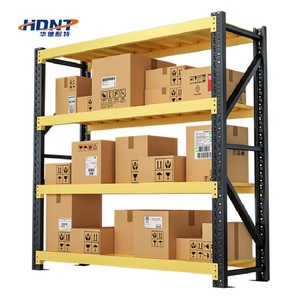
Adjustable 4-Layer Steel Storage Rack Medium Duty Shelves
300-800 kg/Tier
Q235B Steel
CE Certified
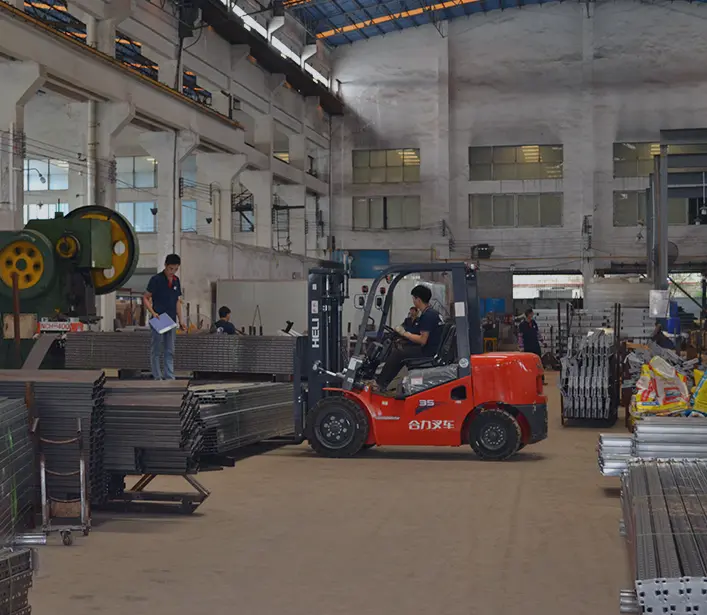
Manufactured in our 30,000 m² automated facility. Every racking configuration undergoes rigorous structural testing, pickling, phosphating, and electrostatic epoxy-polyester powder coating for mission-critical warehouse environments.
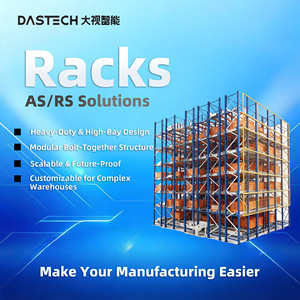
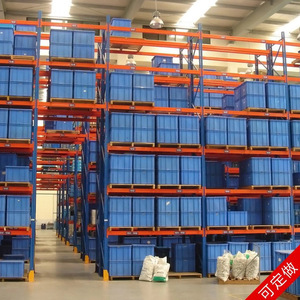
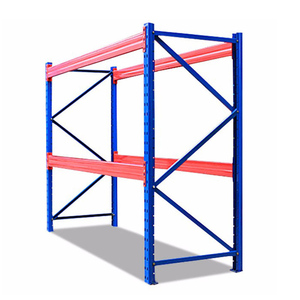
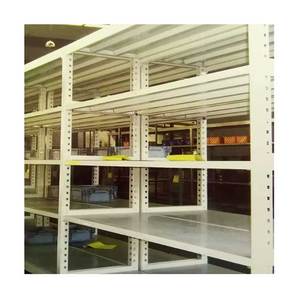
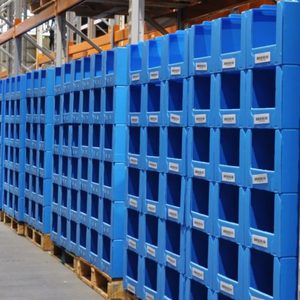
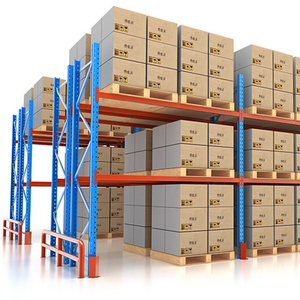
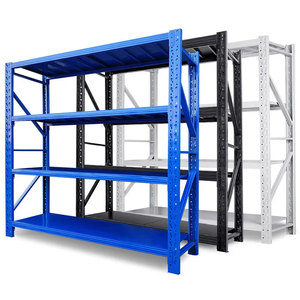
In high-density industrial logistics, selecting a qualified OEM/ODM pallet rack platform factory extends far beyond standard pricing-per-ton assessments. Modern racking engineering bridges structural civil mechanics with dynamic warehouse material flow. Racking uprights and mezzanine platform support columns are vertical structural load-bearing members that experience not only direct axial compressive forces, but also torsional stresses, lateral seismic shear, and cyclic vehicle-induced kinetic shocks. Understanding the metallurgical composition, section modulus, cold-roll forming profile geometries, and international structural codes (such as RMI MH16.1 in North America, EN 15512 / FEM 10.2.02 in the European Union, and AS4084-2023 in Australasia) is vital for supply chain directors, industrial architects, and procurement managers aiming to build reliable, incident-free warehouse storage hubs.
The integrity of any industrial mezzanine platform or heavy-duty selective rack begins at the steel mill. Standard commercial racks from entry-level fabricators frequently utilize re-rolled steel or generic carbon steel with unpredictable yield points. At HEDA Shelves, we mandate prime-certified structural coils supplied by premier state-grade steel mills (e.g., Baosteel, Shougang). The choice between Q235B and Q355B (equivalent to European S355JR or ASTM A572 Grade 50) is calculated based on clear ceiling heights, seismic zone ratings, and target live-load thresholds:
| Structural Parameter | Standard Q235B Cold-Rolled | High-Strength Q355B Alloyed | Engineering Impact on Pallet Platform |
|---|---|---|---|
| Yield Strength ($f_y$) | ≥ 235 N/mm² (MPa) | ≥ 355 N/mm² (MPa) | Allows 30-40% higher beam load or 20% profile weight reduction without buckling risk. |
| Tensile Strength ($f_u$) | 370 – 500 N/mm² | 470 – 630 N/mm² | Enhances extreme impact tolerance against forklift carriage collisions at lower column heights. |
| Elongation at Fracture | ≥ 26% | ≥ 21% | Guarantees vital ductile yield properties under dynamic seismic accelerations before structural crack initiation. |
| Standard Thickness Tiers | 1.5mm, 1.8mm, 2.0mm | 2.0mm, 2.5mm, 3.0mm, 3.5mm | Applied to multi-tier structural mezzanine columns, rack-supported buildings, and 20m+ high-bay racks. |
| Typical Applications | Standard selective bays, long-span shelves | AS/RS, Drive-in, Shuttle racks, Mezzanine I-beams | Ensures torsional rigidity where column horizontal deflection limits must remain ≤ H/500. |
Unlike hot-rolled structural H-beams, cold-formed steel profiles rely heavily on the number of fold bends to achieve sectional stiffness. Our upright columns feature an advanced 11-13 fold roll-formed omega profile with continuous automated punching. Every fold introduces cold-working hardening, which significantly elevates local yield strength at the corners. During custom OEM/ODM development, our engineering team executes 3D non-linear FEA simulation modeling to determine exact stress concentrations at the hook connector apertures and beam weld junctions. This structural validation eliminates catastrophic elastic buckling risks under unbalanced loading conditions, such as single-side pallet off-loading or seismic cross-aisle sway.
Warehouse real estate land acquisition costs, combined with the rapid integration of smart logistics automation, have fundamentally shifted global enterprise procurement strategies. Supply chain executives are prioritizing cubic utilization, modular expandability, and decarbonized production lifecycles.
Enterprises are moving away from single-purpose open floor mezzanines toward hybrid rack-supported structures. By using vertical racking frames as the primary structural pillars for elevated decking, warehouses double their cubic space while slashing primary structural steel fabrication costs by up to 35%.
Procurement specifications increasingly mandate compatibility with autonomous mobile robots (AMRs) and four-way radio shuttles. Racking platforms must now maintain millimeter-level cumulative rail straightness and deflection tolerances to prevent robotic carriage jamming during automated retrieval operations.
B2B buyers are bypassing third-party regional intermediaries to partner directly with certified tier-1 factories. Direct factory collaboration secures verified raw material heat certificates, transparent lead-time tracking, customized roll-tooling configurations, and substantial volume discounts.
Racking durability in challenging operating environments—such as coastal logistics hubs, unconditioned desert warehouses, or sub-zero blast freezers—is determined by pre-treatment chemistry and coating adhesion.
Most premature rack failures occur not through catastrophic mechanical overload, but through undetected corrosion beneath paint layers, leading to localized steel thinning and weld crack propagation. HEDA Shelves enforces a continuous 10-step surface engineering cycle:
Our 30+ engineering team provides layout schematics, pallet aisle clearance checks, Civil Defense egress alignment, and 3D renderings within 24 hours of receiving site drawings.
Continuous multi-station roll-forming lines, automated robotic welding cells, and rapid coil slitting equipment guarantee fast order completion even for multi-thousand ton mega-projects.
Raw material spectroscopy, weld penetration x-ray analysis, cross-cut powder adhesion tests (ISO 2409 Class 0), and static physical load-to-destruction testing prior to dispatch.
Beam packs and upright trusses are nested on protective dunnage with color-coded bundle tags matching installation sequence drawings to minimize unloading time and container demurrage.
 CE Mark Compliant
 ISO 9001:2015 System
 RoHS Directive Validated
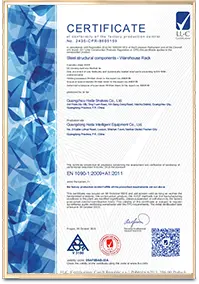 Static & Dynamic Tested
Clear engineering answers to structural safety, floor loading capacities, seismic standards, civil defense compliance, and custom manufacturing lead times.
Standard selective pallet racks carrying 1,000 kg to 1,500 kg per pallet level generally require a concrete floor slab with a minimum thickness of 150mm to 200mm, possessing a minimum compressive strength of 3,000 to 4,000 PSI (C20/25 to C25/30 grade). For high-bay installations exceeding 8 meters in height, heavy-duty cantilever systems, or multi-level mezzanine platforms with column point loads exceeding 40 kN, a reinforced concrete slab of 200mm to 250mm (minimum 4,000 to 5,000 PSI) is strongly advised. Our engineering department reviews your soil survey and slab reinforcement data during the design phase to determine correct footplate surface areas and mechanical/chemical anchor embedment depths.
Civil Defense and fire protection agencies across global municipalities (e.g., UAE Civil Defense, Saudi Civil Defense, NFPA 13 in the USA, and European fire codes) mandate clear transverse and longitudinal flue spaces between back-to-back pallet rows (typically 150mm to 300mm) to allow overhead sprinkler spray to penetrate deep into the lower rack levels. Furthermore, wire mesh decking or perforated steel shelves with open surface ratios exceeding 50% are integrated where required. Our engineers produce complete CAD submittal packages highlighting egress aisle widths, emergency fire-hose turning radii, exit signage clearances, and sprinkler drop-down pipe channels to simplify third-party consultant sign-off.
Under international standards (RMI, EN 15512, AS4084), structural beams are engineered with a design deflection limit of no more than $L/200$, where $L$ represents the clear unsupported distance between upright column faces. For example, on a standard 2,700mm beam carrying two 1,000 kg pallets, the maximum downward elastic deflection under full design load must not exceed 13.5mm. Once unloaded, the beam must recover its initial camber with zero permanent plastic deformation. Each beam connector includes a high-shear safety locking pin capable of resisting vertical dislodgement forces up to 5,000 N, preventing accidental beam dislodgement caused by errant forklift mast elevation.
Yes. Racks installed in seismically active regions (such as parts of California, Japan, Chile, New Zealand, or Southern Europe) undergo dynamic equivalent static and response-spectrum analysis according to FEMA 460 and Eurocode 8. We utilize high-yield Q355B alloy steel, increase upright column steel thicknesses (up to 3.0mm or 3.5mm), incorporate heavy-duty baseplates with multiple chemical epoxy anchors, and integrate high-tensile diagonal X-bracing along the spine and transverse axis of the rack bank. This prevents harmonic resonance, structural shear failure, and beam connector pull-out during earthquake tremors.
For indoor dry logistics environments, our standard multi-stage zinc phosphating combined with high-grade electrostatic polyester-epoxy powder coating provides robust, scratch-resistant protection that easily passes standard 500-hour salt spray tests. For high-humidity coastal zones (e.g., Jebel Ali, Jeddah, Miami, Singapore) or corrosive chemical warehouses, we offer hot-dip galvanization (HDG) compliant with ISO 1461, yielding a zinc protective layer of 65 to 85 μm. For refrigerated cold storage facilities down to -30°C, low-temperature modified steel grades (resistant to ductile-to-brittle transition) are matched with specialized cold-flex powder formulations to prevent micro-cracking and rust creep.
Standard OEM/ODM orders of 1 to 5 forty-foot high-cube (40HQ) containers typically ship within 15 to 20 working days following technical drawing sign-off and deposit confirmation. Large-scale distribution projects (20 to 50+ containers) are scheduled with phased progressive manufacturing to align with the client’s on-site installation tempo. We support all international shipping terms (FOB, CIF, CFR, DDP) and ship from Guangzhou, Shenzhen, or Foshan ports directly to all global deep-water destinations (including Jebel Ali, Dammam, Los Angeles, Rotterdam, Sydney, and Durban). Full export documentation (Bill of Lading, Certificate of Origin, Mill Test Certificates, Packing List with itemized bundle numbers) is provided for smooth customs clearance.
Our systems are engineered for straightforward, error-proof boltless assembly. Every project is accompanied by comprehensive 2D CAD assembly schematics, component identification tags, torque setting tables for floor anchor bolts, and step-by-step video installation guides. For international clients employing local labor crews, our project engineers offer real-time remote technical video support. For large-scale multi-tier mezzanines, high-bay AS/RS structures, or complex radio shuttle installations, HEDA Shelves can deploy experienced on-site installation supervisors to oversee alignment tolerances, plum-line verticality checks, and commissioning testing.
A Structural Steel Mezzanine uses wide-flange I-beams, universal columns, and cold-formed C/Z purlins to create expansive, column-free open spans (typically 6m to 10m grid spacing) on the ground floor. It is best suited for ground-floor manufacturing lines, forklift staging, or modular office cubicles, handling floor loadings from 500 kg/m² up to 1,500 kg/m². In contrast, a Rack-Supported Mezzanine integrates pallet rack upright frames as the direct structural foundation for the upper walkways. This delivers exceptional space efficiency for multi-SKU manual pick operations (e.g., e-commerce fulfillment, spare parts, apparel), reducing steel weight and overall investment costs by 25% to 40% compared to heavy structural steel platforms.
Connect with our senior logistics engineers today. Provide your facility footprint, pallet weights, and operating clearances to receive a comprehensive 2D CAD floor plan, 3D structural rendering, and a competitive factory-direct quote within 24 hours.