Featured Industrial Warehouse Storage Systems
Explore our custom manufactured heavy-duty selective pallet racks, gravity flow channels, modular stacking bases, and high-density double deep installations manufactured in our ISO 9001:2015 certified production plant.
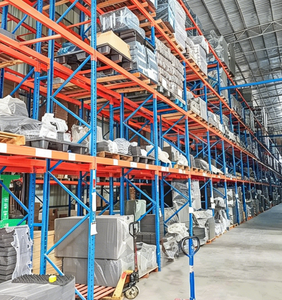
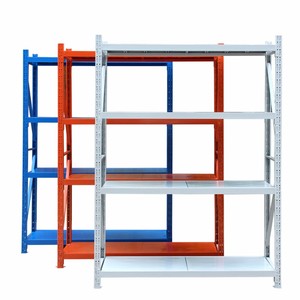
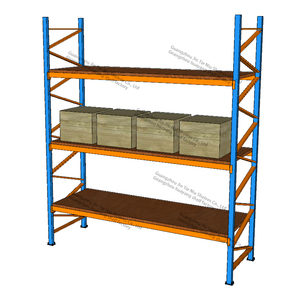
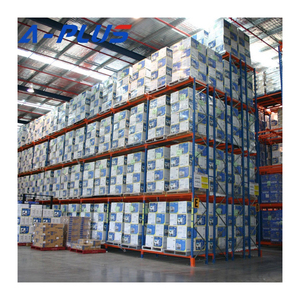
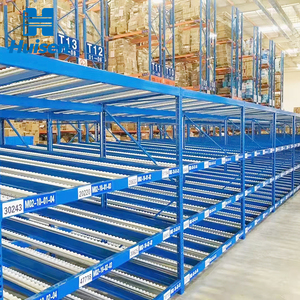
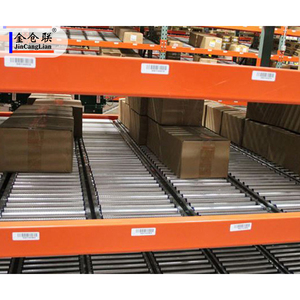
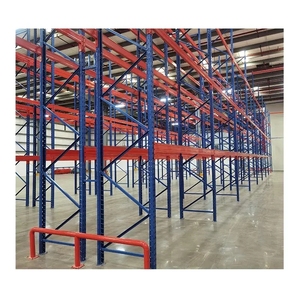
Structural Optimization & Load-Bearing Engineering Matrix
In modern supply chain infrastructures, specifying an industrial racking system goes far beyond standard catalog dimensions. Storage infrastructure must reconcile warehouse geometric clear heights, floor slab geotechnical bearing values, mechanical forklift aisle configurations, and seismic ground acceleration coefficients. As an established OEM/ODM warehouse racking manufacturer and factory direct exporter, our engineering protocol implements rigorous mechanical design standards including European FEM 10.2.02, British SEMA, and American RMI MH16.1 specifications.
Warehouse racking columns are fabricated from high-grade structural carbon steel coils (Q235B and high-yield Q355B). The physical geometry of our uprights utilizes multi-bend cold-formed profiles—predominantly the multi-faceted Omega section—which dramatically increases the moment of inertia ($I_x, I_y$) and radius of gyration, counteracting axial compression buckling without incurring unnecessary gross steel tonnage. The table below delineates the baseline engineering parameters utilized across our global OEM/ODM storage installations.
| Racking Topology | Typical Payload / Level | Aisle Clear Width (AST) | Floor Space Utilization | Stock Access Dynamic | Primary Sector Application |
|---|---|---|---|---|---|
| Selective Pallet Racking | 1,000 kg – 4,500 kg | 3,000 mm – 3,600 mm (Counterbalance) | 40% – 45% Volume | 100% Direct Immediate Access | FMCG, Multi-SKU E-Commerce, 3PL Warehousing |
| Double Deep Systems | 1,000 kg – 3,000 kg | 2,800 mm – 3,200 mm (Deep Reach) | 55% – 65% Volume | 50% Direct Access (FILO / LIFO) | Cold Storage, Dry Grocery, Manufacturing Buffer |
| Drive-In / Drive-Through | 800 kg – 1,500 kg / pallet | Forklift Drives into Lane Rails | 70% – 75% Volume | Last-In, First-Out (LIFO) | Beverage, Homogeneous Goods, Seasonal Raw Bulk |
| Radio Shuttle Automation | 500 kg – 2,000 kg / pallet | Transverse Main Loading Aisle | 80% – 85% Volume | Configurable FIFO or LIFO | Deep Freeze Rooms, Pharmaceutical Distribution |
| Live Pallet Gravity Flow | 500 kg – 1,500 kg / pallet | Dedicated Infeed & Dedicated Picking | 75% – 80% Volume | Strict First-In, First-Out (FIFO) | Dairy, Perishable Food, High-Velocity Cross Dock |
| Heavy Duty Cantilever | 500 kg – 3,000 kg / arm | Variable / Sideloaders / Guide Rail | Customized Linear Storage | 100% Direct Face Access | Structural Steel, PVC Pipes, Timber, Rebar Bundles |
For beam-to-column connections, our structural configurations utilize cold-punched multi-tooth claw connectors integrated with automatic interlocking spring steel safety pins. Under severe forklift impact conditions, these lock mechanisms resist upward dynamic dislodgement force exceeding 5,000 N per hook, fully satisfying industrial occupational health and safety benchmarks across Europe, the Middle East, and North America.
Why Enterprise Procurement Directs to HEDA Shelves
Founded in 2001, Guangzhou Heda Shelves Co., Ltd. operates an integrated, high-capacity industrial production footprint encompassing 30,000 square meters of modern manufacturing plant with a sustained output exceeding 30,000 metric tons per month. Supported by an in-house engineering team of more than 300 technical specialists, our OEM and ODM services manage the full lifecycle from structural finite element analysis (FEA) to turnkey container packing.
Over a quarter-century refining continuous roll-forming tolerances, structural calculations, and bespoke warehouse layout architecture for international clients.
Comprehensive CAD spatial schematics, seismic flue clearances, and high-fidelity 3D renderings supplied prior to purchase order placement for faster stakeholder signoff.
Complete tailor-made customization of upright cross-sections, step-beam gauges, custom RAL powder pigments, wire mesh decks, and integrated brand roll-marking.
Independently certified CE compliance (No. 2435-CPR-8605159), ISO 9001:2015 Quality Management (No. 18624Q00169R0M), and non-toxic RoHS surface compliance.
Our Closed-Loop 10-Step Quality Control Manufacturing Protocol
Every structural member manufactured in our facility undergoes an uncompromising ten-stage quality assurance protocol before overseas loading:
Strict metallurgical spectrometer verification and tensile elongation testing for certified prime Q235B and Q355B coils.
Computer-controlled longitudinal coil slitting and automated precision shear sizing with linear tolerances held within ±0.5 mm.
Continuous CNC multi-punch presses generate 50mm/75mm pitch diamond, teardrop, or butterfly slot patterns with high repeatability.
Progressive cold mechanical press-braking ensures complex edge stiffening and precise angular flange contours.
Dedicated 24-station automated rolling line gradually forms box and interlocking beam profiles without residual internal stress.
Robotic shielded gas arc welders fabricate beam end connectors with continuous, uniform weld beads and zero undercut defect.
Automated shot-blasting and mechanical rotary polish remove thermal scale, sharp slag, and spatter prior to chemical treatment.
Immersion acid pickling followed by microcrystalline zinc phosphating chemically etches the steel for high powder coating adhesion.
Multi-gun automatic powder coating chamber cures pure polyester powder at 200°C, delivering a 60–90 μm corrosion-resistant coat.
Final QC inspects film thickness, cross-hatch adhesion, and weld integrity. Structural uprights are nested into timber cradles, interleaved with protective polyethylene sheeting, and strapped with heavy tensile steel bands. Every bundle is tagged with barcoded QR serial numbers cross-referenced to installation blueprints, facilitating accelerated on-site unloading across global ports including Jebel Ali, Jeddah, Dammam, Rotterdam, and Long Beach.
Future Warehouse Racking Procurement Trends: 2026–2032
Procurement directors and supply chain engineers are navigating profound structural shifts driven by escalating urban land values, rapid automated material handling (AMH) adoption, and strict Scope 3 industrial carbon auditing. Sourcing warehouse racking from an OEM/ODM manufacturer requires balancing today's immediate CAPEX with tomorrow's operational modularity:
Transitioning from conventional manual aisles toward crane-based automated storage and retrieval systems (AS/RS) and AMR robotic racking. Racks demand ultra-stringent fabrication tolerances (±1.0 mm cumulative over 30m vertical height) to enable autonomous shuttles to operate without optical alignment failures.
Global enterprises and institutional 3PL operators increasingly mandate Environmental Product Declarations (EPD). Future procurement is heavily rewarding manufacturers utilizing electric arc furnace (EAF) low-carbon steel, heavy metals-free TGIC powder coatings, and recyclable zero-emission closed-loop chemical washings.
High-density vertical expansion using rack-supported mezzanine flooring and dynamic pick towers. By converting vertical airspace into multi-level manual order picking stations, operators multiply cubic utilization up to 300% without acquiring costly additional real estate footprints.
Furthermore, seismic resilience has shifted from an occasional geographical requirement into an essential baseline parameter. Driven by updated building standards in the Middle East, Southeast Asia, and the Americas, our factory integrates non-linear dynamic time-history structural simulations into the early engineering design phase, optimizing bracing geometries, column base plates, and chemical anchor bolt embedment depths to ensure maximum life safety under severe ground motion.
Frequently Asked Technical Procurement Questions
Key technical, logistical, and compliance considerations addressed directly by our structural engineering division for industrial procurement teams.
Under international standards (including FEM 10.2.02 and EN 15512), the maximum vertical deflection limit of a loaded rack beam must not exceed L/200 (where L is the clear span distance between upright columns). For sensitive automated AS/RS installations, our engineering team designs to a more stringent threshold of L/300 to prevent automated crane optical sensor errors.
For harsh regions such as the Gulf (UAE, Saudi Arabia) or tropical coastal corridors, standard painted steel rapidly deteriorates. Our factory applies a full pickling and phosphating chemical immersion pretreatment prior to applying epoxy-polyester architectural powder coating (60–90 μm). For external yard storage or wet wash-down bays, we supply full continuous hot-dip galvanizing conforming to ISO 1461 with minimum 65 μm zinc thickness.
Yes. Every custom OEM/ODM racking layout is accompanied by comprehensive 2D CAD layouts, 3D renderings, and detailed finite element calculation reports. Our documentation clearly specifies frame axial capacity, seismic base shear, aisle flue clearances, and anchor pull-out loads, facilitating immediate review by municipal bodies such as Civil Defense, OSHA inspectors, and insurance underwriters.
For standard selective pallet racking systems ranging from 5 to 20 full container loads (40ft HQ), production time is typically 15 to 25 working days from final approved engineering drawings. Complex automated shuttle systems, mezzanines with custom steel grating, or specialized cold-room racks generally require 25 to 35 working days depending on component complexity.
All upright frames and beams are nested into timber cradles with dense bubble film, corrugated corner protectors, and heavy composite strapping. Steel-to-steel contact is insulated using non-abrasive PE foam sheeting. Load plans are simulated in 3D prior to loading to evenly balance container weight distribution and maximize 40HQ volumetric capacity without damaging roll-formed edges.
To generate an optimized turnkey proposal within 24–48 hours, our engineers require: (1) Architectural CAD floor plan showing building column grids, door openings, and unobstructed height under roof truss; (2) Pallet dimensions (Length × Width × Overall Stored Height including goods); (3) Maximum gross weight per pallet; and (4) Forklift model, turning radius, and maximum reach height.