Featured Industrial Pallet Racking & Storage Units
Explore core structural steel pallet racking systems deployed in high-density distribution hubs, 3PL logistics facilities, and manufacturing staging centers worldwide.
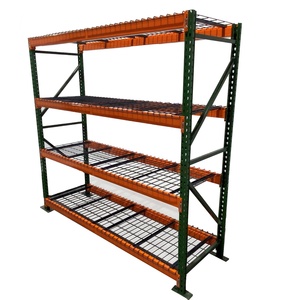
2026 Warehouse Storage USA Teardrop Pallet Racking
North American teardrop hole pitch standard with toolless beam pin locks, high-yield welded baseplates, and seismic-rated column sections.
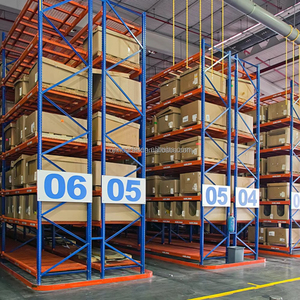
Industrial Commercial Shelving Warehouse Heavy Duty Racking Very Narrow Aisle Racking
Engineered for turret trucks and wire-guided floor circuits, delivering up to 15-meter vertical elevation and tight aisle clearances.
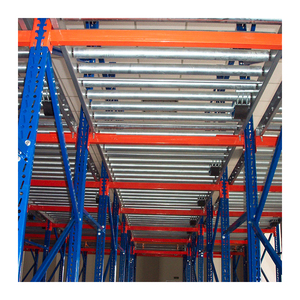
Pallet Flow Rack High Quality Fifo Warehouse Storage Racks Gravity Pallet Flow Racking
Full-depth gravity roller bed lanes equipped with centrifugal speed controllers, automatic separation separators, and heavy-duty entry guides.
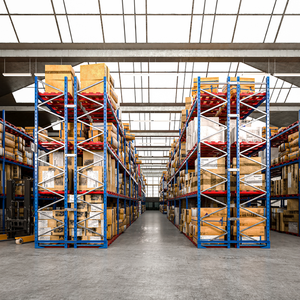
Steel Rack System Heavy Duty Pallet Racking 4000kg Warehouse Storage Rack System
Reinforced box beams with five-hook connector brackets, engineered specifically to resist extreme cyclic fatigue under heavy pallet staging.
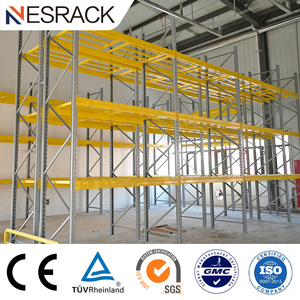
Custom 5Layer Adjustable Heavy Duty Pallet Racking Selective Pallet Racking Shelving
100% selective accessibility featuring adjustable 50mm/75mm slot patterns, electrostatic epoxy coating, and safety locking clips.
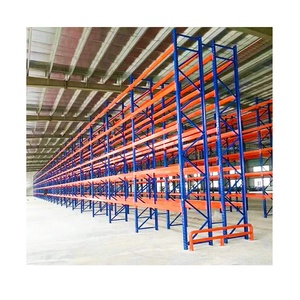
Certificated Warehouse Racking Long Span Garage Shelving Unit Durable Heavy Duty Shelf
Medium-to-heavy manual loading configuration with drop-in steel or timber decks, ideal for carton pick operations and industrial maintenance bays.
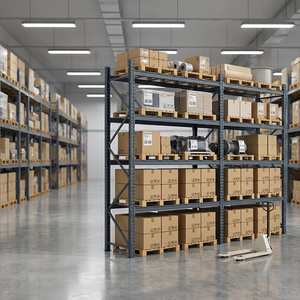
Industrial Storage Warehouse Pallet Racking Multi-Level Boltless Shelves
Rapid-assembly boltless upright frames with cross-bracing geometry, designed for flexible modular adaptation in e-commerce fulfillment centers.
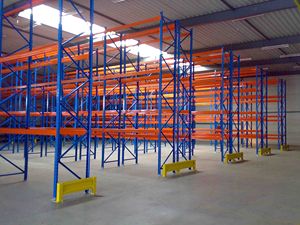
Heavy Duty Pallet Racking System Adjustable Warehouse Shelving for Industrial Logistics
Heavy-duty roll-formed profile designed for cold chain and harsh industrial atmospheres with pickling and phosphating surface passivations.
The Mechanics of Double Deep Racking: Engineering, Space Economics, & Kinematics
Double deep pallet racking represents an optimal midpoint along the continuum between single-selective flexibility and ultra-dense bulk storage systems (such as drive-in or automated shuttle racking). By placing two pallet positions back-to-back along every aisle face, double deep racking reduces overall working aisle count by up to 50%, elevating warehouse volumetric floor space utilization from 40% (characteristic of traditional selective layouts) to 60–65%. However, achieving this density introduces distinct structural dynamics, material handling constraints, and material fatigue parameters that procurement directors and logistics engineers must address.
Core Kinematic Principle: Double deep storage requires specialized material handling equipment—specifically pantograph-reach trucks or telescopic deep-reach forklifts. As the forklift reach mechanism extends into the second pallet depth, horizontal cantilever deflection increases exponentially, necessitating rigid rack tolerances, enlarged beam-to-column locking pins, and derated pallet weight capacities at higher elevations.
Structural Anatomy and Load Distribution Factors
Unlike single-selective bays where pallets sit directly atop paired front and rear load beams, double deep configurations require precise aisle design. Upright frames range from 1,000mm to 1,100mm in depth, tied rigidly with structural back-to-back row spacers ranging from 200mm to 300mm to accommodate pallet overhang while maintaining NFPA 13 longitudinal flue space standards.
From a metallurgical perspective, upright columns must be cold-formed from high-yield structural steels—predominantly Q235B and Q355B (or ASTM A1011 SS Grade 50 in North American facilities). Because drivers operate with limited direct line of sight when depositing the secondary (deep) pallet at elevations above 6 meters, lower upright sections are subject to recurrent accidental impact. Advanced installations incorporate heavy-gauge steel column protectors, welded reinforcement shoes, and full-length pallet entry guide rails along bottom tier levels to protect structural integrity.
Comparative Technical Matrix: Storage System Topologies
| Storage Topology | Space Utilization | SKU Selectivity | Equipment Requirement | Inventory Discipline | Capital Investment |
|---|---|---|---|---|---|
| Double Deep Racking | 60% – 65% | 50% Immediate Access | Deep-Reach / Pantograph Truck | FILO (First-In, Last-Out) | Moderate (High ROI) |
| Standard Selective | 35% – 42% | 100% Immediate Access | Standard Counterbalance / Reach | FIFO / FILO Flexible | Low Initial Base |
| Drive-In / Drive-Through | 70% – 75% | 10% – 15% Selectivity | Standard Counterbalance | Strict FILO (Drive-In) | Moderate |
| Radio Shuttle System | 80% – 85% | Lane Dependent | Standard Lift + AGV Shuttles | Programmable FIFO / FILO | High (Automation CapEx) |
| VNA (Very Narrow Aisle) | 55% – 60% | 100% Immediate Access | Man-Up / Turret Truck + Rails | FIFO / FILO Flexible | High (Precision Slabs) |
Top 10 Double Deep Racking System Manufacturers (2026-2027)
An independent engineering evaluation of the global manufacturers leading industrial storage fabrication, structural compliance, cold-roll precision, and international project delivery.
HEDA Shelves
Guangzhou, China (Exporting to 120+ Countries)- Plant Scale: 30,000 m² In-House Factory
- Monthly Output: 30,000 Tons Steel Processing
- Certifications: CE, ISO 9001:2015, RoHS
- Core Steel: Q235B / Q355B Hot-Rolled Strip
- Design Service: Free CAD & 3D Static Simulations
Established in 2001, Guangzhou Heda Shelves Co., Ltd. has delivered over 10,000 global projects. Renowned for custom heavy-duty double deep engineering, fully automated pickling and phosphating lines, and direct factory container exports tailored to North America, Europe, Australia, and the GCC region.
Mecalux, S.A.
Barcelona, Spain / Global Operations- Core Strengths: Automated Logistics & WMS
- Steel Standards: EN 15512 European Compliance
- Distribution: Extensive Americas & EMEA Presence
- Focus: Large-Scale High Bay Integrated Racks
A multinational powerhouse offering high-precision European profile uprights and proprietary Easy WMS integration. Well-suited for enterprises requiring comprehensive automated stacker crane integrations alongside deep-reach systems.
SSI SCHAEFER
Neunkirchen, Germany- Engineering Focus: Heavy-Duty System Architecture
- Tolerances: Ultra-Tight Precision Cold-Rolling
- Global Presence: 70+ Operating Subsidiaries
- Application: High-Volume FMCG Distribution
Synonymous with German engineering quality, SSI Schaefer manufactures double deep pallet racks engineered to withstand severe seismic and heavy dynamic stresses, backed by expansive global engineering consulting.
Stow Group
Spiere-Helkijn, Belgium- Manufacturing: 10 Dedicated European Facilities
- Product Line: Pallet Racks & Stow Atlas Shuttles
- Steel Metallurgy: Optimized High-Yield Micro-Alloys
- Design Codes: FEM 10.2.02 Structural Norms
One of the largest racking manufacturers in Europe, Stow provides standardized, highly robust double deep systems with quick-locking connectors, recognized across cold-storage and pharmaceutical supply chains.
Jungheinrich AG
Hamburg, Germany- Synergy: Forklift Truck & Rack Integration
- Reach Systems: Optimized for ETV 3-Series Pantographs
- Market Footprint: Pan-European & Asian Operations
- Standard: ISO 14001, DIN EN 15635
Jungheinrich offers a distinct advantage by designing racking systems in tandem with their specialized deep-reach pantograph forklifts, ensuring harmonic clearance calculations between mast structures and beam faces.
Dexion (Gonvarri Material Handling)
Swindon, UK / Madrid, Spain- Heritage: Pioneers of Slotted Angle & Beam Racks
- Standards: SEMA (UK) & FEM Compliance
- Corrosion Tech: Continuous Galvanized Uprights
- Sectors: Automotive & Industrial Logistics
Operating under Gonvarri Material Handling, Dexion provides proven structural designs with heavy-section profile steels, frequently deployed across demanding European industrial manufacturing distribution yards.
Frazier Industrial Company
Long Valley, New Jersey, USA- Design Philosophy: 100% Structural Steel (Hot-Rolled C-Channel)
- Impact Resistance: Superior Abuse Endurance vs Roll-Formed
- Standards: RMI (Rack Manufacturers Institute) / AISC
- Specialty: Extreme Heavy Duty & Freezer Warehousing
Frazier specializes in structural channel double deep racking. While commanding a higher price point than roll-formed variants, their structural steel frames provide unyielding impact resistance in high-throughput American cold stores.
Daifuku Co., Ltd.
Osaka, Japan- Core Sector: Automated Material Handling Systems (AMHS)
- Seismic Design: Advanced Dynamic Vibration Dampening
- Integration: AS/RS Deep Double High Bay Racking
- Market: Electronics, Automotive, Cold Distribution
The global leader in material handling systems by revenue, Daifuku specializes in ultra-tall double deep automated rack-supported buildings designed to withstand major earthquake scenarios using proprietary Japanese seismic dampers.
Hannibal Industries (Nucor Corp.)
Los Angeles, California, USA- Parent Entity: Backed by Nucor Steel Supply Chain
- Patent Tech: TubeRack Dual-Moment Seismic Resistance
- Applications: High Seismic Seismic Zones (West Coast USA)
- Standard: ANSI MH16.1 Certified
Now part of Nucor Corporation, Hannibal Industries manufactures the patented TubeRack system, providing modular tubular double deep configurations that dramatically lower seismic stress concentrations on base slab anchors.
Redirack (Aperam Group)
Rotherham, South Yorkshire, UK- Signature Feature: Proprietary 6-Hook Cold-Formed Socket Joint
- Rigidity: Exceptional Torsional Beam Strength
- Service Life: Heavy Gauge Galvanized Bases & Frames
- Compliance: SEMA & UK Health and Safety Guidelines
Redirack's distinctive welded socket and hook design eliminates beam rotation and bolt loosening under repeated pantograph placement cycles, making it a staple brand for 3PL providers across the United Kingdom.
Emerging Procurement & Engineering Trends (2026–2030)
Procurement teams are shifting from transactional steel purchasing to integrated lifecycle evaluations. Key structural, technological, and sustainability trends are reshaping specifications globally.
1. AGV & Automated Reach Integration
Warehouses are transitioning from manual pantograph forklifts to autonomous deep-reach AGVs guided by LiDAR and SLAM technologies. This demands tighter manufacturing tolerances: beam deflection allowances are tightening from 1/180th span to 1/300th span to prevent sensor faults during deep pallet engagement.
2. Cold-Chain Energy Optimization
Refrigerated space incurs up to 4× the operating expense of ambient space. Modern frozen logistics hubs in the Middle East and North America specify double deep racking to eliminate unnecessary chilled air volumes, pairing systems with specialized sub-zero powder coatings that resist embrittlement at -28°C.
3. High-Tensile Micro-Alloy Steels
The adoption of Q355B and thermo-mechanically rolled high-strength steels allows manufacturers to achieve equal or superior load capacity while trimming profile gauge thickness by 10–14%. This materially decreases freight weight and embodied carbon per pallet position.
4. Advanced Anti-Corrosion Pretreatments
Traditional dry powder coating over raw mill scale is obsolete. Sourcing standards now mandate a rigorous 9-stage pickling and phosphating wash followed by thermosetting polyester powder coating, ensuring racks withstand salty coastal air (e.g., Jebel Ali, Jeddah, Long Beach) without sub-film oxidation.
Inside HEDA Shelves: 10-Step High-Precision Fabrication Workflow
Full in-house control over roll-forming, punching, welding, and surface finishing guarantees end-to-end quality assurance across every batch dispatched from our 30,000 m² facility.
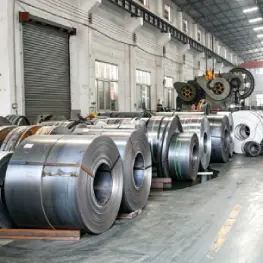
Raw Materials Lab QA
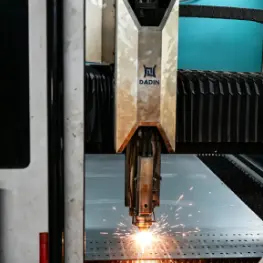
CNC Precision Slitting
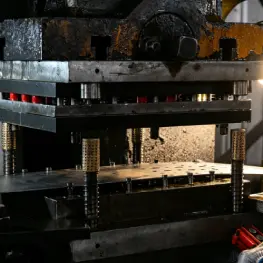
Auto Column Punching
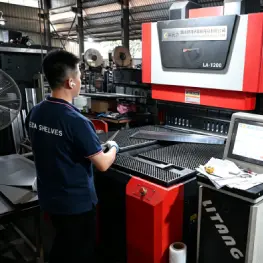
Cold Bending Forming
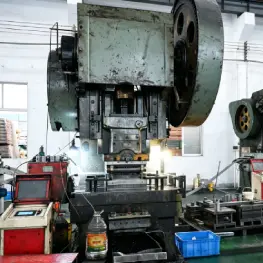
Continuous Roll Forming
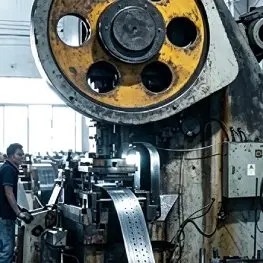
Mechanical Polishing
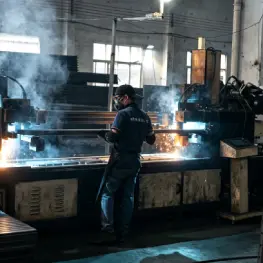
Robotic Beam Welding
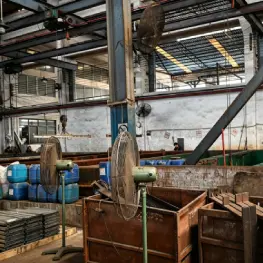
Pickling & Phosphating
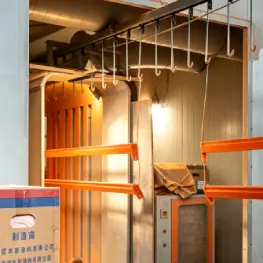
Electrostatic Coating
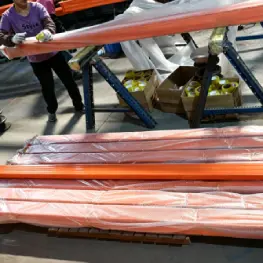
Container Packing QA
Proven International Turnkey Engineering
Examining delivered installations showcasing heavy structural load capacity, multi-tier mezzanine integration, and customized steel engineering across distinct operating sectors.
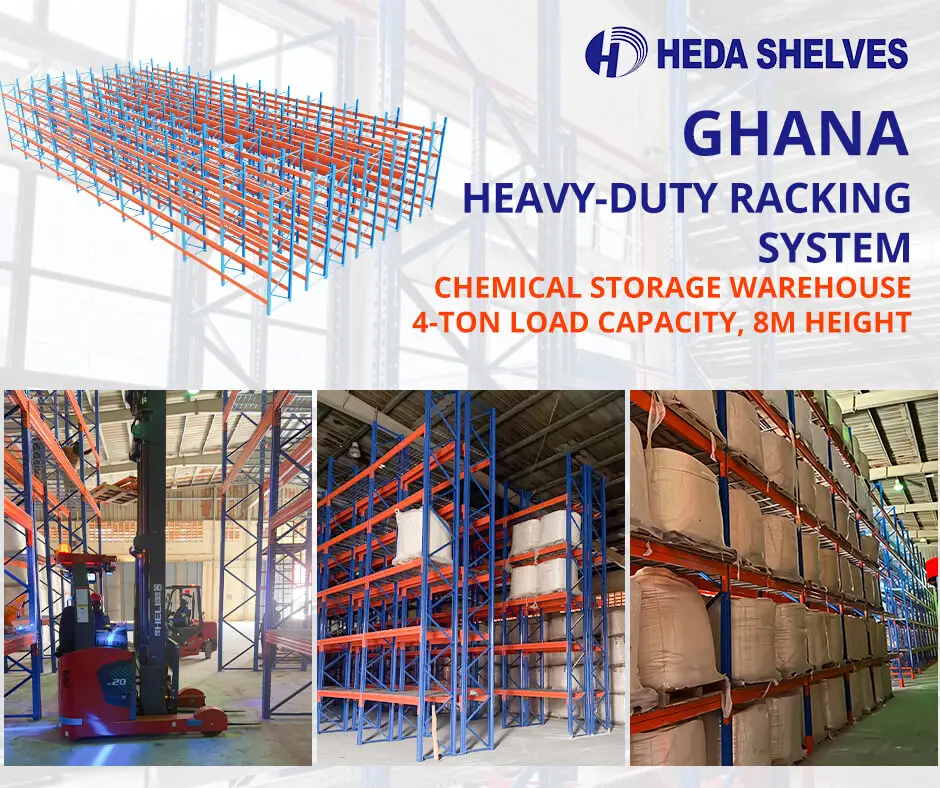 Chemical Logistics
Heavy-Duty Racking for Chemical Facility
Ghana · 2,800 Pallet Positions · High humidity anti-corrosion coating paired with heavy-duty wire decking for hazmat container storage.
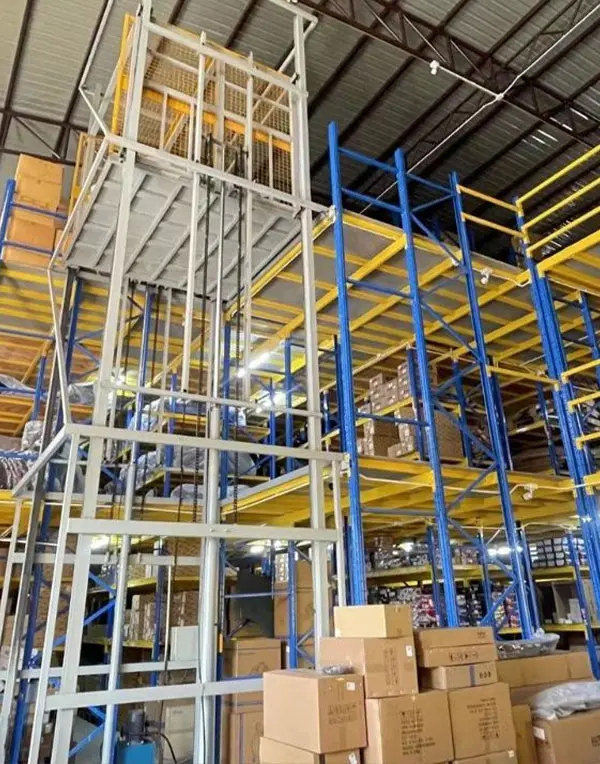
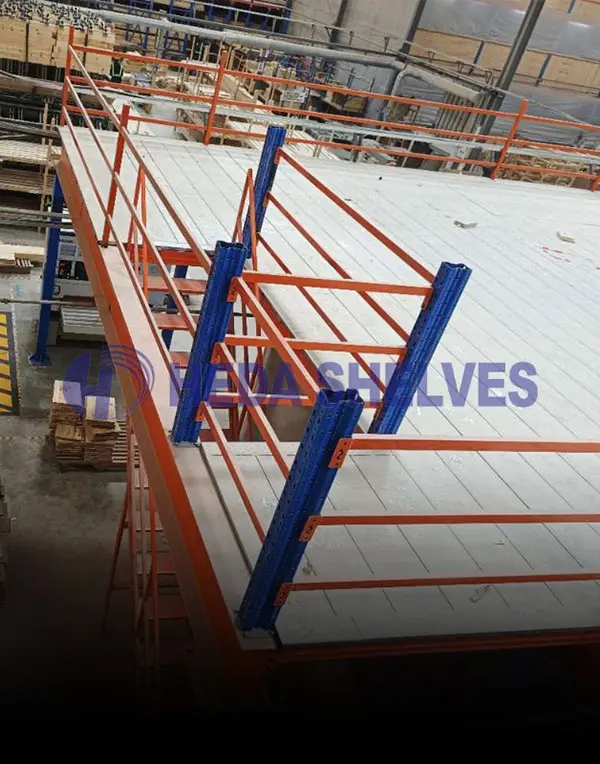 E-Commerce FMCG
Rack-Supported High Bay Mezzanine
Kenya · Multi-Tier Manual Picking · Structural steel columns supporting integrated second-level catwalk decking and drop-gate zones.
 Automotive Logistics
Multi-Level Auto Parts Distribution Center
Thailand · Specialized Longspan + Pallet Storage · Engineered specifically for varied SKU weight classes and high-turnover dispatch bays.
Frequently Asked Questions: Double Deep Engineering & Sourcing
Direct technical answers to the most common inquiries raised by warehouse operations heads, civil engineers, and supply chain directors.
Double deep racking strictly requires a deep-reach reach truck equipped with either a pantograph scissor-reach mechanism or telescopic extending forks. Crucially, forklift mast capacity derates as the mechanism extends forward into the second pallet position. For example, a reach truck rated for 2,000 kg at the front position often de-rates to 1,200 kg – 1,400 kg at the deep position. Engineers must design rack capacity around derated reach loads.
Because double deep uprights carry two pallets of depth per column face, concentrated point loads transmitted through the baseplate are approximately 25–35% higher than in selective configurations. Warehouses generally require an industrial reinforced concrete floor slab with a minimum thickness of 180mm–250mm, compressive strength of C25/30 or C30/37, and a minimum point load bearing capacity exceeding 60 to 90 kN per baseplate.
NFPA 13 mandates clear vertical openings known as longitudinal flues (between back-to-back rows) and transverse flues (between pallets along the beam). In double deep systems, structural row spacers must be precisely calculated (typically 250mm to 300mm) so that standard pallet overhang (typically 50mm front and rear) leaves a compliant, unimpeded 150mm vertical longitudinal flue space for in-rack sprinkler or ESFR ceiling penetration.
Under European FEM 10.2.02 and EN 15512 codes, vertical deflection of load beams under full static design load must not exceed L/200 (where L is the clear span distance between uprights). For North American projects under RMI ANSI MH16.1, the limit is strictly L/180. For double deep operations utilizing automated guidance or camera-assisted pantographs, specifying a tighter deflection threshold of L/250 prevents misaligned pallet engagement.
Double deep operates on a FILO (First-In, Last-Out) discipline per individual storage bay level. As a result, it is best suited for SKUs with moderate to high turnover where stock is batched in lots of 2, 4, or more identical pallets. For operations with single-pallet unique SKUs or strict FIFO date control (such as short shelf-life pharmaceuticals), selective racking or pallet flow gravity racking is technically superior.
For ambient warehouses in humid coastal areas (e.g., Dubai, Dammam, Miami), steel components require chemical immersion pickling (to strip scale) followed by zinc phosphate pre-treatment and electrostatic application of TGIC-free epoxy-polyester powder coating (cured at 180°C–200°C, 60–80 micron thickness). Outdoor yards or wet processing cold rooms necessitate hot-dip galvanization to EN ISO 1461 standards.
Request an Engineered 2D/3D Double Deep Layout Design
Optimize your warehouse storage capacity before procuring. Send your architectural floor plan, clear ceiling heights, and pallet load specs to our engineering team for a free structural calculation, CAD layout, and direct factory quotation.