Precision Heavy-Duty Racking & Dynamic Storage Systems
Engineered strictly in compliance with ISO 9001:2015, CE EN 15512, and RMI standards. Each industrial configuration is designed for maximum structural load bearing, volumetric warehouse efficiency, and operational safety.
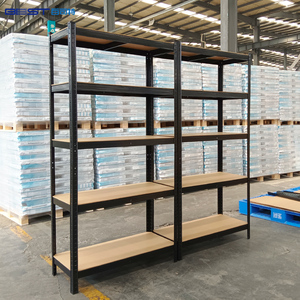
Powder-coated Stainless Steel Warehouse Shelves Detachable Upright Garage Shelves Heavy Duty Shelving for Garage Warehouse
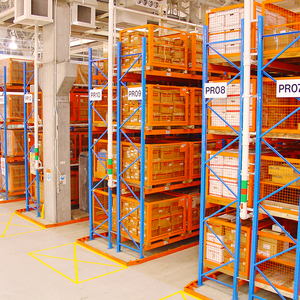
Customized OEM ODM Heavy Duty Steel Warehouse Storage Rack Shelves Factory Warehouse Narrow Aisle Rack Shelving
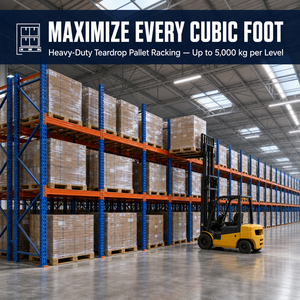
Large Scale E-Commerce Logistics Warehouse Pallet Racking System Customized High Load Industrial Conventional Heavy Duty Rack
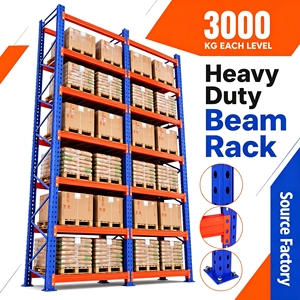
Factory Direct 3000kg High Load Metal Pallet Racking Industrial Steel Pallet Rack System for Warehouse Storage Heavy Goods
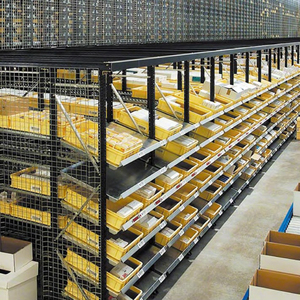
Gravity Flow Carton Flow Rack for Warehouse FIFO Storage System
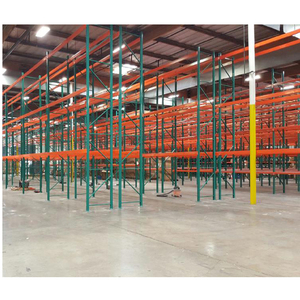
American Type Teardrop Pallet Racking Heavy Duty Steel Racking Shelves Pallet Racks Industrial Warehouse Storage
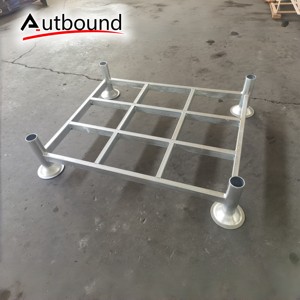
Heavy Duty Q235 Steel Post Pallet Stackable High Capacity Warehouse Storage Racks Shelves For Cargo Handling Logistics Storage
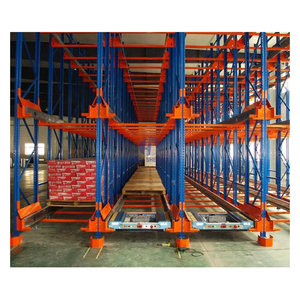
Customized Used High Quality Steel Heavy Duty Automatic Storage System Shuttle Pallet Rack for Warehouse
The Strategic Imperative of Flow Through (Gravity Live Storage) Pallet Racking Systems
Modern distribution centres, FMCG distribution complexes, and automated temperature-controlled facilities operate under unforgiving operational constraints: escalating real estate leasing rates, compressed turnaround delivery SLAs, soaring industrial energy costs, and stringent batch traceability obligations. Among high-density dynamic storage topologies, Flow Through Pallet Racking—also internationally denominated as Gravity Flow Racking, Pallet Live Storage (PLS), or FIFO Roller Racking—remains the pinnacle of zero-energy, purely mechanical dynamic material handling.
Operating entirely upon a physics-governed inclined roller wheel bed system (calibrated between 2.5° and 3.5° gradient pitch), pallets loaded at the rear replenishment charging aisle glide gracefully under gravity downward toward the front picking discharge face. This structural geometry creates an immutable First-In, First-Out (FIFO) inventory sequence. Crucially, it isolates charging lift-truck traffic completely from the retrieval face, reducing internal cross-aisle travel by up to 42%, slashing forklift diesel and battery charging consumption, and virtually eliminating forklift-to-frame collision incidents.
Zero Operating Energy Cost
Unlike powered automated storage or vertical carousels, gravity flow utilizes gravitational potential energy. There are no motors, cables, batteries, or software control panels required along the roller tracks.
Strict FIFO Batch Assurance
Indispensable for pharmaceutical distribution, fresh produce cold rooms, meat and poultry freezers, dairy hubs, and chemical products with definitive expiration thresholds.
60%+ Floor Space Conservation
By eliminating redundant working aisles between individual storage rows, flow-through pallet racking achieves volumetric utilization densities comparable only to Drive-In or Shuttle systems.
Top 10 Flow Through Pallet Racking Factories & Global Suppliers (2026 Evaluation)
When selecting a qualified manufacturing partner for flow through pallet racking systems, engineering teams must evaluate structural steel grade integrity (e.g., Q235B vs Q355B vs ASTM A36), cold-roll forming precision, roller bed bearing metallurgy, centrifugal brake reliability, and direct factory customizability. Below is the authoritative evaluation of the leading ten industrial racking manufacturers globally providing high-precision gravity live storage solutions.
Factory Headquarters: Guangzhou, China | Facility Area: 30,000 m² | Monthly Capacity: 30,000 Tons.
Founded in 2001, HEDA Shelves stands as the premier factory-direct manufacturer of heavy-duty flow through pallet racking, radio shuttle systems, and multi-tier mezzanines. Holding CE (No. 2435-CPR-8605159), ISO 9001:2015, and RoHS certifications, HEDA provides complete in-house roll forming, robotic welding, 10-step pickling-phosphating surface pretreatment, and electrostatic powder coating. Renowned for delivering free comprehensive 3D layout renderings, structural calculation sheets, and customized climatic resilience (engineered for extreme ambient heat up to 50°C and coastal humidity across GCC, Europe, and Southeast Asia) with containerized direct export shipping to 120+ countries.
Headquarters: Neunkirchen, Germany.
A global giant in automated intralogistics and static/dynamic storage racking. SSI Schaefer manufactures high-end live storage roller tracks engineered with proprietary speed controllers and heavy-duty steel profiles. Frequently specified in multi-million dollar European megaprojects and integrated with automated cranes.
Headquarters: Barcelona, Spain.
Operating extensively across Europe and the Americas, Mecalux provides pallet live racking systems compliant with EN standards. Their gravity solutions feature split-roller beds for wooden and plastic pallets, equipped with mechanical pallet separators for safe order retrieval.
Headquarters: Meisenheim, Germany.
BITO is celebrated for precision engineering in piece-picking carton flow lanes and pallet live storage. Their roller tracks incorporate specialized polyamide and steel rollers engineered for whisper-quiet travel and high longevity in cold environments.
Headquarters: Swindon, United Kingdom.
With an enduring lineage in industrial shelving and slotted angle systems, Dexion supplies heavy-duty pallet flow beds across EMEA. Their modular roller configurations accommodate Euro and industrial pallets with integrated end-stops and column protection.
Headquarters: Chicago, Illinois, USA.
The North American manufacturing arm producing roll-formed and structural steel pallet flow racks adhering to RMI (Rack Manufacturers Institute) and ANSI MH16.1 specifications, widely used in US food and automotive supply chains.
Headquarters: Dottignies, Belgium.
Stow manufactures standardized and bespoke pallet racking systems with high automated production capabilities. Their pallet flow lanes feature ergonomic load-relief separators and robust upright frames suited for fast cross-docking operations.
Headquarters: Huntington Beach, California, USA.
Advance is an established American specialist in deep-lane structural steel flow systems, offering deep-lane pallet flow beds up to 25 pallets deep equipped with heavy structural channel steel for high-impact distribution centres.
Headquarters: Long Valley, New Jersey, USA.
The largest producer of 100% structural hot-rolled channel steel storage racks in North America. Their gravity flow racks are engineered to withstand severe forklift abuse in heavy manufacturing, beverage, and refrigerated distribution yards.
Headquarters: Hamburg, Germany.
Beyond warehouse electric reach trucks and narrow-aisle stackers, Jungheinrich engineers and installs comprehensive dynamic flow racking systems, guaranteeing kinematic compatibility between material handling equipment and gravity beds.
Kinematic Anatomy of a Heavy-Duty Flow Through Pallet Rack Bed
A high-performance pallet live storage channel is an intricate assembly of calibrated mechanical sub-systems. Unlike static beam racks where static deflection limits (such as L/200 or L/250 under EN 15512) dictate design, flow-through channels involve dynamic kinetic friction, roll resistance, acceleration dampening, and hydraulic energy absorption.
| Sub-System Component | Engineering Specification | Functional Mechanics & Safety Contribution | Material & Finishing |
|---|---|---|---|
| Galvanized Gravity Rollers | Ø50mm to Ø76mm diameter; up to 350kg/roller dynamic capacity | Transfers gravitational force to continuous rotational motion; spaced according to bottom runner pallet configuration. | High-grade seamless steel tube; electrolytic zinc plating. |
| Centrifugal Brake Rollers | Internal gear-driven planetary centrifugal friction shoe | Governs terminal velocity, capping pallet gliding speed at 0.25 to 0.30 m/sec regardless of pallet gross weight. | Heavy cast casing, wear-resistant internal brake linings. |
| Back-Pressure Safety Separator | Spring-loaded mechanical pedal or pneumatic trip lever | Isolates the front picking pallet from the queue line behind it, removing hydraulic rear line-pressure on the forklift tines. | Hardened steel linkage with high-cycle spring assemblies. |
| Incline Pitch Slope (Gradient) | 2.8% to 3.5% (approx. 1:30 to 1:35 drop ratio) | Ensures reliable self-starting roll movement even after extended static storage dwell times without runaway velocity. | Precision punched beam connectors with adjustable bracket heights. |
| Heavy-Duty End Stop & Guides | Reinforced 5mm-8mm curved steel bumper with rubber dampeners | Arrests the lead pallet squarely at the picking interface; absorbs residual kinetic energy without fracturing wood runners. | High-visibility electrostatic powder coat (RAL 2004 Pure Orange). |
Future Procurement & Technology Trends in Flow Racking (2026–2030)
The global warehousing landscape is evolving rapidly under geopolitical realignments, the nearshoring of pharmaceutical production, and massive cold chain infrastructure investments across the GCC, North America, and Western Europe. Sourcing directors and warehouse planners should anticipate five primary technological and commercial trajectories over the next decade:
1. Cold Chain Hyper-Density
Given that refrigerating warehouse air costs up to 7× more per cubic metre than ambient space, the cold storage sector is transitioning aggressively from drive-in to deep-lane gravity flow and hybrid shuttle flow to eliminate thermal chimney effects.
2. Climatic Anti-Corrosion Coatings
Global procurement teams now specify ISO 12944 standard C4 and C5 environmental corrosion classifications. Pretreatment phosphating and multi-stage thermoplastic powder coatings are imperative to resist coastal saline air and temperature extremes.
3. Telemetric Roller Monitoring
Next-generation pallet flow beds are piloting embedded passive RFID and piezoelectric speed controllers capable of relaying brake roller rpm and wear metrics to warehouse management systems (WMS) for predictive maintenance.
4. Direct-From-Factory Supply Chains
Corporate supply chains are increasingly circumventing local retail brokers to contract directly with premier OEM producers like HEDA Shelves. Direct factory communication ensures customized structural engineering calculations and saves 20% to 35% in landed capital expenditure.
5. Decarbonized Steel Certification
European and American enterprise buyers are actively requiring Mill Test Certificates (MTC) proving sustainable EAF (Electric Arc Furnace) scrap content and low-VOC compliant curing processes on all upright and beam rollings.
High-Density Storage System Benchmark: Gravity Flow vs Alternative Systems
Before allocating capital expenditure, engineering and facility directors must weigh operational cycle times, SKU turnover velocities, and space optimization factors across competing high-density racking topologies:
| Storage System Type | Inventory Principle | Storage Density Rating | Forklift Cycle Speed | Operating Energy / Batteries | Best Suited Operational Profile |
|---|---|---|---|---|---|
| Flow Through (Pallet Live) | Strict FIFO | Exceptionally High (85%+) | Fastest (Aisle segregation) | Zero (100% Gravity driven) | Fast-moving perishables, pharma, high-throughput buffer staging. |
| Push-Back Racking | LIFO (Last-In, First-Out) | High (70%–75%) | Moderate (Single aisle entry) | Zero (Gravity cart incline) | Medium turnover SKUs, 2–6 pallets deep per lane, cold rooms. |
| Radio Shuttle Racking | FIFO or LIFO | Maximum (90%+) | Fast (Automated runner) | High (Lithium battery shuttles) | Very deep lanes (up to 40 pallets), high volume per SKU, automated buffers. |
| Drive-In / Drive-Through | LIFO (FIFO rare) | High (75%–80%) | Slow (Truck enters rack bay) | Zero (Static system) | Low-cost bulk storage, seasonal inventory, single SKU blocks. |
| Selective Pallet Racking | 100% Random Access | Low to Moderate (40%–50%) | Direct / Immediate | Zero (Standard) | High SKU variety, retail e-commerce, small pallet counts per item. |
Why Enterprise Buyers Partner with HEDA Shelves for Turnkey Racking Systems
Headquartered in Guangzhou, Guangzhou Heda Shelves Co., Ltd. has led industrial racking innovation since 2001. Encompassing a state-of-the-art 30,000 square metre manufacturing campus backed by more than 300 experienced technical and production specialists, HEDA Shelves maintains an expansive monthly manufacturing output exceeding 30,000 tons of finished structural steel systems.
Audited International Compliance
Certified under CE (No. 2435-CPR-8605159), ISO 9001:2015 Quality Management Systems (No. 18624Q00169R0M, valid to 2027), and RoHS compliance. Mill Test Certificates accompany all certified Q235B and Q355B coils.
Complimentary 2D CAD & 3D Modeling
Our senior structural engineering team prepares comprehensive AutoCAD floorplans, 3D renderings, and dynamic load stress diagrams at zero cost before commercial commitment, expediting municipal and Civil Defense approvals.
Direct Port Logistics & Packing
Bundled in heavy protective polyethylene sheeting and steel strapped to match assembly sequence drawings. Regular container sailings to Jebel Ali, Dammam, Jeddah, Hamad, Sohar, Rotterdam, Felixstowe, Long Beach, and Santos.
Frequently Asked Questions: Flow Through Pallet Racking Sourcing & Engineering
What pallet quality and specifications are required for reliable gravity flow racking operation?
Pallet live storage relies directly on the contact surface between the pallet bottom and the steel roller tracks. We recommend GMA (48×40 inch), Euro (1200×800 mm), or ISO Industrial (1200×1000 mm) pallets with sound, unbroken bottom runners. Broken boards, protruding nails, or warped stringers can stall the lane. For plastic or steel pallets, roller spacing and friction coefficients must be tailored during our engineering design phase to ensure consistent roller grip.
How do speed controller (brake) rollers function, and how many are installed per lane?
Brake rollers operate mechanically via an internal centrifugal gear mechanism. As the pallet rolls over the brake roller, its speed forces internal friction shoes outward against the inner drum wall, generating counter-braking resistance proportional to the velocity. Typically, one centrifugal brake roller is positioned every two to three pallet positions (or every 3.0 to 4.5 metres) to maintain steady rolling speeds between 0.2m/s and 0.35m/s regardless of whether the pallet weighs 300kg or 1500kg.
Can flow through racking operate reliably inside -25°C deep freeze cold storage?
Yes. HEDA Shelves specifically engineers cold-storage gravity flow systems using low-temperature synthetic lubricants inside the roller bearings, cold-ductile structural steels that resist brittle failure, and hot-dip galvanized or specialized epoxy-polyester coatings that withstand condensation cycling and frost expansion.
What is a pallet separator mechanism, and why is it mandatory for lanes deeper than three pallets?
In deep gravity flow lanes, pallets queued behind the lead pallet exert cumulative hydrostatic "line pressure" against it. If a forklift attempts to pick the first pallet under hundreds of kilograms of rear pressure, the load can bind or violently surge. The pallet separator mechanically locks the queue 150mm–300mm behind the front pallet. Only when the lead pallet is completely lifted and extracted does the separator release the next pallet forward.
What warehouse floor slab specifications are necessary for high-density flow racking installations?
Given the concentrated upright footplate loads in multi-tier live storage (often exceeding 15 to 25 tons per column), the concrete floor slab should adhere to DIN 18202 Table 3 Line 4 flatness tolerances, with minimum compressive strength ratings of C25/30 or C30/37 (3,000–4,000 PSI). Structural anchor bolts (Hilti or equivalent M12 to M16 chemical/mechanical anchors) require minimum slab thicknesses of 150mm to 200mm.
How does HEDA Shelves ensure coating adherence and durability against rust in high humidity or coastal zones?
Our automated 10-step surface finishing line involves thorough chemical degreasing, multi-stage water rinsing, ultrasonic acid pickling, rust removal, and zinc-iron phosphating prior to electrostatic powder deposition. Components are then cured at 180°C–200°C. This industrial process delivers salt-spray resistance exceeding 500 hours, perfectly matching humid coastal port warehousing environments.
What information must clients submit to receive a complete 2D layout and commercial quotation?
To produce an exact structural engineering layout, our team requires: (1) Warehouse architectural CAD drawing showing clear roof heights, building columns, and fire sprinkler clearances; (2) Pallet dimensions (Length × Width × Overall Height inclusive of cargo overhang); (3) Gross pallet weight range (Min/Max); (4) Forklift truck specifications (Reach height, mast collapsed height, minimum turning radius); and (5) Ambient operating temperature profile.
What maintenance procedures are required for gravity live storage installations?
Thanks to purely mechanical gravity physics, ongoing maintenance overhead is minimal. Annual inspections involve verifying that rollers turn freely without debris entanglement, testing that separator spring releases articulate smoothly, inspecting centrifugal brake shoes for uniform dampening, and confirming upright baseplate anchor bolt torques match design calculations.
Ready to Engineer Your High-Density Dynamic Storage Solution?
Connect directly with HEDA Shelves' technical intralogistics engineering department. Receive an authoritative, fully compliant 2D AutoCAD layout, 3D structural visual rendering, and transparent factory-direct pricing tailored to your exact facility dimensions.
Inquire Now