Precision Heavy-Duty Catalog
Featured Industrial Pallet Racking & Flow Systems
From standard single-selective layouts to semi-automated dynamic flow channels and heavy structural assemblies, our systems are engineered to withstand extreme load configurations and demanding operational cycles.
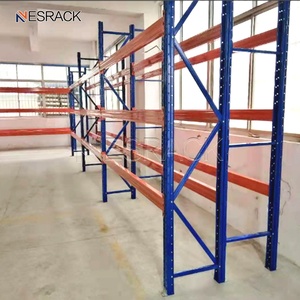
High Quality Intelligent Warehouse Storage Equipment Pallet Racking Beams and Uprights Stacking Racks & Shelves
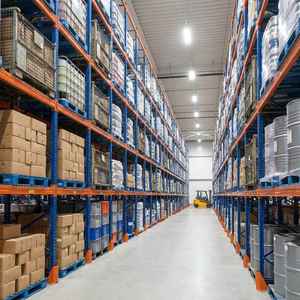
Heavy Duty Selective Pallet Racking Warehouse Storage Rack System Industrial Racks Adjustable For Building Materials
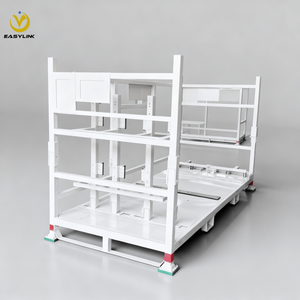
Easylink-Customized Foldable Single Pallet Steel Stillages Powder Coating for Outdoors for Warehouse Storage Stacking Racks
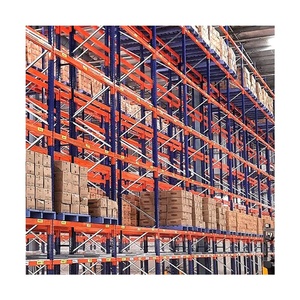
Metal Pallet Racking Warehouse Storage Pallet Racking System Heavy Duty Shelves Rack Unit For Goods Storage
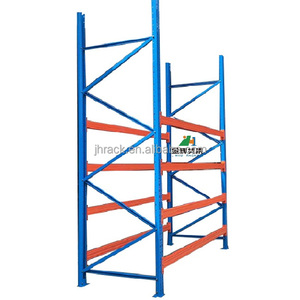
Free 3d Design Light Heavy Duty Storage Shelf Racks Pallet Rack Garage Shelving Steel Storage Units Shelves Warehouse Rack
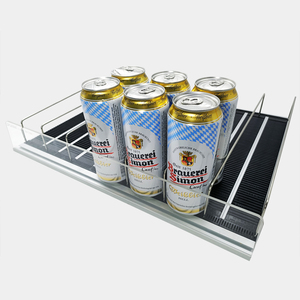
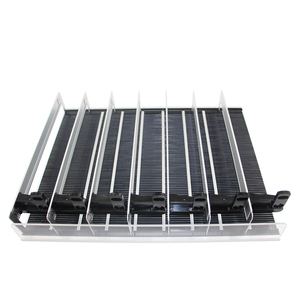
Gravity Flow Shelf FIFO System Custom Size Black Eco-Friendly Supermarket Roller Pusher Self Maintenance for Walk-in Cooler
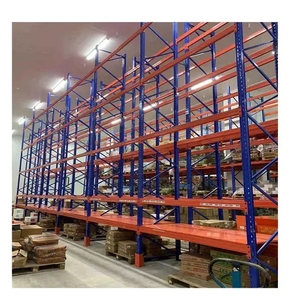
Structural Steel Pallet Rack Manufacturers Heavy Duty Storage Racks Warehouse Racking System
2001
Established Year
30,000 m²
In-House Manufacturing
30,000 t
Monthly Steel Output
120+
Export Nations Verified
Executive Engineering White Paper
Architectural Engineering of Modern High-Cube Storage Systems
In modern industrial supply chain architecture, static pallet racking is no longer treated merely as steel shelving; it is fundamentally an unbraced or semi-braced structural steel framing system subjected to combined axial compression, biaxial bending, cyclic forklift impact fatigue, and seismic acceleration forces. As global logistics facilities expand vertical heights up to 14–30 meters to maximize cubic utilization, the selection between roll-formed cold-bent C-sections and hot-rolled structural steel sections becomes a pivotal procurement decision determining structural stability, longevity, and life-cycle economics.
Cold-formed racking fabricated from prime carbon steel coil grades—such as certified Q235B and Q355B (comparable to ASTM A36 and ASTM A572 Grade 50)—provides optimal strength-to-weight performance through precision multi-stage cold bending profiles. Upright sections feature cold-punched teardrop or hexagonal connection holes designed with a continuous 50mm or 75mm pitch, accommodating load beams via high-strength steel connectors equipped with 3-claw or 4-claw safety interlocks. Under international structural standards including FEM 10.2.02, EN 15512:2020, and RMI (ANSI MH16.1), structural deflection under rated working pallet loads is rigorously restricted to a maximum ratio of L/200 (where L equals clear span length between upright columns), preventing micro-yielding and connector fatigue failure.
Engineering Comparison: High-Density Racking Profiles
Detailed comparative analysis of core intralogistics storage architectures based on floor area utilization, access speed, capital expenditure, and structural load characteristics.
| System Architecture | Floor Space Utilization | Selectivity Profile | Max Pallet Weight Class | Primary Material Standard | Ideal Logistics Scenario |
|---|---|---|---|---|---|
| Selective Pallet Racking | 40% – 45% (Standard Aisles) | 100% Direct Immediate Access | 500 kg – 2,500 kg / level | Cold-formed Q235B / Q355B | High SKU diversity, 3PL FMCG hubs, retail distribution |
| Drive-In / Drive-Through | 65% – 75% (High Density) | LIFO / FIFO (Batch Picking) | 800 kg – 1,800 kg / lane level | Heavy-duty roll-formed channel | Cold storage, bulk beverage, limited SKU inventory |
| Push-Back Cart Systems | 60% – 70% (2 to 6 deep) | LIFO (Gravity Cart Rollers) | Up to 1,500 kg / pallet | Telescopic nested steel carriage | Buffer staging areas, high throughput mid-SKU density |
| Radio Shuttle Automation | 75% – 85% (Ultra-High Density) | LIFO / FIFO (Automated Shuttle) | Up to 2,000 kg / pallet | Reinforced guide rails + high-tensile steel | Temperature-controlled cold stores, manufacturing buffer |
| Heavy Structural Steel Racks | 45% – 55% (Impact Resistant) | 100% Direct Immediate Access | 3,000 kg – 6,000 kg / bay level | Hot-rolled structural C-channels | Outdoor timber yards, steel rebar, foundry storage |
Beyond profile geometries, surface protection engineering dictates operational longevity—particularly across coastal industrial hubs, humid ambient environments, and extreme low-temperature cold rooms. Racking systems deployed in standard ambient distribution hubs utilize multi-stage automated chemical pre-treatment—comprising alkaline degreasing, hot water rinsing, micro-crystalline pickling, and iron/zinc phosphating—prior to electrostatic powder deposition of pure polyester thermosetting powder baked at 180°C–200°C. This yields a dry film thickness (DFT) between 60 to 90 microns, attaining superior cross-hatch adhesion and over 500 hours of continuous ASTM B117 neutral salt spray corrosion resistance. For walk-in freezers (-25°C to -35°C) and exposed outdoor stillage yards, heavy-duty hot-dip galvanization conforming to ISO 1461 guarantees sacrificial zinc barrier protection exceeding 450 g/m², preventing micro-fracture propagation triggered by thermal shock.
Macro Market Evolution
Future Procurement Trends in Warehouse Storage (2025–2030)
Strategic supply chain directors are adapting their capital expenditure (CapEx) strategies to accommodate automated vehicle navigation, regional climate resilience, and strict ESG compliance.
Convergence with AMR & Robotic Automation
Traditional manually-navigated forklift aisles are rapidly transitioning to hybrid automation profiles. Procurement specifications now mandate strict horizontal and vertical deflection tolerances (+/- 1.5mm) to accommodate Autonomous Mobile Robots (AMR), Automated Guided Vehicles (AGV), and stacker cranes. Racking footings, aisle spacing, and lower load beams increasingly integrate optical alignment targets, sensor-reflective coatings, and mechanical run-in guide tracks engineered for autonomous shuttle interfacing.
Extreme Climate & Coastal Humidity Formulations
With cross-border logistics hubs proliferating in harsh climate belts (such as the Middle East, Southeast Asia, and coastal transit points), procurement executives are abandoning standard solvent paints in favor of marine-grade phosphated polyester powder systems and closed-tube hollow sections. Systems must maintain structural elasticity and surface coat integrity under constant ambient heat cycles exceeding +45°C coupled with intense diurnal temperature fluctuations and high airborne salinity.
Seismic Damping & Dynamic Structural Modeling
Global procurement teams prioritize structural resilience over raw tonnage. High-fidelity Finite Element Analysis (FEA) and dynamic shaking-table simulation data are required at the preliminary tender phase. Enterprise projects demand certified baseplates with widened anchor footings, heavy-gauge gusset stiffeners, and energy-dissipating ductile beam-end connectors capable of absorbing non-linear ground accelerations across active seismic zones (PGA > 0.3g).
Enterprise Manufacturing Power
Why Global Supply Chains Rely on HEDA Shelves
Established in 2001, Guangzhou Heda Shelves Co., Ltd. combines quarter-century manufacturing mastery with a massive 30,000 square meter production facility, delivering complete end-to-end design, fabrication, and export logistics.
30,000 m² Integrated Facility
Fully in-house roll forming lines, automated high-precision column punching, automated robot welding cells, and an enclosed 200-meter multi-stage electrostatic coating line in Guangzhou, China.
CE & ISO 9001:2015 Traceability
Certified production adhering strictly to international standards, including CE certification (No. 2435-CPR-8605159), ISO 9001:2015 Quality Management, and full RoHS compliance across all industrial coatings.
Free 3D Layout & Engineering
Our 300+ technical personnel provide turnkey architectural support. Within 24–48 hours, receive tailored 2D CAD floor plans, 3D visual renderings, and structural loading calculations customized to your forklift fleet and floor slab.
Container-Optimized Export Packing
Over 10,000 projects completed across 120+ countries. Every bundle is professionally packed with shock-absorbing strapping, waterproof wrapping, and custom color-coded labels matching your on-site erection drawings.
Procurement Knowledge Base
Frequently Asked Technical Questions
Clear, engineering-driven answers to the most common inquiries raised by warehouse operators, EPC general contractors, and structural consultants.
How do you calculate warehouse floor slab load capacity before installing heavy-duty pallet racks?
Floor slab assessment requires analyzing the concrete compressive strength (typically C25/30 or C30/37), reinforcement mesh spacing, and underlying subgrade modulus. Racking columns impart severe concentrated point loads through baseplates to the concrete slab (frequently between 30 kN to 120 kN per upright post). Our structural team designs enlarged baseplates with dual or quad anchor bolt patterns to distribute axial stress below the maximum allowable punching shear and bearing limit of your concrete floor.
What engineering details are required to pass local Civil Defense and fire authority approvals?
Civil Defense and insurance underwriters evaluate rack layouts primarily for clear egress corridors, flue spaces, and integrated fire sprinkler suppression. Our 2D CAD layout drawings clearly document transverse flue spaces (minimum 75mm between back-to-back pallets) and longitudinal flue spaces (minimum 150mm), along with proper clearance below roof sprinkler heads (minimum 450mm to 900mm). We also furnish comprehensive load warning notices conforming to EN 15635 for municipal inspection files.
What is the structural difference between Q235B and Q355B steel in racking fabrication?
Q235B has a minimum yield strength of 235 MPa and a tensile strength of 370–500 MPa, delivering exceptional cold-formability and ductility for general beam and light-to-medium upright applications. Q355B offers a higher yield strength of 355 MPa and a tensile strength of 470–630 MPa, allowing thinner material profiles to support higher axial loads without buckling. For high-bay installations exceeding 10 meters, utilizing Q355B uprights reduces self-weight while meeting strict seismic ductility criteria.
How are pallet racks configured for low-temperature cold rooms (-20°C to -30°C)?
Low temperatures induce steel embrittlement, reducing impact energy absorption. In blast freezers and cold storage facilities, we utilize specialized structural steels verified for Charpy V-notch impact toughness at -20°C. Surface protection is upgraded to either heavy-duty zinc galvanization or customized low-temperature elastic powder coatings that resist micro-cracking caused by condensation cycles, structural shrinkage, and ice accumulation.
What parameters are required to generate an accurate warehouse 3D design and quotation?
To provide a rapid structural proposal within 24 hours, our engineering team requires: (1) Architectural CAD floor plans with column grid spacing and clear height to the lowest roof obstruction/lighting; (2) Pallet dimensions (W x D x H) including goods overhang; (3) Maximum unit pallet weight; (4) Forklift model, maximum lifting mast height, and turning radius; and (5) Operational environmental conditions (ambient, cold store, or chemical exposure).
How do you prevent forklift impact damage to upright columns and end frames?
Forklift impact accounts for over 85% of structural racking failures globally. Every HEDA Shelves system can be equipped with heavy-gauge solid steel column guards, wrap-around poly-urethane impact boots, and reinforced heavy C-channel end-of-aisle barrier protectors anchored directly into the floor slab independently of the racking uprights, absorbing lateral vehicular shocks without transferring momentum into the loaded rack.
Request Your Custom Warehouse Layout & Engineering Quotation
Connect directly with our senior structural engineering team. Submit your facility dimensions or CAD drawings to receive a comprehensive 2D CAD layout, 3D visual rendering, and precision load-deflection calculation within 24 to 48 hours.