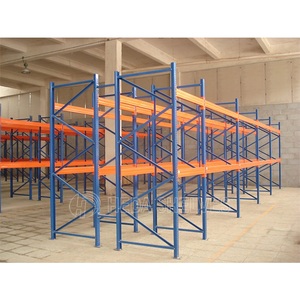
 Heavy Duty
Engineered High-Density Storage Solutions
Explore heavy-duty, certified industrial racking solutions designed to maximize cube utilization across global 3PL, cold chain, and high-throughput distribution environments.
Heavy Duty
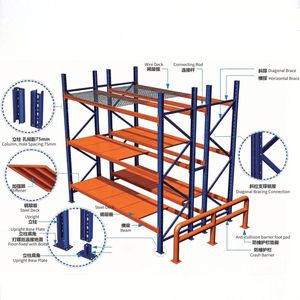 Anti-Rust
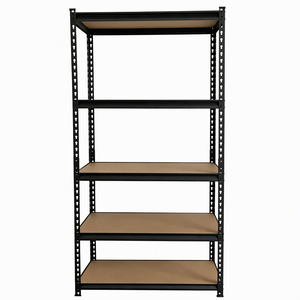 Modular
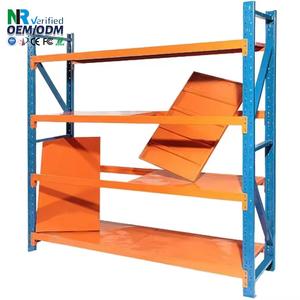 Industrial
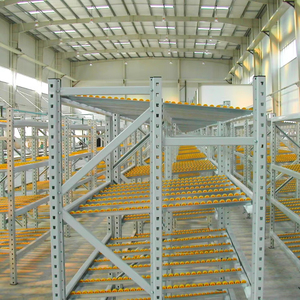 Dynamic Flow
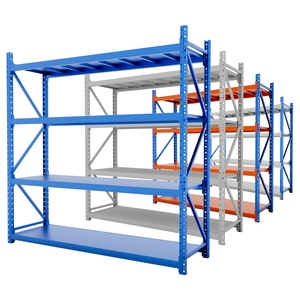 Long Span
 Commercial
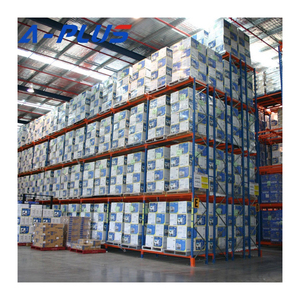 Double Deep Focus
Strategic Engineering Analysis: Double Deep Pallet Racking Mechanics
A rigorous evaluation of volumetric efficiency, reach mechanics, and structural dynamics for modern multi-echelon supply chains.
In modern high-throughput intralogistics infrastructure, balancing footprint footprint optimization against direct SKU selectivity is a primary spatial engineering objective. Double deep pallet racking stores unit loads two pallets deep in a back-to-back layout rather than single deep runs. By eliminating 50% of the working access aisles required in standard selective configurations, double deep architectures elevate floor storage density by approximately 30% to 40% while retaining accessibility to 50% of immediate pick faces without load re-handling.
Successful execution hinges on understanding reach kinematics, horizontal deflection boundaries, and torsional resilience under dynamic live loads. Operating a double deep configuration requires specialized materials handling equipment (MHE), typically pantograph reach trucks, telescopic fork attachments, or double-reach guided mast configurations. Because the extended moment arm magnifies eccentric mechanical loading during deeper placement, structural design mandates certified cold-formed structural steel profiles (such as certified Q235B or equivalent high-yield alloys) combined with rigorous horizontal beam tie designs and seismic deflection compliance.
Comparative Analysis: Double Deep vs. Alternative High-Density Racking
Supply chain leaders face operational trade-offs across capital expenditure, access speeds, and storage density. The following engineering comparison illustrates how double deep racking balances capital performance against operational throughput:
| Storage Racking Architecture | Cube Utilization Efficiency | Direct SKU Selectivity | Stock Management Protocol | MHE Specialization Requirement | Relative Capex Level |
|---|---|---|---|---|---|
| Selective Pallet Racking | Baseline (40% - 45%) | 100% Immediate Direct Access | FIFO / LIFO Multi-Protocol | Standard Counterbalance / Reach | Economical Baseline |
| Double Deep Pallet Racking | High (60% - 68%) | 50% Immediate (2-Pallet Batch) | LIFO per Single Channel | Pantograph / Telescopic Reach | Moderate / High ROI |
| Drive-In / Drive-Through | Very High (70% - 80%) | Extremely Low (Lane Level) | Strict LIFO (FIFO Drive-Thru) | Standard Narrow Chasis | Moderate CapEx |
| Radio Shuttle Automation | Maximum (80% - 88%) | Semi-Automated Channel | Configurable FIFO / LIFO | Standard Forklift + Shuttle Unit | High Initial Investment |
Procurement & Technological Trends Shaping the Market
Anticipating structural shifts in supply chain intralogistics: from metallurgical advancements to smart automated reach interfaces.
TCO Optimization via Direct Manufacturer Sourcing
Global procurement teams are bypassing regional distributors to partner directly with certified tier-1 manufacturers. Direct integration enables custom bay heights, engineered clear beam spans, mill-test certifications, and direct CAD coordination, yielding 18% to 27% reductions in overall capital expenditure.
Automation-Ready Upright & Beam Tolerances
As distribution hubs transition toward automated double-deep Automated Storage and Retrieval Systems (ASRS) and AGV reach vehicles, beam fabrication tolerances are tightening to within ±1.0 mm. Future-proof procurement mandates EN 15512 and FEM 10.2.02 deflection standard compliance during initial structural roll-out.
Extreme Environmental & Climate Adaptation
With massive supply chain deployment across high-temperature and coastal environments (such as the GCC, Southeast Asia, and Sub-Saharan hubs), anti-corrosion engineering is critical. Demands have shifted to multi-stage phosphating, pre-treatment pickling, and thermo-hardened anti-abrasion electrostatic powder coatings.
Manufacturing Excellence & Structural Reliability
Guangzhou HEDA Shelves delivers turnkey structural storage engineering backed by over two decades of technical manufacturing precision.
30,000 m² Manufacturing Infrastructure
Operating dedicated automated roll-forming lines, automated column punching tooling, and multi-stage beam welding robots. With an output capacity exceeding 30,000 tons per month, we manage large-scale logistics hub rollouts reliably without sub-tier fabrication delays.
International Verified Certifications
Full production adherence to international industrial safety standards. Structural and quality procedures are certified under CE (Certificate No. 2435-CPR-8605159), ISO 9001:2015 Quality Management Systems (Certificate No. 18624Q00169R0M), and strict RoHS eco-compliance.
Free 2D CAD & Full 3D Digital Layouts
Our in-house structural engineering team calculates real-world seismic dead and live loads, slab point-load tolerances, and local authority clearance requirements (e.g., Civil Defense regulations), delivering preliminary 2D architectural CAD layouts and 3D visual models free of charge.
Frequently Asked Questions: Double Deep Procurement
Direct technical answers addressing engineering parameters, forklift integrations, and operational safety criteria.
What specific forklift reach capabilities are required for double deep racking?
Double deep racks require reach trucks fitted with pantograph scissor extensions, dual-depth telescopic forks, or specialized reach masts. The MHE must retain sufficient derated capacity when reaching into the rear pallet position at peak operational heights.
How does double deep racking maintain structural safety against extended reach moments?
Because secondary depth placement induces eccentric torsional loads on the front horizontal beam, engineering configurations utilize reinforced dual-tie crossbars, structural pallet guide rails, and heavy-gauge upright frame bracing to minimize horizontal displacement and twisting.
Can double deep systems support FIFO inventory rotations?
Double deep systems function on a Last-In, First-Out (LIFO) model per single operational lane. However, warehouse management systems (WMS) typically configure SKU batches in pairs. When pallets are stored and dispatched as two-pallet increments, FIFO compliance across the total stock profile is fully maintained.
What building details are necessary to generate an engineered layout and quote?
To generate certified CAD configurations, we require building dimensions (clear ceiling height, column spans, slab load capacity), unit load metrics (pallet dimensions, depth, overhanging margins, gross weight), and reach equipment operational data (mast height, aisle clearance turning radii).
How do surface coatings endure humid, coastal, or cold-chain logistics environments?
Our structural steel components undergo continuous acid pickling, phosphating, and electrostatic epoxy-polyester powder coating cured at 200°C. For sub-zero cold rooms or open maritime humidity, hot-dip galvanization is integrated to ensure long-term structural integrity.
What export packaging practices are used to prevent transit damage on overseas shipments?
All upright columns and heavy beams are packed in rigid bundle cradles with edge protectors, waterproof plastic wrapping, and high-tensile steel strapping. Every bundle is tagged with part indices cross-referenced with your layout drawings for simplified sorting and erection on site.
Design Your High-Density Double Deep Facility
Consult with our structural engineering team today. Receive a custom 2D warehouse layout design, comprehensive 3D modeling, and direct factory pricing calculated precisely for your facility parameters.