Industrial Racking & Multi-Tier Mezzanine Platforms
Direct factory solutions engineered from high-yield Q235B and Q355B cold-rolled steel, designed for maximum volumetric utilization, seismic safety, and severe industrial conditions.
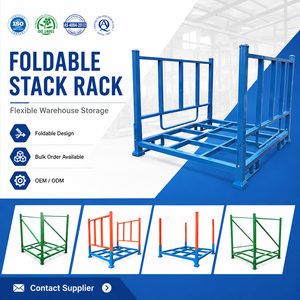
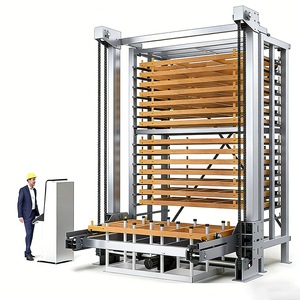
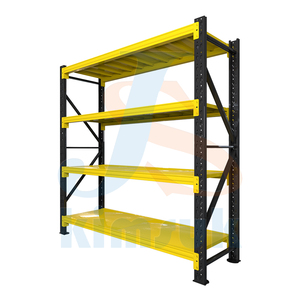
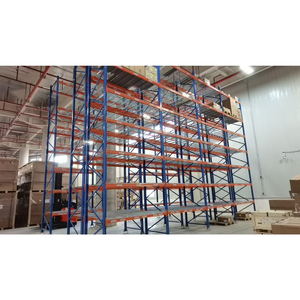
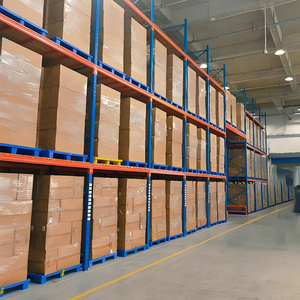
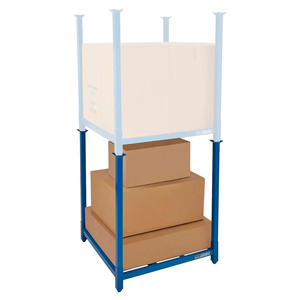
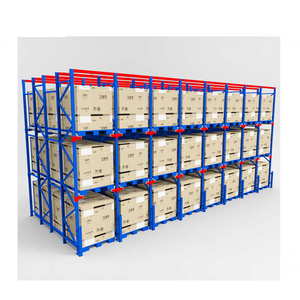
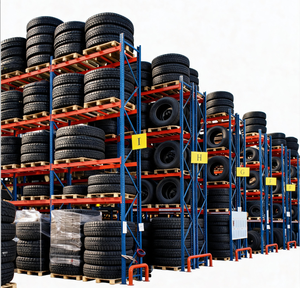
Structural Mechanics & Mezzanine Architectural Taxonomy
In modern supply chain architecture, modern industrial warehouses and cross-docking logistics distribution centers must capitalize on every cubic meter of overhead clear height. Industrial mezzanine platforms provide an elevated intermediate floor level that multiplies usable floor surface area without requiring costly footprint expansions, building permits, or civil structural modifications. According to industrial storage standard specifications (including EN 15512:2020, RMI ANSI MH16.1, and AS4084), mezzanine floors are primarily categorized into two distinct structural methodologies:
1. Heavy Structural Steel (Wide-Flange I-Beam) Mezzanines: Built upon heavy-duty hot-rolled structural steel columns (universal columns/tubular sections) and main primary/secondary I-beams. This taxonomy offers maximum clear column spans (often 6 to 12 meters between columns), enabling unrestricted vehicular and forklift movement on the ground floor. It typically accommodates heavy uniformly distributed loads (UDL) ranging from 500 kg/m² up to 2,000 kg/m², making it the preferred architectural foundation for supporting cleanrooms, modular in-plant executive offices, heavy tooling machinery, and automated parcel sorting conveyor systems.
2. Rack-Supported & Shelving-Supported Multi-Tier Mezzanine Systems: Utilizes the vertical cold-formed upright frames and horizontal load beams of heavy pallet racking or longspan shelving as the primary structural support columns for intermediate suspended walkway floors. This system integrates high-density pallet and carton storage below, within, and above the platform. Rack-supported designs dramatically reduce raw steel consumption compared to free-standing structural platforms, lowering capital expenditures by 35% to 48% for high-SKU manual fulfillment, e-commerce picking operations, and automotive parts distribution facilities.
Comparative Analysis: Structural Platform vs. Rack-Supported Mezzanine
| Engineering Parameter | Structural Steel Mezzanine | Rack-Supported Mezzanine | Shelving-Supported System |
|---|---|---|---|
| Primary Steel Profile | Hot-rolled wide flange I-beams & H-sections | Cold-rolled omega uprights & box beams | Cold-formed slotted longspan uprights |
| Standard Column Span | Wide Span: 6.0m – 12.0m | Compact Grid: 1.8m – 3.6m | High Density: 1.0m – 2.4m |
| Floor Load Capacity (UDL) | 500 – 2,000 kg/m² (Special to 3,500 kg) | 300 – 1,000 kg/m² per deck level | 200 – 600 kg/m² per deck level |
| Deflection Criteria | L/300 to L/500 (conveyor/robot ready) | L/200 to L/300 standard walkway | L/200 pedestrian walking deflection |
| Decking Substrate | Steel plate, composite bar grating, B-deck concrete | Perforated steel planks, galvanized decking, plywood | High-density steel decking, wire mesh decks |
| Fire & NFPA Compliance | Bar grating allows 50%+ water penetration | Perforated steel planks with drainage punch | Integrated sprinkler pipe hanger channels |
| Capital Cost Ratio | Benchmark Baseline (1.0x) | Cost-Efficient (0.55x – 0.65x) | Ultra-Low Initial CapEx (0.45x) |
Top 10 Racking Mezzanine Floor Manufacturers & Factories
A comprehensive evaluation of the world's premier industrial racking and mezzanine platform manufacturers, benchmarked by engineering capability, manufacturing infrastructure, and supply reliability.
Guangzhou Heda Shelves Co., Ltd.
Direct Factory & Engineering Headquarters: Guangzhou, ChinaEstablished in 2001, Guangzhou Heda Shelves is an internationally certified OEM/ODM manufacturing powerhouse operating an integrated 30,000 m² factory with over 300 technical production specialists. With a massive monthly capacity exceeding 30,000 metric tons, HEDA manages 100% of the manufacturing value chain in-house—including raw coil slitting, cold roll-forming, automated multi-head column punching, structural robotic welding, chemical pickling/phosphating pretreatment, and electrostatic powder coating lines.
Holding CE certification (No. 2435-CPR-8605159), ISO 9001:2015 quality credentials, and RoHS certifications, HEDA delivers custom-engineered multi-tier mezzanine racks and structural storage platforms to over 120 countries, with specialized logistics supply routes serving the UAE (Jebel Ali, Khalifa Port), Saudi Arabia (Dammam, Jeddah), Qatar, and broader GCC trade channels.
- Factory Size: 30,000 m² In-House
- Monthly Capacity: 30,000 Metric Tons
- Certifications: CE / ISO 9001:2015 / RoHS
- Custom Engineering: Free 2D CAD & 3D FEA Simulation
SSI Schaefer Group
Neunkirchen, GermanyA global titan in modular warehousing, automated intralogistics, and heavy racking systems. SSI Schaefer excels in massive multi-tier mezzanine installations deeply integrated with automated storage and retrieval systems (ASRS), vertical lift modules, and live roller conveyor layouts. Their mezzanine systems are precision-engineered to stringent DIN and FEM design standards.
- Core Strength: Large-scale automated fulfillment
- Engineering Standard: FEM, DIN, Eurocode
- Global Footprint: Worldwide offices & manufacturing
Stow Group
Dottignies, BelgiumOne of Europe's largest manufacturers of industrial storage solutions. Stow specializes in standard pallet racking, drive-in systems, and heavy-duty structural steel mezzanine floors known as the Stow Atlas platform. Their advanced engineering centers prioritize automated manufacturing and rapid bolt-together modular assembly systems across European logistics hubs.
- Core Strength: Heavy industrial mezzanine platforms
- Production Hubs: Belgium, Germany, Poland
- Design System: Modular bolted connections
Mecalux / Interlake Mecalux
Barcelona, Spain / Chicago, USAOperating across Europe and the Americas, Mecalux provides extensive structural racking, cantilever systems, and multi-tier mezzanine walkways. Their rack-supported multi-tier platforms are widely specified for third-party logistics (3PL) providers and apparel distribution centers requiring extensive carton live storage and Pick-to-Light interfaces.
- Core Strength: Multi-tier rack catwalks & software
- Compliance: RMI, ANSI, Eurocode
- Global Market: 70+ export territories
Jungheinrich AG
Hamburg, GermanyRenowned for its holistic approach combining material handling electric forklift trucks with stationary warehouse racking and mezzanine floors. Jungheinrich platforms are tailored for narrow-aisle forklift operations, integrating sophisticated structural floor deflection calculations to accommodate Autonomous Mobile Robots (AMRs) and AGVs on upper deck levels.
- Core Strength: Forklift-integrated mezzanine planning
- Automation Tier: AMR/AGV upper-deck suitability
- Coverage: Pan-European & Global subsidiaries
Dexion (Gonvarri Group)
Swindon, United KingdomWith historical roots dating back to the invention of slotted angle steel, Dexion (a key brand of Gonvarri Material Handling) provides longspan shelving, structural steel mezzanines, and multi-tier pallet racking systems. Their solutions are engineered to British Standards and European Codes, focusing on high safety factors, integrated handrails, and pallet drop gates.
- Core Strength: Heavy structural profiles & safety barriers
- Origin Heritage: Pioneered slotted angle technology
- Focus Sectors: Industrial engineering & defense
BITO-Lagertechnik Bittmann GmbH
Meisenheim, GermanyBITO manufactures specialized modular multi-tier shelving systems and multi-level order picking platforms. Known for their high precision cold-rolled profiles and proprietary boltless assembly methods, BITO platforms are extensively deployed in pharmaceutical distribution and fast-moving spare parts warehouses requiring strict floor level tolerances.
- Core Strength: High-precision small parts picking
- Assembly System: Boltless interlocking connectors
- Production Base: Germany
AR Racking (Grupo Arania)
Bizkaia, SpainPart of the Arania Group steel processing giant, AR Racking designs and manufactures industrial storage systems with fully automated production lines. Their multi-tier racking mezzanines feature advanced galvanized finishing options and seismic-resistant structural frames calculated for earthquake-prone distribution territories.
- Core Strength: Seismic engineering & galvanized finishes
- Steel Lineage: Integrated cold-rolled coil supply
- Testing Center: R&D center with University of Mondragon
Frazier Industrial Company
Long Valley, New Jersey, USAFrazier is the leading North American producer of structural steel pallet racks and structural mezzanines. Unlike manufacturers using roll-formed sheet steel, Frazier focuses exclusively on hot-rolled structural steel channel uprights. This provides unmatched abuse resistance against recurring forklift impacts in high-velocity beverage and grocery distribution centers.
- Core Strength: 100% Hot-rolled structural channel steel
- Impact Resistance: Superior durability against forklifts
- Standard: RMI / AISC North American standards
Dematic (KION Group)
Atlanta, USA / Frankfurt, GermanyA core subsidiary of the KION Group, Dematic designs enterprise-scale automated mezzanine systems tailored for micro-fulfillment centers and high-throughput parcel sorting hubs. Their structural mezzanines are engineered from heavy-duty wide flange steel to support cross-belt sorters, automated carton induction loops, and dense conveyor networks with zero dynamic vibration resonance.
- Core Strength: Vibration-damped mezzanine layouts
- Application: High-speed automated sortation platforms
- Integration: Full turnkey hardware and WCS controls
Next-Generation Procurement Trends & Engineering Outlook
The global warehouse racking and mezzanine market is experiencing a massive paradigm shift driven by e-commerce SKUs, land acquisition costs, and automated intralogistics. Forward-thinking procurement managers, EPC contractors, and supply chain directors must evaluate the following four emerging trends before issuing tenders for structural storage infrastructure:
1. AMR & AGV Upper-Deck Compatibility
Traditional mezzanine decks relied on standard 38mm particleboard or pressed steel planks engineered solely for foot traffic. Future procurement demands high-stiffness composite steel decking (resin-coated steel plate or high-density fiber cement boards) that satisfy stringent dynamic point-load deflection thresholds (L/400 or lower) to facilitate Autonomous Mobile Robots (AMRs) executing picking routines directly on upper mezzanine floors.
2. Extreme Climate Surface Metallurgy
In demanding logistics regions such as the UAE, Saudi Arabia, and Southeast Asia, ambient warehouse temperatures regularly exceed 45°C with severe relative humidity and abrasive sand ingress. Standard electrostatic powder coating without chemical pre-treatment fails within 24 months. Modern procurement mandates multi-stage hot pickling and phosphating pre-treatments, delivering superior epoxy-polyester bonding and salt-spray resistance exceeding 500 hours.
3. Pre-Engineered Modular Fast-Assembly
With industrial real estate rental costs escalating monthly, procurement timelines have compressed from quarters to weeks. Buyers now prioritize 100% pre-engineered, bolted modular connection frameworks over field-welded structures. Modular beam-to-column connections and snap-lock decking reduce on-site erection time by 60%, eliminate fire hazards from on-site welding, and enable rapid future relocation or vertical expansion.
4. Civil Defense & NFPA Compliance
Multi-tier mezzanine approvals hinge on municipal fire regulations (such as GCC Civil Defense, NFPA 13, and Eurocodes). Modern specifications require integrated flue space management between pallet bays, open-grid bar grating allowing over 50% vertical water penetration from ceiling sprinkler systems, integrated emergency exit stairway calculations, and flame-retardant electrical cable raceways built into mezzanine sub-beams.
HEDA Shelves Enterprise Advantage: In-House 10-Step Quality Process
Unlike trading companies or structural brokers, Guangzhou Heda Shelves Co., Ltd. controls every facet of raw material conversion within its proprietary 30,000 square meter factory base in Guangzhou. Every beam, upright column, catwalk deck, and bracket undergoes a rigorous 10-stage manufacturing protocol conforming to ISO 9001:2015 and CE certification standards:
Procurement & Engineering FAQ for Warehouse Directors
Technical answers to the most rigorous architectural, logistical, and commercial inquiries submitted by warehouse developers and corporate procurement teams:
How do I choose between a structural steel mezzanine and a rack-supported mezzanine?
What warehouse slab specifications are necessary to support a multi-tier mezzanine platform?
How does HEDA Shelves ensure compliance with Middle East (GCC) Civil Defense regulations?
What is the realistic factory production and overseas container shipping lead time?
What surface treatment is best for hot, humid, or dusty warehouse environments?
Ready to Expand Your Warehouse Capacity by 100%–300%?
Submit your facility architectural floor plans or clear height dimensions today. HEDA Shelves' senior intralogistics engineers will return a complete 2D CAD layout, 3D rendering, and factory-direct project quotation within 24 hours.
Inquire Now